
相关资源
探索丰富的全球公民教育资源,深化理解,促进研究、倡导、教学与学习。
共找到3,777条结果
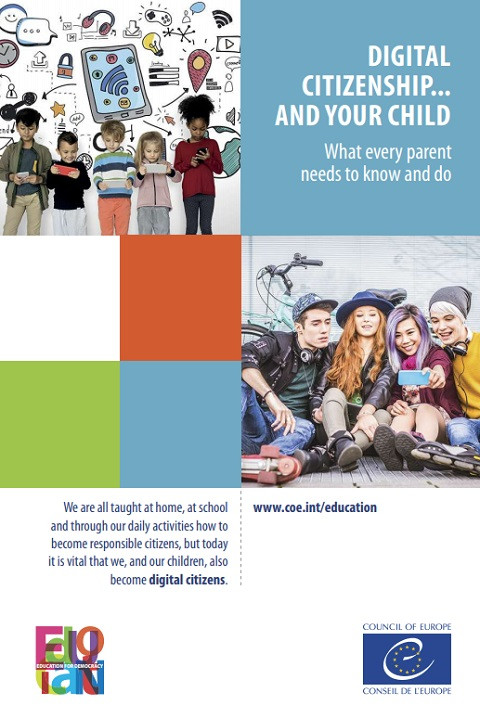 La citoyenneté numérique... et votre enfant: Ce que tout parent a besoin de savoir et de faire 出版年份: 2019 机构作者: Conseil de l'Europe Le Conseil de l’Europe a préparé le présent guide pour vous aider : à mieux comprendre la citoyenneté numérique et ses effets sur les comportements en ligne; à parler de la citoyenneté numérique avec vos enfants; à agir pour aider vos enfants à maîtriser les compétences indispensables à la citoyenneté numérique; à encourager les établissements scolaires de vos enfants à s’associer avec compétence à l’éducation à la citoyenneté numérique.
 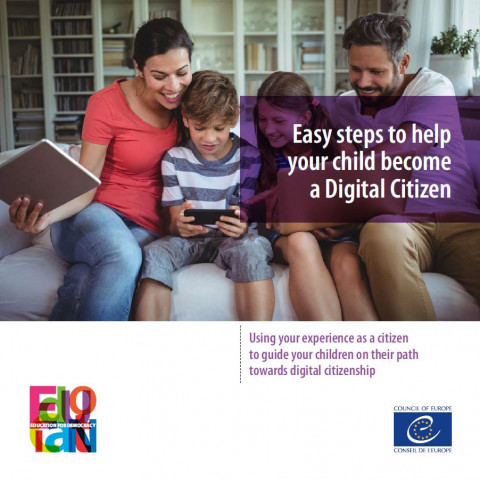 Easy Steps to Help Your Child Become a Digital Citizen 出版年份: 2020 作者: Janice Richardson | Veronica Samara 机构作者: Council of Europe A guide to help you use your experience as a citizen to guide your children on their path towards digital citizenship.Young people today inhabit a world that has been transformed by digital technologies, effortlessly enabling connectedness through social media and access to vast quantities of information. Making sense of this hyper rich information and engaging effectively and responsibly poses a whole set of new challenges for educators as they seek to prepare young people as citizens, exercising their rights and participating effectively in the affairs of the community.Parents, and “non-tech” grandparents too, can help children become digital citizens. In this guide, we explain some of the easy steps to follow, to help children master what it takes to act responsibly and respectfully online. Étapes simples pour aider votre enfant à devenir un citoyen numérique 出版年份: 2020 作者: Janice Richardson | Veronica Samara 机构作者: Conseil de l'Europe Un guide pour vous aider à utiliser votre expérience en tant que citoyen pour guider vos enfants sur la voie de la citoyenneté numérique.Les jeunes habitent aujourd'hui un monde qui a été transformé par des technologies numériques, permettant la connexion sans effort via les médias sociaux et l'accès à de vastes quantités d'informations. Etre capable de décortiquer cette information hyper riche et s’engager de manière efficace et responsable pose toute une série de nouveaux défis pour les éducateurs dans la mesure où ils cherchent à préparer les jeunes en tant que citoyens, à exercer leurs droits et à participer efficacement aux affaires de la communauté.Les parents et les grands-parents (même les profanes en technologie), peuvent aider les enfants à devenir des citoyens numériques. Dans ce guide, nous présentons quelques étapes faciles à suivre afin d’aider les enfants à maîtriser l’essentiel pour agir de façon responsable et respectueuse en ligne.
  A Report on Education for Democratic Citizenship and Human Rights Education Policy and Practice in Six Eastern Partnership Countries: Promoting Human Rights Education and Democratic Citizenship in Eastern Partnership Countries 出版年份: 2017 作者: Ralph Edward Huddleston | Karine Harutyunyan | Ulviyya Mikayilova | Irina Fursa | Shorena Gharibashvili | Cezar Gavriliuc | Polina Verbytska 机构作者: Council of Europe This report has been produced within the framework of the EU/CoE Joint Programme “Supporting Education Policies in Democratic Citizenship and Human Rights Education in 6 Eastern Partnership countries”. The Programme embraces the six countries of the EU’s Eastern Partnership: Armenia, Azerbaijan, Belarus, Georgia, Moldova and Ukraine. Its aim is to support integration and/or further develop of education for democratic citizenship and human rights education in national education systems (including school curriculum) in Eastern Partnership countries, in accordance with the Council of Europe Charter on Education for Democratic Citizenship and Human Rights Education. The report draws on the results of a research exercise designed to map the most important initiatives and priorities in the area of Education for Democratic Citizenship and Human Rights Education (EDC/HRE) in the six countries. The research exercise was carried out 2015-16 by local experts within each country. It resulted in six individual country reports outlining the current situation in relation to the integration of the principles of EDC/HRE within the national education system, and identifying opportunities for further development.
 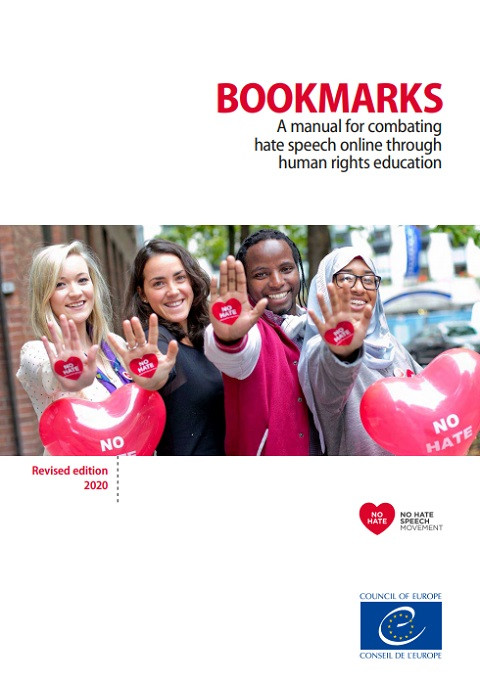 Bookmarks: A Manual for Combating Hate Speech Online Through Human Rights Education 出版年份: 2020 作者: Ellie Keen | Mara Georgescu 机构作者: Council of Europe The work of the Council of Europe for democracy is strongly based on education: education in schools, and education as a lifelong learning process of practising democracy, such as in non-formal learning activities. Human rights education and education for democratic citizenship form an integral part of what we have to secure to make democracy sustainable. Hate speech is one of the most worrying forms of racism and discrimination prevailing across Europe and amplified by the Internet and social media.Hate speech online is the visible tip of the iceberg of intolerance and ethnocentrism. Young people are directly concerned as agents and victims of online abuse of human rights; Europe needs young people to care and look after human rights, the life insurance for democracy.Bookmarks was originally published to support the No Hate Speech Movement youth campaign of the Council of Europe for human rights online. Bookmarks is useful for educators wanting to address hate speech online from a human rights perspective, both inside and outside the formal education system. The manual is designed for working with learners aged 13 to 18 but the activities can be adapted to other age ranges.This edition of Bookmarks reflects the end of the coordination of the youth campaign by the Council Europe. The campaign may be officially over, but the education and awarenessraising to counter hate speech and promote human rights values remain an urgent task for young people of all ages. Connexions: Manuel pour la lutte contre le discours de haine en ligne par l’éducation aux droits humains 出版年份: 2020 作者: Ellie Keen | Mara Georgescu 机构作者: Conseil de l'Europe L’action du Conseil de l’Europe en faveur de la démocratie est fortement axée sur l’éducation : l’éducation à l’école, mais aussi l’éducation en tant que pratique de la démocratie tout au long de la vie, comme dans le cadre des activités d’apprentissage non formel. L’éducation aux droits humains et l’éducation à la citoyenneté démocratique font partie intégrante du socle que nous devons bâtir pour faire de la démocratie une réalité durable.Le discours de haine est l’une des formes les plus inquiétantes de racisme et de discrimination qui sévit aujourd’hui en Europe, amplifiée par Internet et par les médias sociaux. Le discours de haine en ligne n’est que la partie visible de l’iceberg de l’intolérance et de l’ethnocentrisme. Les jeunes sont directement concernés, en tant qu’acteurs et victimes d’atteintes aux droits humains en ligne. L’Europe a besoin que les jeunes veillent aux droits de l’homme et les protègent : c’est là l’assurance-vie de la démocratie.Connexions a été créé dans le cadre du Mouvement contre le discours de haine, autrement dit, la campagne de la jeunesse du Conseil de l’Europe pour les droits humains en ligne. C’est un outil précieux pour les éducateurs qui souhaitent aborder le discours de haine en ligne sous l’angle des droits de l’homme, tant dans le système éducatif formel que dans le cadre de l’éducation informelle. Ce manuel a été conçu pour travailler avec des apprenants de 13 à 18 ans, mais les activités proposées peuvent être adaptées à d’autres groupes d’âge.Cette édition de Connexions a été révisée après que le Conseil de l’Europe a mis fin à la coordination de la campagne de jeunesse liée au Mouvement contre le discours de haine. Bien que la campagne ait pris officiellement fin, il importe de poursuivre l’éducation et la sensibilisation des jeunes pour combattre le discours de haine et promouvoir les valeurs liées aux droits humains.
 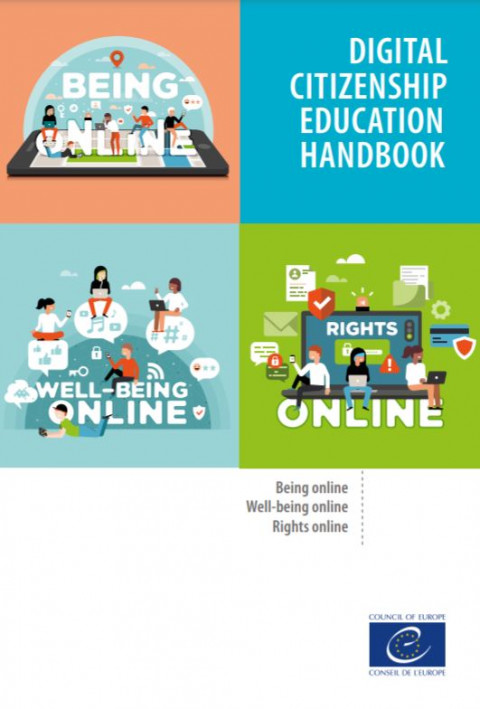 Digital Citizenship Education Handbook 出版年份: 2019 作者: Janice Richardson | Elizabeth Milovidov 机构作者: Council of Europe Digital citizenship and engagement involves a wide range of activities, from creating, consuming, sharing, playing and socialising, to investigating, communicating, learning and working. Competent digital citizens are able to respond to new and everyday challenges related to learning, work, employability, leisure, inclusion and participation in society, respecting human rights and intercultural differences.This Digital citizenship education handbook is designed to help educators and other interested adults understand and deal with them. It builds on the Council of Europe’s Reference Framework of Competences for Democratic Culture and the achievements of our longstanding Education for Democratic Citizenship programme, and complements the Internet literacy handbook as part of a coherent approach to educating citizens for the society of the future.
  T-KIT 4: Intercultural Learning 出版年份: 2018 作者: Oana Nestian Sandu | Nadine Lyamouri-Bajja 机构作者: Council of Europe | European Commission Intercultural learning is an important topic for the priorities of both the European Commission and the Council of Europe, and of their partnership in the field of youth.Intercultural learning is an educational approach that can lead to social transformation, so that people from different cultural backgrounds can develop positive relations based on the values and principles of human rights and on seeing cultural differences as positive things. It is a form of political and social education that needs to pay attention not only to intercultural relations, but also to different understandings of culture and diversity, power relations, distribution of resources, political and social context, human rights, discrimination, history and daily interactions among different groups.This T-Kit was developed for the context of youth work and non-formal education with young people, both of which support the personal development, social integration and active citizenship of young people. Educators and youth workers have an important role in addressing intercultural learning in their work with young people. They can stimulate young people’s learning in their daily lives, so that they can question and extend their perception, develop competences to interact positively with people from different cultural backgrounds and embrace the values of diversity, equality and dignity. In today’s Europe, these values and skills are fundamental for young people and for society as a whole in order to continue building peace and mutual understanding.
  Higher Education's Response to the COVID-19 Pandemic: Building a More Sustainable and Democratic Future (Council of Europe Higher Education Series; No. 25) 出版年份: 2021 作者: Sjur Bergan | Tony Gallagher | Ira Harkavy | Ronaldo Munck | Hilligje van’t Land 机构作者: Council of Europe Public health was the immediate concern when the Covid-19 pandemic struck in Asia, then in Europe and other parts of the world. The response of our education systems is no less vital. Higher education has played a major role in responding to the pandemic and it must help shape a better, more equitable and just post-Covid-19 world. This book explores the various responses of higher education to the pandemic across Europe and North America, with contributions also from Africa, Asia and South America.The book describes the various ways in which higher education is facing the Covid-19 pandemic. It is designed to help universities, specifically their staff and students as well as their partners, contribute to a more sustainable and democratic future.
  Media Literacy for All: Supporting Marginalised Groups Through Community Media 出版年份: 2020 作者: Martina Chapman | Nadia Bellardi | Helmut Peiss 机构作者: Council of Europe Being media literate means being able to critically understand and evaluate media content and to responsibly and safely use digital media services. Media literacy helps us engage with others in the public sphere, using the creative and participatory potential that new technologies and services can offer. Nowadays, it also includes understanding how data is used and how algorithms and AI can influence media production and choices.The importance of community media in supporting the formation of an ‘informed citizenry’ is well recognised by the Council of Europe. Community media have the ability to empower community groups with the neces- sary access and skills to create their own communica- tion channels and to foster their participation in the public sphere in a structured and professional man- ner. However, in many European countries community media still lack formal, legal recognition, fair access to distribution platforms and sustainable funding.This background paper explores how the community media sector promotes media literacy and how this work can strengthen marginalised communities’ partic- ipation in the media environment and public discourse. Comparing five models of community media from Cyprus, Ireland, Luxembourg, Spain and the United Kingdom, it seeks to inform and inspire practitioners and policy-makers, highlighting a number of findings and policy responses that can help member States fully realise the potential of community media.