
相关资源
探索丰富的全球公民教育资源,深化理解,促进研究、倡导、教学与学习。
共找到2,657条结果
 Global citizenship: from public support to active participation 出版年份: 2012 作者: Christine Carabain | Shelena Keulemans | Marije van Gent | Gabi Spitz 机构作者: National Committee for International Cooperation and Sustainable Development (NCDO) Cette publication explore le concept de citoyenneté mondiale en abordant essentiellement le côté scientifique, la littérature la plus pertinente,. Cette exploration dans les années à venir sera la base pour les programmes de NCDO dans le domaine de la recherche, la formation du personnel, et le partage des connaissances. NCDO a la tâche importante d'engager les gens dans ces deux grands changements en perspective: qu'est-ce que cela veut dire, combien il est important pour nous, comment pouvons-nous y contribuer? NCDO estime qu'il lui incombe de sensibiliser les citoyens néerlandais de la connexion croissante et la dépendance mutuelle entre les peuples à travers le monde, ainsi que pour leur faire connaître les possibilités qu'ils ont pour aider à résoudre les problèmes mondiaux. En d'autres termes: NCDO vise à faire progresser la dimension globale de la citoyenneté aux Pays-Bas. Mais qu'est-ce que la dimension mondiale de la citoyenneté? Malgré la prise de conscience de l'importance de la citoyenneté mondiale, une définition claire et largement acceptée du concept fait toujours défaut (Hart, 2011). À ce jour, le concept est souvent expliqué à l'aide des exemples et des domaines d'intervention. Cette publication présentera la définition de la citoyenneté mondiale qui NCDO emploiera dans la période à venir. En rejse tilbage i tiden – en lære for fremtiden Håndbog for lærere 出版年份: 2010 机构作者: European Union Agency for Fundamental Rights What role do Holocaust-related sites play in today's societies? What do they offer young people? What should schools and teachers consider when planning a visit to such a site? And how can teachers make best use of such visits for teaching about the Holocaust and human rights? This Handbook provides a number of examples, hints and historical background information, which will help teachers and students to make visits to Holocaust-related sites and exhibitions a meaningful and enriching experience. Een stap in het verleden – een les voor de toekomst: Handboek voor leraren 出版年份: 2010 机构作者: European Union Agency for Fundamental Rights What role do Holocaust-related sites play in today's societies? What do they offer young people? What should schools and teachers consider when planning a visit to such a site? And how can teachers make best use of such visits for teaching about the Holocaust and human rights? This Handbook provides a number of examples, hints and historical background information, which will help teachers and students to make visits to Holocaust-related sites and exhibitions a meaningful and enriching experience.
 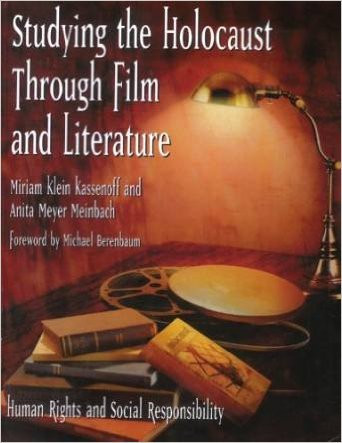 Studying the Holocaust Through Film and Literature: Human Rights and Social Responsibility Through film and literature, this book shows students the moral and ethical lessons that have evolved from the Holocaust so they can connect them with the moral dilemmas they face in their own lives. The authors focus on 3 main lessons of the Holocaust ‒ thou shalt not be a victim, thou shalt not be a perpetrator and thou shalt not be a bystander ‒ and address the issues of courage, compassion, character and civility. (By the author) Toolkit on the Holocaust and Human Rights Education in the EU Responding to a practical need expressed by teachers and students with a view toward examining the connections between Holocaust and Human Rights Education, the Fundamental Rights Agency (FRA) and Yad Vashem have developed this Toolkit to provide first insights into Holocaust and Human Rights Education content and methodologies, which can be used for teaching about and from the Holocaust and human rights. The Toolkit is a practical guide for teachers and educators who wish to develop teaching projects, by linking Holocaust and human rights. In addition, some examples of teaching projects and learning activities of Holocaust Education and Human Rights Education are provided in the Toolkit.
  Discover the past for the future: The role of historical sites and museums in Holocaust education and human rights education in the EU The Holocaust has rightfully become an integral part of the collective cultural memory of Europe and the world. This report outlines the findings of the first EU-wide research on the role of Holocaust-related sites and exhibitions in educating young Europeans about the Holocaust and human rights. With this research, the European Union Agency for Fundamental Rights (FRA) brings the two fields of Holocaust education and human rights education together and suggests how the merging of the two could develop into a new knowledge of past and present. The report highlights that attempts to expand knowledge of human rights and to establish links between Holocaust education and human rights education need a broader focus than the memorial sites or museums can offer. Much of the work on linking Holocaust education and human rights education needs to be accomplished in schools. This requires teachers to have opportunities to gain a better understanding of human rights education, and human rights education to be better integrated into school curricula in the EU. Visits to memorial sites and museums can stimulate, support and supplement such work. (By the publisher) ‘We saw inhumanity close up’. What is gained by school students from Scotland visiting Auschwitz? As the education for citizenship agenda continues to make an impact on schools in the UK, and with the Holocaust Educational Trust (HET) in conjunction with the Scottish Government introducing its Lessons From Auschwitz (LFA) project for students and teachers in Scotland, this article focuses on the Scottish context and investigates the school processes by which students are chosen to participate in the LFA project, the impact the LFA project has on student personal growth, and the range of follow‐up activities in their schools and communities. The methodology employed online questionnaires and face‐to‐face interviews, which were designed to ascertain student perceptions of the LFA project and the impact that this project had on student participants, their schools, and their communities. Findings demonstrate that the student cohort were highly academic students who took their responsibilities on return to their schools very seriously and organized a wide range of events, both in their schools and in their communities. There was clear evidence that the LFA project had led to extra teaching and awareness of the Holocaust, racism and human rights; and that students’ citizenship values had been enhanced. (By the publisher) The Holocaust and Education for Citizenship: the teaching of history, religion and human rights in England The importance of the Holocaust is undeniable. It seems that this truism has long been accepted by teachers and education policy makers. A superficial prediction would be that the Holocaust will continue to have both a high profile and a high status in the schools and colleges of England and Wales. However, on the basis of small‐scale work using data from teachers’ perceptions, we draw attention to certain problems in learning about the Holocaust and begin to suggest issues which should be investigated further. The issues which need further investigation are related to the possibilities that there may be too little time devoted to teaching about the Holocaust; the events of the Holocaust may sometimes be used as a mere context for understanding World War Two; teachers may not perceive the Holocaust as being significantly unique; teachers may not collaborate effectively; there may be a lack of clarity about the nature of the affective and cognitive aims of such work. (By the author) An Evaluation of UNESCO Publications on Human Rights Education 出版年份: 2002 机构作者: University of Leicester (UK) | Centre for Citizenship Studies in Education The purpose of this evaluation was to contribute to the formulation of a future strategy on Human Rights Education (HRE). The evaluation focused on nine publications commissioned by UNESCO Headquarters and field offices between 1997 and 2001.The relevance of the publications was assessed in light of UNESCO’s HRE goals and objectives. These were identified in UNESCO documents such as the 1995 Declaration and Integrated Framework of Action on Education for Peace, Human Rights and Democracy. The evaluation also included a report on the perception of users and UNESCO staff of the dissemination and impact of these publications, based on 11 staff interviews and an email questionnaire with 11 responses from 10 countries. In addition, the evaluators provided guidelines for the future development and evaluation of HRE publications.
  Global Monitoring of Target 4.7: Themes in National Curriculum Frameworks; Background Paper Prepared for the 2016 Global Education Monitoring Report 出版年份: 2016 机构作者: UNESCO International Bureau of Education (IBE) This study is an initial attempt to monitor ESD and GCED content in curricula globally. The goal here is to analyse national curriculum documents to reveal if, how, and to what extent ESD and GCED content is present across the globe. For this purpose, the research team developed a coding scheme based on key ESD and GCED knowledge, skills, behaviours and pedagogies that was used in evaluating the various national curriculum documents for evidence of ESD and GCED content. In this paper, we present the study in the following order. Further explanation of ESD and GCED, and a discussion of issues relating to their implementation and monitoring will come first. Then we will review similar studies that have also attempted to monitor GCED and ESD through content analysis. The study’s methods and findings will then be presented, followed by a discussion of the challenges addressed in developing a coding system to monitor curricula effectively. Finally, we share a series of recommendations that will focus on ways for moving forward in monitoring GCED and ESD effectively, both at a curricular level and beyond.