
相关资源
探索丰富的全球公民教育资源,深化理解,促进研究、倡导、教学与学习。
共找到3,225条结果
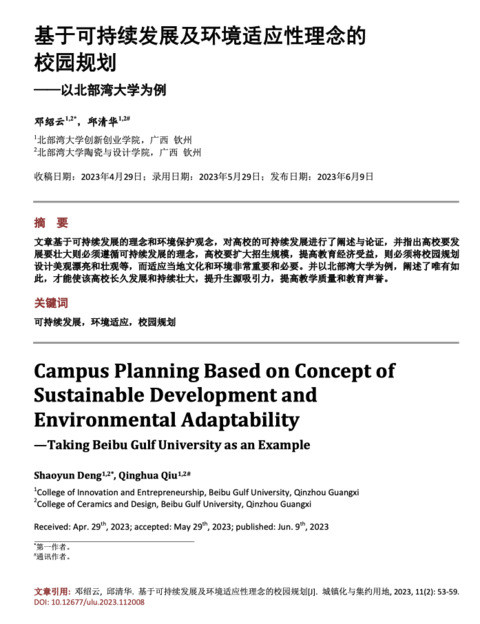 基于可持续发展及环境适应性理念的校园规划: 以北部湾大学为例 (城镇化与集约用地; Vol.11, No.2) 出版年份: 2023 作者: 邓绍云 | 邱清华 文章基于可持续发展的理念和环境保护观念,对高校的可持续发展进行了阐述与论证,并指出高校要发展要壮大则必须遵循可持续发展的理念,高校要扩大招生规模,提高教育经济受益,则必须将校园规划设计美观漂亮和壮观等,而适应当地文化和环境非常重要和必要。并以北部湾大学为例,阐述了唯有如此,才能使该高校长久发展和持续壮大,提升生源吸引力,提高教学质量和教育声誉。
  Ré-inventer le Monde 出版年份: 2023 机构作者: L'Agence Française du Développement (AFD) Réinventer le Monde est un programme pédagogique créé par l’Agence française de développement pour sensibiliser les jeunes au développement durable et à la solidarité internationale et leur donner envie de s’engager. Conçu comme un voyage sonore, ce programme permet de découvrir à travers les histoires d’habitants de la planète, les Objectifs de développement durable et les interconnexions entre ici et là-bas. Il mêle éducation au développement durable (EDD) et éducation aux médias et à l’information (EMI) et propose une approche centrée sur l’apprentissage de la citoyenneté mondiale. Reinventing the World is an educational program created by the French Development Agency to raise young people's awareness of sustainable development and international solidarity, and inspire them to get involved. Conceived as an audio journey, the program uses the stories of the planet's inhabitants to discover the Sustainable Development Goals and the interconnections between here and there. It blends education for sustainable development (ESD) and media and information literacy (MIM), and offers an approach focused on learning about global citizenship.
 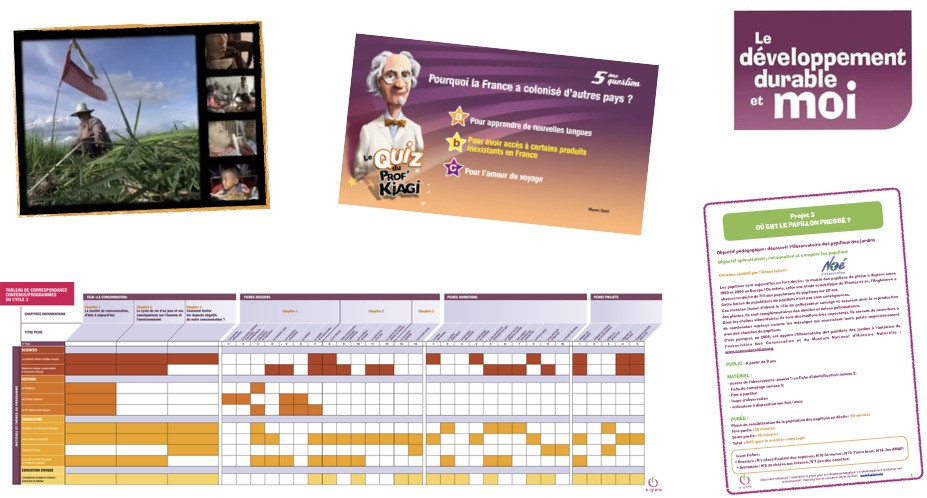 Le développement durable et moi 出版年份: 2010 机构作者: E-graine Les mallettes pédagogiques constituent un des supports historiques d’e-graine dans sa batterie d’outils pédagogiques. Destinées en premier lieu aux enseignants dans les années 2010, elles ont été pensées comme des outils clés en mains pour éduquer au développement durable et à la solidarité internationale. A l’aide d’un tableau de correspondance pédagogique fourni avec la mallette, un enseignant pouvait, dans les différentes disciplines, intégrer facilement ces vidéos à ses cours. Le dispositif était idéal pour appuyer les écoles ne disposant pas toujours des moyens financiers permettant de faire appel à des animateurs spécialisés. Il était également possible pour le grand public de se procurer ces mallettes pour une utilisation dans le cadre familial.Pour toucher le plus grand nombre et parcequ’elle modernise ses outils pour rester à la pointe de l’innovation pédagogique, e-graine fait le choix de les proposer gratuitement en ligne pour le plus grand nombre. Le contenu que vous trouverez ci-dessous en vidéo demeure évidemment une bonne base d’initiation pour une cible 8-12 ans. Teaching kits are one of e-graine's long-standing educational tools. First designed for teachers in the 2010s, they were conceived as turnkey tools for teaching sustainable development and international solidarity. Using a pedagogical correspondence table supplied with the kit, teachers could easily integrate the videos into their lessons in any subject. The system was ideal for supporting schools that don't always have the financial resources to hire specialized animators. It was also possible for the general public to purchase the kits for use in the home. In order to reach as many people as possible, and because it is constantly updating its tools to remain at the cutting edge of educational innovation, e-graine has decided to make them available free of charge online. The video content you'll find below is obviously a good introduction for 8-12 year-olds.
  Low-tech en rénovation énergetique: les podcasts 作者: Anna Chavepayre | Alexandre Pointet | Christine Lecerf | Patrice Brière | Ivan Fouquet | Vania Dormoy | Milena Karanesheva | Clotilde 机构作者: Profeel Des praticiens, maîtres d’ouvrage, maîtres d’œuvre et entreprises racontent : faire de la rénovation, c’est déjà une démarche low-tech qui prend en compte l’énergie grise, l’économie des ressources. Ils font du low-tech pour la transition climatique, pour le plaisir d’une utilisation simple et robuste, pour inventer des choses en partant du déjà-là, du paysage. C’est la marche de l’histoire. Practitioners, owners, project managers and contractors tell us that renovation is already a low-tech approach that takes into account grey energy and resource conservation. They do low-tech for the climate transition, for the pleasure of simple, robust use, to invent things based on what's already there, on the landscape. It's the march of history.
 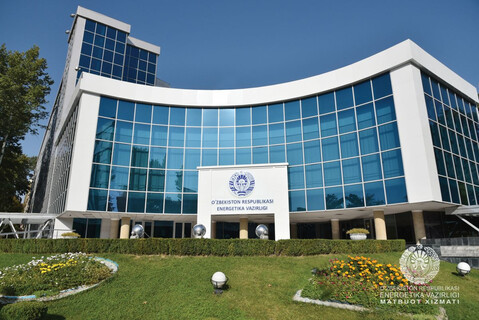 Transition to “Green Economy” in Uzbekistan: Opportunities and Challenges 出版年份: 2023 作者: Nodira Mukhammadkulova | Shakhrizoda Rakhimova 机构作者: Central Asian Bureau for Analytical Reporting (CABAR) Climate change issues and the crisis in the energy market have led to the development of technologies for the use of alternative, more environmentally friendly and possibly renewable resources, which are called “green” technologies. In Uzbekistan, the program of transition to a green economy and green growth until 2030 was adopted at the end of 2022. According to the program, by 2030, the share of renewable energy sources (RES) used will be about 30% of the country’s total electricity generation. The issue of awareness of the population as consumers about the relevance of diversification of energy consumption, advantages and disadvantages of alternative energy sources is relevant. Возможности и вызовы перехода на "зеленую экономику" в Узбекистане 出版年份: 2023 作者: Nodira Mukhammadkulova | Shakhrizoda Rakhimova 机构作者: Central Asian Bureau for Analytical Reporting (CABAR) Вопросы изменения климата и кризис на рынке энергоресурсов обусловили развитие технологий по использованию альтернативных, более экологичных и по возможности возобновляемых ресурсов, которые получили название «зеленые» технологии. В Узбекистане программу перехода к “зеленой” экономике и “зеленому” росту до 2030 года приняли в конце 2022 года. Согласно программе, к 2030 году доля используемых возобновляемых источников энергии (ВИЭ) будет составлять около 30% общей выработки электроэнергии в стране. Актуальным является вопрос осведомленности населения как потребителей об актуальности диверсификации энергопотребления, преимуществах и недостатках альтернативных видов источников энергии.
 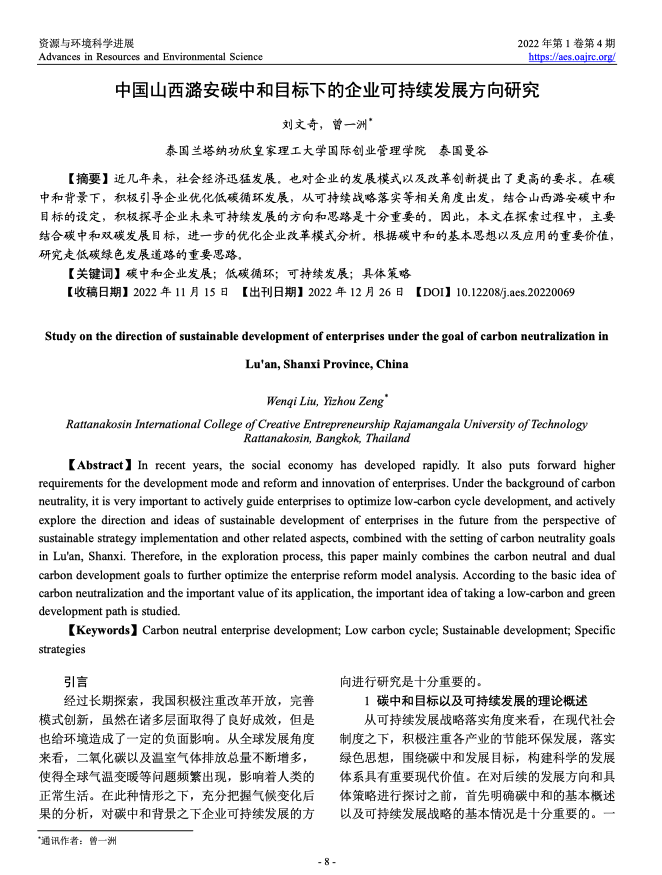 中国山西潞安碳中和目标下的企业可持续发展方向研究 出版年份: 2022 作者: 刘文奇 | 曾一洲 近几年来,社会经济迅猛发展。也对企业的发展模式以及改革创新提出了更高的要求。在碳中和背景下,积极引导企业优化低碳循环发展,从可持续战略落实等相关角度出发,结合山西潞安碳中和目标的设定,积极探寻企业未来可持续发展的方向和思路是十分重要的。因此,本文在探索过程中,主要结合碳中和双碳发展目标,进一步的优化企业改革模式分析。根据碳中和的基本思想以及应用的重要价值,研究走低碳绿色发展道路的重要思路。
  Embracing Peace through UNESCO World Heritage 出版年份: 2024 作者: 장정아 | 김민성 | 김수진 | 김원호 | 안치영 | 오성희 | 오창현 | 이성영 | 이현경 | 전원희 机构作者: Korean National Commission for UNESCO This resource kit is the product of long labor by 10 researchers consisting of scholars on UNESCO heritage and teachers working in schools that belong to the UNESCO Associated Schools Network (ASPnet). It is distinct from existing educational resources in several ways. First, this kit goes beyond introducing the variously inscribed World Heritage properties one after another, to explain the rich significance of the heritage properties through keywords such as peace, cultural diversity, and sustainability. We also sought to overcome misconceptions about World Heritage and presented the content through various interesting cases for easy, hands-on application in classroom settings. In 2024, KNCU has pilot-tested the teaching materials presented in this resource kit in Korean middle and high schools belonging to UNESCO ASPnet. An online teacher training course based on this book has also been provided in June this year. 유네스코 유산, 평화를 품다 出版年份: 2024 作者: 장정아 | 김민성 | 김수진 | 김원호 | 안치영 | 오성희 | 오창현 | 이성영 | 이현경 | 전원희 机构作者: 유네스코한국위원회 이 책은 유네스코 등재유산을 연구해온 학자, 유네스코학교 담당 교사 등 10명의 연구진이 오랜 기간동안 고심해서 만들어낸 결과물로 각종 유네스코 등재유산에 대한 정보를 '평화, 문화다양성, 지속가능성' 등의 키워드를 중심으로 이들 유산이 갖는 의미들을 담아내고자 하였다. 또한 다양한 사례를 중심으로 학교 현장에서 참여형 수업을 통해 손쉽게 활용할 수 있도록 내용을 구성했으며 이 책을 기반으로 국내 중/고등 유네스코학교에서 시범수업을 실시하는 한편 2024년부터는 교사들이 활용할 수 있도록 교원연수용 온라인 콘텐츠를 제공할 예정이다.
  The SDG second half: Ideas for doing things differently 出版年份: 2023 作者: Amar Bhattacharya | Margaret Biggs | Matthew Bishop | Caren Grown | George Ingram | Homi Kharas | John W. Mcarthur | Sarah E. Mendelson | Jane Nelson | Tony Pipa | Naheed Sarabi | Jacob Taylor | Priya Vora | Rebecca Winthrop 机构作者: Center for Sustainable Development at Brookings This short compendium captures a cross section of SDG-focused insights and recommendations from CSD-affiliated scholars. Each brief essay describes something with the potential to be done differently during the second half of the SDG era. Across a dozen contributions, topics range from reframing media coverage of the SDGs to measuring and elevating the role of the private sector; from participatory approaches to transforming education systems to new learning paradigms for human rights; from better risk-taking in fragile countries to improving infrastructure and services for care; from fit-for-purpose multilateral development banks to a purpose-driven fund to end extreme poverty; from turbo-charged Canadian SDG approaches to renewed American SDG leadership; from breakthroughs in digital public infrastructure to innovative frontiers in the digitally empowered methods of collective behavior science.