
相关资源
探索丰富的全球公民教育资源,深化理解,促进研究、倡导、教学与学习。
共找到2,657条结果
 UNESCO Women for Ethical AI: Outlook Study on Artificial Intelligence and Gender 出版年份: 2024 机构作者: UNESCO The gender chapter of the UNESCO Recommendation on the Ethics of AI is a concrete commitment by 194 Member States to advance gender equality in the AI ecosystem. To track progress in the implementation of the gender provisions of UNESCO’s Recommendation, and to assess the impacts of AI on gender equality, the UNESCO Women for Ethical AI (W4EAI) Platform has been established. This report advances the workstream through evidence-based insights in three critical areas: women’s participation in AI development and deployment, the inclusion of gender equality concerns in AI governance and the impact of AI on gender equality. It highlights the significant underrepresentation of women in AI, the lack of gender-disaggregated data, and the compounded challenges women face in the field. The report also addresses the neglect of gender dimensions in AI policy, the risks posed by AI systems to women, and the need for responsible and ethical AI governance to promote gender equality. Finally, it outlines actionable recommendations to enhance gender equality through and in AI, emphasizing the importance of comprehensive data collection, targeted interventions, and inclusive policy-making.
  Education: global citizenship education in context 机构作者: Global Hive In a fast-changing and globalized reality, there are many who believe that education can, and should, help young people to meet the challenges they will confront now and in the future, and that educating for global citizenship is now more important and urgent than ever before. Upon reflection back over this decade of work, however, there is an indication that not a lot of progress has been made in expanding education for global citizenship (Schulz, 2007; Canadian Council for International Cooperation, 2004). In the early 1990s, with the financial assistance of the Canadian International Development Agency and inspired by visions of global solidarity, Canadian schools and community organizations joined together in efforts to educate students on global society, though since then funding has been cut drastically, and coordinated efforts across sectors have decreased, as schools and NGOs face their own budget cuts. In a recent poll conducted by VisionCritical and the Inter-Council Network of Provincial and Regional Councils for Global Cooperation, it was found that one third of Canadians rank global poverty (hunger in the world) among the first, second and third most concerning issues to them globally. Moreover, the majority of Canadians believe there is a human rights obligation to reduce global poverty, and believe there are significant benefits to doing so, including improving Canada’s international reputation, reducing global conflict, and reducing risks of pandemics. Global Citizenship Education is essential for the following reasons: Education for Global Citizenship gives young people access to the knowledge, understanding, skills, and values that they need to participate fully in ensuring their own and others’ well-being, and to make a positive contribution both locally and globally. Global Citizenship Education involves children and youth fully in their own learning through the use of a range of activities and participatory learning methods. This engages the learner, but also develops confidence, self-esteem, and skills of critical thinking, communication, cooperation and conflict resolution. Current use of the world’s resources is inequitable and unsustainable. As the gap between the rich and the poor widens, poverty continues to deny millions of people around the world their basic human rights. Education is a powerful tool for changing the world because tomorrow’s adults are the children and youth we are educating today. For teachers interested in promoting global citizenship, the next and most immediate question is how: How can I integrate and teach global citizenship education when I have so many other pressing curriculum requirements to get through with my students? How does Global Citizenship Education relate to English Language Arts or Physical Education? This toolkit seeks to provide information on how global citizenship education can be integrated into many areas of the curriculum, offer some tools and methods by which to do so, and present some illustrative case studies to provide inspiration and guidance.
  Global education guides 出版年份: 2009 机构作者: Global Education Network of Young Europeans (GLEN) This document was written as an introduction to global education and as a practical support tool for planning, managing and evaluating global education projects. It is addressed to members of GLEN, the Global Education Network of Young Europeans, as well as to other global educators. The following pages are the result of numerous discussions that have occurred during the last five years both within GLEN and with external global education practitioners and academics. Many of these discussions crystallised at the European Global Education Days (EGED), a five-day seminar that GLEN organised on the occasion of the network’s fifth anniversary in November 2008. The EGED brought together more than 70 global education activists, practitioners and academics from 15 European countries, with the aims of exchanging experiences and good practices of global education, discussing how to evaluate global education projects and measure impact; reflecting on the potential of global education as a tool for activists and how it relates to concepts such as citizenship or development; and using the results of these discussions for the future work of our network: planning global education projects and further engaging with other stakeholders. The world is currently going through a period of accumulated crises: the ecological crisis, the financial and economic crisis, the food crisis. And this on top of all the other problems: hunger, poverty, unequal distributions of resources, violent conflict, etc. The challenges which humankind is facing seem to be greater than ever. However, the Greek word ‘crisis’ does not mean downfall, but decision. We, as human beings and as citizens of this world, can decide to contribute our share for bringing about more just political and economic structures; and more sustainable, democratic, peaceful and inclusive ways of living together. If we do global education, it is in order to address exactly these issues; it is to empower people to become agents of change in view of this vision. So, in this spirit, let us use the present momentum and make the current ‘crisis’ a turning point. Guide d'éducation globale 出版年份: 2009 机构作者: Global Education Network of Young Europeans (GLEN) Ce document a été écrit comme une introduction à l'éducation mondiale et comme un outil de support pratique pour la planification, la gestion et l'évaluation des projets d'éducation globale. Il est adressé aux membres de GLEN, le Réseau Éducation Mondiale des Jeunes Européens, ainsi que d'autres éducateurs mondiaux. Les pages qui suivent sont le résultat de nombreuses discussions qui ont eu lieu au cours des cinq dernières années, tant au sein de GLEN et avec les praticiens de l'éducation mondiale externes et des universitaires. Beaucoup de ces discussions cristallisées lors des Journées Européennes Global Éducation (JEGÉ), un séminaire de cinq jours qui GLEN organisé à l'occasion du cinquième anniversaire du réseau en Novembre 2008. Le JEGÉ a réuni plus de 70 mondiaux éducation des militants, des praticiens et des universitaires de 15 pays européens, avec les objectifs de l'échange d'expériences et de bonnes pratiques de l'éducation mondiale, discuter de la façon d'évaluer les projets mondiaux d'éducation et de mesurer l'impact; réflexion sur le potentiel de l'éducation mondiale comme un outil pour les militants et comment il se rapporte à des concepts tels que la citoyenneté ou de développement; et en utilisant les résultats de ces discussions pour les travaux futurs de notre réseau: la planification des projets mondiaux d'éducation et engager davantage avec d'autres parties prenantes. Le monde traverse actuellement une période de crises accumulées: la crise écologique, la crise économique et financière, la crise alimentaire. Et cela au-dessus de tous les autres problèmes: la faim, la pauvreté, les distributions inégales des ressources, les conflits violents, etc. Les défis auxquels l'humanité est confrontée semblent être plus que jamais. Cependant, le mot grec ‘crise’ ne signifie pas la chute, mais la décision. Nous, en tant qu'êtres humains et en tant que citoyens de ce monde, pouvons décider de contribuer à provoquer des structures politiques et économiques plus justes; et des moyens plus durables, démocratiques, pacifiques et inclusifs de vivre ensemble. Si nous faisons l'éducation mondiale, il est dans le but de répondre exactement à ces questions; il est d'habiliter les gens à devenir des agents de changement en vue de cette vision. Donc, dans cet esprit, nous utilisons la dynamique actuelle et de faire la ‘crise’ actuelle un point tournant. 글로벌 교육 가이드 出版年份: 2009 机构作者: Global Education Network of Young Europeans (GLEN) 본 문서는 글로벌 교육을 소개, 계획 및 관리하고 글로벌 교육 프로젝트를 평가하기 위한 실질적 지원 도구로 작성되었다. 이것은 GLEN 멤버와 영 유로피언의 글로벌 교육 네트워크뿐 아니라, 다른 글로벌 교육자들을 위한 것이다. 다음의 내용은 GLEN 내부와 외부 글로벌 교육 실무자 및 학계 양측에서 지난 5년간 이뤄졌던 수많은 논의의 결과다. 이 논의의 대부분은 2008년 11월 GLEN 네크워크 5주년에 즈음하여 조직된 5일간의 세미나- ‘유러피언 글로벌 교육의 날(EGED)’에서 결정되었다. ‘유러피언 글로벌 교육의 날(EGED)’은 유럽 15개 국에서 70명 이상의 글로벌 교육 활동가, 실무자 및 학계 관계자들이 함께 하여 어떻게 글로벌 교육 프로젝트를 평가하고 그 영향을 측정하는 가에 대한 논의를 하였다. 또한 활동가를 위한 도구로써 글로벌 교육의 잠재력을 반영하는 것과 이를 어떻게 ‘시민의식’ 혹은 ‘개발’의 개념과 연계시키는 가에 대한 논의도 이어 나갔다. 아울러, 향후 우리의 네트워크 작업을 위한 본 논의들의 결과를 어떻게 사용하는 가에 대한 방안도 모색하였는데, 여기에선 글로벌 교육 프로젝트를 계획하고 더 나아가 다른 이해관계자들도 참여시키는 방안도 모색하였다. 세계는 현재 축적된 위기의 시간을 겪고 있다. 즉, 생태 위기, 금융 및 경제 위기, 식량 위기를 겪고 있다. 그리고 그 위에 기아, 빈곤, 불평등한 자원 분배, 폭력 충돌 등 다른 문제들도 산적하고, 이러한 문제들에 직면한 인류의 도전은 그 어느 때보다 중요하게 여겨진다. 그러나 그리스어 ‘위기’라는 단어는 ‘몰락’이 아니라 하나의 ‘결정’을 의미한다. 우리는 인류와 세계시민으로서 더 정의로운 정치와 경제구조를 이끌기 위해 우리 각자의 몫을 기여할 수 있고, 더불어 평화롭게 함께 살고, 더 지속가능하고 민주적인 것에 기여하는 방법을 찾을 수 있다. 우리가 글로벌 교육을 하는 것은 바로 이러한 문제점을 해결하기 위해서이다. 다시 말해서, 미래에 대한 비전을 갖고 변화의 동인이 되는 사람에게 힘을 실어 주는 것이다. 그러므로 우리는 이러한 정신으로 현재의 동력이 되어 오늘날의 위기를 전환점으로 만들도록 한다.
  Comprehensive Societal Integration of People with Disabilities in the Arab and Islamic Society (A Historical-original View) 出版年份: 2012 作者: Ibrahim Alnuqythan 机构作者: Gulf Society for Diability The file is a research paper that discusses the comprehensive integration of persons with disabilities in the Arab and Islamic world. The paper seeks to answer the following questions:- Did the disabled in the Arab-Islamic civilization have a comprehensive integration into society?What are the examples of this integration in the Arab-Islamic civilization?The paper discussed and touched on live models that show the reality of inclusion of persons with disabilities in society. الدمج المجتمعي الشامل لذوي الإعاقة في المجتمع العربي الإسلامي (نظرة تاريخية-تأصيلية) 出版年份: 2012 作者: Ibrahim Alnuqythan 机构作者: Gulf Society for Diability الملف عبارة عن ورقة بحثية تناقش الدمج الشامل للمعوقين في الوطن العربي والإسلامي. وتسعى الورقة للإجابة عن الأسئلة التالية:- هل كان للمعوقين في الحضارة العربية الإسلامية دمج شامل في المجتمع؟- ما النماذج على هذا الدمج في الحضارة العربية الإسلامية؟ولقد ناقشت الورقة وتطرقت لنماذج حية تظهر واقع ادماج المعوقين في المجتمع.
 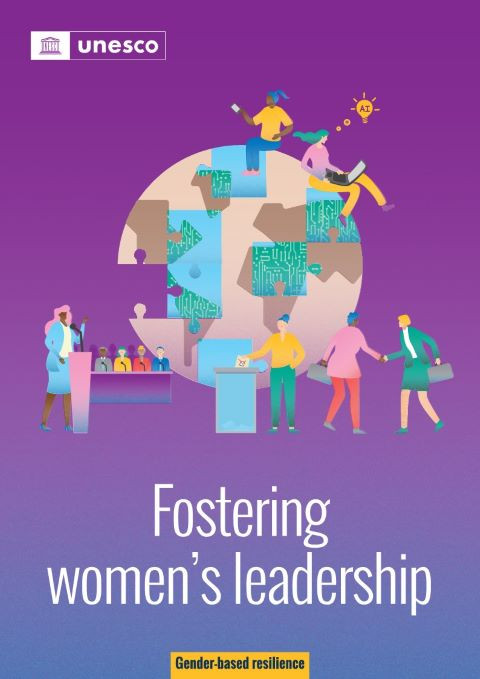 Fostering Women's Leadership 出版年份: 2024 作者: Mariagrazia Squicciarini | Anna Rita Manca | Garance Sarlat 机构作者: UNESCO No (leadership) share no gain (for societies and economies)! Leveraging UNESCO’s unique Gender-Based Resilience Framework, this report explores the role of women in leadership positions in both decision-making and high-tech, including in artificial intelligence-related innovations. It further highlights progress towards the G20 Brisbane Target, aimed to accelerate progress on gender equality by reducing the gender gap in labour market participation rates by 25% by 2025. Women remain underrepresented in decision-making, holding only about 26% of seats in national parliaments worldwide on average. In the world of work, female labour participation continues to lag behind men’s, at 47% for women against 72% for men on average. Despite progress by G20 members towards the Brisbane Target, a 2% average gap in absolute terms remained to be filled in 2022. In the high-tech world, women make up only 30% of AI professionals, and even less of leaders. Female inventors in AI account for about 37% of patents filed in 2022-23.
 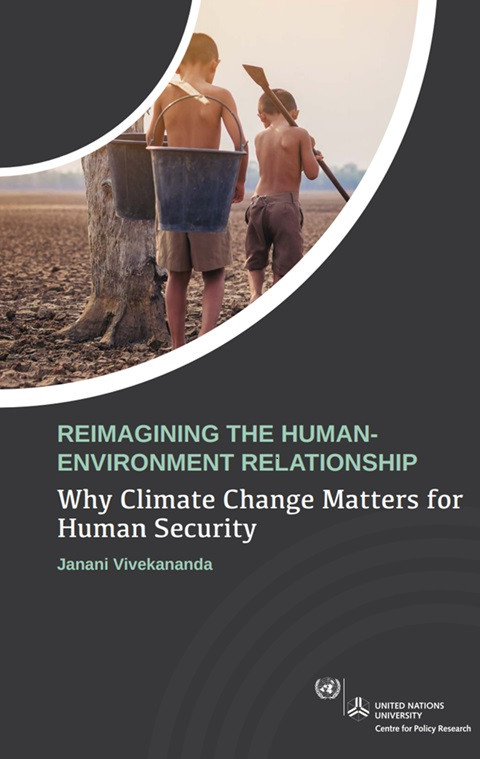 Why Climate Change Matters for Human Security 出版年份: 2022 作者: Janani Vivekananda 机构作者: United Nations University | United Nations Environment Programme (UNEP) This paper outlines the state of knowledge regarding security risks related to climate change, synthesizing the existing scientific evidence to set out five broad pathways of risk. Climate change itself is rarely a direct cause of conflict. Yet, there is ample evidence that its effects exacerbate important drivers and contextual factors of conflict and fragility, thereby challenging the stability of states and societies. Climate change impacts such as coral bleaching, diversity loss, and erratic rainfall can stress livelihoods and drive displacement, increase resource conflicts, and challenge the security and stability of people and states worldwide. Managing these security risks requires action across the entire impact chain: work to mitigate climate change; reducing its consequences on ecosystems; adapting socioeconomic systems; better management of climate-induced heightened resource competition; and strengthening governance and conflict management institutions. And every dimension of the response must be conflict-sensitive and climate proof. Without the right responses, climate change will mean more fragility, less peace and less security. But this paper sets out illustrative examples of how, with a greater understanding of how climate change interacts with social, political, economic and environmental drivers of conflict and fragility, we will be better placed to make the kind of risk-informed decisions is integral to achieving international peace and security.
  기후변화와 북한인권: 실태 및 협력방안 - SDGs 매개의 남북인권협력 관점에서 - 出版年份: 2022 作者: 이규창 | 김에스라 | 나용우 | 최현아 机构作者: 통일연구원 글로벌 이슈인 기후변화는 생태계 및 환경뿐만 아니라 건강, 감염병, 경제, 주거, 식수 등 인간 삶의 상당한 영역에 영향을 미치고 있다. 기후변화는 재해‧ 재난의 빈도 및 강도의 증대로 이어져 최근에는 기후위기라는 용어가 회자되고 있으며 더 나아가 기후재앙이라는 용어도 사용되고 있다. 국제사회는 기후변화가 인권에 미치는 영향을 주목하고 이에 대응하기 위하여 노력을 기울이고 있다. 그 모습은 유엔인권최고대표사무소 (OHCHR)의 ‘기후변화와 인권의 관계에 관한 보고서’ 발표, 유엔 인권이사회의 ‘인권과 기후변화’ 결의 채택, ‘기후변화 맥락에서의 인권증진 및 보호에 관한 특별보고관’ 임명 등으로 나타나고 있다. 이 같은 배경에서 본 연구보고서는 기후문제가 북한인권에 미치는 영향과 실태 및 남북협력방안을 연구 내용으로 다루고 있다. 본 저작물은 통일연구원에서 2022년 작성하여 공공누리 제4유형으로 개방한 '기후변화와 북한인권: SDGs 매개의 남북인권협력 관점에서(작성자:이규창 외)'를 이용하였으며, 해당 저작물은 통일연구원 홈페이지(https://www.kinu.or.kr/)에서 무료로 내려받으실 수 있습니다.