
相关资源
探索丰富的全球公民教育资源,深化理解,促进研究、倡导、教学与学习。
共找到662条结果
 Education aux droits de l'homme 出版年份: 2013 机构作者: UNESCO The Education Sector is called to implement a significant and broad mandate, covering many challenging issues in education in a diverse and fast-changing world. More than ever, we need to better focus and ensure greater cohesion in implementing this mandate. This document is part of a series of Technical Notes that have been developed by colleagues in the Education Sector in order to facilitate programme delivery in thematic areas related to the work of the Sector. The Technical Notes are meant to serve as a quick reference tool for UNESCO staff, providing a brief overview including basic knowledge, key priorities for UNESCO and future directions as well as practical information on each topic. Education sector technical notes: human rights education 出版年份: 2013 机构作者: UNESCO Human rights are enshrined in international law, and states have an obligation to respect, protect and fulfil them. Despite this, human rights violations remain widespread. ◗ Educating children and adults on human rights is essential. Individuals and groups must understand their rights in order to see them upheld and to ensure that their own behavior does not compromise the rights of others. ◗ States have an obligation to promote human rights and human rights education is now recognized as a right in itself. ◗ UNESCO, along with the Office of the United Nations High Commissioner for Human Rights, co-leads the World Programme for Human Rights Education (2005-ongoing). Notes techniques du secteur de l'éducation: education au changement climatique 出版年份: 2013 机构作者: UNESCO Climate change is a major challenge to sustainable development. The ten hottest years on record have occurred since 1998. Sea-levels are rising. Rainfall patterns are changing, causing droughts and floods. Extreme weather events such as storms, cyclones and heat waves are becoming more frequent and intense. Climate change poses a number of interconnected challenges, including water security, rising pressures on food production and health and disaster risks. ◗ Climate change disproportionately affects developing countries and vulnerable people within those countries, thereby seriously threatening progress towards the Millennium Development Goals (MDGs) and Education for All (EFA). It is already having a reverse impact on enrolment rates, the delivery of quality education and safe learning environments. ◗ Education has a key role to play in concerted local and global climate change mitigation and adaptation efforts. ◗ UNESCO promotes climate change education within the overall context of Education for Sustainable Development (ESD). ◗ UNESCO supports Member States in building the capacity of policy makers and educators to enhance the education sector response to climate change. ◗ Closer alignment of Climate Change Education with Disaster Risk Reduction (DRR) education contributes to safeguarding development gains and building resilience in countries vulnerable to the negative impacts of climate change. Education sector technical notes: climate change education 出版年份: 2013 机构作者: UNESCO Climate change is a major challenge to sustainable development. The ten hottest years on record have occurred since 1998. Sea-levels are rising. Rainfall patterns are changing, causing droughts and floods. Extreme weather events such as storms, cyclones and heat waves are becoming more frequent and intense. Climate change poses a number of interconnected challenges, including water security, rising pressures on food production and health and disaster risks. ◗ Climate change disproportionately affects developing countries and vulnerable people within those countries, thereby seriously threatening progress towards the Millennium Development Goals (MDGs) and Education for All (EFA). It is already having a reverse impact on enrolment rates, the delivery of quality education and safe learning environments. ◗ Education has a key role to play in concerted local and global climate change mitigation and adaptation efforts. ◗ UNESCO promotes climate change education within the overall context of Education for Sustainable Development (ESD). ◗ UNESCO supports Member States in building the capacity of policy makers and educators to enhance the education sector response to climate change. ◗ Closer alignment of Climate Change Education with Disaster Risk Reduction (DRR) education contributes to safeguarding development gains and building resilience in countries vulnerable to the negative impacts of climate change.
 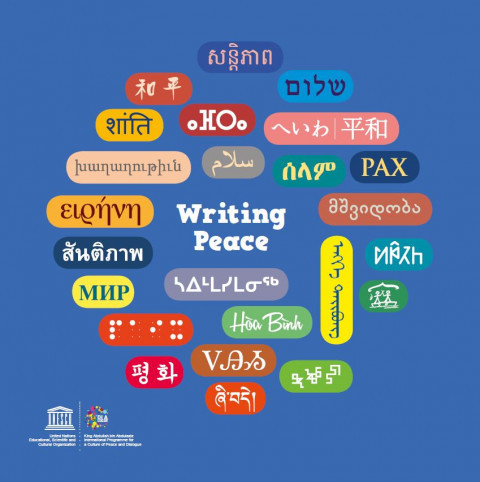 J'écris la paix 出版年份: 2017 作者: Eric Cattelain 机构作者: Organisation des Nations Unies pour l'éducation, la science et la culture (UNESCO) J’écris la Paix est un manuel qui invite le jeune public à découvrir les écritures contemporaines à travers un échantillon d’entre elles. Son but est de partir à la découverte du monde et de le rendre un peu plus proche, un peu plus familier. J’écris la Paix encourage les enfants (de 8 à 18 ans) à prendre conscience de l'interdépendance des cultures en se familiarisant avec les systèmes d'écriture contemporains, leur histoire et leurs emprunts mutuels.Le manuel contient 24 fiches d'activités. Chaque section présente les caractères d'un système d'écriture, un texte d'introduction et un contexte historique, le mot "paix" et le mot "bonjour", les langues associées au(x) système(s), et une activité dont les réponses apparaissent en fin de manuel.Six mille ans après l'avènement de l'écriture, que savons-nous des autres, de leurs systèmes de pensée et des transcriptions de leurs écritures? Comment les différents systèmes d'écriture peuvent-ils contribuer à une meilleure compréhension du monde et de la place que nous y occupons? En commençant par la découverte de ces scripts et de leur beauté fascinante, le manuel relie les enfants à la diversité, leur ouvrant ainsi les yeux sur le concept de paix et sur la conscience que nous en avons. Escribir la Paz 出版年份: 2017 作者: Eric Cattelain 机构作者: Organización de las Naciones Unidas para la Educación, la Ciencia y la Cultura (UNESCO) Escribir la Paz es un manual que invita a un público infantil y juvenil a descubrir las escrituras contemporáneas a través de una muestra de ellas. Tiene por objeto explorar el mundo, volviéndolo más cercano y más familiar. Escribir la Paz ayuda a niños y jóvenes de 8 a 18 años a tomar conciencia de la interdependencia de las culturas, familiarizándose con los sistemas de escritura contemporáneos, su historia y sus aportes mutuos. El manual incluye 24 fichas de actividades. Cada sección presenta los caracteres de un sistema de escritura, un texto introductorio y un contexto histórico, las palabras “Paz” y “Hola”, los idiomas asociados a las distintas escrituras, y una actividad cuyas respuestas se presentan al final del manual. Seis mil años después de la aparición de la escritura, ¿qué sabemos de los demás, de sus sistemas de pensamiento y la transcripción de sus escrituras? ¿De qué manera pueden los distintos sistemas de escritura contribuir a un mejor conocimiento del mundo y del lugar que ocupamos en él? Empezando por el descubrimiento de estas escrituras y su fascinante belleza, el manual conecta a los jóvenes con la diversidad y les sensibiliza al concepto de paz y a la conciencia que de él tenemos. أكتب السلام 出版年份: 2017 作者: Eric Cattelain 机构作者: منظمة الأمم المتحدة للتربية والعلم والثقافة (UNESCO) يدعو كتيب "أكتب السلام" فئة القراء الصغار إلى اكتشاف الكتابات الحديثة من خلال التعريف بلغات مختلفة. كما نسعى من خلال ذلك إلى التعايش مع الاختلاف ليبدو العالم أكثر قربا وحيوية. يشجع كتيب "أكتب السلام" الأطفال الذين تتراوح أعمارهم بين 8 ـ 14 سنة على الاطلاع على مختلف أشكال الترابط والتفاعل بين الثقافات من خلال تعريفهم بأنظمة الكتابة وتاريخها والاقتباسات المتبادلة بينها.يحتوي الكتيب على 24 ورقة نشاط حيث يعرض كل جزء حروف أحد أنظمة الكتابة المدرجة في الكتيب من جهة، ومن جهة أخرى، نصَا تعريفيّا بها وبخلفيتها التاريخية، إضافة إلى كلمة "السلام" وكلمة "مرحبا" واللغة أو اللغات المرتبطة بتلك الأنظمة. كما يحتوي كل جزء على نشاط معرفي تتوفر أجوبته في آخر الدليل.بعد مرور 6000 سنة على مجيء الكتابة، ما الذي نعرفه عن الآخرين، عن أنظمتهم الفكرية وعن كيفية تناقل أنظمتهم الخطيّة؟ كيف لهذه الأنظمة المختلفة أن تساهم في تقديم معرفة أفضل عن العالم وعن موقعنا فيه؟ نسعى من خلال افتتاحنا للكتاب بآليات التعلم حول تلك الأنظمة وجمالها الأخاذ ربط إدراك الأطفال بالتنوع والانفتاح على مفهوم السلام والوعي به. Writing Peace 出版年份: 2017 作者: Eric Cattelain 机构作者: UNESCO “Writing Peace” is a manual that invites young audiences to discover contemporary writings through the introduction of various languages. Its goal is to make the world appear a little closer and a little more familiar. "Writing Peace" encourages children (ages8 to 14) to become aware of the interdependence of cultures through familiarization with contemporary writing systems, their history, and their borrowings.The manual contains 24 activity sheets. Each section presents the characters of a writing system, an introductory text and historical background, the word “peace” and the word “hello,” the language(s) attached to the system(s), and an activity whose answers appear at the end of manual.Six thousand years after the advent of writing, what do we know about others, their systems of thought, and the transcriptions of their writing systems? How can different writing systems contribute to a better understanding of the world and our place within it? By beginning to learn about these writings and their fascinating beauty, the manual connects children to diversity, thus opening their eyes to the concept of peace and our awareness of it.
  UNESCO GCED eNewsletter Issue 4 出版年份: 2016 机构作者: UNESCO Feature: Mobilizing support for global citizenship and sustainable development through Education Target 4.7 UNESCO 1974 Recommendation used to measure progress towards education target 4.7 Measuring progress towards 4.7 Gyeongju Action Plan: NGOs join UNESCO Global capacity-building workshop on GCED organized by APCEIU Southern Africa Regional Meeting on GCED convened in Johannesburg, South Africa UNESCO launches Teacher's Guide on the Prevention of Violent Extremism Expert meeting on the Prevention of Violent Extremism through Education European ministers back education for democracy to counter extremism and racaism UN discusses innovative solutions to prevent violent extremism through education UNESCO's YESPeace Network taps the power of youth worldwide to change the future GCED Topics and Learning Objectives available in seven languages. Discours du Sous-Directeur général de l'UNESCO pour la culture M. Francesco Bandarin à l'occasion de la Journée internationale de la langue maternelle: Les langues locales pour la citoyenneté mondiale: zoom sur la science; UNESCO, le 21 février 2014 出版年份: 2014 机构作者: UNESCO This is an address by Mr. Francesco Bandarin, Assistant Director-General for culture of UNESCO, on the occasion of the International Mother Language Day: Local languages for global citizenship: focusing on science. Although little progress has been made to extend the benefits of multilingual education in the areas such as science, development of science will be considerably consolidated if people better understand and utilize local and international languages.