
相关资源
探索丰富的全球公民教育资源,深化理解,促进研究、倡导、教学与学习。
共找到662条结果
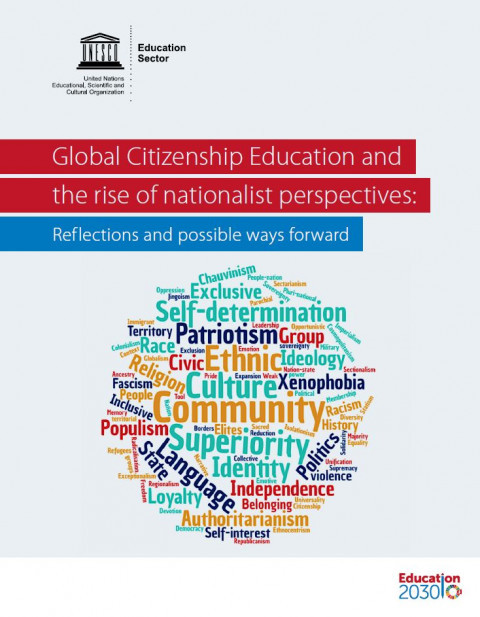 세계시민교육과 민족주의적 관점의 부상: 성찰과 나아갈 길 出版年份: 2018 机构作者: 유네스코 | 유네스코 아시아태평양 국제이해교육원 지난 몇 년간 많은 이들이 전 세계에서 민족주의적 관점의 부상을 목도해왔다. 이에 관해 평론가들은 배타성과 외국인 공포증, 때로 인종주의적 주장과 공공장소 내 폭력적 행위가 증가하고 있는 것뿐만 아니라, 일부 국가에서 경제적 보호주의에 더욱 중점을 두는 현상에 대해 언급해왔다. 이러한 추세는 교육의 역할에 대해 많은 의문을 불러일으키고 있으며, 특히 평화롭고 공정한 사회의 발전에 필요한 능력·가치·태도 함양을 목적으로 하는, 유네스코 교육 분야의 핵심 사업인 세계시민교육(GCED, Global Citizenship Education)에 있어 심각한 도전이 되고 있다. 이 책에서는 민족주의적 관점이 부상하고 있다는 증거 및 그 원인을 규명하고, 이러한 현상으로부터 세계시민교육이 어떠한 도전을 받고 있는지를 보여주고자 한다. 이 책은 유네스코의 사업과 더불어 세계시민교육을 추진하는 다른 교육 종사자들에게 앞으로 나아갈 수 있는 방안을 권고하고자 한다.
  Notes techniques du secteur de l’éducation: Education en vue du Développement Durable (EDD) 出版年份: 2013 机构作者: UNESCO The Education Sector is called to implement a significant and broad mandate, covering many challenging issues in education in a diverse and fast-changing world. More than ever, we need to better focus and ensure greater cohesion in implementing this mandate. This document is part of a series of Technical Notes that have been developed by colleagues in the Education Sector in order to facilitate programme delivery in thematic areas related to the work of the Sector. The Technical Notes are meant to serve as a quick reference tool for UNESCO staff, providing a brief overview including basic knowledge, key priorities for UNESCO and future directions as well as practical information on each topic. Prix UNESCO de l'éducation pour la paix, 2008 出版年份: 2009 机构作者: UNESCO The UNESCO Prize for Peace Education 2008 was awarded to the Institute for Justice and Reconciliation (South Africa) by Mr Koïchiro Matsuura, Director-General of UNESCO, on the recommendation of the International Jury of the Prize. The prize-giving ceremony, organized as part of the celebrations of the International Day of Peace (21 September), the International Decade for a Culture of Peace and Non-Violence for the Children of the World (2001- 2010) and the 60th anniversary of the Universal Declaration of Human Rights, was held at UNESCO Headquarters on 18 September 2008 in the presence of Mr Mohammed Arkoun, President of the International Jury, and H.E. Mr Javier Pérez de Cuéllar, member of the International Jury, former Prize laureates, Permanent Delegates of Member States and representatives of governmental and non-governmental organizations. The award ceremony was preceded by the screening of an excerpt from the documentary Truth, Justice, Memory: South Africa’s Truth and Reconciliation Process and by a video message from Archbishop Emeritus Desmond Tutu, winner of the 1984 Nobel Peace Prize for his role as a unifying leader in the campaign to resolve the problem of apartheid in South Africa, and former Chairperson of South Africa’s Truth and Reconciliation Commission
  UNESCO prize for peace education, 2008 出版年份: 2009 机构作者: UNESCO The UNESCO Prize for Peace Education 2008 was awarded to the Institute for Justice and Reconciliation (South Africa) by Mr Koïchiro Matsuura, Director-General of UNESCO, on the recommendation of the International Jury of the Prize. The prize-giving ceremony, organized as part of the celebrations of the International Day of Peace (21 September), the International Decade for a Culture of Peace and Non-Violence for the Children of the World (2001- 2010) and the 60th anniversary of the Universal Declaration of Human Rights, was held at UNESCO Headquarters on 18 September 2008 in the presence of Mr Mohammed Arkoun, President of the International Jury, and H.E. Mr Javier Pérez de Cuéllar, member of the International Jury, former Prize laureates, Permanent Delegates of Member States and representatives of governmental and non-governmental organizations. The award ceremony was preceded by the screening of an excerpt from the documentary Truth, Justice, Memory: South Africa’s Truth and Reconciliation Process and by a video message from Archbishop Emeritus Desmond Tutu, winner of the 1984 Nobel Peace Prize for his role as a unifying leader in the campaign to resolve the problem of apartheid in South Africa, and former Chairperson of South Africa’s Truth and Reconciliation Commission Allocution de M. Koïchiro Matsuura, Directeur Général de l'UNESCO, à l'Occasion du Séminaire International sur l'Education au Changement Climatique, UNESCO, 27 Juillet 2009 出版年份: 2009 机构作者: UNESCO This document is the address of Mr Mr Koïchiro Matsuura, Director-General of UNESCO, on the occasion of the International Seminar on Climate Change Education; UNESCO, 27 July 2009. He presented the climate change issues and highlighted the importance of education for sustainable future. Address by Mr Koïchiro Matsuura, Director-General of UNESCO, on the occasion of the International Seminar on Climate Change Education; UNESCO, 27 July 2009 出版年份: 2009 机构作者: UNESCO This document is the address of Mr Mr Koïchiro Matsuura, Director-General of UNESCO, on the occasion of the International Seminar on Climate Change Education; UNESCO, 27 July 2009. He presented the climate change issues and highlighted the importance of education for sustainable future. Address by Mr Koïchiro Matsuura, Director-General of UNESCO, on the occasion of the International Seminar on Climate Change Education; UNESCO, 27 July 2009 出版年份: 2009 机构作者: UNESCO Ce document est l'adresse de M. Koïchiro Matsuura, Directeur général de l'UNESCO, à l'occasion du Séminaire international sur les changements climatiques de l'éducation; UNESCO, le 27 Juillet 2009. Il a présenté les questions liées au changement climatique et a souligné l'importance de l'éducation pour un avenir durable. Escuelas asociadas de la UNESCO news infos: educación sobre el cambio climático 出版年份: 2009 机构作者: UNESCO As the United Nations Climate Change Conference takes place on December 7 to 18 2009 in Copenhagen, Denmark, this special issue will focus on selected climate change education activities carried out by the ASP network around the globe. Climate change is one of the most urgent challenges of sustainable development and a key action theme in the UN Decade of Education for Sustainable Development (DESD). ASPnet schools around the world work on Climate Change Education in order to enable students to make informed and responsible decisions, turn passive awareness into behaviour change and make sustainable behaviours a daily habit. The development of good practices and innovative educational materials in climate change education is a key element in ASPnet’s strategy to meet the pressing educational needs of the future generation. This newsletter highlights only a few of the large number of activities of ASPnet worldwide. Ecoles associées de l'UNESCO news infos: l'éducation au changement climatique 出版年份: 2009 机构作者: UNESCO As the United Nations Climate Change Conference takes place on December 7 to 18 2009 in Copenhagen, Denmark, this special issue will focus on selected climate change education activities carried out by the ASP network around the globe. Climate change is one of the most urgent challenges of sustainable development and a key action theme in the UN Decade of Education for Sustainable Development (DESD). ASPnet schools around the world work on Climate Change Education in order to enable students to make informed and responsible decisions, turn passive awareness into behaviour change and make sustainable behaviours a daily habit. The development of good practices and innovative educational materials in climate change education is a key element in ASPnet’s strategy to meet the pressing educational needs of the future generation. This newsletter highlights only a few of the large number of activities of ASPnet worldwide. UNESCO associated schools news infos: climate change education 出版年份: 2009 机构作者: UNESCO As the United Nations Climate Change Conference takes place on December 7 to 18 2009 in Copenhagen, Denmark, this special issue will focus on selected climate change education activities carried out by the ASP network around the globe. Climate change is one of the most urgent challenges of sustainable development and a key action theme in the UN Decade of Education for Sustainable Development (DESD). ASPnet schools around the world work on Climate Change Education in order to enable students to make informed and responsible decisions, turn passive awareness into behaviour change and make sustainable behaviours a daily habit. The development of good practices and innovative educational materials in climate change education is a key element in ASPnet’s strategy to meet the pressing educational needs of the future generation. This newsletter highlights only a few of the large number of activities of ASPnet worldwide.