
相关资源
探索丰富的全球公民教育资源,深化理解,促进研究、倡导、教学与学习。
共找到1,450条结果
 Educación científica: Nuevas metodologías para una sociedad cambiante (Revista Ibero-americana de Educação; vol. 87, núm. 1) 出版年份: 2021 作者: F. Javier Perales | David Aguilera 机构作者: Organización de Estados Iberoamericanos para la Educación, la Ciencia y la Cultura (OEI) Una sociedad tan cambiante como la nuestra necesita de cambios (innovaciones) y adaptaciones en el ámbito educativo que permitan compaginar lo académico con las demandas sociales. Este primer monográfico estimamos que resulta representativo de la riqueza y diversidad de las propuestas recibidas que, a su vez, constituyen un muestrario de la pujanza de la comunidad de docentes e investigadores en su afán de hacer de la enseñanza de las ciencias una oferta atractiva y eficiente para las nuevas generaciones.
  Climate Change Adaptation Policy, 10 years: Tracking Adaptation and Suggesting the Way Forward (Ⅲ) 出版年份: 2021 作者: YoungiI Song | Jiyoung Shin | Jinhan Park | Songmi Park | Mirae Kim 机构作者: Korea Environment Institute (KEI) This study suggested the direction of preparing and wrote the climate change adaptation gap report by sector. This study defined the adaptation gap as the degree of implementation compared to the adaptation goal and evaluated the effect of reducing climate change risk.This study prepared a climate change adaptation gap report through the process of selecting representative indicators, setting adaptation goals, and analyzing national climate change adaptation policies for five sectors: forest/ecosystem, agriculture and fisheries, water, health, and territory/coast.Through the writing of the climate change adaptation gap report, We identified the insufficient climate change adaptation measures and suggested the policy directions to effectively reduce climate change risk and ensure the effectiveness of future climate change adaptation policies.As a result, we emphasized the climate change adaptation efforts are needed, such as establishing climate change adaptation policies directly related to climate change risk, building the data to understand the effectiveness of climate change adaptation measures, and setting goals for climate change adaptation. 기후변화 적응정책 10년: 현주소 진단과 개선방안 모색을 중심으로 (Ⅲ) 出版年份: 2021 作者: 송영일 | 신지영 | 박진한 | 박송미 | 김미래 机构作者: 한국환경연구원 IPCC 제5차 평가보고서(2013년) 발간 이후 8년만인 올해 발간된 제6차 평가보고서에서는 전 세계 평균기온이 산업혁명 이전보다 1.09℃ 증가한 것으로 발표하였는데, 이는 제5차 보고서 발간 당시 발표한 0.78℃에 비하여 0.31℃가 증가한 것입니다. 전 세계적으로 온실가스 발생을 감축하기 위해 꾸준히 노력해 왔음에도 불구하고 지난 8년 정도의 시간 동안 이와 같은 기온상승이 있었습니다. 이는 기후변화가 우리의 생각보다 빨리 진행되고 있으며 이미 배출된 온실가스만으로도 기후변화가 지속적으로 발생할 수 있다는 사실을 뒷받침합니다. 신 기후체제의 근간이 되는 파리협정에서는 감축과 함께 적응을 중요한 기후변화 대응방안으로 평가하고 있습니다.우리나라에서는 기후변화의 부정적 영향에 대비하고 기후탄력성을 키워 기후 안전 사회를 이루기 위하여 2010년부터 적응정책을 이행하고 있습니다. 지난 10년간 적응정책 이행 과정에서 발생한 성과와 한계를 진단하고 이를 토대로 개선방안을 제시하기 위하여 총 3년에 걸쳐 본 과제가 수행되었습니다. 3년 차인 2021년에는 제도적 측면의 평가와 기후변화 리스크 저감 효과 측면에서 적응정책을 살펴보았습니다. 본 연구에서 도출한 해외주요 국가들과의 적응정책 비교·분석 결과 및 적응목표와 이행 정도에 대한 갭(gap) 분석 결과는 적응정책을 개선하고 실효성을 높이는 데 이바지할 것으로 기대합니다. * 본 저작물은 한국환경연구원에서 '2021'년에 작성하여 공공누리 제'4'유형으로 개방한 ‘기후변화 적응정책 10년: 현주소 진단과 개선방안 모색을 중심으로 (Ⅲ)(작성자: 송영일 외)’를 이용하였으며 해당 저작물은 한국환경연구원 홈페이지(http://www.kei.re.kr)’에서 무료로 다운받으실 수 있습니다.
  Teaching Students How to Learn: Setting the Stage for Lifelong Learning (Educational Practices Series No. 33) 出版年份: 2021 作者: Stella Vosniadou | Michael J. Lawson | Helen Stephenson | Erin Bodner 机构作者: UNESCO International Bureau of Education (IBE) | International Academy of Education In this Teaching How to Learn booklet, teachers can find information about some of the cognitive, metacognitive, emotional, and motivational capabilities that characterise self-regulated learners, and some of the actions that teachers can take to promote self-regulated learning in their students. These include giving students time to engage in constructive tasks independently or in collaboration with their peers and providing them with the knowledge and strategies that they can use to manage their learning and control their motivation and emotions while they complete these tasks successfully.
  Envision 4.7: Bridge 47 Global Event; Helsinki, Finland 5–7 November 2019: Report 出版年份: 2019 机构作者: Bridge 47 | Frinland. Ministry of Education and Culture | Finland. Ministry for Foreign Affairs Global event Envision 4.7 was held in Helsinki in November 2019. The event brought around 200 people together to discuss ways to take the SDG Target 4.7 forward. In this report you can find summaries of all the speeches, panel discussions, workshops and working groups that were held at the event, together with a summary of discussions around all the different topics. You can also find pictures and drawings from the event at the report.
 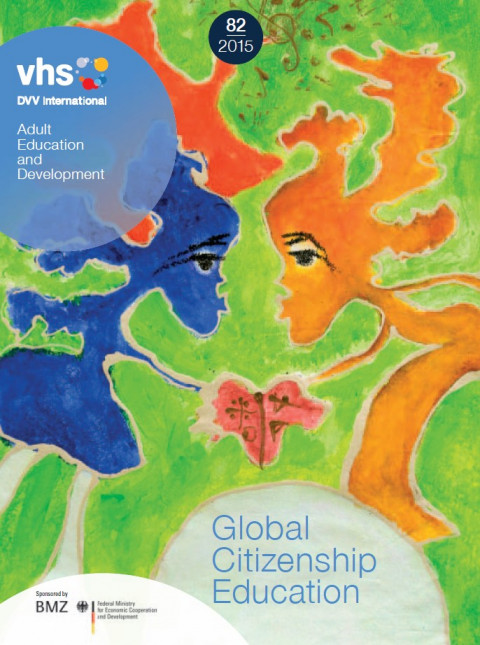 Adult education and development: global citizenship education (no 82, 2015) 出版年份: 2015 机构作者: DVV International Issue 82/2015 of the international journal Adult Education and Development (AED) explores the topic global citizenship education. In the international debates, we are witnessing a growing interest in the concept of global citizenship education. It is one of the three pillars of the Global Education First Initiative (GEFI) launched by the United Nations Secretary-General in 2012 and is being internationally promoted by the work of UNESCO. According to the GEFI, education that fosters global citizenship “must fully assume its central role in helping people to forge more just, peaceful, tolerant and inclusive societies”. The 2030 Agenda for Sustainable Development, adopted by the United Nations General Assembly in September 2015, refers to global citizenship as one tool to “ensure that all learners acquire the knowledge and skills needed to promote sustainable development”. The ambitions are high, but the concrete understanding of global citizenship education and its implications differ widely. Is it just another abstract concept? What meaning can the word citizenship have if it does not refer to a specific nation? What do people in different parts of the world understand by global citizenship? And how can global citizenship education be put into practice? Adult Education and Development decided to engage in the debate and invited authors from different regions, backgrounds and disciplines to share their thoughts and experiences on the topic and related questions such as identity, migration, peace, the meaning of citizenship, globalisation and sustainable development. Irina Bokova, Director-General of UNESCO, explains the organisation’s understanding of global citizenship education, and why adult education and “learning beyond the classrooms” are crucial when it comes to promoting global citizenship. Canadian author and journalist Doug Saunders (“Arrival City: How the Largest Migration in History Is Reshaping Our World”) talks about the challenges and opportunities of what he refers to as the last great human migration, that from the countryside to the cities, and about the positive role adult education can play during this transition. In the section “Citizens’ voices” people from all over the world talk about what global citizenship means to them and in what ways they see themselves as global citizens. And photographer Viktor Hilitksi travelled through Belarus and captured with his camera how villages rediscover their local traditions and cultures. Éducation des adultes et développement: L'éducation à la citoyenneté mondiale (ECM) (no 82, 2015) 出版年份: 2015 机构作者: DVV International Le numéro 82/2015 de la revue internationale l’Éducation des Adultes et Développement(AED) explore le sujet de l'éducation à la citoyenneté mondiale. Dans les débats internationaux, nous assistons à un intérêt croissant pour le concept d'éducation à la citoyenneté mondiale. Il est l'un des trois piliers de l'Initiative Mondiale pour l'Éducation Avant Tout (GEFI) lancé par le Secrétaire général des Nations Unies en 2012 et est promu à l'échelle internationale par le travail de l'UNESCO. Selon le GEFI, l'éducation qui favorise la citoyenneté mondiale "doit assumer pleinement son rôle central en aidant les gens à forger plus justes, des sociétés pacifiques, tolérantes et inclusives". L'Agenda 2030 pour le développement durable, adoptée par l'Assemblée générale des Nations Unies en Septembre 2015, se réfère à la citoyenneté mondiale comme un outil pour «faire en sorte que tous les apprenants à acquérir les connaissances et les compétences nécessaires pour promouvoir le développement durable». Les ambitions sont grandes, mais la compréhension concrète de L'éducation à la citoyenneté mondiale(ECM) et ses implications diffèrent largement. Est-il juste un autre concept abstrait? Quel sens le mot citoyenneté peut avoir si elle ne se réfère pas à une nation spécifique? Qu'est-ce que les gens dans les différentes parties du monde comprennent par la citoyenneté mondiale? Comment l'éducation à la citoyenneté mondiale(ECM) peut-elle être mise en pratique? Education des adultes et développement ont décidé de participer au débat et a invité les auteurs de différentes régions, milieux et disciplines à partager leurs réflexions et expériences sur le sujet et les questions connexes telles que l'identité, la migration, la paix, le sens de la citoyenneté, la mondialisation et le développement durable. Irina Bokova, Directrice générale de l'UNESCO, explique la compréhension de l'organisation de l'éducation à la citoyenneté mondiale, et pourquoi l'éducation des adultes et de «l'apprentissage au-delà des salles de classe" sont cruciales en matière de promotion de la citoyenneté mondiale. L'auteur et journaliste canadien Doug Saunders ( «La ville d'arrivée: comment la plus grande migration dans l'histoire remodèle notre monde») parle des défis et des opportunités de ce qu'il appelle la dernière grande migration humaine, celle des campagnes aux villes et Sur le rôle positif que l'éducation des adultes peut jouer au cours de cette transition. Dans la section «La voix des citoyens», des gens du monde entier parlent de ce que la citoyenneté mondiale signifie pour eux et de la manière dont ils se perçoivent comme des citoyens du monde. Et le photographe Viktor Hilitksi a parcouru la Biélorussie et a capturé avec sa caméra comment les villages redécouvrent leurs traditions et cultures locales.
  Éducation des adultes et développement: l’éducation à la citoyenneté mondiale (no 82, 2015) 出版年份: 2015 机构作者: DVV International Issue 82/2015 of the international journal Adult Education and Development (AED) explores the topic global citizenship education. In the international debates, we are witnessing a growing interest in the concept of global citizenship education. It is one of the three pillars of the Global Education First Initiative (GEFI) launched by the United Nations Secretary-General in 2012 and is being internationally promoted by the work of UNESCO. According to the GEFI, education that fosters global citizenship “must fully assume its central role in helping people to forge more just, peaceful, tolerant and inclusive societies”. The 2030 Agenda for Sustainable Development, adopted by the United Nations General Assembly in September 2015, refers to global citizenship as one tool to “ensure that all learners acquire the knowledge and skills needed to promote sustainable development”. The ambitions are high, but the concrete understanding of global citizenship education and its implications differ widely. Is it just another abstract concept? What meaning can the word citizenship have if it does not refer to a specific nation? What do people in different parts of the world understand by global citizenship? And how can global citizenship education be put into practice? Adult Education and Development decided to engage in the debate and invited authors from different regions, backgrounds and disciplines to share their thoughts and experiences on the topic and related questions such as identity, migration, peace, the meaning of citizenship, globalisation and sustainable development. Irina Bokova, Director-General of UNESCO, explains the organisation’s understanding of global citizenship education, and why adult education and “learning beyond the classrooms” are crucial when it comes to promoting global citizenship. Canadian author and journalist Doug Saunders (“Arrival City: How the Largest Migration in History Is Reshaping Our World”) talks about the challenges and opportunities of what he refers to as the last great human migration, that from the countryside to the cities, and about the positive role adult education can play during this transition. In the section “Citizens’ voices” people from all over the world talk about what global citizenship means to them and in what ways they see themselves as global citizens. And photographer Viktor Hilitksi travelled through Belarus and captured with his camera how villages rediscover their local traditions and cultures. Introducing quality assurance of education for democratic citizenship in schools - comparative study of 10 countries 出版年份: 2009 机构作者: Council of Europe For over a decade the Council of Europe has been working on policies in the field of education for democratic citizenship (EDC). One result has been that the Committee of Ministers of the Council of Europe agreed on a recommendation stating that EDC is central to educational politics, and that it is a “factor for innovation in terms of organising and managing overall education systems, as well as curricula and teaching methods” (Recommendation Rec(2002)12). According to this recommendation, European governments acknowledged their responsibility for ensuring the cultural basis of democracy through education. However, politics is not so simple that supranational recommendations are immediately translated into policy in national states. This gap between agreed and realised policies has been termed a “compliance gap”. One of the most logical reasons for noncompliance comes from a lack of awareness or competences. Therefore the Council of Europe concentrated on producing materials that could help raise awareness and develop competences. Key products resulting from this effort have been collected as an “EDC/HRE Pack” since 2005.This collection covers the areas of policy making, democratic governance of educational institutions, teacher training and quality assurance. The “Tool for Quality Assurance of Education for Democratic Citizenship in Schools” (Bîrzea et al., 2005), which is one of these materials, forms the reference document for this study.This study analyses relevant conditions and possible activities with regard to implementing the tool in 10 national educational systems. As relevant conditions, the study considers the existing attempts to deliver educational quality within countries, together with the teacher training programmes that accompany these attempts. As possible activities, national adaptations of the tool, and various ways of working with different target groups, are also taken into account.The following sections provide background information concerning the project. This will help the reader understand why the tool needs to be adapted in different circumstances. Section 2 presents points of reference that open theoretical perspectives on the work presented. Section 3 provides a rationale for the selection of participating countries and gives and describes the methodology used when conducting this study. Finally, Section 4 provides an overview of the remaining contents of this book.
  Citizens as Users of Languages and Digital Technology 出版年份: 2021 机构作者: European Centre for Modern Languages (ECML) | Council of Europe A recent meta-analysis of the literature portrays male and female citizens who are users of languages and digital technologies. This helps to understand the goals of an education aimed at developing male and female citizens capable of using digital technology in a competent, informed, safe, responsible, ethical, and critical manner.