
相关资源
探索丰富的全球公民教育资源,深化理解,促进研究、倡导、教学与学习。
共找到2,781条结果
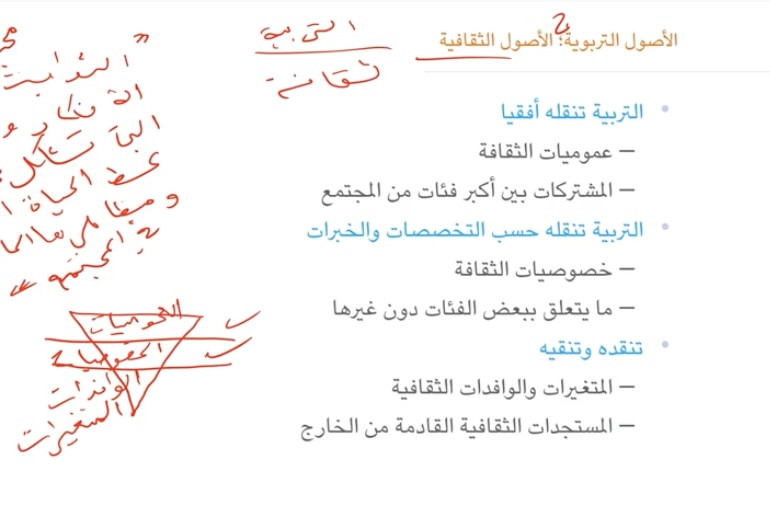 علاقة الثقافة بالتربية 出版年份: 2018 作者: Lutfi Hajlawi الفيديو عبارة عن أحد الدروس في مقرر مقدمة إلى التربية بجامعة الملك خالد. يناقش الدكتور مفهومي التربية والثقافة والعلاقة بينهما. هذا المقرر ضمن برنامج إعداد المعلمين بجامعة الملك خالد. The Relationship of Culture to Education 出版年份: 2018 作者: Lutfi Hajlawi The video is one of the lessons in an Introduction to Education course at King Khalid University. The doctor discusses the concepts of education and culture and the relationship between them. This course is part of the Teachers Preparation Program at King Khalid University.
 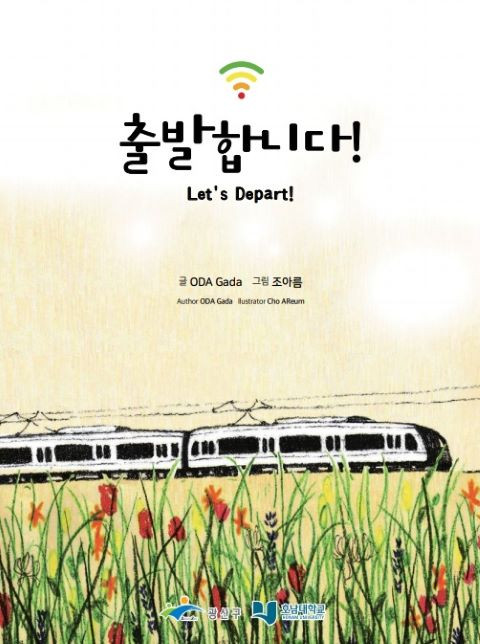 Let's Depart! 出版年份: 2021 机构作者: ODA Gada | 광진구 | 호남대학교 <Let's Go!> is the fourth illustrated book in the ‘Youth Global Citizenship Education Project’ jointly published by Gwangsan-gu Office of Gwangju and Honam University. With the theme of mental health, the main character 'Yuri' shares various emotions in 'Emotional Train', It's the process of confronting her candid feelings of her own while seeing people who receive her empathy and comfort. By using 'Wi-Fi' and 'flowers' as devices to express emotions, anyone can easily immerse themselves in the story. 출발합니다! 出版年份: 2021 作者: ODA Gada 机构作者: ODA Gada | 광진구 | 호남대학교 <출발합니다!>는 광주광역시 광산구와 호남대가 공동 진행하는 ‘청소년 세계 시민 교육 프로젝트’ 의 네번째 그림책이다. 마음건강을 주제로, '유리'라는 주인공이 '감정열차'에서 다양한 감정을 나누고, 공감과 위로를 받는 사람들을 보면서 솔직한 자신의 감정을 직면하게 되는 과정을 담았다. '와이파이'와 '꽃'을 감정을 표현하는 장치로 활용해 누구나 쉽게 이야기에 빠져들도록 했다. 본 저작물은 광주 광산구와 호남대학교에서 2021년 작성된 공공누리 제1유형으로 광산구청 누리집(www.gwangsan.go.kr/)에서 다운로드 하실 수 있습니다. Отправляется! 出版年份: 2021 作者: ODA Gada 机构作者: ODA Gada | 광진구 | 호남대학교 <Let's Go!> — четвертая иллюстрированная книга в рамках «Молодежного образовательного проекта глобальной гражданственности», совместно изданного офисом Квансан-гу Кванджу и Университетом Хонам. Что касается темы психического здоровья, главная героиня Юри делится различными эмоциями в «Эмоциональном поезде». Это процесс противостояния ее искренним чувствам, когда она видит людей, которые получают ее сочувствие и утешение. Используя «Wi-Fi» и «цветы» в качестве средств выражения эмоций, каждый может легко погрузиться в историю.
 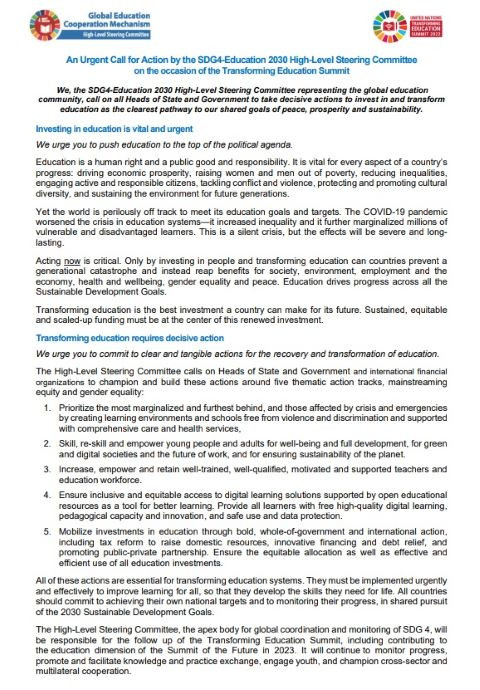 Срочный призыв к действиям Руководящего комитета высокого уровня по ЦУР 4 – «Образование-2030» по случаю Саммита по трансформации образования 出版年份: 2022 机构作者: United Nations (UN) Мы, Руководящий комитет высокого уровня ЦУР 4-Образование-2030, представляющий мировое образовательное сообщество, призываем всех глав государств и правительств предпринять решительные действия по инвестированию и преобразованию образования как наиболее четкого пути к нашим общим целям мира, процветания и устойчивости. 可持续发展目标 4—2030 年教育高级别指导委员会 在教育变革峰会之际的紧急行动呼吁 出版年份: 2022 机构作者: United Nations (UN) 我们,代表全球教育界的 SDG4-Education 2030 高级别指导委员会,呼吁所有国家元首和政府首脑采取果断行动,对教育进行投资和改造,作为实现和平、繁荣和可持续发展这一共同目标的最清晰途径 .
 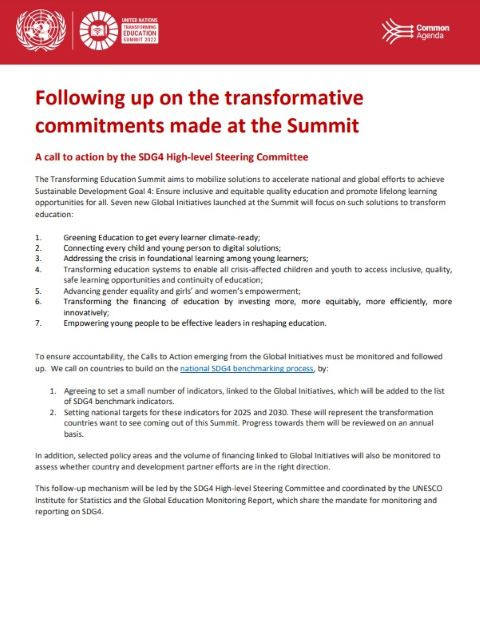 Following Up on the Transformative Commitments Made at the Summit: A Call to Action by the SDG4 High-level Steering Committee 出版年份: 2022 机构作者: United Nations (UN) The Transforming Education Summit aims to mobilize solutions to accelerate national and global efforts to achieve Sustainable Development Goal 4: Ensure inclusive and equitable quality education and promote lifelong learning opportunities for all. Seven new Global Initiatives launched at the Summit will focus on such solutions to transform education.
 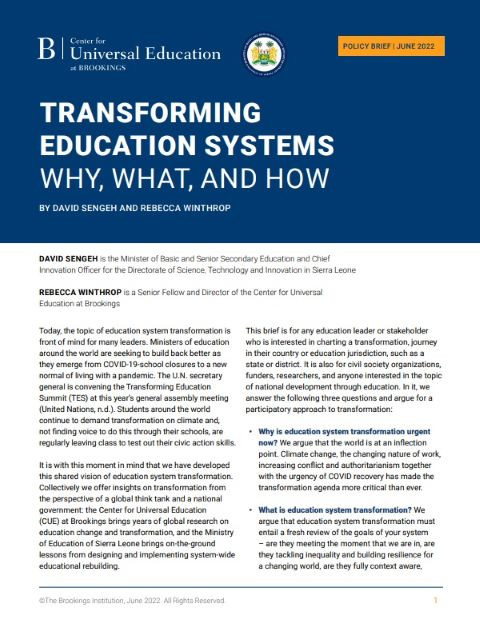 Transforming Education Systems: Why, What, and How 出版年份: 2022 作者: Rebecca Winthrop | David Sengeh 机构作者: Brookings Institution This brief is for any education leader or stakeholder who is interested in charting a transformation journey in their country or education jurisdiction such as a state or district. It is also for civil society organisations, funders, researchers, and anyone interested in the topic of national development through education. In it, the authors answer the following three questions and argue for a participatory approach to transformation: Why is education system transformation urgent now? The world is at an inflection point. Climate change, the changing nature of work, increasing conflict and authoritarianism together with the urgency of COVID recovery has made the transformation agenda more critical than ever. What is education system transformation? Education system transformation must entail a fresh review of the goals of your system – are they meeting the moment that we are in, are they tackling inequality and building resilience for a changing world, are they fully context aware, are they owned broadly across society – and then fundamentally positioning all components of your education system to coherently contribute to this shared purpose. How can education system transformation advance in your country or jurisdiction? Three steps are crucial: Purpose (developing a broadly shared vision and purpose), Pedagogy (redesigning the pedagogical core), and Position (positioning and aligning all components of the system to support the pedagogical core and purpose). Deep engagement of educators, families, communities, students, ministry staff, and partners is essential across each of these 3P steps.
 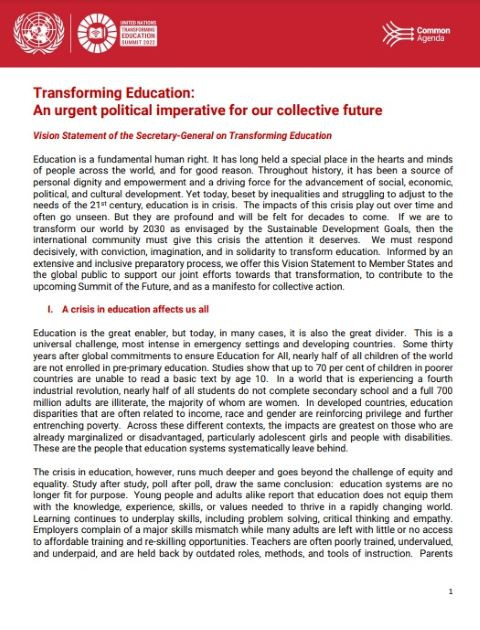 Transforming Education: An Urgent Political Imperative for Our Collective Future; Vision Statement of the Secretary-General on Transforming Education 出版年份: 2022 机构作者: United Nations (UN) Education is a fundamental human right. It has long held a special place in the hearts and minds of people across the world, and for good reason. Throughout history, it has been a source of personal dignity and empowerment and a driving force for the advancement of social, economic, political, and cultural development.Yet today, beset by inequalities and struggling to adjust to the needs of the 21st century, education is in crisis. The impacts of this crisis play out over time and often go unseen. But they are profound and will be felt for decades to come. If we are to transform our world by 2030 as envisaged by the Sustainable Development Goals, then the international community must give this crisis the attention it deserves. We must respond decisively, with conviction, imagination, and in solidarity to transform education. Informed by an extensive and inclusive preparatory process, we offer this Vision Statement to Member States and the global public to support our joint efforts towards that transformation, to contribute to the upcoming Summit of the Future, and as a manifesto for collective action.