
相关资源
探索丰富的全球公民教育资源,深化理解,促进研究、倡导、教学与学习。
共找到2,781条结果
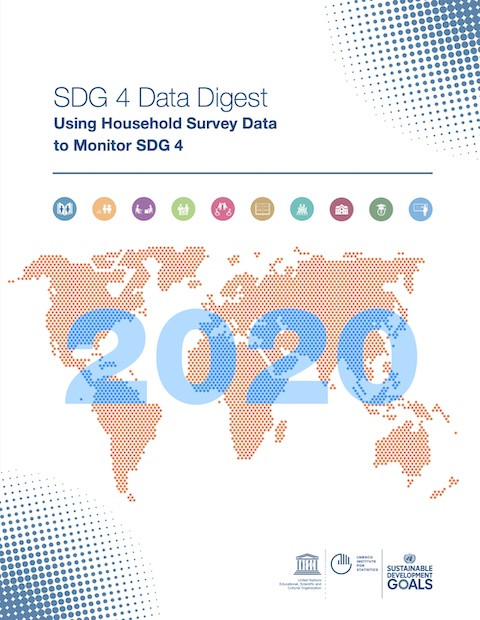 Rapport sur les données de l’ODD 4: Utiliser les données des enquêtes auprès des ménages pour le suivi de l’ODD 4 出版年份: 2020 机构作者: UNESCO Institute for Statistics (UIS) L’édition 2020 du Rapport sur les données de l’ODD 4 de l’Institut de statistique de l’UNESCO met l’accent sur les enquêtes auprès des ménages comme un outil important et sous-utilisé pour collecter les données nécessaires au suivi des progrès réalisés sur la voie de l’Objectif du développement durable 4 et pour s’assurer que personne n’est laissé pour compte. Le Rapport décrit les programmes d’enquêtes existants et offre des conseils sur la conception et la mise en œuvre de nouvelles enquêtes. Le Rapport identi e un certain nombre d’avantages à utiliser les enquêtes auprès des ménages et décrit les catégories d’indicateurs les mieux adaptées au suivi avec des données d’enquête. Les données issues des enquêtes auprès des ménages complètent les données administratives recueillies dans les écoles et peuvent être ventilées dans une plus large mesure que les données administratives a n de faciliter le suivi de l’exclusion dans l’éducation. Les définitions et les méthodes de calcul des indicateurs sélectionnés sont présentées et la combinaison des données des enquêtes sur les ménages avec les données provenant d’autres sources est expliquée. Ce numéro du Rapport s’adresse aux responsables gouvernementaux, aux plani cateurs nationaux, aux donateurs et aux autres personnes qui prennent des décisions concernant la mise en œuvre d’enquêtes sur les ménages représentatives au niveau national. Il décrit les conditions requises pour mener une enquête auprès des ménages et les étapes à suivre depuis la conception du questionnaire jusqu’à la collecte et l’analyse des données, et il donne des conseils sur la présentation des résultats. Une section sur le COVID-19 résume l’impact de la pandémie actuelle sur la collecte de données. Des ressources supplémentaires, avec des suggestions de questions d’enquête pour la collecte de données sur l’éducation par le biais d’enquêtes auprès des ménages, sont également incluses.
 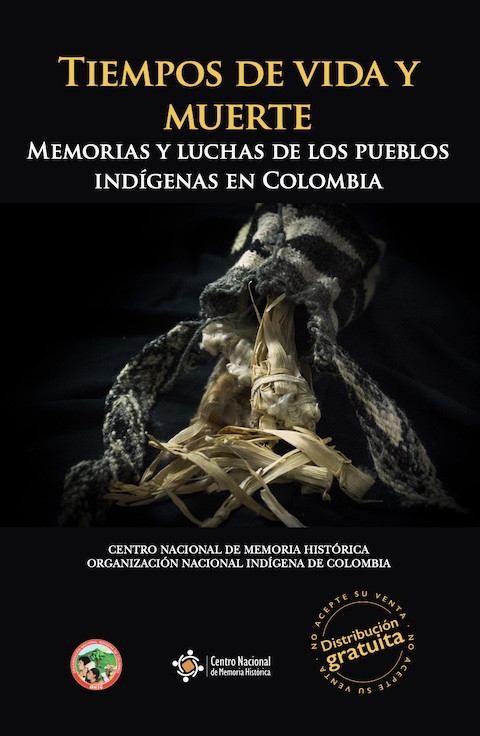 Times of Life and Death: Memories and Struggles of Indigenous Peoples in Colombia 出版年份: 2019 机构作者: National Center for Historical Memory | National Indigenous Organization of Colombia This book presents research carried out by the National Center for Historical Memory and the national Indigenous organization of Colombia. This stories broaden the view on the conflict and the construction of the State in Colombia. It transcends the confrontation between armed actors in the recent conflict in the country, to expand the understanding of who we are and what we have been as a diverse and multicultural nation. Tiempos de vida y muerte: Memorias y luchas de los pueblos indígenas en Colombia 出版年份: 2019 机构作者: National Center for Historical Memory | National Indigenous Organization of Colombia Este libro presenta investigaciones realizada por el Centro Nacional de Memoria Histórica y la Organización Nacional Indígena de Colombia. Con este relato se amplía la mirada sobre el conflicto y el proceso de construcción de estado en Colombia, que trasciende la confrontación entre actores armados en el conflicto reciente del país, para ampliar la comprensión de lo que somos y lo que hemos sido como nación diversa y multicultural.
 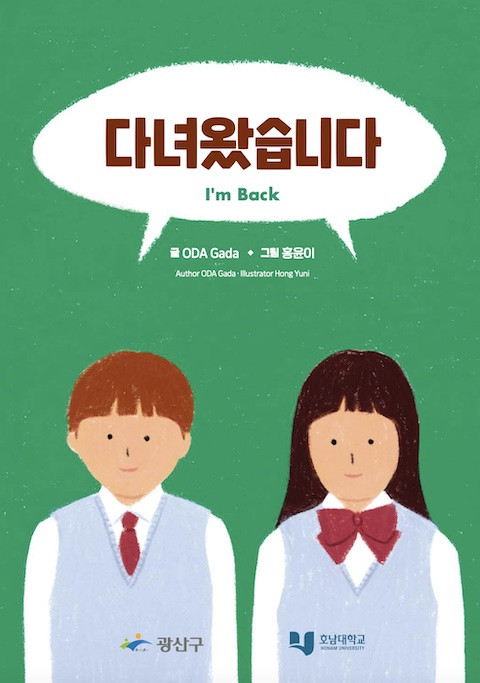 I'm Back 出版年份: 2020 机构作者: ODA Gada | 광진구 | 호남대학교 〈I'm back〉 is the third illustrated book in the ‘Rainbow Youth Global Citizen Project’ jointly published by Gwangsan-gu Office of Gwangju and Honam University. Youths need gender equality education to become members of community that respect diversity. This book was made more meaningful as we listened directly to the stories of adolescents, the main audience of this book, and the contents were created with them from the composition stage through workshops. The participating teenagers were a great help to the publication of this book as they actively voiced their opinions. 다녀왔습니다 出版年份: 2020 机构作者: ODA Gada | 광진구 | 호남대학교 <다녀왔습니다>는 광주광역시 광산구와 호남대가 공동 진행하는 ‘청소년 세계 시민 교육 프로젝트’ 의 세 번째 그림책이다. 청소년이 다양성을 존중할 수 있는 공동체 일원으로 자라나기 위해서는 성 평등 교육이 필요하다. 이 책은 책의 주 독자가 될 청소년들의 이야기를 직접 듣고, 스토리 구성 단계부터 워크숍을 통해 함께 이야기를 만들었기에 그 의미가 더 크다. 이 그림책은 청소년이 일상에서 접하는 성 고정관념의 모습들을 담았다. 집과 학교, 등하굣 길 등에서 흔히 일어나는 상황을 그려냈다.
  Inclusive Education in Kyrgyzstan (International Journal of Humanities and Natural Sciences; vol. 2-1, no. 41) 出版年份: 2020 作者: A.K. Akkojoeva The article deals with issues of inclusive education, defines the concepts of "inclusion" and "inclusive education". Special attention was paid to the analysis of approaches to the functioning of inclusive education and concepts for the implementation of inclusive education in the Kyrgyz Republic. teaching children with disabilities through inclusive education involves understanding the inclusion of a new philosophy of education that creates a modern humanistic approach to education based on the diversity of students and more individual characteristics of the child than problems, as well as the ability to jointly enrich the education of ordinary children and children with disabilities. Инклюзивное образование в Кыргызстане (Международный журнал гуманитарных и естественных наук; vol. 2-1, no. 41) 出版年份: 2020 作者: A.K. Akkojoeva В статье рассматриваются вопросы инклюзивного образования, определяются понятия «инклюзия» и «инклюзивное образование». Особое внимание было уделено анализу подходов к функционированию инклюзивного образования и концепций реализации инклюзивного образования в Кыргызской Республике. Обучение детей с ограниченными возможностями здоровья через инклюзивное образование предполагает понимание включения новой философии образования, которая создает современный гуманистический подход к образованию, в основе которого лежит многообразие учащихся и больше индивидуальных особенностей ребенка, нежели проблем, а также возможность совместно обогащать воспитание обычных детей и детей с ограниченными возможностями здоровья.
 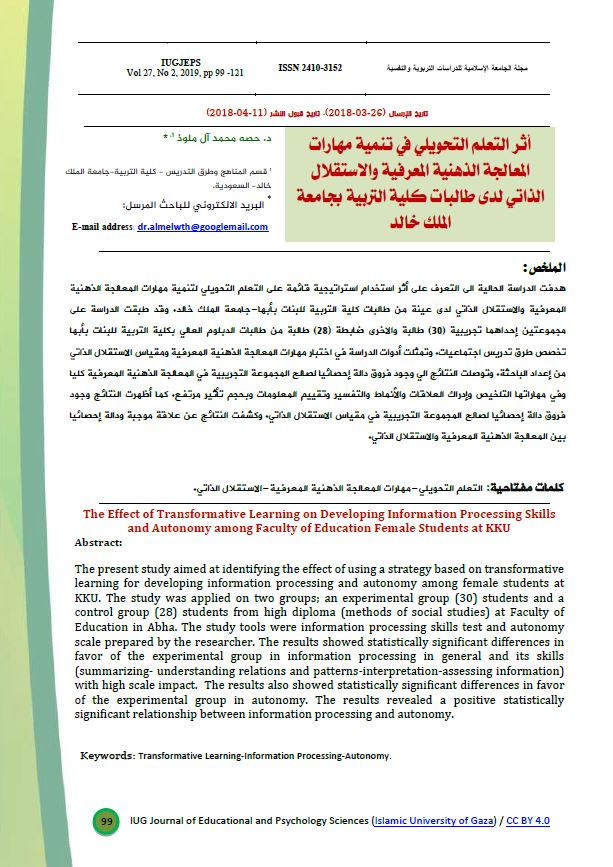 أثر التعلم التحويلي في تنمية مهارات المعالجة الذهنية المعرفية والاستقلال الذاتي لدى طالبات كلية التربية بجامعة الملك خالد 出版年份: 2019 作者: Hessa Muhammad Al Malaz 机构作者: Islamic University of Gaza هدفت الدراسة الى التعرف على أثر استخدام استراتيجية قائمة على التعلم التحويلي لتنمية مهارات المعالجة الذهنية المعرفية. استخدمت الدراسة عينة من طالبات كلية التربية للبنات بجامعة الملك خالد. كشفت الدراسة عن علاقة موجبة ودالة احصائيا بين المعالجة الذهنية المعرفية والاستقلال الذاتي. The Effect of Transformative Learning on Developing Information Processing Skills and Autonomy among Faculty of Education Female Students at KKU 出版年份: 2019 作者: Hessa Muhammad Al Malaz 机构作者: Islamic University of Gaza The study aimed to identify the effect of using a strategy based on transformational learning to develop cognitive mental processing skills. The study used a sample of students from the College of Education for Girls at King Khalid University. The study revealed a positive and statistically significant relationship between cognitive mental processing and autonomy.
 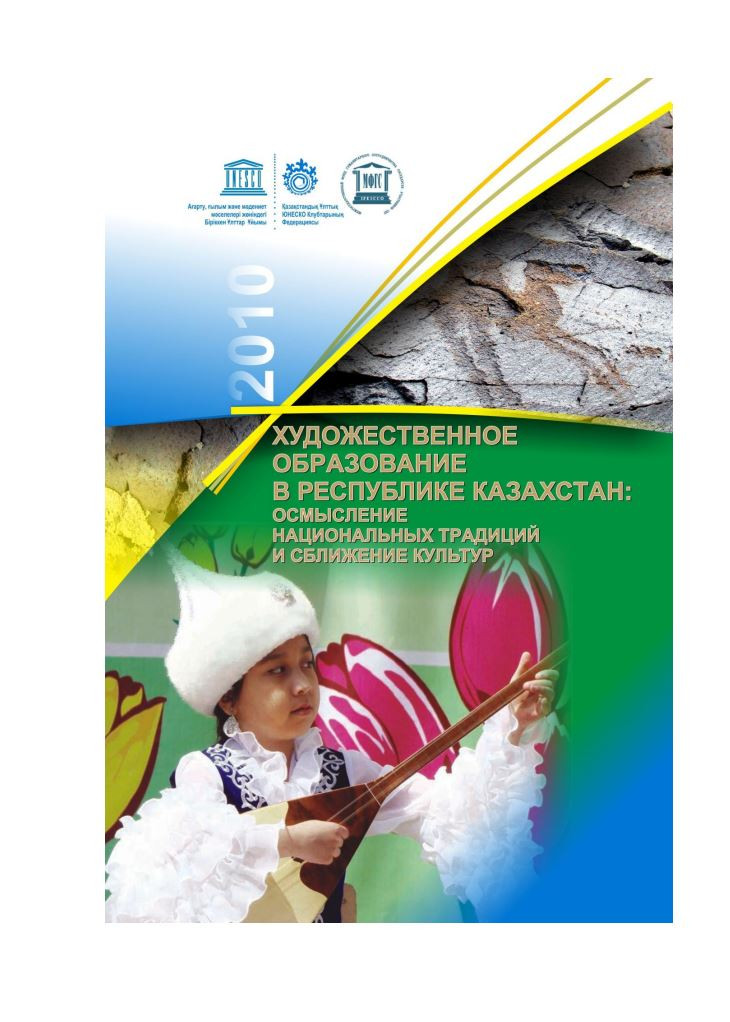 Art Education in the Republic of Kazakhstan: Perception of the National Traditions and Rapprochement of the Cultures; Research Paper 出版年份: 2010 作者: Rustam Muzafarov Kazakhstan has the unique feature of ethno-cultural diversity that appeared historically due to multi-ethnic and multi-confessional population's development. Such an environment urges the state to facilitate the revival and development of ethnic cultures and cross-cultural interaction for the benefit of national unity. The adoption of the concept of ethno-cultural education means that the creation of national education system would enhance the idea of cultural and linguistic pluralism, combining the advanced education techniques and information facilities with traditional cultural values. In fact, the educated personality feels real belonging to the historical and cultural traditions of the country.