
相关资源
探索丰富的全球公民教育资源,深化理解,促进研究、倡导、教学与学习。
共找到2,776条结果
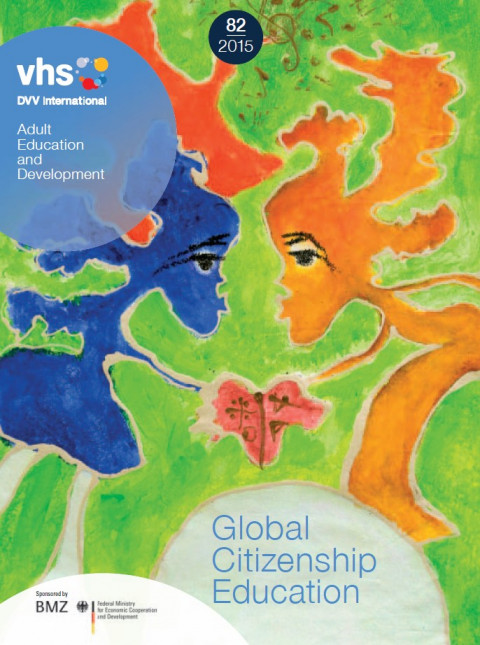 Éducation des adultes et développement: L'éducation à la citoyenneté mondiale (ECM) (no 82, 2015) 出版年份: 2015 机构作者: DVV International Le numéro 82/2015 de la revue internationale l’Éducation des Adultes et Développement(AED) explore le sujet de l'éducation à la citoyenneté mondiale. Dans les débats internationaux, nous assistons à un intérêt croissant pour le concept d'éducation à la citoyenneté mondiale. Il est l'un des trois piliers de l'Initiative Mondiale pour l'Éducation Avant Tout (GEFI) lancé par le Secrétaire général des Nations Unies en 2012 et est promu à l'échelle internationale par le travail de l'UNESCO. Selon le GEFI, l'éducation qui favorise la citoyenneté mondiale "doit assumer pleinement son rôle central en aidant les gens à forger plus justes, des sociétés pacifiques, tolérantes et inclusives". L'Agenda 2030 pour le développement durable, adoptée par l'Assemblée générale des Nations Unies en Septembre 2015, se réfère à la citoyenneté mondiale comme un outil pour «faire en sorte que tous les apprenants à acquérir les connaissances et les compétences nécessaires pour promouvoir le développement durable». Les ambitions sont grandes, mais la compréhension concrète de L'éducation à la citoyenneté mondiale(ECM) et ses implications diffèrent largement. Est-il juste un autre concept abstrait? Quel sens le mot citoyenneté peut avoir si elle ne se réfère pas à une nation spécifique? Qu'est-ce que les gens dans les différentes parties du monde comprennent par la citoyenneté mondiale? Comment l'éducation à la citoyenneté mondiale(ECM) peut-elle être mise en pratique? Education des adultes et développement ont décidé de participer au débat et a invité les auteurs de différentes régions, milieux et disciplines à partager leurs réflexions et expériences sur le sujet et les questions connexes telles que l'identité, la migration, la paix, le sens de la citoyenneté, la mondialisation et le développement durable. Irina Bokova, Directrice générale de l'UNESCO, explique la compréhension de l'organisation de l'éducation à la citoyenneté mondiale, et pourquoi l'éducation des adultes et de «l'apprentissage au-delà des salles de classe" sont cruciales en matière de promotion de la citoyenneté mondiale. L'auteur et journaliste canadien Doug Saunders ( «La ville d'arrivée: comment la plus grande migration dans l'histoire remodèle notre monde») parle des défis et des opportunités de ce qu'il appelle la dernière grande migration humaine, celle des campagnes aux villes et Sur le rôle positif que l'éducation des adultes peut jouer au cours de cette transition. Dans la section «La voix des citoyens», des gens du monde entier parlent de ce que la citoyenneté mondiale signifie pour eux et de la manière dont ils se perçoivent comme des citoyens du monde. Et le photographe Viktor Hilitksi a parcouru la Biélorussie et a capturé avec sa caméra comment les villages redécouvrent leurs traditions et cultures locales.
  Éducation des adultes et développement: l’éducation à la citoyenneté mondiale (no 82, 2015) 出版年份: 2015 机构作者: DVV International Issue 82/2015 of the international journal Adult Education and Development (AED) explores the topic global citizenship education. In the international debates, we are witnessing a growing interest in the concept of global citizenship education. It is one of the three pillars of the Global Education First Initiative (GEFI) launched by the United Nations Secretary-General in 2012 and is being internationally promoted by the work of UNESCO. According to the GEFI, education that fosters global citizenship “must fully assume its central role in helping people to forge more just, peaceful, tolerant and inclusive societies”. The 2030 Agenda for Sustainable Development, adopted by the United Nations General Assembly in September 2015, refers to global citizenship as one tool to “ensure that all learners acquire the knowledge and skills needed to promote sustainable development”. The ambitions are high, but the concrete understanding of global citizenship education and its implications differ widely. Is it just another abstract concept? What meaning can the word citizenship have if it does not refer to a specific nation? What do people in different parts of the world understand by global citizenship? And how can global citizenship education be put into practice? Adult Education and Development decided to engage in the debate and invited authors from different regions, backgrounds and disciplines to share their thoughts and experiences on the topic and related questions such as identity, migration, peace, the meaning of citizenship, globalisation and sustainable development. Irina Bokova, Director-General of UNESCO, explains the organisation’s understanding of global citizenship education, and why adult education and “learning beyond the classrooms” are crucial when it comes to promoting global citizenship. Canadian author and journalist Doug Saunders (“Arrival City: How the Largest Migration in History Is Reshaping Our World”) talks about the challenges and opportunities of what he refers to as the last great human migration, that from the countryside to the cities, and about the positive role adult education can play during this transition. In the section “Citizens’ voices” people from all over the world talk about what global citizenship means to them and in what ways they see themselves as global citizens. And photographer Viktor Hilitksi travelled through Belarus and captured with his camera how villages rediscover their local traditions and cultures.
  I Don’t Want… War! 出版年份: 2024 机构作者: Amnesty International | Entreculturas | Mundo Cooperante | Save the Children On the occasion of the International Day of the Girl Child, which is commemorated on October 11, the organizations Amnesty International, Entreculturas, Mundo Cooperante and Save the Children, under the framework of the joint alliance NO QUIERO, denounce the serious consequences that armed conflicts have on girls and their integral development. Today, more than ever, it is urgent to address the effects of wars that prevent millions of girls from living a future free of violence, such as child and forced marriage or sexual violence. ¡No Quiero… la guerra! 出版年份: 2024 机构作者: Amnesty International | Entreculturas | Mundo Cooperante | Save the Children Con motivo del Día Internacional de la Niña, que se conmemora el 11 de octubre, las organizaciones Amnistía Internacional, Entreculturas, Mundo Cooperante y Save the Children, bajo el marco de la alianza conjunta NO QUIERO, denunciamos las graves consecuencias que los conflictos armados tienen sobre las niñas y su desarrollo integral. Hoy, más que nunca, es urgente abordar los efectos de las guerras que impiden que millones de niñas puedan vivir un futuro libre de violencias, como el matrimonio infantil y forzoso o la violencia sexual.
  School Coexistence Toolkit: Prevention of Gender-Based Violence 机构作者: Ministry of Education of Colombia The infographics on the prevention of gender-based violence are intended precisely to raise awareness about this naturalized phenomenon so that families, children, adolescents and young people, and educators understand that this type of violence is not normal, it causes suffering and serious consequences for victims, and cannot be tolerated in any way. The infographics, based on the protocol, provide information in a simple and easy-to-understand way about what gender-based violence is, which can be sexual, physical, psychological or symbolic violence, how to prevent it, and what to do if you identify a victim or are a victim of this aggression. Kit de herramientas para la convivencia escolar: Prevención de las violencias basadas en el género 机构作者: Ministry of Education of Colombia Las infografías de prevención de las violencias basadas en el género, tienen la intencionalidad precisamente de sensibilizar sobre este fenómeno naturalizado para que las familias, las niñas, niños, adolescentes y jóvenes y los educadores, entiendan que estas violencias no son normales, producen sufrimiento y graves secuelas entre las víctimas y no pueden ser toleradas de ninguna manera. Las infografías, basadas en el protocolo, informan, de una manera sencilla y fácil de comprender, sobre qué son las violencias de género, las cuales pueden ser violencia sexual, física, psicológica o simbólica, cómo prevenirlas y qué hacer en caso de identificar una víctima o ser víctima de estas agresiones.
  Inequalities and Gender Violence in Latin America and the Caribbean 出版年份: 2023 作者: Karina Batthyány 机构作者: Consejo Latinoamericano de Ciencias Sociales (CLACSO) The chapters of this book are the result of the powerful research work carried out within the framework of the call “Inequalities and gender violence in Latin America and the Caribbean", promoted by CLACSO. They seek, as a whole, to outline answers to these questions, through innovative methodologies that redefine conventional tools and give the texts great singularity. The point of view is, in all cases, novel and localized: territorially, but also in terms of theory and epistemology. The reading of This book manages to immerse the reader's gaze in a truly critical approach to the reality of the continent. Desigualdades y violencias de género en América Latina y el Caribe 出版年份: 2023 作者: Karina Batthyány 机构作者: Consejo Latinoamericano de Ciencias Sociales (CLACSO) Los capítulos del presente libro son fruto de los potentes trabajos de investigación realizados en el marco de la convocatoria “Desigualdades y violencias de género en América Latina y el Caribe", promovida por CLACSO. Buscan, en su conjunto, esbozar respuestas a dichos interrogantes, mediante metodologías innovadoras que resignifican herramientas convencionales y dotan a los textos de gran singularidad. El punto de vista es, en todos los casos, novedoso y localizado: territorialmente, pero también en lo que a la teoría y a la epistemología se refiere. La lectura de este libro logra sumergir la mirada de la lectora o el lector a un acercamiento verdaderamente crítico a la realidad del continente.
  Citizens as Users of Languages and Digital Technology 出版年份: 2021 机构作者: European Centre for Modern Languages (ECML) | Council of Europe A recent meta-analysis of the literature portrays male and female citizens who are users of languages and digital technologies. This helps to understand the goals of an education aimed at developing male and female citizens capable of using digital technology in a competent, informed, safe, responsible, ethical, and critical manner. Citoyens et citoyennes usagers et usagères des langues 出版年份: 2021 机构作者: European Centre for Modern Languages (ECML) | Conseil de l'Europe Une méta-analyse de la littérature récente dresse le portrait des citoyens et citoyennes usagers et usagères de langues et du numérique. Cela permet de connaitre les objectifs d’une éducation qui vise le développement de citoyens et citoyennes capables d’utiliser le numérique d’une façon compétente, informée, sûre, responsable, éthique et critique.