
相关资源
探索丰富的全球公民教育资源,深化理解,促进研究、倡导、教学与学习。
共找到3,790条结果
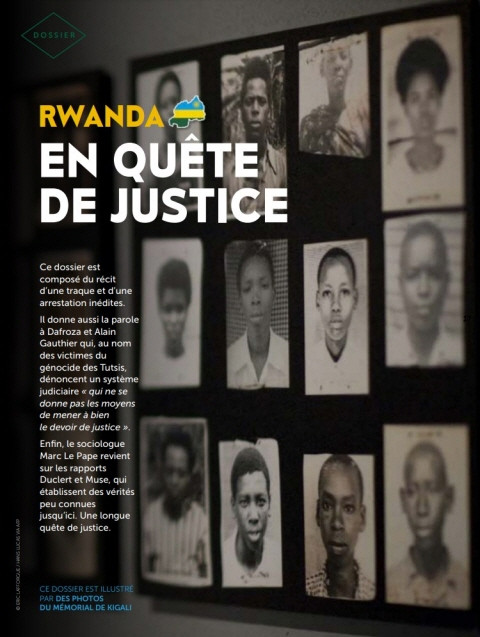 Rwanda: En quête de justice (Humains; n° 30) 出版年份: 2024 机构作者: Action by Christians for the Abolition of Torture (ACAT France) À l’occasion du trentième anniversaire du génocide des Tutsis au Rwanda, l’ACAT-France revient sur cet événement tragique pour les droits de l’Homme. Découvrez le dossier de la revue Humains #32 consacré à ce sujet.
 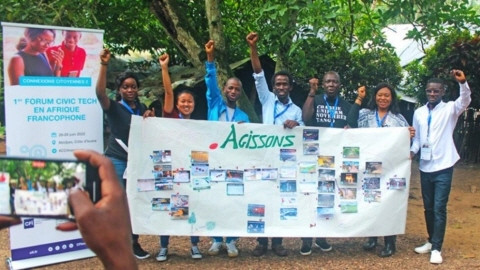 Civic Tech in Africa: When Citizen’s Connections Work for Democracy 出版年份: 2022 作者: Raphaëlle Constant 机构作者: Radio France International (RFI) The first civic tech forum in French-speaking Africa was held at the end of June in Abidjan, Côte d'Ivoire, at the initiative of CFI. For "L'atelier des médias", Raphaëlle Constant spoke to the people who are developing digital initiatives in several African countries to improve the flow of information and mobilise citizens to influence public debate. Civic tech en Afrique: Quand des connexions citoyennes œuvrent pour la démocratie 出版年份: 2022 作者: Raphaëlle Constant 机构作者: Radio France International (RFI) Le premier forum civic tech en Afrique francophone s’est tenu fin juin à Abidjan, en Côte d’Ivoire, à l'initiative de CFI. Pour L’atelier des médias, Raphaëlle Constant y a tendu son micro à celles et ceux qui développent des initiatives numériques dans plusieurs pays africains pour améliorer la circulation de l’information et déclencher des mobilisations citoyennes pour peser dans le débat public.
  Developing Digital Citizenship and Language Competences 出版年份: 2023 作者: Christian Ollivier | Catherine Jeanneau 机构作者: European Centre for Modern Languages (ECML) The profile of citizens who use languages and digital tools helps to define the objectives to pursue in language training that incorporates digital citizenship education. The Didactic Framework outlines a socio-interactional approach that enables this integration. Développer citoyenneté numérique et compétences langagières 出版年份: 2023 作者: Christian Ollivier | Catherine Jeanneau 机构作者: European Centre for Modern Languages (ECML) Le portrait des citoyens et citoyennes usagers et usagères des langues et du numérique permet de préciser les objectifs à poursuivre dans une formation en langue qui intègre l'éducation à la citoyenneté numérique. Le Cadre didactique définit une approche socio-interactionnelle permettant cette intégration.
  The Role of School Principal in Enhancing the Partnership Between School and Community in the Sultanate of Oman 出版年份: 2010 作者: Mohammed Ali Zeeb Ashour 机构作者: University of Bahrain. Scientific Publishing Center This study aimed at identifying the role of school principal in enhancing the partnership between school and community in Oman, from school employees and community members’ perspectives. It also aimed at finding out the statistical significant differences in the role of school principal in enhancing the partnership between school and community - due to job title and educational district. The study community comprised 9877, and the sample consisted of (513) persons, and (80) community members. To achieve the aims of this study a questionnaire was developed of (41) items distributed into five domains.The study showed the following results: - The role of school principal in enhancing the partnership between school and community showed an average degree. - The domains of the role of school principal came into the following order: vision and general educational processes and objectives, partnership in providing financial support to school, partnership in school administrative affairs, and lastly the partnership in school planning. - There were significant statistical differences in the responses to the educational district variable at all domains except in partnership in the school administrative affairs domain. - There were no significant statistical differences in the responses of the study sample to the job title variable at all domains, except in the partnership in providing consultant to school domain, in favor of principals.
 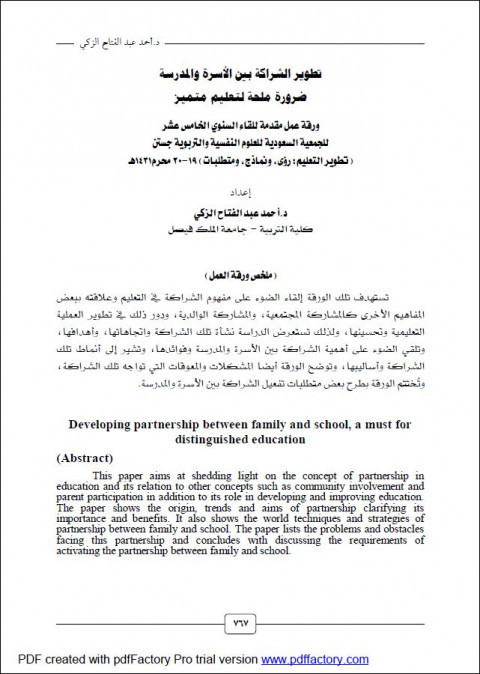 تطوير الشراكة بين الأسرة والمدرسة ضرورة ملحة لتعليم متميز 出版年份: 2010 作者: الزكي، أحمد عبد الفتاح 机构作者: King Saud University تستهدف الورقة إلقاء الضوء على مفهوم الشراكة في التعليم وعلاقته ببعض المفاهيم الأخرى كالمشاركة المجتمعية، والمشاركة الوالدية، ودور ذلك في تطوير العملية التعليمية وتحسينها، ولذلك تستعرض الدراسة نشأة تلك الشراكة واتجاهاتها، وأهدافها، وتلقي الضوء على أهمية الشراكة بين الأسرة والمدرسة وفوائدها، وتشير إلى أنماط تلك الشراكة وأساليبها، وتوضح الورقة أيضا المشكلات والمعوقات التي تواجه تلك الشراكة. وتختتم الورقة بطرح بعض متطلبات تفعيل الشراكة بين الأسرة والمدرسة. Developing Partnership between Family and School, a Must for Distinguished Education 出版年份: 2010 作者: الزكي، أحمد عبد الفتاح 机构作者: King Saud University This paper aims at shedding light on the concept of partnership in education and its relation to other concepts such as The paper shows the origin, trends and aims of partnership clarifying its importance and benefits. It also shows the techniques and strategies of partnership between family and school from around the world . The paper lists the problems and obstacles facing this partnership and concludes with discussing the requirements of activating the partnership between family and school.
 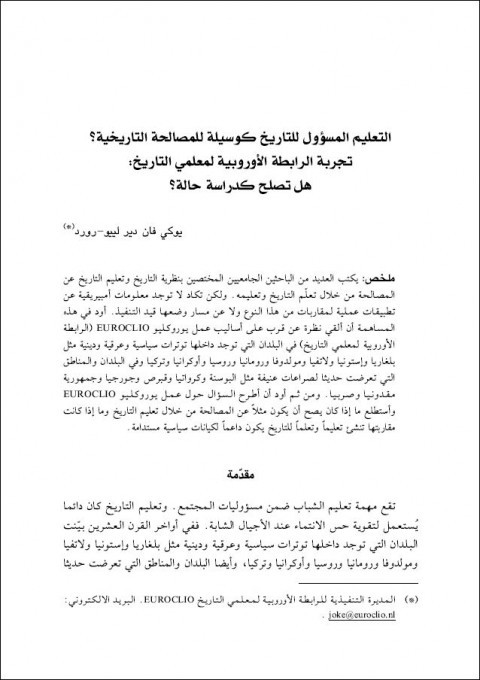 التعليم المسؤول للتاريخ كوسيلة للمصالحة التاريخية؟ : تجربة الرابطة الأوروبية لمعلمي التاريخ: هل تصلح كدراسة حالة؟ 出版年份: 2012 作者: فان دير لييو-رورد، يوكي 机构作者: Lebanese Association for Educational Studies (LAES) يكتب العديد من الباحثين الجامعيين المختصين بنظرية التاريخ وتعليم التاريخ عن المصالحة من خلال تعلّم التاريخ وتعليمه. ولكن تكاد لا توجد معلومات أمبيريقية عن تطبيقات عملية لمقاربات من هذا النوع ولا عن مسار وضعها قيد التنفيذ. أود في هذه المساهمة ان القي نظرة عن قرب على أساليب عمل يوروكليو EUROCLIO (الرابطة الأوروبية لمعلمي التاريخ) في البلدان التي توجد داخلها توترات سياسية وعرقية ودينية مثل بلغاريا واستونيا ولاتفيا ومولدوفا ورومانيا وروسيا وأوكرانيا وتركيا وفي البلدان والمناطق التي تعرضت حديثا لصراعات عنيفة مثل البوسنة وكرواتيا وقبرص وجورجيا وجمهورية مقدونيا وصربيا. ومن ثم أود أن أطرح السؤال حول عمل يوروكليو EUROCLIO وأستطلع ما يصح ان يكون مثلا عن المصالحة من خلال تعليم التاريخ وما اذا مقاربتها تنشئ تعليما وتعلما للتاريخ يكون داعما لكيانات سياسية مستدامة. Responsible History as a Tool for Historical Reconciliation? EUROCLIO, the European Association of History Educators as a Case Study? 出版年份: 2012 作者: فان دير لييو-رورد، يوكي 机构作者: Lebanese Association for Educational Studies (LAES) Many university researchers specialized in the theory of history and in teaching history write about reconciliation using history learning and teaching. However, there are almost no empirical data on practical applications of such approaches nor on the process of implementation. In this contribution. I’d like to have a close look at the working methods of the European Association of History Educators EUROCLIO, in countries with internal political, racial and religious tensions, such as Bulgaria, Estonia, Latvia, Moldovia, Romania, Russia, Ukraine, Turkey and in the countries and regions that were recently exposed to severe conflicts such as Bosnia, Croatia, Cyprus, Georgia, Republic of Macedonia and Serbia. Then I’d want to ask the question about how EUROCLIO functions and explore what applies to be an example of reconciliation through teaching history, and whether the reconciliation approach creates a history teaching and learning that would be supportive of sustainable political entities.