
相关资源
探索丰富的全球公民教育资源,深化理解,促进研究、倡导、教学与学习。
共找到3,229条结果
 Carbon Inequality Kills: Why Curbing the Excessive Emissions of an Elite Few Can Create a Sustainable Planet for All 出版年份: 2024 作者: Mira Alestig | Nafkote Dabi | Abha Jeurkar | Alex Maitland | Max Lawson | Daniel Horen Greenford | Corey Lesk | Ashfaq Khalfan 机构作者: Oxfam International The only way to beat climate breakdown and deliver social justice is to radically reduce inequality. This briefing paper reveals the catastrophic climate impacts of the richest individuals in the world, and proposes taking urgent action to protect people and the planet. What little carbon dioxide we can still safely emit is being burned indiscriminately by the super-rich. We share new evidence of how the yachts, jets and polluting investments of the 50 richest billionaires are accelerating the climate crisis. Oxfam’s research shows that the emissions of the world’s super-rich 1% are causing economic losses of trillions of dollars; contributing to huge crop losses; and leading to millions of excess deaths. As global temperatures continue to rise, risking the lives and livelihoods of people living in poverty and precarity, we must act now to curb the emissions of the super-rich and make rich polluters pay. Notice of Corrections available for this report. LA Desigualdad de las emisiones de carbono MATA: Limitar el exceso de emisiones de una reducida élite para lograr un mundo más sostenible para todas las personas 出版年份: 2024 作者: Mira Alestig | Nafkote Dabi | Abha Jeurkar | Alex Maitland | Max Lawson | Daniel Horen Greenford | Corey Lesk | Ashfaq Khalfan 机构作者: Oxfam International La única manera de evitar el colapso climático y garantizar la justicia social es reducir drásticamente las desigualdades. El presente informe pone de manifiesto las nefastas consecuencias que el estilo de vida de las personas más ricas del mundo tiene sobre el cambio climático, y plantea la adopción de medidas urgentes que permitan proteger a las personas y el planeta.Son los más ricos quienes están consumiendo, indiscriminadamente, la limitada cantidad de dióxido de carbono que aún podemos emitir de forma segura. En este estudio se publican nuevos datos que demuestran que los yates, los aviones privados y las contaminantes inversiones de 50 de las personas más ricas del mundo están acelerando la crisis climática. La investigación de Oxfam pone de manifiesto que las emisiones generadas por el 1 % más rico de la población mundial están ocasionando perjuicios económicos por valor de billones de dólares, además de contribuir a enormes pérdidas de cosechas y millones de muertes.Mientras tanto, la temperatura global sigue aumentando, lo cual pone en riesgo la vida y los medios de vida de millones de personas en situación de pobreza y precariedad. Por eso, es urgente que se adopten medidas que permitan frenar las emisiones de los más ricos, y lograr que quienes más contaminan asuman el coste. LES INÉGALITÉS CARBONE TUENT: Réduire les émissions excessives d’une élite peut favoriser la durabilité de la planète pour tou·te·s 出版年份: 2024 作者: Mira Alestig | Nafkote Dabi | Abha Jeurkar | Alex Maitland | Max Lawson | Daniel Horen Greenford | Corey Lesk | Ashfaq Khalfan 机构作者: Oxfam International Pour lutter contre le dérèglement climatique et instaurer une véritable justice sociale, une seule solution s’impose : la réduction drastique des inégalités. En mettant en évidence les répercussions catastrophiques que le mode de vie des plus riches entraîne sur le climat, la présente note d’information propose des mesures urgentes pour protéger l’ensemble de la population et la planète.Le peu de dioxyde de carbone que nous pouvons encore nous permettre de générer sans que cela entraîne des conséquences irréparables est aujourd’hui dilapidé sans discernement par les ultra-riches. Nous offrons ici de nouvelles preuves de la façon dont les yachts de luxe, les jets privés et les investissements polluants de 50 des milliardaires les plus riches au monde accélèrent la crise climatique. Les recherches d’Oxfam montrent que les émissions produites par la frange des 1 % les plus riches de la planète provoquent des pertes économiques estimées à plusieurs milliers de milliards de dollars, contribuent à la destruction d’une énorme quantité de récoltes et entraînent des millions de décès prématurés.Alors que la température de la Terre ne cesse d’augmenter, mettant en péril la vie et les moyens de subsistance des personnes qui vivent dans la pauvreté et la précarité, il nous faut agir sans délai pour endiguer les émissions des ultra-riches et faire payer les riches pollueurs.
  Carbon Inequality Kills: Why Curbing the Excessive Emissions of an Elite Few Can Create a Sustainable Planet for All; Executive Summary 出版年份: 2024 作者: Mira Alestig | Nafkote Dabi | Abha Jeurkar | Alex Maitland | Max Lawson | Daniel Horen Greenford | Corey Lesk | Ashfaq Khalfan 机构作者: Oxfam International The only way to beat climate breakdown and deliver social justice is to radically reduce inequality. This briefing paper reveals the catastrophic climate impacts of the richest individuals in the world, and proposes taking urgent action to protect people and the planet. What little carbon dioxide we can still safely emit is being burned indiscriminately by the super-rich. We share new evidence of how the yachts, jets and polluting investments of the 50 richest billionaires are accelerating the climate crisis. Oxfam’s research shows that the emissions of the world’s super-rich 1% are causing economic losses of trillions of dollars; contributing to huge crop losses; and leading to millions of excess deaths. As global temperatures continue to rise, risking the lives and livelihoods of people living in poverty and precarity, we must act now to curb the emissions of the super-rich and make rich polluters pay. LA Desigualdad de las emisiones de carbono MATA: Limitar el exceso de emisiones de una reducida élite para lograr un mundo más sostenible para todas las personas; RESUMEN EJECUTIVO 出版年份: 2024 作者: Mira Alestig | Nafkote Dabi | Abha Jeurkar | Alex Maitland | Max Lawson | Daniel Horen Greenford | Corey Lesk | Ashfaq Khalfan 机构作者: Oxfam International La única manera de evitar el colapso climático y garantizar la justicia social es reducir drásticamente las desigualdades. El presente informe pone de manifiesto las nefastas consecuencias que el estilo de vida de las personas más ricas del mundo tiene sobre el cambio climático, y plantea la adopción de medidas urgentes que permitan proteger a las personas y el planeta. Son los más ricos quienes están consumiendo, indiscriminadamente, la limitada cantidad de dióxido de carbono que aún podemos emitir de forma segura. En este estudio se publican nuevos datos que demuestran que los yates, los aviones privados y las contaminantes inversiones de 50 de las personas más ricas del mundo están acelerando la crisis climática. La investigación de Oxfam pone de manifiesto que las emisiones generadas por el 1 % más rico de la población mundial están ocasionando perjuicios económicos por valor de billones de dólares, además de contribuir a enormes pérdidas de cosechas y millones de muertes. Mientras tanto, la temperatura global sigue aumentando, lo cual pone en riesgo la vida y los medios de vida de millones de personas en situación de pobreza y precariedad. Por eso, es urgente que se adopten medidas que permitan frenar las emisiones de los más ricos, y lograr que quienes más contaminan asuman el coste. LES INÉGALITÉS CARBONE TUENT: Réduire les émissions excessives d’une élite peut favoriser la durabilité de la planète pour tou·te·s; RÉSUMÉ 出版年份: 2024 作者: Mira Alestig | Nafkote Dabi | Abha Jeurkar | Alex Maitland | Max Lawson | Daniel Horen Greenford | Corey Lesk | Ashfaq Khalfan 机构作者: Oxfam International Pour lutter contre le dérèglement climatique et instaurer une véritable justice sociale, une seule solution s’impose : la réduction drastique des inégalités. En mettant en évidence les répercussions catastrophiques que le mode de vie des plus riches entraîne sur le climat, la présente note d’information propose des mesures urgentes pour protéger l’ensemble de la population et la planète.Le peu de dioxyde de carbone que nous pouvons encore nous permettre de générer sans que cela entraîne des conséquences irréparables est aujourd’hui dilapidé sans discernement par les ultra-riches. Nous offrons ici de nouvelles preuves de la façon dont les yachts de luxe, les jets privés et les investissements polluants de 50 des milliardaires les plus riches au monde accélèrent la crise climatique. Les recherches d’Oxfam montrent que les émissions produites par la frange des 1 % les plus riches de la planète provoquent des pertes économiques estimées à plusieurs milliers de milliards de dollars, contribuent à la destruction d’une énorme quantité de récoltes et entraînent des millions de décès prématurés.Alors que la température de la Terre ne cesse d’augmenter, mettant en péril la vie et les moyens de subsistance des personnes qui vivent dans la pauvreté et la précarité, il nous faut agir sans délai pour endiguer les émissions des ultra-riches et faire payer les riches pollueurs. 생명을 위협하는 탄소 불평등: 소수 엘리트 계층의 과도한 탄소 배출을 억제하면 모두를 위한 지속 가능한 지구를 만들 수 있는 이유: 요약본 出版年份: 2024 作者: Mira Alestig | Nafkote Dabi | Abha Jeurkar | Alex Maitland | Max Lawson | Daniel Horen Greenford | Corey Lesk | Ashfaq Khalfan 机构作者: Oxfam International 기후붕괴를 막고 사회적 정의를 실현할 수 있는 유일한 방법은 불평등을 근본적으로 완화하는 것이다. 본 보고서에서는 세계에서 가장 부유한 사람들이 기후에 미치는 재앙적인 영향을 밝히고, 인류와 지구를 보호하기 위한 즉각적인 조치를 이행할 것을 제언한다. ‘슈퍼리치’로 불리는 전 세계 최상위 부유층은 우리가 아직 안전하게 배출할 수 있는 제한된 양의 이산화탄소, 다시 말 해 ‘탄소예산(carbon budget)’을 무분별하게 낭비하고 있다. 우리는 세계 상위 50대 억만장자들이 대형 요트, 개인 전용기, 투자 등을 통해 어떻게 기후위기를 가속화하고 있는지에 대한 새로운 증거를 공유하고자 한다. 옥스팜의 연구에 따르면, 전 세계 상위 1% 부유층의 탄소 배출로 인해 수조 달러의 경제적 손실과 막대한 규모의 농작물 손실, 그리고 통상적으로 예상되는 사망자 수준을 넘어서는 ‘초과 사망(excess death)’이 수백만 건 발생하고 있다. 지구 온도가 계속 상승하면서 빈곤하고 불안정한 삶을 살아가는 사람들의 생명과 생계가 위협받고 있다. 우리는 슈퍼리치들의 탄소 배출을 억제하고 환경오염을 유발하는 부유층이 비용을 치를 수 있도록 행동에 나서야 한다.
 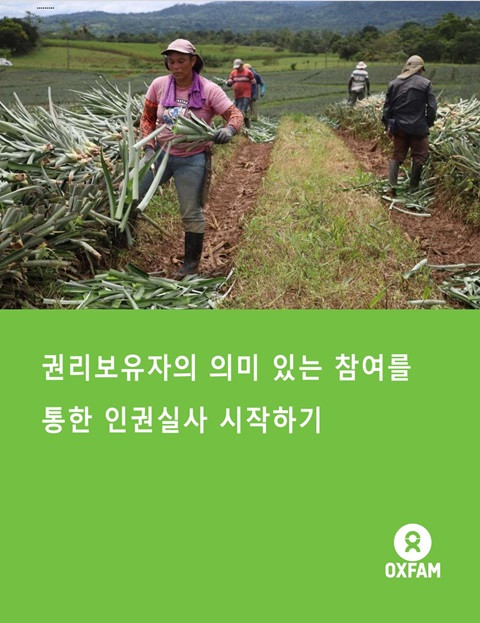 권리보유자의 의미 있는 참여를 통한 인권실사 시작하기 出版年份: 2024 作者: Caroline Brodeur 机构作者: 옥스팜 기업의 인권 경영, ESG 실천을 위해 ‘의미 있는’ 인권실사는 필수적이다. 하지만 ‘의미 있는’이 정확히 무엇을 말하는지는 비교적 불명확하다. 옥스팜은 오랜 기간 동안 인권 피해를 입은 공동체와 협력하면서 권리보유자들이 실사 과정이나 관련 프로젝트에서 그들의 삶에 영향을 미치는 기업 활동에 대해 발언권을 행사할 수 있도록 지원했다. 이를 통해 옥스팜은 권리보유자 참여는 이런 모습이어야 한다는 명확한 프레임워크를 발전시켜왔다. 이 문서는 기업이 의사결정 실무에 필수적으로 통합시켜야 할 권리보유자 관여에 대한 핵심 원칙들을 제시한다.
  Connections that Matter: How the Quality of Governance Boosts Climate Action; A Systematic Scoping Review of the Literature 出版年份: 2024 机构作者: United Nations Development Programme (UNDP) | German Institute of Development and Sustainability (IDOS) This report reflects the findings of a systematic literature review jointly undertaken by the UNDP Global Policy Centre for Governance and the German Institute of Development and Sustainability. The report offers aggregated empirical insight from across the globe about how inclusive, effective and accountable governance systems produces positive effects on climate action. The report aims to galvanize development actors and stakeholders to invest in SDG 16 and the strengthening of governance systems, and to better identify pathways that raise the ambition and effectiveness of climate action.
  [Executive Summary] Connections that Matter: How the Quality of Governance Boosts Climate Action 出版年份: 2024 机构作者: United Nations Development Programme (UNDP) | German Institute of Development and Sustainability (IDOS) This is the executive summary of the Connections that Matter: How the Quality of Governance Boosts Climate Action prepared by the UNDP Global Policy Centre for Governance and the German Institute of Development and Sustainability.