
相关资源
探索丰富的全球公民教育资源,深化理解,促进研究、倡导、教学与学习。
共找到950条结果
 Atelier régional sur le renforcement des compétences des enseignants en matière d'éducation pour le développement durable, Alexandrie, Égypte, 7-9 mai 2007: rapport final 出版年份: 2007 机构作者: UNESCO Beirut | University of Alexandria Dans le cadre de la Décennie des Nations Unies pour l'éducation au développement durable, les bureaux de l'UNESCO dans la région arabe ont tenu leur premier atelier en septembre 2005 sur le rôle de l'éducation et de la formation pour le développement durable. Ce deuxième atelier a été inauguré en mai 2007 sur le renforcement des compétences des enseignants en éducation pour le développement durable. Le choix de l'enseignant à être au centre de cet atelier met l'accent sur le rôle que l'enseignant joue dans les programmes de développement.
 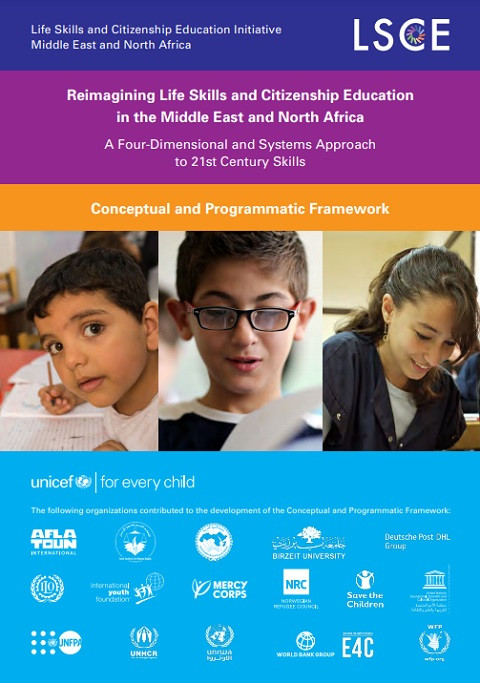 Reimagining Life Skills and Citizenship Education in the Middle East and North Africa: A Four-Dimensional and Systems Approach to 21st Century Skills; Conceptual and Programmatic Framework 出版年份: 2017 机构作者: UNICEF Middle East and North Africa The situation of learning in MENA calls for a holistic, lifelong and rights-based vision of education that maximizes the potential of all children and youth in the region and better equips them to create meaning out of knowledge and to face the transitions from childhood to adulthood, from education to work, and from unreflective development to responsible and active citizenship. This is what drives the MENA Life Skills and Citizenship Education (LSCE) Initiative, kicked off in 2015 with the aim of supporting the countries of the region – conceptually, programmatically and technically – to improve learning and to better invest such learning in individual, social and economic development.The LSCE Conceptual and Programmatic Framework (CPF) puts forth a roadmap to guide policies, strategies and programmes on life skills and citizenship education supporting the region-wide efforts to provide children and youth with opportunities to learn, transition from childhood to adulthood, move from school to work settings, and become responsible and active citizens of their communities.A set of twelve core life skills for MENA has been identified using the four-dimensional learning model: ‘Learning to Know’ (Cognitive Dimension), ‘Learning to Do’ (Instrumental Dimension), ‘Learning to Be’ (Individual Dimension), and ‘Learning to Live Together’ (Social Dimension). The twelve core life skills are life-long, and they build on evidence that underlines the importance of skills acquisition from an early age. Furthermore, the twelve core life skills are acquired and sustained through all forms of learning in a systems approach that recognizes multiple pathways of learning, formal, non-formal and informal. Réimaginer l’éducation aux compétences de vie et à la citoyenneté au Moyen-Orient et en Afrique du Nord : Une approche à quatre dimensions et systémique des compétences pour le XXIe siècle ; Cadre programmatique et conceptuel 出版年份: 2017 机构作者: UNICEF Middle East and North Africa L’Initiative pour l’éducation aux compétences de vie et à la citoyenneté de la région MENA (LSCE) représente un effort de collaboration étatique et régional en faveur de la réalisation de l’objectif de développement durable (ODD) 4 – Assurer l’accès de tous à une éducation de qualité, sur un pied d’égalité, et promouvoir les possibilités d’apprentissage tout au long de la vie. Elle cherche à reformuler la compréhension traditionnelle de l’éducation aux compétences de vie et à la citoyenneté dans la région, tout en rappelant les questions fondamentales au sujet du but et du rôle de l’éducation dans le développement sociétal qui sont pertinentes dans le contexte actuel.L’Initiative LSCE se concentre sur trois défis interdépendants :Une société du savoir inaccessible, résultat de la mauvaise qualité de l’éducation, du bas niveau des résultats scolaires et d’une équité et inclusion limitées.Une croissance économique en déclin, résultat d’un manque d’aptitudes à l’employabilité, du haut taux de chômage chez les jeunes, de l’inégalité des sexes face à l’accès au marché du travail, du manque de création d’emplois, et d’un environnement économique faible.Une faible cohésion sociale, résultat de l’escalade de la violence et de la radicalisation tout autant que d’un faible engagement civique.
 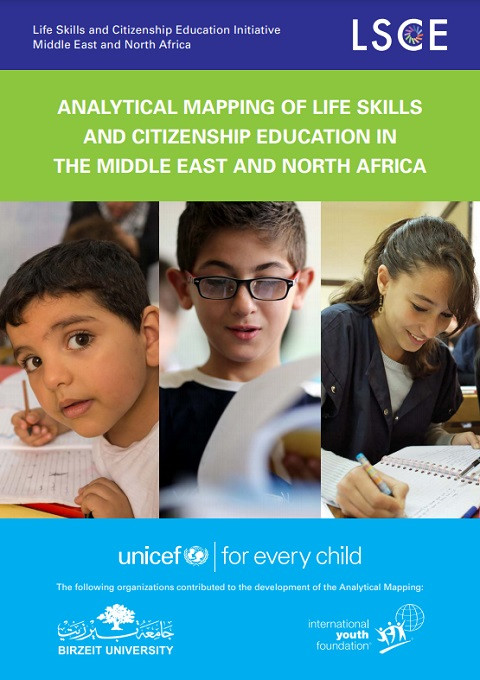 Analytical Mapping of Life Skills and Citizenship Education in the Middle East and North Africa 出版年份: 2017 机构作者: UNICEF Middle East and North Africa The Analytical Mapping of the Life Skills and Citizenship Education in MENA, published in October 2017, provides a multi-stakeholder view of the status of life skills and citizenship education in MENA and the corresponding vision for the region. It does not evaluate existing interventions, nor is it meant to generate an exhaustive list of all existing life skills programmes in MENA. It rather aims to provide an analytical overview of Life Skills and Citizenship Education (LSCE) related intervention in the region. Through analyzation, it also attempts to highlight general challenges encountered in the programming of LSCE, as well as focus on opportunities for LSCE in MENA national education systems.
  Confronting the Causes and Repercussions of Climate Change: What Role for the Moroccan School and Educational Action? 出版年份: 2016 作者: Abdulaziz Faras 机构作者: Mohammed V University. Faculty of Education An article discussing the role that the public school and environmental education should play in tackling climate change. The study indicates the importance of the number of model programs for environmental education. The article also deals with the role imposed by the Moroccan school in confronting the causes and repercussions of climate change. مواجهة أسباب وتداعيات التغيرات المناخية: أي دور للمدرسة المغربية وللفعل التربوي؟ 出版年份: 2016 作者: Abdulaziz Faras 机构作者: Mohammed V University. Faculty of Education مقال يناقش الدور الذي يجب أن تساهم به المدرسة عامة والتربية البيئية في مواجهة تغير المناخ. تشير الدراسة لأهمية أعداد البرامج النموذجية للتربية البيئية. والمقال أيضا يتعرض للدور المفروض القيام به من قبل المدرسة المغربية في مواجهة أسباب وتداعيات التغير المناخي.
  The Media and Its Role in Raising Security Awareness in Society 出版年份: 2018 作者: Abdul Basit Howaidi | Iman Drake 机构作者: Hamma Lakhdar Eloued University The aim of this study was to reveal the role of the media in the security awareness within the society. The media was one of the means of mass influence that played an important role in the life of human societies. The analytical descriptive method was used to suit the nature of the subject. A professor of the Faculty of Social Sciences and Humanity, which was randomly selected. The questionnaire was also used as an important tool for collecting data from the field. The study reached the following results: The media, the coverage, the nature of the programs presented, and the attempt to open channels of communication between the security institutions and the media have a great role in spreading and achieving security awareness within the community. الإعلام و دوره في التوعية الأمنية داخل المجتمع 出版年份: 2018 作者: Abdul Basit Howaidi | Iman Drake 机构作者: Hamma Lakhdar Eloued University هدفت هذه الدراسة إلى ال كشف عن "دور الإعلام في التوعية الأمنية داخل المجتمع"، و ذلك أن الإعلام وسيلة من وسائل التأثير الجماهيري التي لعبت دورا مهما في حياة المجتمعات الإنسانية ، تم توظيف المنهج الوصفي التحليلي و الذي يناسب طبيعة الموضوع، وقدرت عينة الدراسة ب66 أستاذا جامعيا من كلية العلوم الاجتماعية و الانسانية و التي تم اختيارها بطريقة عشوائية، كما تم الاعتماد على أداة الاستبيان كأداة مهمة لجمع البيانات من الميدان و قد توصلت الدراسة إلى النتائج التالية : ان للإعلام و طريقة التغطية و طبيعة البرامج المقدمة ومحاولة فتح قنوات الاتصال بين المؤسسات الأمنية و الإعلام له دور كبير في نشر و تحقيق التوعية الأمنية داخل المجتمع.
  The Digital Transformation of Governmental Higher Education Institutions in the Southern Governorates of Palestine 出版年份: 2023 作者: Randa Ead Shrair The article aimed to identify the level of digital transformation in government higher education institutions in the Southern Governorates of Palestine from the point of view of its faculty members and to reveal whether there are statistically significant differences at the significance level (α ≤ 0.05). between the averages of the respondents' responses about the level of digital transformation in Government higher education institutions in the Southern Governorates of Palestine are attributed to the variables: (gender, years of service, academic degree, and specialization); by using the descriptive/surveying, a questionnaire was designed consisted of (30) items distributed on (4) axes. After verifying its validity and reliability, the questionnaire was applied to a stratified random sample of (123) male and female faculty members. The study concluded that the level of digital transformation in higher education institutions was “high" and there were no statistically significant differences between the averages of the respondents' responses about the level of digital transformation in those institutions due to the variables of the study . التحول الرقمي في مؤسسات التعليم العالي الحكومية بمحافظات فلسطين الجنوبية 出版年份: 2023 作者: Randa Ead Shrair هدفت الدراسة التعرف إلى مستوى التحول الرقمي في مؤسسات التعليم العالي الحكومية بمحافظات فلسطين الجنوبية من وجهة نظر أعضاء هيئاتها التدريسية، والكشف عما إذا كان هناك فروق ذات دلالة إحصائية عند مستوى الدلالة (0.05≥α)، بين متوسطات استجابات أفراد العينة حول مستوى التحول الرقمي في مؤسسات التعليم العالي الحكومية بمحافظات فلسطين الجنوبية تعزى لمتغيرات: (الجنس، سنوات الخدمة، والدرجة العلمية، والتخصص)، وباستخدام المنهج الوصفي/ المسحي، والرجوع للأدبيات السابقة، تم بناء استبانة تكونت من (30) فقرة موزعة على (4) مجالات، وبعد التأكد من صدقها وثباتها، تم تطبيقها على عينة عشوائية بسيطة مكونة من (123) عضو هيئة تدريس، وقد توصلت الدراسة ًإلى أن مستوى التحول الرقمي في مؤسسات التعليم العالي جاء "كبيرا"، ولم توجد فرق ذو دلالة إحصائية بين متوسطات استجابات أفراد العينة حول مستوى التحول الرقمي في تلك المؤسسات تعزى لمتغيرات الدراسة.