
相关资源
探索丰富的全球公民教育资源,深化理解,促进研究、倡导、教学与学习。
共找到882条结果
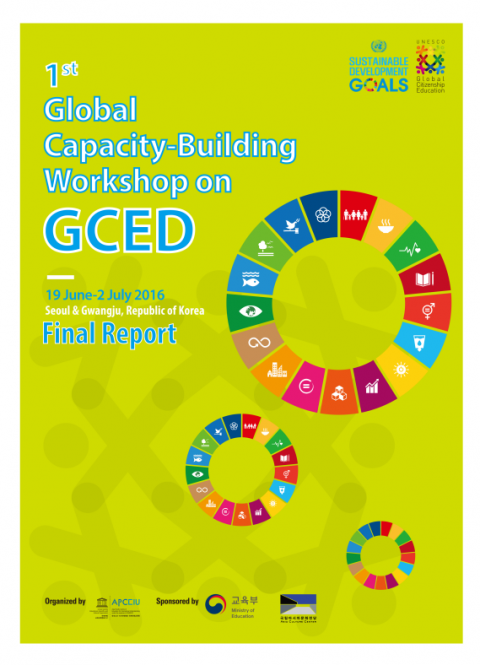 Final Report: 1st Global Capacity-Building Workshop on GCED 出版年份: 2016 机构作者: APCEIU This report provides an overview of the activities carried out during the 1st Global Capacity-Building Workshop on GCED held in Seoul and Gwangju, Republic of Korea from 19 June - 2 July, 2016. APCEIU organized the 1st Global Capacity-Building Workshop on GCED in collaboration with UNESCO in order to contribute to achieving the Sustainable Development Goals(SDGs) target 4.7 by enhancing the capacity of teacher educators and trainers in implementing GCED. This intensive 2-week workshop provided the participating educators with the opportunities to better understand the concept and internalize the pedagogical principles of GCED while sharing their experiences and working on collaborative action plans. For more information, please contact APCEIU's Office of Education and Training at ent@unescoapceiu.org.
 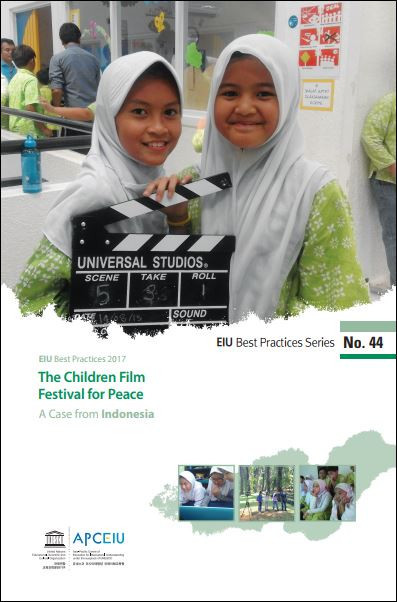 EIU Best Practices Series No.44: The Children’s Film Festival for Peace 出版年份: 2017 机构作者: APCEIU This monograph is one of APCEIU's EIU Best Practices Series, which aims to encourage educators, scholars, and activists to implement and share local initiatives on EIU. The Series No. 44 introduces a project called “The Children’s Film Festival for Peace,” designed by a primary teacher in Indonesia to deliver EIU values to children in an easy and enjoyable way through an ICT class. The film themes which covered awareness on everyday social issues such as bullying, enabled students internalize the values of caring for others and sharing through acting, filming and creating. This exemplary project gives students a chance to bring their class learnings to life whilst spreading EIU values to their peers through their creations.
 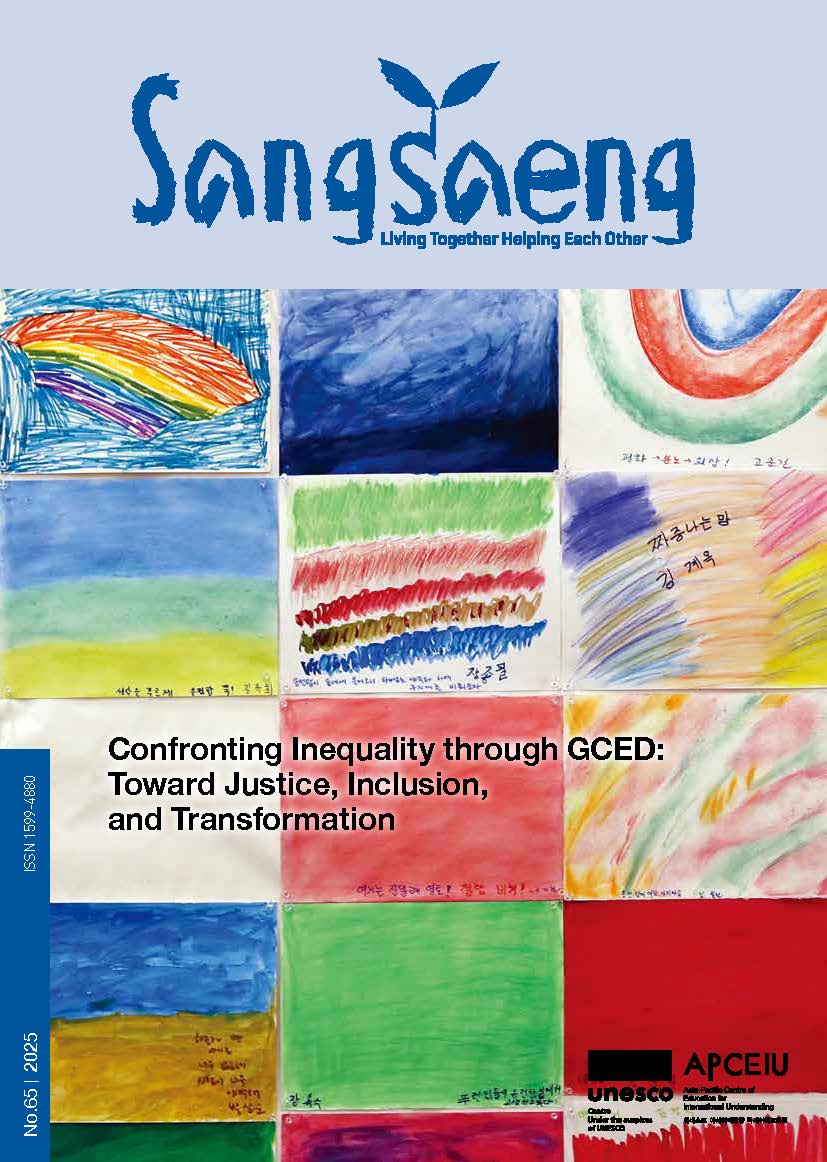 Confronting Inequality through GCED: Toward Justice, Inclusion, and Transformation (SangSaeng; No.65, 2025) 出版年份: 2025 机构作者: APCEIU The 62nd issue of SangSaeng has been published with the theme of “Ethical AI and GCED: Exploring the Expanding Domain of Artificial Intelligence.”AI has never been as pervasive and influential as it is in today’s rapidly changing world. Despite the convenience and cutting-edge technology AI has offered us, it has the potential to pose a threat to humanity. This is where ethics for AI should come forward. In this regard, this issue will lead readers to the alarming side of AI as well as its future developments, focusing on the importance of GCED and AI ethics in tackling any potential problems.Contents03 Editor's Note 04 Special ColumnEmbracing Change to Cultivate Success — Integrating Global Citizenship Education into Tertiary Education / Dendev Badarch08 FOCUS Ethical AI and GCED: Exploring the Expanding Domain of Artificial IntelligenceRole of Ethics in the Era of AI — Protecting and Guiding AI Processes for Humanity to Flourish / Emma Ruttkamp-BloemPayingAttention to AI Ethics — An Avenue for a New Competitive Edge in Business / Myoungshin KimDriving Innovative Education — Balancing Future Possibilities and Ethical Concerns: How GCED Can be Used to Address AI Issues / Angelique Southern 20 Special ReportEmpowering a Climate Generation — From Classrooms to Climate Frontlines : The Transformative Role of Education highlighted at COP28 / Djian Sadadou 22 Best PracticesNavigating an AI Future — Ethical AI and the Importance of Critical Thought / Hannah GrantGLACE Brings the World to a City — Empowering Youth as Global Citizens: Lessons from Navotas City’s Project GLAC / Marco D. MedurandaLowering Eco-Anxiety — Teaching Climate Change Through Media and Information Literacy / Laetitia Legrand 33 GCED YOUTH NETWORKNew Wave of Youth Advocacy — Role of AI in Youth Advocacy and its Ethical Implications to Global Citizenship / Oshan M. Gunathilake and Diego Manrique36 Understanding the Asia Pacific RegionDiscovering Auroville — Where Boundaries Fade, Nature Thrives, and Global Minds Unite / Akanksha Arya 39 Peace in My MemoryHappiness without Violence — Mindanao Peace Forum Celebrates Building a Culture of Peace / Ludivina Borja-DekitPeace Scholar Passes Away Amidst Turbulent Times / Kwang-Hyun KIM 45 Story TimeThe Right Footing — My Life Has Purpose Thanks to Football / Hajar Abulfazl 48 LetterShared Challenges of Global Citizens / Natsuki Nagata 50 APCEIU in Action
 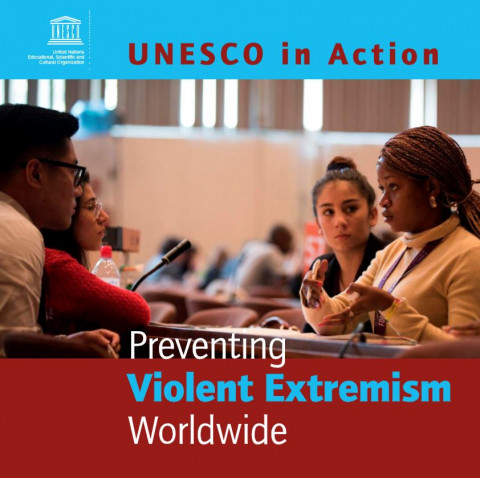 UNESCO in action: preventing violent extremism worldwide 出版年份: 2018 机构作者: UNESCO UNESCO supports countries in crafting education programmes that build young people’s resilience to violent extremist messaging and foster a positive sense of identity and belonging. From this angle, the role of education is not to intercept violent extremists or identify individuals who may potentially become violent extremists, but to create conditions to build the defences of peace within learners through values, skills and behaviours that reject violent extremism, and by strengthening their commitment to non-violence and peace. This work is undertaken within the broader framework of Global Citizenship Education, where UNESCO leads implementation of Target 4.7 of the Sustainable Development Goal 4 on Education. The work undertaken in the field of Global Citizenship Education also embraces activities pertaining to human rights and peace education, Holocaust and genocide education, and activities to combat all forms of intolerance, racism and anti-Semitism.
  Bringing it out in the open: Monitoring school violence based on sexual orientation, gender identity or gender expression in national and international surveys 出版年份: 2019 机构作者: UNESCO This technical brief has been developed by the United Nations Educational, Scientific and Cultural Organization (UNESCO) to strengthen the routine monitoring of school violence that is based on sexual orientation, gender identity or gender expression (SOGIE). It is informed by best practice from large institutional surveys that have been successfully conducted at the international or national level. The Brief provides recommendations on: • Questions to capture data on the sexual orientation or gender identity of students.• Questions to capture data on school violence that is specifically based on SOGIE. The Brief also gives guidance on: • The challenges in collecting data on school violence based on SOGIE• Identifying and fulfilling indicators on school violence based on SOGIE
  A Guide on Violence Prevention in Educational Settings in Eastern Europe and Central Asia 出版年份: 2015 机构作者: UNESCO The emphasis is given to gender-based violence. This guide offers practical advice and proposes organizational and educational measures, as well as response schemes for the management and staff of education institutions in order to address acts of violence and provide assistance to the victims. The guide is advisory in nature: it can be used as a background material for developing a national recommendation on the prevention of violence in an education institution.Experts from the ministries of education, education institutions and public organizations of Eastern Europe and Central Asia, as well as the United Nations Educational, Scientific and Cultural Organization (UNESCO) and the United Nations Children's Fund (UNICEF) took part in discussions throughout the process of publication-writing. Предотвращение насилия в образовательных учреждениях: Методическое пособие для педагогических работников 出版年份: 2015 机构作者: Организация Объединенных Наций по вопросам образования, науки и культуры (UNESCO) Методическое пособие предназначено для руководителей и сотрудников (учителей, психологов, социальных педагогов и др.), общеобразовательных школ и учреждений среднего профессионального образования. В нем представлена информация о природе и причинах насилия в образовательном учреждении, его видах и последствиях, вовлеченных сторонах.Особое внимание уделяется гендерному насилию. Пособие носит практический характер и предлагает организационные и воспитательные меры, а также алгоритмы действий руководства и персонала образовательного учреждения по реагированию на факты насилия и оказанию помощи пострадавшим. Пособие носит рекомендательный характер: на его основе могут быть разработаны национальные методические рекомендации по предотвращению насилия в образовательном учреждении.В обсуждении пособия в ходе его разработки приняли участие специалисты министерств образования, образовательных учреждений и общественных организаций стран Восточной Европы и Центральной Азии, а также Организации Объединенных Наций по вопросам образования, науки и культуры (ЮНЕСКО) и Детского фонда ООН (ЮНИСЕФ).
  United Nations Strategy and Plan of Action on Hate Speech 出版年份: 2019 机构作者: United Nations (UN) In response to the alarming trend of rising hate speech around the world, Secretary-General António Guterres launched the United Nations Strategy and Plan of Action on Hate Speech, on 18 June 2019.Seeking to enhance the UN’s response to the global phenomenon of hate speech, this strategy is the outcome of close collaboration between 16 entities under the UN Working Group on Hate Speech and is coordinated by the United Nations Special Adviser on the Prevention of Genocide.The Strategy makes a firm commitment to step up coordinated action to tackle hate speech, both at global and national levels. Stratégie et Plan d’action des Nations Unies pour la lutte contre les discours de haine 出版年份: 2019 机构作者: United Nations (UN) En réponse à l’alarmante montée de la xénophobie, du racisme et de l’intolérance, de la misogynie violente, de l’antisémitisme et de l’islamophobie dans le monde actuellement, le 18 juin 2019, le Secrétaire général, Antonio Guterres, a lancé la Stratégie et le Plan d’action des Nations Unies pour la lutte contre les discours de haine. Cette démarche part du constat qu’au cours des 75 dernières années, les discours de haine ont été annonciateurs des crimes atroces qui les ont suivis, génocide compris, comme au Rwanda, en Bosnie ou au Cambodge.La Stratégie et le Plan d’action des Nations Unies pour la lutte contre les discours de haine offrent au système des Nations Unies des orientations stratégiques pour lutter contre les discours de haine aux niveaux national et mondial. Y est précisé également comment le Secrétariat de l’ONU peut seconder les coordinateurs résidents des Nations Unies dans leur action face aux discours de haine.Les objectifs sont doubles : il s’agit premièrement de renforcer les efforts déployés par les entités des Nations Unies pour s’attaquer aux causes profondes et aux éléments moteurs des discours de haine, et deuxièmement, d’aider le système des Nations Unies à répondre efficacement aux conséquences sociétales des discours de haine. La estrategia y plan de acción de las Naciones Unidas para la lucha contra el discurso de odio 出版年份: 2019 机构作者: United Nations (UN) En respuesta a la alarmante tendencia del aumento del discurso del odio por todo el mundo, el Secretario General, António Guterres, presentó la Estrategia y Plan de Acción de las Naciones Unidas para la lucha contra el Discurso de Odio, el 18 de junio de 2019.Con el objetivo de mejorar la respuesta de la ONU ante el fenómeno del discurso de odio, esta estrategia es el resultado de la estrecha colaboración entre 16 entidades dentro del Grupo de Trabajo de la ONU para la lucha contra el Discurso de Odio y está coordinada por la Asesora Especial de las Naciones Unidas para la Prevención del Genocidio.La Estrategia se compromete firmemente a intensificar la acción coordinada para hacer frente al discurso del odio, tanto a escala mundial como nacional.