
相关资源
探索丰富的全球公民教育资源,深化理解,促进研究、倡导、教学与学习。
共找到1,180条结果
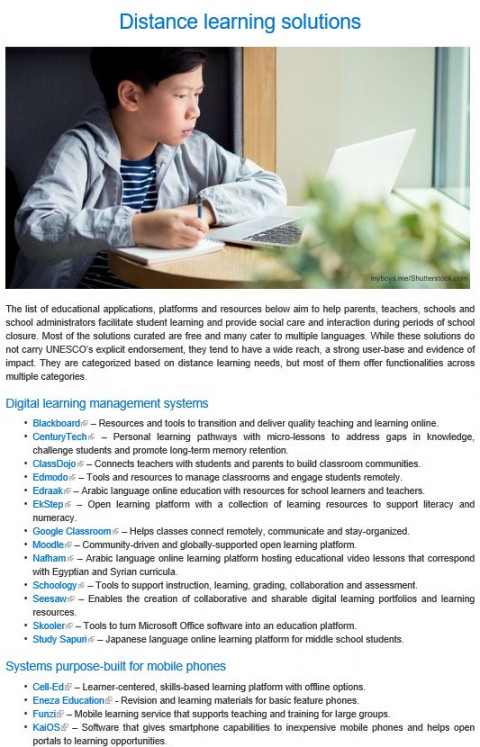 Soluciones para un aprendizaje a distancia 出版年份: 2020 机构作者: Organización de las Naciones Unidas para la Educación, la Ciencia y la Cultura (UNESCO) A continuación, ofrecemos una lista de aplicaciones y plataformas educativas para ayudar a los padres, docentes, centros educativos y sistemas escolares a facilitar el aprendizaje de los alumnos y garantizar las interacciones y los servicios sociales durante el periodo de cierre de las escuelas. Aunque no han sido explícitamente respaldadas por la UNESCO, estas soluciones tienen un amplio alcance, numerosos usuarios y una eficacia probada. La mayor parte de las soluciones son gratuitas y muchas se encuentran en varios idiomas.Si usted es un proveedor de servicios de aprendizaje digital y posee un producto sólido que cree merece figurar en la siguiente lista de recursos, favor envíenos un correo electrónico a la dirección: COVID19taskforce@unesco.org Инструменты дистанционного обучения 出版年份: 2020 机构作者: UNESCO Приведенный ниже список образовательных приложений, платформ и ресурсов призван помочь родителям, учителям, школам и школьным администраторам облегчить процесс обучения учащихся и обеспечить социальную помощь и взаимодействие в периоды закрытия школ. Большинство предложений доступны бесплатно и многие поддерживаются на нескольких языках. Хотя эти предложения не имеют непосредственной поддержки ЮНЕСКО, они, как правило, имеют широкий охват, мощную базу пользователей и подтверждения достигнутых результатов. Они распределены исходя из потребностей дистанционного обучения, но большинство из них предлагают функциональные возможности по нескольким категориям. حلول للتعلّم عن بعد 出版年份: 2020 机构作者: UNESCO الغرض من قائمة التطبيقات والمنصات والموارد التعليمية الواردة أدناه، مساعدة الأهل والمعلمين والمدارس ومديريها على تيسير عملية تعلّم الطلاب وتقديم الرعاية الاجتماعية والتفاعل الاجتماعي لهم في أثناء فترة إغلاق المدارس. ومعظم الحلول المختارة مجانية، ويقدم العديد منها محتوى متاحاً بعدة لغات. ولا تحظى هذه الحلول بدعم صريح من اليونسكو، بيد أنها تصل إلى عدد كبير من الأشخاص، ولها قاعدة مستخدمين واسعة، وتأثيرها مثبت. وتُصنّف هذه الحلول في فئات تبعاً لاحتياجات الدارسين، ولكن معظمها يحتوي على خصائص مأخوذة من فئات مختلفة.
  COVID-19 Crisis and Curriculum: Sustaining Quality Outcomes in the Context of Remote Learning (Issue Note no. 4.2 – April 2020) 出版年份: 2020 机构作者: UNESCO The COVID-19 pandemic has changed the lives of large numbers of learners, teachers and parents around the world, with millions now teaching and learning from home. While this is first and foremost a health crisis, it will likely have significant long-term effects on education, including on curriculum and learning. The situation, however, could become an opportunity to rethink curriculum, teaching-learning-assessment processes and the development of learners’ competencies with a view to strengthening their learning skills and sustaining their motivation.This crisis will likely provide an opportunity for schools to strengthen their ties with families, and for teachers to communicate and cooperate better with parents in the interest of learners. In the same vein, the crisis means teachers and parents may become more involved in decisions regarding curriculum appropriateness. This can support the development of a learner-centred, participative and inclusive learning paradigm that takes into account the interests of learners, as well as their environments and aspirations. Crisis y currículo durante el COVID-19: mantención de los resultados de calidad en el contexto del aprendizaje remoto (Nota temática No. 4.2 – Abril 2020) 出版年份: 2020 机构作者: Organización de las Naciones Unidas para la Educación, la Ciencia y la Cultura (UNESCO) La pandemia del COVID-19 ha cambiado la vida de una gran cantidad de estudiantes, docentes, padres y madres a lo largo del mundo y millones actualmente enseñan y aprenden desde sus hogares. Aunque se trata principalmente de una crisis sanitaria, es probable que tenga importantes secuelas a largo plazo en la educación, incluso en el currículo y el aprendizaje. No obstante, la situación puede transformarse en una oportunidad para reexaminar el currículo, los procesos de evaluación de la enseñanza y del aprendizaje y el desarrollo de las competencias de las y los estudiantes, en vista de fortalecer sus habilidades de aprendizaje y mantener su motivación.Es probable que la crisis ofrezca una oportunidad para que las escuelas fortalezcan sus vínculos con las familias y para que las y los docentes se comuniquen y cooperen mejor con los padres y las madres en beneficio de las y los estudiantes. En la misma línea, la crisis significa que docentes, madres y padres podrían participar más en las decisiones respecto de la idoneidad del currículo. Esto puede servir como apoyo al paradigma de aprendizaje inclusivo, participativo y centrado en la y el estudiante, que considera tanto los intereses de las y los estudiantes como sus entornos y aspiraciones.
  Documento final de la consulta técnica sobre educación para la ciudadanía mundial: Educación para la ciudadanía mundial: una perspectiva emergente 出版年份: 2013 机构作者: UNESCO This document draws on inputs to, and common perspectives emerging from, a Technical Consultation on Global Citizenship Education organized by UNESCO and the Republic of Korea (i.e., the Ministries of Foreign Affairs and of Education, and the Asia-Pacific Centre of Education for International Understanding) in Seoul on 9-10 September 2013 . Informing this draft document are: a) responses from the expert participants to a questionnaire circulated by UNESCO in advance of the consultation; b) presentations from experts during the consultation; c) discussions during the consultation; and d) reference material contributing to, and prepared for, the consultation. The final draft of this document was prepared by UNESCO’s Division of Education for Peace and Sustainable Development at Headquarters in Paris, with the assistance of a drafting team. Document final de la Consultation technique sur l'éducation à la citoyenneté mondiale: Education à la citoyenneté mondiale: une nouvelle vision 出版年份: 2013 机构作者: UNESCO This document draws on inputs to, and common perspectives emerging from, a Technical Consultation on Global Citizenship Education organized by UNESCO and the Republic of Korea (i.e., the Ministries of Foreign Affairs and of Education, and the Asia-Pacific Centre of Education for International Understanding) in Seoul on 9-10 September 2013 . Informing this draft document are: a) responses from the expert participants to a questionnaire circulated by UNESCO in advance of the consultation; b) presentations from experts during the consultation; c) discussions during the consultation; and d) reference material contributing to, and prepared for, the consultation. The final draft of this document was prepared by UNESCO’s Division of Education for Peace and Sustainable Development at Headquarters in Paris, with the assistance of a drafting team.
  Outcome Document of the Technical Consultation on Global Citizenship Education: Global Citizenship Education: An Emerging Perspective 出版年份: 2013 机构作者: UNESCO This document draws on inputs to, and common perspectives emerging from, a Technical Consultation on Global Citizenship Education organized by UNESCO and the Republic of Korea (i.e., the Ministries of Foreign Affairs and of Education, and the Asia-Pacific Centre of Education for International Understanding) in Seoul on 9-10 September 2013 . Informing this draft document are: a) responses from the expert participants to a questionnaire circulated by UNESCO in advance of the consultation; b) presentations from experts during the consultation; c) discussions during the consultation; and d) reference material contributing to, and prepared for, the consultation. The final draft of this document was prepared by UNESCO’s Division of Education for Peace and Sustainable Development at Headquarters in Paris, with the assistance of a drafting team. Document final de la Consultation technique sur l’éducation à la citoyenneté mondiale: Éducation à la citoyenneté mondiale : Une nouvelle vision 出版年份: 2013 机构作者: UNESCO Le présent document s’inspire des contributions et des perspectives communes issues d’une Consultation technique sur l’éducation à la citoyenneté mondiale organisée par l’UNESCO et la République de Corée (à savoir, par les ministères des Affaires étrangères et de l’Éducation et le Centre Asie-Pacifique d'éducation pour la compréhension internationale) à Séoul, les 9 et 10 septembre 20131. Ce projet de document s’appuie sur : (a) les réponses des experts participants à un questionnaire envoyé par l’UNESCO avant la consultation ; (b) les présentations des experts durant la consultation; (c) les débats qui ont eu lieu pendant la consultation ; et sur (d) les documents de référence préparés pour la consultation. Le projet final du présent document a été préparé par la Division de l'éducation pour la paix et le développement durable, au Siège de l’UNESCO, à Paris, avec le soutien d’une équipe de rédaction. Documento Final de la Consulta técnica Sobre Educación para la Ciudadanía Mundial - Educación para la Ciudadanía Mundial: una Perspectiva Emergente 出版年份: 2013 机构作者: Organización de las Naciones Unidas para la Educación, la Ciencia y la Cultura (UNESCO) En el presente documento se toman como base los aportes y las perspectivas comunes que surgen de la consulta técnica sobre la educación para la ciudadanía mundial, organizada por la UNESCO y la República de Corea (los Ministerios de Relaciones Exteriores y de Educación y el Centro de Asia y el Pacífico de Educación para el Entendimiento Internacional) en Seúl los días 9 y 10 de septiembre de 2013.A lo largo de la elaboración del borrador de este documento se utilizaron: a) las respuestas de expertos a un cuestionario circulado por la UNESCO previo a la consulta; b) las ponencias realizadas por los expertos durante la consulta; c) las discusiones que se efectuaron durante la consulta; y d) el material de referencia que respaldó y fue preparado para la consulta. El borrador final del presente documento fue preparado por la División de la Educación para la Paz y el Desarrollo Sostenible en la sede de la UNESCO en París, con la asistencia de un equipo de redacción. En este documento se presentan las perspectivas comunes que emanaron de la consulta.