
相关资源
探索丰富的全球公民教育资源,深化理解,促进研究、倡导、教学与学习。
共找到3,224条结果
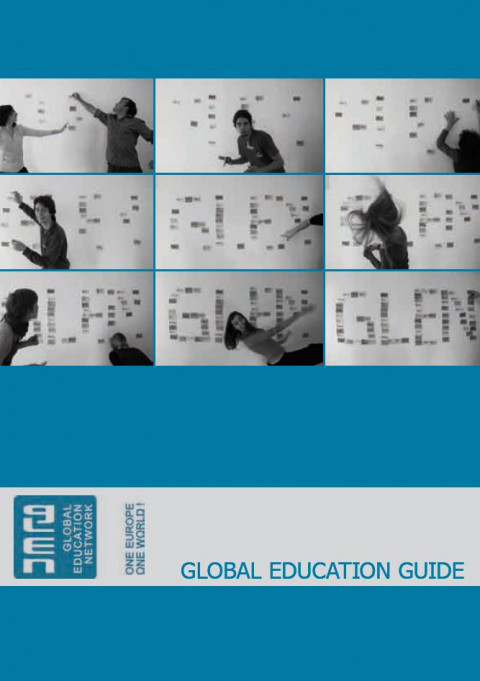 Global education guides 出版年份: 2009 机构作者: Global Education Network of Young Europeans (GLEN) This document was written as an introduction to global education and as a practical support tool for planning, managing and evaluating global education projects. It is addressed to members of GLEN, the Global Education Network of Young Europeans, as well as to other global educators. The following pages are the result of numerous discussions that have occurred during the last five years both within GLEN and with external global education practitioners and academics. Many of these discussions crystallised at the European Global Education Days (EGED), a five-day seminar that GLEN organised on the occasion of the network’s fifth anniversary in November 2008. The EGED brought together more than 70 global education activists, practitioners and academics from 15 European countries, with the aims of exchanging experiences and good practices of global education, discussing how to evaluate global education projects and measure impact; reflecting on the potential of global education as a tool for activists and how it relates to concepts such as citizenship or development; and using the results of these discussions for the future work of our network: planning global education projects and further engaging with other stakeholders. The world is currently going through a period of accumulated crises: the ecological crisis, the financial and economic crisis, the food crisis. And this on top of all the other problems: hunger, poverty, unequal distributions of resources, violent conflict, etc. The challenges which humankind is facing seem to be greater than ever. However, the Greek word ‘crisis’ does not mean downfall, but decision. We, as human beings and as citizens of this world, can decide to contribute our share for bringing about more just political and economic structures; and more sustainable, democratic, peaceful and inclusive ways of living together. If we do global education, it is in order to address exactly these issues; it is to empower people to become agents of change in view of this vision. So, in this spirit, let us use the present momentum and make the current ‘crisis’ a turning point. Guide d'éducation globale 出版年份: 2009 机构作者: Global Education Network of Young Europeans (GLEN) Ce document a été écrit comme une introduction à l'éducation mondiale et comme un outil de support pratique pour la planification, la gestion et l'évaluation des projets d'éducation globale. Il est adressé aux membres de GLEN, le Réseau Éducation Mondiale des Jeunes Européens, ainsi que d'autres éducateurs mondiaux. Les pages qui suivent sont le résultat de nombreuses discussions qui ont eu lieu au cours des cinq dernières années, tant au sein de GLEN et avec les praticiens de l'éducation mondiale externes et des universitaires. Beaucoup de ces discussions cristallisées lors des Journées Européennes Global Éducation (JEGÉ), un séminaire de cinq jours qui GLEN organisé à l'occasion du cinquième anniversaire du réseau en Novembre 2008. Le JEGÉ a réuni plus de 70 mondiaux éducation des militants, des praticiens et des universitaires de 15 pays européens, avec les objectifs de l'échange d'expériences et de bonnes pratiques de l'éducation mondiale, discuter de la façon d'évaluer les projets mondiaux d'éducation et de mesurer l'impact; réflexion sur le potentiel de l'éducation mondiale comme un outil pour les militants et comment il se rapporte à des concepts tels que la citoyenneté ou de développement; et en utilisant les résultats de ces discussions pour les travaux futurs de notre réseau: la planification des projets mondiaux d'éducation et engager davantage avec d'autres parties prenantes. Le monde traverse actuellement une période de crises accumulées: la crise écologique, la crise économique et financière, la crise alimentaire. Et cela au-dessus de tous les autres problèmes: la faim, la pauvreté, les distributions inégales des ressources, les conflits violents, etc. Les défis auxquels l'humanité est confrontée semblent être plus que jamais. Cependant, le mot grec ‘crise’ ne signifie pas la chute, mais la décision. Nous, en tant qu'êtres humains et en tant que citoyens de ce monde, pouvons décider de contribuer à provoquer des structures politiques et économiques plus justes; et des moyens plus durables, démocratiques, pacifiques et inclusifs de vivre ensemble. Si nous faisons l'éducation mondiale, il est dans le but de répondre exactement à ces questions; il est d'habiliter les gens à devenir des agents de changement en vue de cette vision. Donc, dans cet esprit, nous utilisons la dynamique actuelle et de faire la ‘crise’ actuelle un point tournant. 글로벌 교육 가이드 出版年份: 2009 机构作者: Global Education Network of Young Europeans (GLEN) 본 문서는 글로벌 교육을 소개, 계획 및 관리하고 글로벌 교육 프로젝트를 평가하기 위한 실질적 지원 도구로 작성되었다. 이것은 GLEN 멤버와 영 유로피언의 글로벌 교육 네트워크뿐 아니라, 다른 글로벌 교육자들을 위한 것이다. 다음의 내용은 GLEN 내부와 외부 글로벌 교육 실무자 및 학계 양측에서 지난 5년간 이뤄졌던 수많은 논의의 결과다. 이 논의의 대부분은 2008년 11월 GLEN 네크워크 5주년에 즈음하여 조직된 5일간의 세미나- ‘유러피언 글로벌 교육의 날(EGED)’에서 결정되었다. ‘유러피언 글로벌 교육의 날(EGED)’은 유럽 15개 국에서 70명 이상의 글로벌 교육 활동가, 실무자 및 학계 관계자들이 함께 하여 어떻게 글로벌 교육 프로젝트를 평가하고 그 영향을 측정하는 가에 대한 논의를 하였다. 또한 활동가를 위한 도구로써 글로벌 교육의 잠재력을 반영하는 것과 이를 어떻게 ‘시민의식’ 혹은 ‘개발’의 개념과 연계시키는 가에 대한 논의도 이어 나갔다. 아울러, 향후 우리의 네트워크 작업을 위한 본 논의들의 결과를 어떻게 사용하는 가에 대한 방안도 모색하였는데, 여기에선 글로벌 교육 프로젝트를 계획하고 더 나아가 다른 이해관계자들도 참여시키는 방안도 모색하였다. 세계는 현재 축적된 위기의 시간을 겪고 있다. 즉, 생태 위기, 금융 및 경제 위기, 식량 위기를 겪고 있다. 그리고 그 위에 기아, 빈곤, 불평등한 자원 분배, 폭력 충돌 등 다른 문제들도 산적하고, 이러한 문제들에 직면한 인류의 도전은 그 어느 때보다 중요하게 여겨진다. 그러나 그리스어 ‘위기’라는 단어는 ‘몰락’이 아니라 하나의 ‘결정’을 의미한다. 우리는 인류와 세계시민으로서 더 정의로운 정치와 경제구조를 이끌기 위해 우리 각자의 몫을 기여할 수 있고, 더불어 평화롭게 함께 살고, 더 지속가능하고 민주적인 것에 기여하는 방법을 찾을 수 있다. 우리가 글로벌 교육을 하는 것은 바로 이러한 문제점을 해결하기 위해서이다. 다시 말해서, 미래에 대한 비전을 갖고 변화의 동인이 되는 사람에게 힘을 실어 주는 것이다. 그러므로 우리는 이러한 정신으로 현재의 동력이 되어 오늘날의 위기를 전환점으로 만들도록 한다.
  Turning Students into Global Citizens 出版年份: 2016 作者: Fernando Reimers Prof. Fernando M. Remiers made the case for global citizenship education and shared his experiences through Ed Week.
  Russian regions for sustainable development: education and culture of peoples in Russian Federation; proceedings of the international conference 出版年份: 2010 作者: Ilona Graf | Natalia Dulepova | Nikolai Lyakhov | Vera Markova | Vladimir Sobyanin | Victoria Shatrova 机构作者: Novosibirsk State University The publication gives careful consideration to RF regional efforts to contribute undertaking a survey of educational contents and methods promoting cultural diversity, including traditional modes of transmission, in Siberia as a vast territory involving three greatest regions of Russian Federation. The mainstream of this recognition and accommodation of Siberian cultural diversity – efforts to create opportunities and facilities for culture-specific learning in each region, adapting teaching methods to the requirements of the everyday life of learners with the support of educational policymakers, educational professionals at all levels and local communities. The goal of publication is contributing to raising the awareness of Siberian population in recognizing the cultural dimension as a central pillar of the UNESCO decade «Education for Sustainable Development» (2005-2014). The publication is aimed at teachers, ethnologists, sociologists, linguists, philosophers, those researching the education and culture of peoples in Russia, government specialists, representatives of national-cultural communities of indigenous peoples and ethnic minorities. Régions russes pour le développement durable: l'éducation et la culture des peuples de la Fédération de Russie; Actes de la Conférence internationale 出版年份: 2010 作者: Ilona Graf | Natalia Dulepova | Nikolai Lyakhov | Vera Markova | Vladimir Sobyanin | Victoria Shatrova 机构作者: Novosibirsk State University La publication donne une attention particulière aux efforts régionaux RF pour contribuer d'entreprendre une enquête sur les contenus et les méthodes pédagogiques favorisant la diversité culturelle, y compris les modes traditionnels de transmission, en Sibérie comme un vaste territoire impliquant trois plus grandes régions de la Fédération de Russie. Le courant dominant de cette reconnaissance et d'hébergement de Sibérie diversité culturelle - des efforts pour créer des opportunités et des installations pour spécifiques à la culture d'apprentissage dans chaque région, en adaptant les méthodes d'enseignement aux exigences de la vie quotidienne des apprenants avec le soutien des décideurs éducatifs, professionnels de l'éducation du tout les niveaux et les communautés locales. Le but de la publication contribue à la sensibilisation de la population sibérienne dans la reconnaissance de la dimension culturelle comme un pilier central de l'UNESCO décennie «Education pour le développement durable» (2005-2014). La publication est destinée aux enseignants, ethnologues, sociologues, linguistes, philosophes, ces recherches sur l'éducation et la culture des peuples en Russie, les spécialistes du gouvernement, des représentants des communautés culturelles nationales des peuples autochtones et des minorités ethniques. Mudança climática em sala de aula: curso da UNESCO para professores secundários (fundamental II e ensino médio) sobre educação em mudança climática e desenvolvimento sustentável (EMCDS) 出版年份: 2014 作者: David Selby | Fumiyo Kagawa 机构作者: UNESCO Brasilia This course has been created with the goal of bringing climate change education outside the science classroom into the many other subject areas upon which climate change now has an impact, or will impact in the future, such as ethics, social studies, economics, political science, among others. The course materials are organized into four parts: 1. Course Framework and Overview, 2. Teachers’ Education Course daily materials, 3. Regional Resource Packs, 4. Daily Classroom Materials for teachers. These materials are all described in more detail and can be accessed from the Start Menu found on the following pages. This course is designed to enable teachers at the secondary level from diverse subject areas to introduce climate change education for sustainable development (CCESD) across the curriculum. UNESCO has identified the professional development of teachers in education for sustainable development as the top priority in recognition of the transformative role that teachers and teacher educators need to play in re-orienting education to help realize a sustainable future (UNESCO, 2005, p. 19). But good intentions for the professional development of teachers have fallen short in practice. Although taken up by enthusiasts, teacher education for sustainable development has rarely been mainstreamed, and, where there are courses, is often approached within a disciplinary as opposed to an interdisciplinary frame (Wals, A., 2009). If professional development in education for sustainable development is at an adolescent stage, teacher education in climate change education for sustainable development is in its infancy. For instance, according to a 2009 international comparative study on climate change education and sustainable development in ten countries, climate change education has peripheral status in educational research and practice, and when it is addressed it is only within science education (Læssøe,J. Schnack, K., Breiting, S. & Rolls, S., 2009). There is a clear and present need to respond to climate change challenges through systematic teacher education programmes that are not restricted to a single subject area. This teacher education course is an attempt to fill the current gap and is in line with one of UNESCO’s key objectives for climate change education for sustainable development, that is, to support teacher training on climate change for sustainable development (UNESCO, 2010, p. 9). The programme has four distinctive features: 1. It helps teachers to understand the causes, dynamics and impacts of climate change through a holistic approach. 2. Teachers are exposed to, and experience, a range of pedagogical approaches and techniques, that they can use in their own school environment. This includes engagement of themselves and their students in whole school and school-in-community approaches. 3. Teachers will develop their capacities to facilitate students’ community based learning. 4. Teachers will develop future-oriented and transformative capacities in facilitating climate change mitigation, adaptation, and disaster risk reduction learning. Outcome document on education and biodiversity conservation, adopted at the parallel event: international conference on biodiversity conservation and education for sustainable development: learning to conserve biodiversity in a rapidly changing world 出版年份: 2012 机构作者: Centre for Environment Education The Outcome Document from the two day International Conference on Biodiversity Conservation and ESD, attended by over 250 participants including educators and held as a parallel event inside COP 11, outlines a way forward by providing recommendations towards a strategic plan of action for ESD in the context of biodiversity conservation. The role of education and training in sustainable development: social, economic and environmental dimensions 出版年份: 2006 作者: Mohammad Jabir Ali | Abdallah AmboSaeedi | Jilani Lamloumi | Sulieman Sulieman 机构作者: UNESCO Beirut Education, Training and Sustainable Development are three fields for life were selected to be the topic in the Regional Workshop on the Role of Education and Training in Sustainable Development (Manama - Kingdom of Bahrain, 19-21 September 2005), as part of TVET-UNEVOC programme for 2004-2005, and follow-up on Bonn Declaration issued at the end of the International Expert Meeting on “Learning for Work, Citizenship and Sustainability”, Bonn, 25-28 October 2004. Thirty five (35) officials, experts and specialists from thirteen (13) Arab countries, UNESCO Offices in Beirut and Doha, and the International Centre for TVET - Bonn Centre took part in Bahrain Workshop. The Organizing Committee for the Workshop had highlighted the social, economic and enviromental dimensions of sustainable development, according to the plan of action of the UN Decade on Education for Sustainable Development (2005-2014). The main working papers discussed in the Workshop were developed into a reference study in TVET-UNEVOC Searies to reflect on future orientations in the fields related to Sustainable Development in the Arab countries. Le rôle de l'éducation et de la formation dans le développement durable: les dimensions sociales, économiques et environnementales 出版年份: 2006 作者: Mohammad Jabir Ali | Abdallah AmboSaeedi | Jilani Lamloumi | Sulieman Sulieman 机构作者: UNESCO Beirut L’éducation, formation et développement durable sont trois champs pour la vie ont été choisis pour être le sujet à l'atelier régional sur le rôle de l'éducation et de la formation dans le développement durable (Manama - Royaume de Bahreïn, 19-21 Septembre 2005), dans le cadre de TVET- programme UNEVOC pour 2004-2005, et le suivi de la Déclaration de Bonn émis à la fin de la réunion internationale d'experts sur «Apprendre pour le travail, la citoyenneté et la durabilité», Bonn, 25-28 Octobre 2004. Trente-cinq (35) fonctionnaires, experts et des spécialistes de treize (13) pays arabes, Bureaux de l'UNESCO à Beyrouth et à Doha, et le Centre international pour l'EFTP - Centre de Bonn ont pris part à Bahreïn Atelier. Le Comité d'organisation de l'atelier a mis en évidence les dimensions sociales, économiques et Enviromental du développement durable, selon le plan d'action de la Décennie des Nations Unies sur l'éducation pour le développement durable (2005-2014). Les principaux documents de travail abordés dans l'atelier ont été mis au point dans une étude de référence dans l'EFTP-UNEVOC Searies à réfléchir sur les orientations futures dans les domaines liés au développement durable dans les pays arabes.