
相关资源
探索丰富的全球公民教育资源,深化理解,促进研究、倡导、教学与学习。
共找到3,454条结果
 Rapport sur les résultats 2019 出版年份: 2019 机构作者: GPE Le partenariat met en oeuvre le plan stratégique GPE 2020, son plan stratégique pour la période 2016-2020, qui définit une série de mesures ambitieuses pour la réalisation des trois buts stratégiques suivants: But stratégique 1: Des résultats d’apprentissage meilleurs et plus équitables grâce à un enseignement et un apprentissage de qualité But stratégique 2: Renforcement de l’équité, de l’égalité des sexes et de l’inclusion pour tous dans un cycle complet d’enseignement de qualité, en donnant la priorité aux plus démunis et aux plus marginalisés, notamment en raison de leur sexe, leur handicap, leur appartenance ethnique ou parce qu’ils se trouvent dans une situation de conflit ou de fragilité But stratégique 3: Des systèmes éducatifs efficaces et efficients offrant des services d’éducation équitables et de qualité pour tous Ces efforts sont alignés sur l’objectif de développement durable 4, l’engagement mondial en faveur d’une éducation inclusive et équitable de qualité pour tous.
 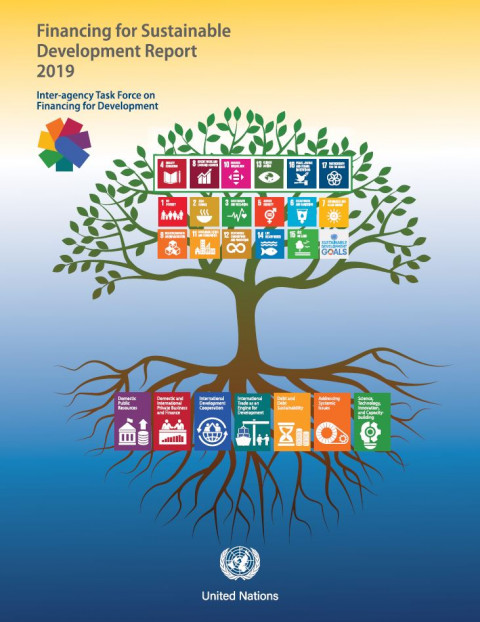 Financing for Sustainable Development Report 2019: Report of the Inter-agency Task Force on Financing for Development 出版年份: 2019 机构作者: United Nations (UN) This report provides a comprehensive assessment of the state of sustainable finance. Prepared by more than 60 UN agencies, programmes and offices and other relevant international organizations, the report puts forward a set of policy recommendations for achieving tangible progress on financing for sustainable development in 2019 and beyond.The report warns that creating favorable conditions is becoming more challenging. Rapid changes in technology, geopolitics, and climate are remaking our economies and societies, and existing national and multilateral institutions -- which had helped lift billions out of poverty -- are now struggling to adapt. Confidence in the multilateral system has been undermined, in part because it has failed to deliver returns equitably, with most people in the world living in countries with increasing inequality.
 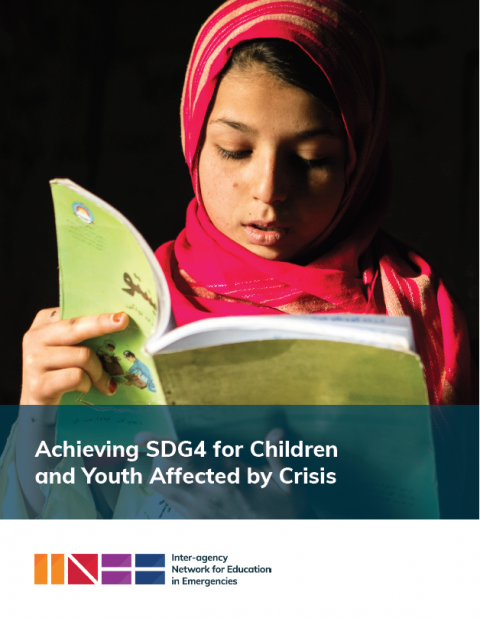 Achieving SDG4 for Children and Youth Affected by Crisis 出版年份: 2019 机构作者: Inter-agency Network for Education in Emergencies (INEE) With the Sustainable Development Goal 4 (SDG4), the global community committed to ensuring a quality education for all children and youth. Despite this promise, children and youth in crisis contexts continue to be neglected. We will never achieve SDG4 unless all children and youth affected by conflict and crisis are able to access and attend school and learn in a quality, safe, relevant and inclusive education environment. There is an urgent need for governments and the international community to make and adhere to political, financial and legal commitments if we truly are to leave no child behind. This brief offers recommendations for addressing the disparities in safe, quality, inclusive education for children affected by crisis. It begins by highlighting key areas for policy and practice, and looks at ways to use the various tools developed by the Inter-agency Network of Education in Emergencies (INEE). It takes a look at overall themes and trends, as well as the specific issues of gender disparities, the importance of supporting teachers, children’s psycho-social wellbeing and the protection and safety of education in conflict.
  The Mandate of UNESCO for Peace in the era of 「The Rise of Exclusionism」 出版年份: 2019 作者: 한경구 | 유성상 | 성지은 | 조동준 | 강인욱 | 김성해 | 루츠 묄러 | 최동주 机构作者: 대한민국 외교부 | Korean National Commission for UNESCO Multilateralism has gradually been losing ground in the international community recently, owing to rapid changes in ideology, exemplified by the America First policy, Brexit, and the rise of many right wing parties. The growth of such ideologies in the hearts and minds of people, implies that diplomacy, a form of high politics between government bureaucrats, is no longer sufficient to guard the current order.To respond to this challenge, the United Nations, the greatest symbol of postwar multilateralism, has set the reaffirmation of the UN‟s values worldwide as one of its priorities for 2019. UNESCO has a leading role to play in leading this effort, as the UN specialist organization mandated to build the defenses of peace in the minds of men and women through intellectual cooperation in the field of education, science, and culture. The aim of this session is to discuss various ways in which UNESCO can help to heal the divisions in people‟s thinking and contribute to peace-building in the current global context. 배타주의 확산 시대에 있어 평화를 향한 유네스코의 역할 (2019 제주포럼 유네스코 세션) 出版年份: 2019 作者: 한경구 | 유성상 | 성지은 | 조동준 | 강인욱 | 김성해 | 루츠 묄러 | 최동주 机构作者: 대한민국 외교부 | 유네스코한국위원회 최근 국제사회는 미국우선주의, 브렉시트, 극우정당의 부상 등 여러 급격한 변화로 인해 2 차 대전 이후 70 여 년간 다져온 다자주의 기반을 조금씩 잃어가고 있다. 사람들의 마음속에서부터 시작되는 이러한 현상은 국가 간 외교라는 „상위정치‟만으로는 다자주의를 지키기 힘든 시대가 왔음을 의미하기도 한다. 이러한 가운데 현 다자주의 체제의 상징인 UN 은 금년 중점과제 중 하나로 “전세계적인 UN 가치 강화”를 내걸었다. UN 기구 중 교육과학문화의 지적 협력을 통해 인간의 마음에 평화의 방벽을 세우는 것을 사명으로 하는 UNESCO 를 통해 인류의 마음 속 갈등과 분열을 치유하고 평화로 나아가기 위한 여러 구체적인 방안을 고민해보고자 한다.
 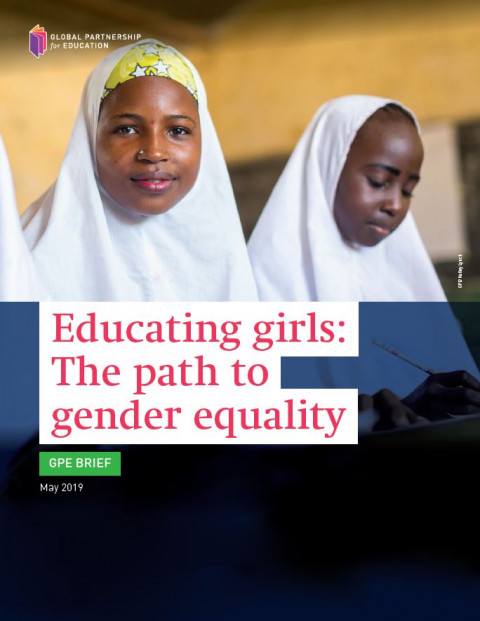 Educating Girls: The Path to Gender Equality; GPE Brief 出版年份: 2019 机构作者: GPE Despite significant gains in recent years, education outcomes for girls in developing countries continue to lag behind those of boys. Adolescence is a particularly critical stage for girls, marked by rapid biological and psychological changes as well as powerful social expectations of how their lives should unfold. For many girls in developing countries, adolescence also marks a time of extreme vulnerability: to child marriage, teenage pregnancy, sexual violence, nutritional deficiency and exposure to HIV/AIDS. It also marks a time when pressures of social norms and cultural practices place new restrictions on what girls can do and who they can be. Lack of access to education increases vulnerability to these risks and constraints. Conversely, being in education acts as a powerful protective factor as well as a route to empowerment for girls to determine their own destiny. Achieving gender equality means delivering on three interlinked areas for girls: health, education and safety. GPE uses its results-based partnership model to work with developing countries to prioritize planning and spending on girls’ education throughout the education cycle, to achieve gender equality. Ensuring girls and boys have equal access to inclusive, quality education is a core principle of GPE’s strategic plan, GPE 2020, and GPE’s Gender Equality Policy and Strategy 2016-2020. At the advocacy level and in conjunction with its partners, GPE is also promoting working across sectors to meet the holistic needs of girls, from a gender equality perspective.
  Guide rapide des indicateurs de l'éducation pour l'ODD 4 出版年份: 2018 机构作者: UNESCO Institute for Statistics (UIS) Ce guide sert de référence rapide sur la manière de suivre les progrès accomplis vers la réalisation de l’Objectif de développement durable 4 (ODD 4) sur une éducation de qualité. Il fournit les explications essentielles sur les cibles de l’ODD 4, leurs indicateurs, le mode d’élaboration des indicateurs et où trouver les données nécessaires à ces indicateurs. Quick guide to education indicators for SDG 4 出版年份: 2018 机构作者: UNESCO Institute for Statistics (UIS) This guide serves as a quick reference on how to monitor progress towards Sustainable Development Goal 4 (SDG 4) on quality education. It provides basic explanations of SDG 4 targets, their indicators, how they are created and where to find the information needed for these indicators. Guía abreviada de indicadores de educación para el ODS 4 出版年份: 2018 机构作者: UNESCO Institute for Statistics (UIS) Esta guía sirve de referencia rápida sobre cómo monitorear el progreso en la consecución del Objetivo de Desarrollo Sostenible 4 (ODS 4) relativo a la educación de calidad. El texto ofrece explicaciones básicas acerca de las metas del ODS 4, sus indicadores, cómo se establecen y dónde encontrar la información necesaria para estos indicadores
  Improving early-grade performance for 2030: measurement and estimation options for innovative policy dialogue 出版年份: 2019 作者: Helen Abadzi 机构作者: UNESCO International Bureau of Education (IBE) Governments and donors are faced with the challenge of attaining the 2030 Sustainable Development Goals (SDGs). One of the challenges for education is to measure and set benchmarks that indicate whether people have developed sufficient core literacy and numeracy skills to function in the complex literate environments of the 21st century. Benchmark setting has proved difficult in education because stakeholders find it hard to define which variables really matter and how they can be measured. Measurement of skills particularly in grades 1‐3 is highly relevant for policy dialogue, because this is when many students fall behind. Donors use existing national, regional, and international assessments, for which longitudinal data are available. However, assessments require reading fluency and do not focus on the lowest literacy and numeracy levels, so they may overestimate or underestimate learners’ skills in grades 1‐3. Governments need specific feedback as soon as possible of likely student performance by 2030 so that they can take measures to improve performance by then. This monograph aims to publicize options for measuring early literacy and numeracy skills, using neuroscientific insights. These may help develop interventions that could accelerate early learning, facilitate monitoring and promote policy interventions to accelerate the achievement of the SDG 4.1 goals in various countries by 2030. The research evidence presented indicates that: Performance benchmarks can be set using reading and math fluency research;The performance of lower grades worldwide could be monitored through brief tests, measuring concepts that have high predictive validity, derived from cognitive science;If these test results were linked to international and national assessments, statistical models could be developing to estimate roughly how populations of various countries are likely to score in 2030;Clear feedback, along with recommendations for appropriate interventions, would allow countries and donors to engage in targeted policy dialogue to close the gap;Improved performance in grade 1 would improve performance in subsequent grades;With sufficient emphasis, funding, and space logistics, illiteracy among low‐income students could be eliminated in about 7 years and near‐universal and sustainable literacy could be attained by 2030.