
相关资源
探索丰富的全球公民教育资源,深化理解,促进研究、倡导、教学与学习。
共找到2条结果
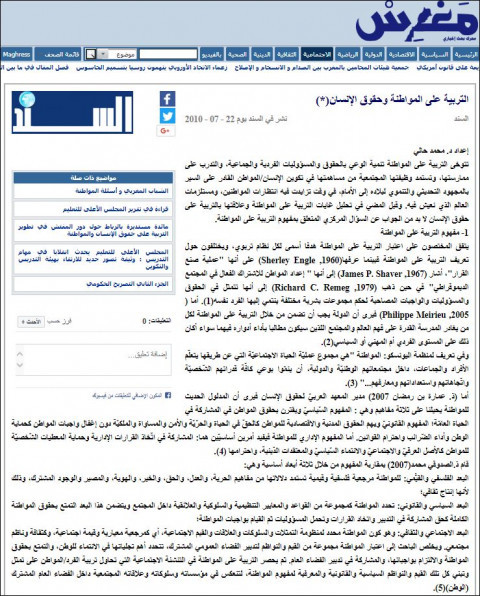 التربية على المواطنة وحقوق الإنسان 出版年份: 2010 作者: محمد حالي يقدم هذا المقال تعريفات لمقوّمات مفهوم التربية على المواطنة بأبعاده الثلاثة، على خلفية حالة المغرب، انطلاقاً من أن التربية على المواطنة تتوخى "تنمية الوعي بالحقوق والمسؤوليات الفردية والجماعية، والتدرب على ممارستها، وتستمد وظيفتها المجتمعية من مساهمتها في تكوين الإنسان/المواطن القادر على السير بالمجهود التحديثي والتنموي لبلاده إلى الأمام، في وقت تزايدت فيه انتظارات المواطنين، ومستلزمات العالم الذي نعيش فيه". أما الأبعاد الثلاثة فهي: 1) البعد الفلسفي والقيمي: 2) البعد السياسي والقانوني 3) البعد الاجتماعي والثقافي. إلى ذلك، فإن المقال يعالج المحاور التي تتكامل في تقديم المفهوم: 1) التربية على المواطنة بتعريفاتها المختلفة (ومنها أنها تشكل" هدفاً أسمى لكل نظام تربوي") ،؛ و2) مواصفات المواطن الصالح والقيم المعلنة في " الميثاق الوطني للتربية والتكوين" (القيم الإسلامية ووقيم الهوية الحضارية،ن وقيم المواطنة، وقيم حقوق الإنسان)؛ 3) غايات التربية على المواطنة؛ 4) أهداف التربية على المواطنة؛ 5) الكفايات المرجعية المرتبطة بالتربية على المواطنة؛ 6) وسائل وطرق تحقيق الأهداف؛ 7) علاقة التربية على المواطنة بالتربية على حقوق الإنسان. وتختم المقالة بالإشارة إلى أن التربية على المواطن وحقوق الإنسان "تتم بواسطة ثلاث قنوات أساسية، تتعاضد في ما بينها وتتكامتل أهدافها وهي: العائلة، البيئة الاجتماعية والسياسية، والمدرسة". Education on Citizenship and Human Rights 出版年份: 2010 作者: محمد حالي This article presents definitions for the determinants of the concept of education on citizenship, in its three principles, using Morocco as a background, considering that education on citizenship aims at “Developing awareness of the rights and responsibilities, both individual and collective, training on practicing it and that citizenship derives its social function from its contribution to the formation of the human being/citizen who is capable of carrying forward the modernizing and developmental effort of his country, at a time where the citizens’ expectations and the living requirements of today’s world are growing”.The three dimensions of the definition are: 1) the philosophic and value dimension; 2) the legal and political dimension; 3) the social and cultural dimension. In addition, the article deals with the parameters that complement each other in presenting the concept: 1) Education on citizenship with its different definitions; 2) The attributes of the Good Citizen and the declared values in the Moroccan “National Charter of Education and Training” (namely the Islamic values, values of the civil identity, identity values and human rights values); 3) the aims of education on citizenship; 4) the objectives of education on citizenship; 5) The relevant reference capacities; 6) Means and ways of implementing the objectives; 7) the relationship between education on citizenship and the education on human rights. The article concludes by pointing that education on citizenship in practiced through three main channels that synergize and integrate their objectives: the family, the social environment and the school”.