
相关资源
探索丰富的全球公民教育资源,深化理解,促进研究、倡导、教学与学习。
共找到12条结果
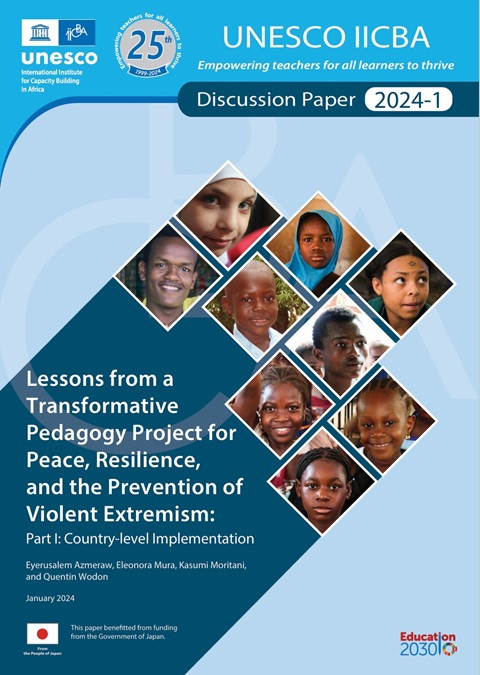 Lessons from a Transformative Pedagogy Project for Peace, Resilience, and the Prevention of Violent Extremism: Part I; Country-Level Implementation 出版年份: 2024 作者: Eyerusalem Azmeraw | Quentin Wodon | Eleonora Mura | Kasumi Moritani 机构作者: UNESCO International Institute for Capacity-Building in Africa (IICBA) From 2017 to 2022, UNESCO’s International Institute for Capacity Building in Africa (IICBA) led a series of projects for peacebuilding and the prevention of violent extremism through education with support from the Government of Japan. This two-part paper draws lessons from the projects. The first part of the paper briefly explains the transformative pedagogy approach that guided project implementation and provides examples of changes that were implemented at the country level under the projects. The analysis is qualitative, with the aim being to outline, through country examples, what can be achieved through such projects. Lessons on factors contributing to impact are also outlined.
 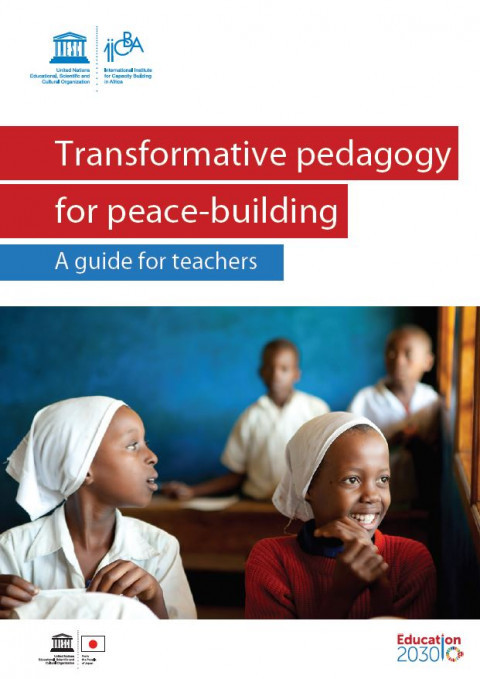 Transformative Pedagogy for Peace-building: A Guide for Teachers 出版年份: 2017 机构作者: UNESCO International Institute for Capacity-Building in Africa (IICBA) This publication is a guide for teachers and teacher trainers on transformative pedagogy so that they are able to empower youth with peace-building knowledge, skills and competencies necessary to develop into advocates and actors of peace.The guide particularly aims to introduce teachers to the foundation of conflict analysis and peace-building and to equip them with a learner-centered approach to peace education and community engagement.This guide is a resource for educators to engage and support youth in their journey to becoming active peace-builders and fostering transformation in the Horn of Africa and Surrounding Countries.
 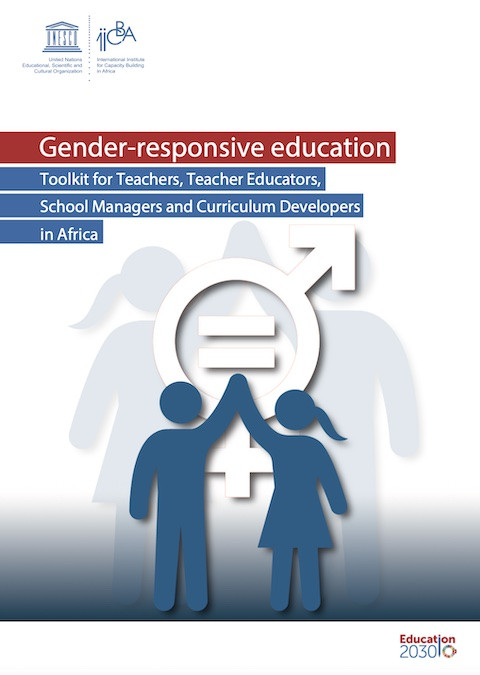 Gender-Responsive Education: Toolkit for Teachers, Teacher Educators, School Managers and Curriculum Developers in Africa 出版年份: 2020 作者: Dawit Mekonnen | Haregewoin Cherine 机构作者: UNESCO International Institute for Capacity-Building in Africa (IICBA) This GRE Toolkit is intended to address gender equality in education through intervention across the whole education sector. More specifically, the toolkit contributes to the enhancement of institutional capacities to develop gender responsive curricula, evaluate teaching-learning materials, organize/create gender responsive classroom interaction, eliminate stereotypes in teaching and learning materials, support improvement of the teaching methods and learning assessment techniques in schools and Teacher Training Institutes.The Toolkit is a guide for educators who plan to facilitate gender-responsive education. As such it consists of activities, tools and notes to the facilitators in addition to presenting conceptual discussions and relevant data.
 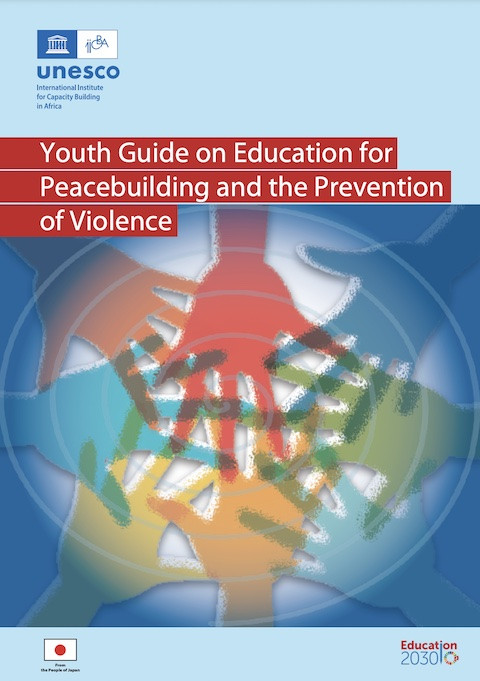 Youth Guide on Education for Peacebuilding and the Prevention of Violence 出版年份: 2022 机构作者: UNESCO International Institute for Capacity-Building in Africa (IICBA) This publication is a training guide for the youth in both formal or non-formal education. It is a resource to work with children and young people in various settings, including schools, non-formal educational program, community activities and other settings. The goal of the training guide is therefore the youth to become a facilitator with the disposition, knowledge, skills and commitment to support other youth in developing their full potential as peace-builders. It provides a foundation of conflict analysis, peacebuilding and describes a learner centered approach to peace education and community engagement. Guide jeunesse sur l’éducation pour la consolidation de la paix et de la prévention de la violence 出版年份: 2022 机构作者: UNESCO International Institute for Capacity-Building in Africa (IICBA) Cette publication est un guide de formation pour les jeunes de l’éducation formelle ou non formelle. Il s’agit d’une ressource pour travailler avec les enfants et les jeunes dans différents contextes, notamment dans les écoles, les programmes d’éducation non formelle, les activités communautaires et autres. L’objectif de ce guide de formation est donc de permettre aux jeunes de devenir des animateurs dotés de la disposition, des connaissances, des compétences et de l’engagement nécessaires pour aider d’autres jeunes à développer pleinement leur potentiel de bâtisseurs de paix. Il fournit les bases de l’analyse des conflits et de la construction de la paix et décrit une approache de l’éducation à la paix et de l’engagement communautaire centrée sur l’apprenant.
  Transformative pedagogy for learning to live together in Southern Africa: a practical guide 出版年份: 2022 机构作者: UNESCO International Institute for Capacity-Building in Africa (IICBA) IntroductionEducation is a powerful force for peacebuilding and transformation: it can contribute to changing individuals and communities, promoting a more just and equitable world fostering inclusion, social cohesion and ultimately contributing to creating peaceful societies. Teachers play a central role in the establishment of knowledge, attitudes and values among young people; they also empower them to propose alternative narratives, to engage with their communities and to contribute to building peaceful societies through their actions.This work can be done through subject areas, e.g., history, civic and moral education, art, music, sports etc., or through dedicated subjects. In any case, there is a need to equip teachers with specific skills and knowledge and this guide can also be used in science subjects.This work cannot begin or take place in the school environment only. It is important to establish a continuum between the school and its surrounding environment. This requires knowledge of the local context and mobilization of organizations and/or community stakeholders. All these aspects are building blocks of transformative pedagogy, which is the central element of this Guide. Chapter One provides concrete elements of analysis to help understand violence and its root causes in the SADC region and to identify prevention strategies. Chapter Two discusses the importance of education, highlighting key elements that contribute to education for peace building and transformation. Chapter Three focuses on the importance of fostering ethical reflections as spaces for dialogue and identity building to develop a sense of purpose and belonging. Chapter Four provides concrete approaches for teachers to adopt Transformative Pedagogy .Chapter Five highlights core competences for Learning to Live Together understood as the combination of knowledge, skills and attitudes essential to promote mutual understanding and social cohesion (the core competencies presented do not constitute an exhaustive list). Chapter Six discusses learners empowerment and participation in community engagement, equipping teachers with concrete tools and approaches to support learners as active change-makers to transform their communities. Chapter seven focuses on assessment as a key component of the transformative learning process allowing both teachers and learners to self-reflect, make connections, understand where they are in the learning process, how they arrived there and what questions they may still have. Chapter Eight introduces concrete activities for learners that can inspire teachers, as well as provide some ideas of initiatives that can be organised. A table at the beginning of Chapter Eight connects the relevant contents of the Guide with each activity presented.
  UNESCO IICBA: strategic plan 出版年份: 2019 机构作者: UNESCO International Institute for Capacity-Building in Africa (IICBA) UNESCO IICBA’s Strategic Plan for 2018-2021 is guided by its mandate and mission to strengthen the capacity of Member States in Africa in teacher policy and development. This work is vital to realizing its vision of an integrated, prosperous and peaceful Africa where everyone has access to qualified, motivated and professionally supported teachers. This plan is supported by a vision for Strategic Partnerships, because UNESCO IICBA recognizes their value in promoting regional and national cooperation in teacher-related issues, and in fostering dialogue on teachers and education. Strategic partnerships have three objectives:Successfully implement UNESCO IICBA’s Strategic Plan 2018-2021 Ensure the efficiency and effectiveness of resource mobilizationStrengthen advocacy, cooperation and coordination mechanisms The Strategic Plan is also supported by a Communication Strategy that covers all of UNESCO IICBA’s programme areas and will support collaboration, coordination and institutional operations. The strategy aims to contribute to effective communication that will:Help to fulfill UNESCO IICBA’s strategic goals and objectivesAmplify the visibility of UNESCO IICBA to its stakeholdersInform partners and donors on implementation progress, and demonstrate UNESCO IICBA’s accountabilityEnsure people understand what UNESCO IICBA represents and doesImprove teachers’ professional image and raise awareness to address teachers’ issues in AfricaKeep UNESCO IICBA team members proud, motivated, innovative and accountable in their tasks
 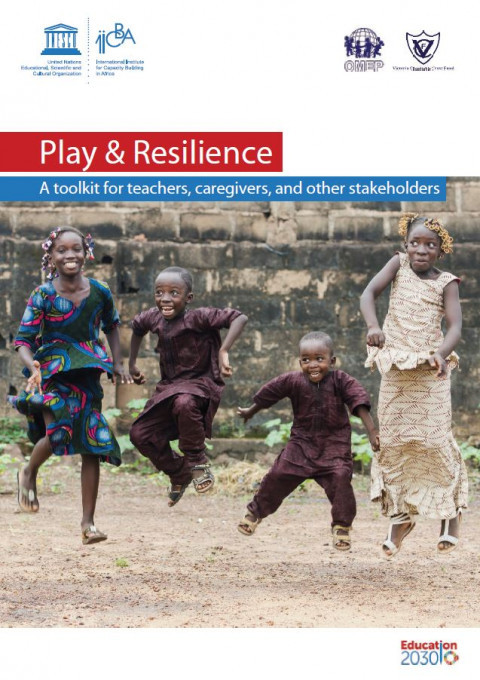 Play & Resilience: A toolkit for teachers, caregivers, and other stakeholders 出版年份: 2019 机构作者: UNESCO International Institute for Capacity-Building in Africa (IICBA) This publication is a toolkit for teachers, caregivers, community members and other stakeholders in the Early Childhood Care and Education Landscape.This toolkit is aimed at fostering Resilience in children through playbased strategies.
 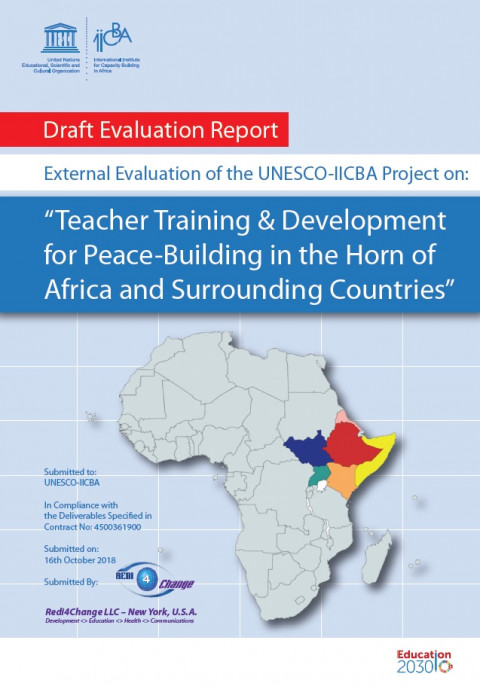 [Draft Evaluation Report] External Evaluation of the UNESCO-IICBA Project on: “Teacher Training & Development for Peace-Building in the Horn of Africa and Surrounding Countries” 出版年份: 2018 机构作者: UNESCO International Institute for Capacity-Building in Africa (IICBA) The project on “Teacher Training and Development for Peace-Building in the Horn of Africa and Surrounding Countries” was designed by UNESCO-IICBA and financed by the Government of Japan. The project benefitted six conflict-affected countries; Ethiopia, Eritrea, Somalia, Kenya, Uganda, and South Sudan by building on the mandate and niche expertise of UNESCO-IICBA in teacher education, as well as benefiting from the empathetic insights and financing of the Government of Japan.This evaluation report analyses the design, implementation, and consolidation of the project to assess the likelihood that it can facilitate peace education as an effective and integral part of the national education systems. The project’s short timeframe and modest financing mean that the evaluation could not credibly deal with its outcomes and impact; but efforts are made to gauge the uptake and sustainability of this project as a vehicle for promoting peace education and so help to prevent violent conflict and cultivate a culture of peace in the countries concerned.
 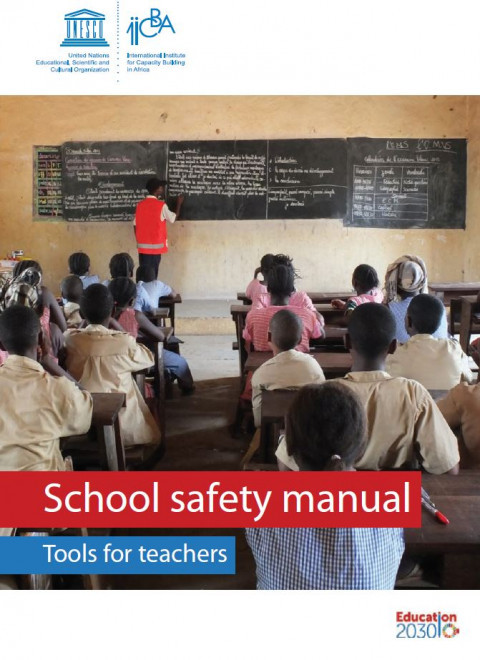 School Safety Manual: Tools for Teachers 出版年份: 2017 机构作者: UNESCO International Institute for Capacity-Building in Africa (IICBA) This manual was produced as part of the Teacher Training and Development for Peace-building in the Horn of Africa and Surrounding Countries project and aims to introduce teachers to the knowledge and skills needed for the establishment, maintenance and sustainment of basic school safety. As more children are enrolling in school in Africa, creating a safe and peaceful environment must be a top priority of teachers and educational institutions.The responsibility of schools to provide a safe environment for their students has been affirmed in the United Nations (UN) Sustainable Development Goal (SDG) four on Education.