
相关资源
探索丰富的全球公民教育资源,深化理解,促进研究、倡导、教学与学习。
共找到3条结果
 Saving our world heritage 出版年份: 2023 作者: Hopkinson, Leo 机构作者: UNESCO
 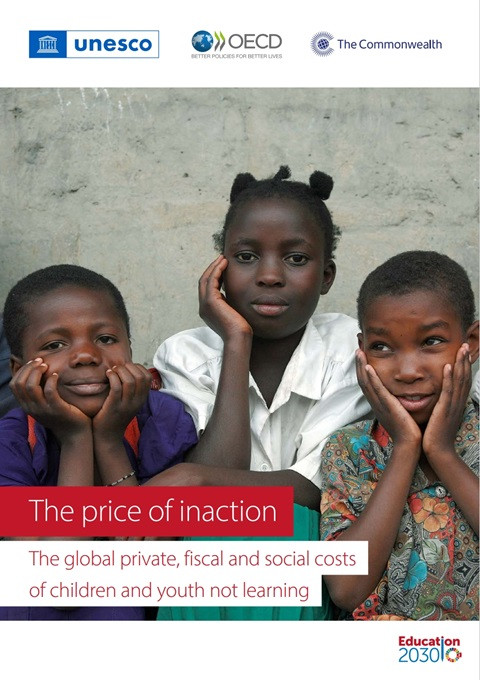 The Price of Inaction: The Global Private, Fiscal and Social Costs of Children and Youth Not Learning 出版年份: 2024 作者: Giorgio Brunello | Lorenzo Rocco | Matthias Eck 机构作者: UNESCO | Organisation for Economic Co-operation and Development (OECD) | Commonwealth Secretariat Despite efforts by countries, the number of out-of-school children remains significant, with 128 million boys and 122 million girls excluded from schooling. Educational skills deficits are also immense – 57 per cent of the world’s children have not gained basic skill levels. UNESCO, OECD and the Commonwealth Secretariat have developed the first global report to illustrate the monetary costs to economies around the world of leaving children and youth behind in education. Using available evidence, the report calculates the costs, globally and by region, of children and youth that are not in school or gaining basic skills. Calculations are also provided for twenty selected countries in which there are gender disparities in education at either girls’ or boys’ expense. If governments were to increase efforts so that every child was in school and achieving basic skills, the future world GDP would raise by more than US$6.5 trillion annually, not to mention eliminating the social costs of failure. This publication offers the evidence and insights that show that for economic development to accelerate, so must prioritizations and investments in education and gender-transformative action.
 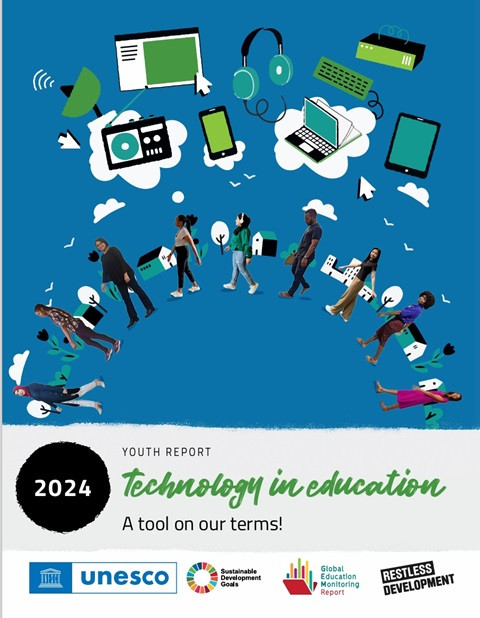 Youth Report 2024: Technology in Education; A Tool on Our Terms! 出版年份: 2024 机构作者: UNESCO | Global Education Monitoring Report Team | Restless Development The 2024 Youth Report on technology in education is the result of an extensive consultation process in partnership with Restless Development involving +1500 youth and students across 8 regions. The consultations invited participants to reflect on the key challenges and opportunities for the use of technology in education in their regions through the lenses of the recommendations in the global 2023 Global Education Monitoring Report on technology in education: Technology on our terms. The discussions centred on the need for the use of technology in education to be appropriate for national and local contexts and to be equitable and leave no one behind. The report calls for decisions about technology in education to keep learners at the centre when deciding whether the use of technology in education would be appropriate, equitable, evidence-based, and sustainable. Through this report, young people have described what technology on their terms would look like. It concludes with a call to action calling which highlights concrete recommendations that governments can follow to ensure that technology in education is on youth terms.