
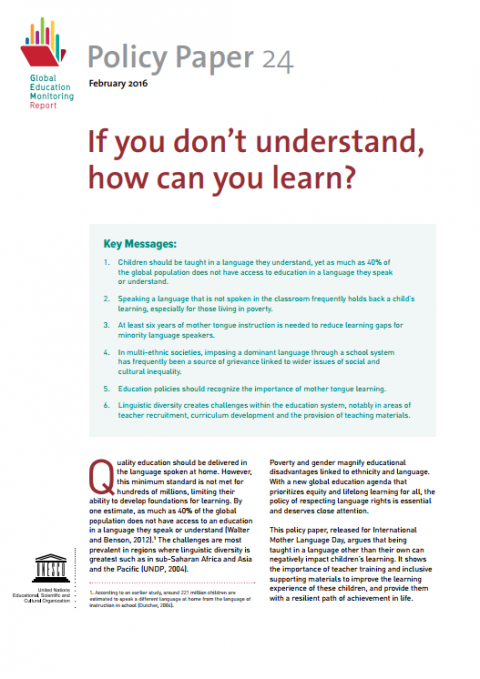
فيكف مهفت لا تنك اذإ ؟مَّلعتت نأ كل
- المؤلف المؤسسي
- منظمة الأمم المتحدة للتربية والعلم والثقافة (UNESCO)
- الترتيب
- 9 p.
- لغة المورد
- الإنجليزيةالفرنسيةالإسبانيةالروسيةالعربيةالصينية
- سنة النشر
- 2016
- الموضوعات
- التنوع / محو الأمية الثقافية / الشمولية
- أنواع الموارد
- الأوراق البحثية/ مقالات المجالات
- المناطق
- جميع دول العالم
Key Messages:
1. Children should be taught in a language they understand, yet as much as 40% of the global population does not have access to education in a language they speak or understand.
2. Speaking a language that is not spoken in the classroom frequently holds back a child’s learning, especially for those living in poverty.
3. At least six years of mother tongue instruction is needed to reduce learning gaps for minority language speakers.
4. In multi-ethnic societies, imposing a dominant language through a school system has frequently been a source of grievance linked to wider issues of social and cultural inequality.
5. Education policies should recognize the importance of mother tongue learning. 6. Linguistic diversity creates challenges within the education system, notably in areas of teacher recruitment, curriculum development and the provision of teaching materials.
موارد ذات صلة
-
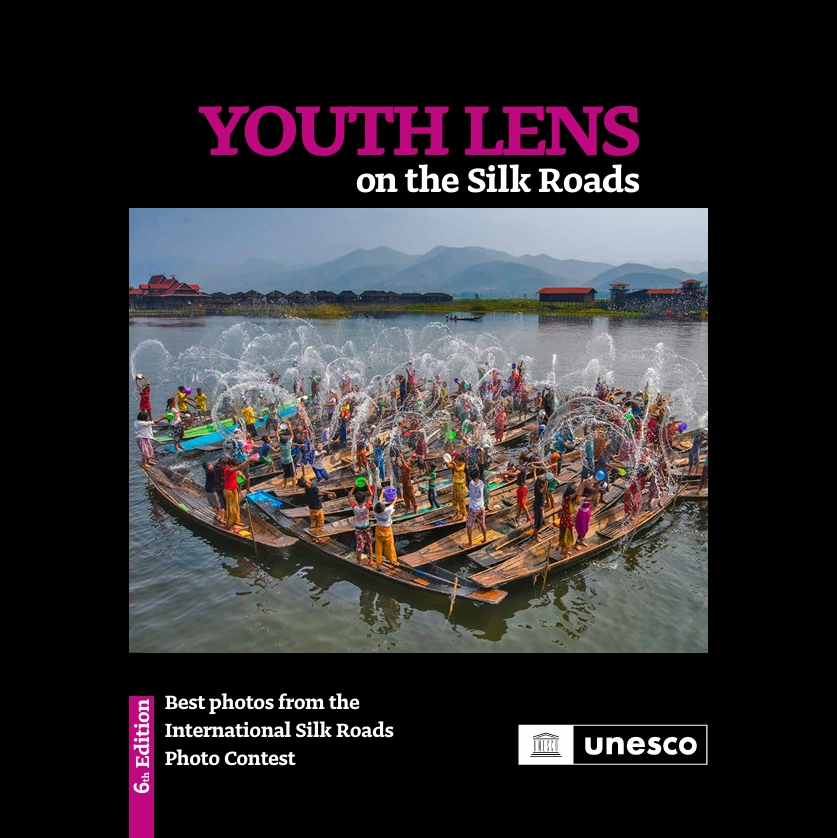 Youth Lens on the Silk Roads: Best Photos from the International Silk Roads Photo Contest; 6th Edition
 -
 UNESCO Framework for Culture and Arts Education: Implementation Guidance
 -
 The Representation of Jews, Judaism and Antisemitism in School Textbooks and Curricula in Europe
 -
 Strategies to Counter Antisemitism: A Handbook for Educators