
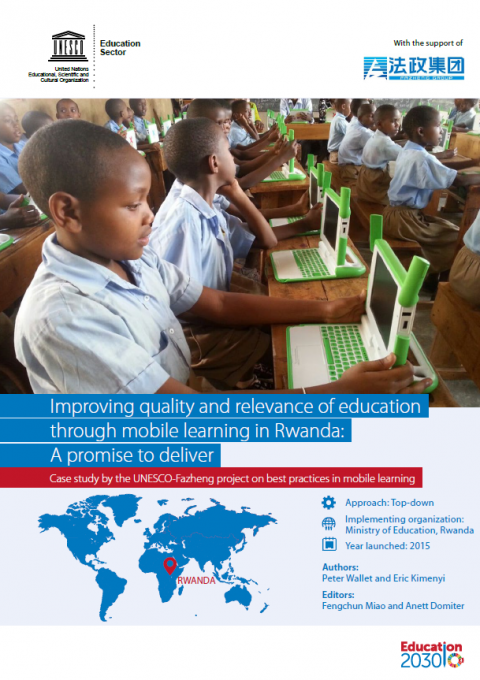
Improving quality and relevance of education through mobile learning in Rwanda: a promise to deliver: case study by the UNESCO-Fazheng project on best practices in mobile learning
- المؤلف المؤسسي
- منظمة الأمم المتحدة للتربية والعلم والثقافة (UNESCO)
- الترتيب
- 24 p.
- لغة المورد
- الإنجليزية
- سنة النشر
- 2019
- الموضوعات
- العولمة والعدالة الاجتماعية / التفاهم الدوليالتنمية المستدامة / الاستدامةالمبادرات التحويلية / الأساليب التربوية التحويلية
- أنواع الموارد
- الأوراق البحثية/ مقالات المجالاتتقارير المؤتمر والبرنامج
- مستوى التعليم
- التعليم الابتدائيالتعليم الثانويأخرى
- المناطق
- إفريقيا
- مكان النشر
- Paris
Rwanda’s education sector is evolving through the adoption of information and communication technology (ICT ). Whereas the focus was previously on the extensive deployment of laptop devices, it is shifting towards advancing adaptive child-centred learning and the use of ICT augmented environments to enrich teaching and learning. In developing countries, however, an orientation frequently remains to select strategies which have previously shown to be successful in developed contexts without taking into account the full range of elements required for effective implementation including a comprehensive assessment of the financial implications required to ensure longer term sustainability.
This case study aims to showcase Rwanda’s customised approach to the integration of ICT in classrooms adapted to meet the particular needs of the Rwandan education system. The SMARTRwanda Master Plan lays out a vision to transform Rwanda’s economy by leveraging the use of ICT. Aligned to SMART Rwanda, the Ministry of Education (MINEDUC) is implementing the SMARTClassroominitiative under its ICT in Education Master Plan to reach all schools by 2020. Although there have been several challenges encountered during the various phases of implementation, more than half of all schools across the country are now equipped with ICT devices and many teachers have undergone various capacity-building initiatives to make better use of ICT in teaching and learning. More work is required in order to develop a fully functioning ICT in education ecosystem in Rwanda; nevertheless, this case study demonstrates progress made thus far and describes the various system stakeholders, their roles, responsibilities and contributions to date to improve access, quality and relevance of education through ICT adoption.
موارد ذات صلة
-
 IIEP-UNESCO 12th Medium-Term Strategy: 2026–2029
 -
 Advancing Intergenerational Learning: Identifying Challenges and Opportunities for Older Adults; Integrated Case Study Report
 -
 Digital Empowerment for Lifelong Learning and Transformative Andragogy (DELTA) for Adult Educators: Introduction to the DELTA Framework and Resources
 -
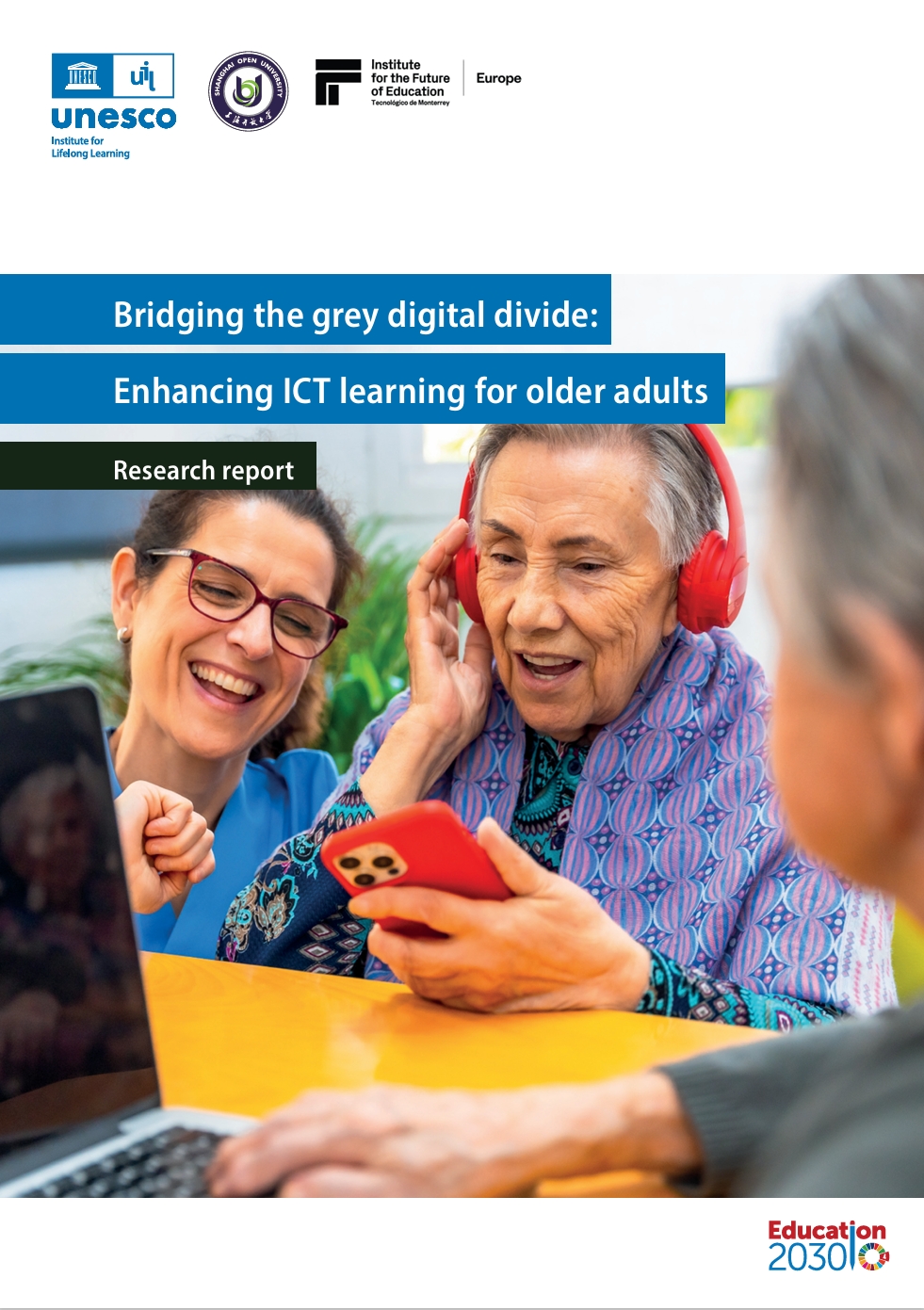 Bridging the Grey Digital Divide: Enhancing ICT Learning for Older Adults; Research Report