
الموارد
استكشف مجموعة واسعة من الموارد القيمة حول تعليم المواطنة العالمية لتعميق فهمك وتعزيز البحث والمناصرة والتعليم والتعلم.
تم العثور على 1,329 نتيجة
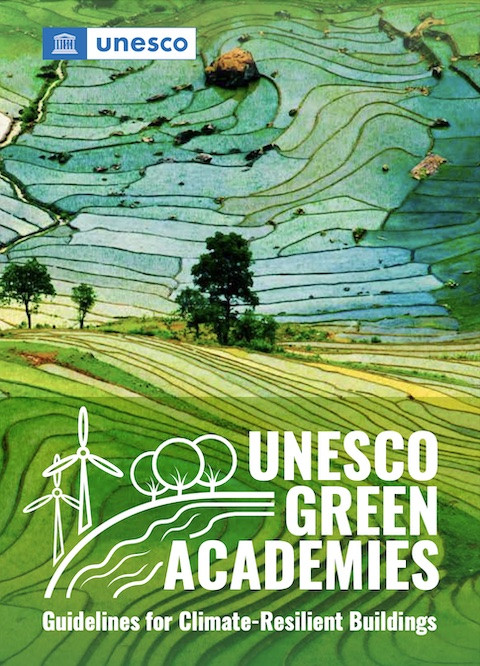 联合国 教科文组织 绿色学院: 气候适应型学校指南 سنة النشر: 2019 المؤلف المؤسسي: UNESCO Bangkok 本手册鼓励社区进行能力建设,并朝着适应气候变化的方向 过渡。它以科学知识为基础,按照“人与生物圈计划”的规 定改善人与环境之间的关系。
 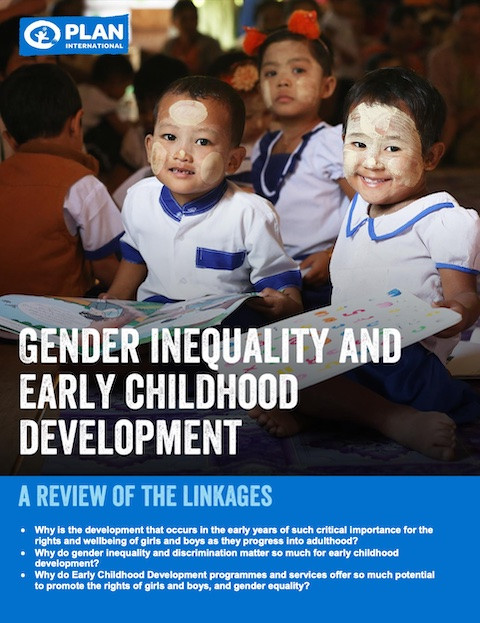 Gender Inequality and Early Childhood Development: A Review of the Linkages سنة النشر: 2017 المؤلف المؤسسي: Plan International This paper aims to respond to the fact that Early Childhood Development initiatives and programmes, both internal and external, often appear to give limited attention to gender inequality and discrimination. Furthermore, initiatives to promote girls’ rights and gender equality often pay little attention to early childhood, instead focusing on older girls and adolescents.
 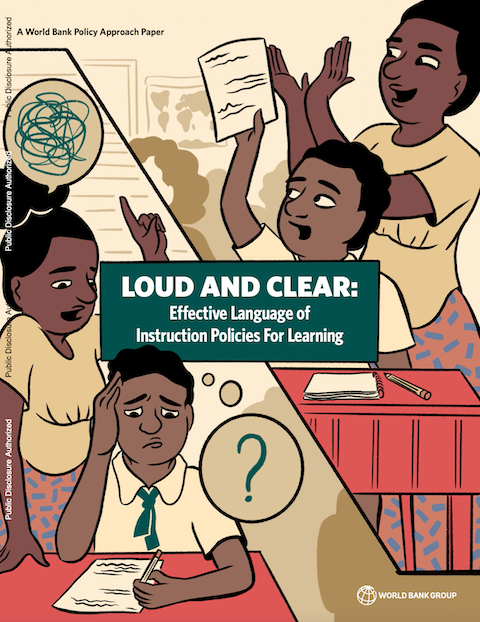 Loud and Clear: Effective Language of Instruction Policies for Learning سنة النشر: 2021 المؤلف المؤسسي: World Bank This paper describes the new World Bank policy approach on language of instruction(LoI), as part of the operationalization of the literacy policy package in support of the Bank’s new learning target. This new approach aims to support progress on language of instruction(LoI) Policies and interventions, as loi-based challenges are identified and addressed in light of each country’s context. Haut et fort: Politiques efficaces de Langue d’Enseignement Pour l’Apprentissage سنة النشر: 2021 المؤلف المؤسسي: World Bank Ce document décrit la nouvelle approche de la politique de la Banque mondiale en matière de langue d’enseignement, en tant que composante dans l’opérationnalisation du paquet de politique de littératie en appui au nouvel objectif d’apprentissage de la banque. Cette nouvelle approche vise à soutenir les progrès dans le domaine des politiques et des interventions en matière de LE (Langue d'Enseignement), dans la mesure où les défis liés à la PLE(Politique de Langue d'Enseignement) sont identifiés et traités à la lumière du contexte de chaque pays.
  Positioning ICT in Education to Achieve the Education 2030 Agenda in Asia and the Pacific: Recommendations for a Regional Strategy سنة النشر: 2018 المؤلف: Hyojeong So | Kyungsim Yeon | Kyungsim Yeon | Jian Xi Teng المؤلف المؤسسي: UNESCO Bangkok This regional study is an important document for Asia-Pacific Member States as it consolidates data related to the effective use of ICT in education. One highlight of this study is the five priority areas for the use of ICT towards achieving SDG4 and Education 2030 that were identified based on a synthesis of the data:ICT for transforming and expanding TVET and higher education ICT for improving teacher qualityICT for improving access to and quality of secondary education ICT for enabling inclusive and equitable learningICT for monitoring and evaluation
 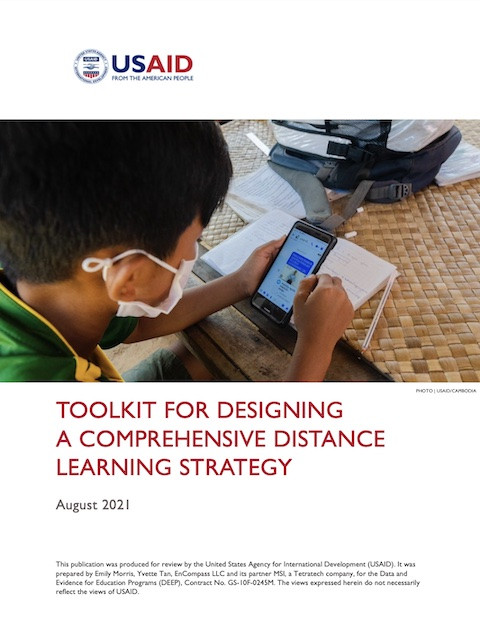 Toolkit for Designing a Comprehensive Distance Learning Strategy سنة النشر: 2021 المؤلف: Emily Morris | Yvette Tan المؤلف المؤسسي: United States Agency for International Development (USAID) The purpose of this toolkit is to provide practical guidance (tools, examples, and resources) for designing a comprehensive distance learning strategy that covers an entire education sector or system.
 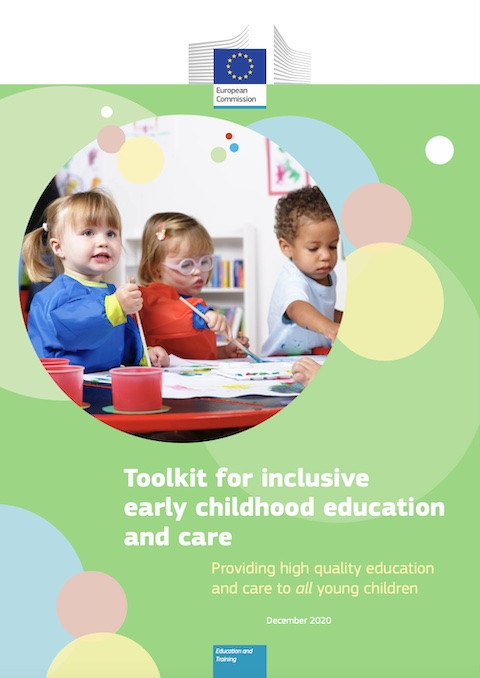 Toolkit for Inclusive Early Childhood Education and Care (ECEC): Providing High Quality Education and Care to All Young Children سنة النشر: 2021 المؤلف المؤسسي: European Commission | European Union (EU) Early childhood education and care (ECEC) is the first step on the lifelong learning ladder. It provides young children with professional support to grow, learn and flourish. While it benefits all children, it is even more crucial to children who may face additional needs or difficulties due to individual or family circumstances, e.g. children living in poverty or precarious conditions, children with disabilities or special learning needs, or children from a migrant background or from a minority ethnic community. All children must therefore be able to benefit from high quality ECEC, independently from their individual or family circumstances. It helps them develop to the best of their abilities and supports their well-being. The European Union 2019 Council Recommendation for High-Quality Early Childhood Education and Care Systems offers a Quality framework for ECEC to support Member States to work towards achieving higher quality and more inclusive ECEC systems. The 2020 Communication from the European Commission on achieving the European Education Area by 2025 announced the release of a European toolkit for inclusion in ECEC, drawing on exchange of best practice and the input of experts and stakeholders. The Toolkit for inclusion in ECEC recalls political commitments made e.g. in the European Pillar of Social Rights, policy recommendations which have been adopted by EU Member States as well as research findings. They all converge towards the need and will to develop more inclusive ECEC systems and settings. To ensure equity for all children in accessing and benefitting from ECEC, the toolkit includes a set of practical solutions and measures to inspire ECEC policy makers at the national, regional or local level, as well as ECEC practitioners. It includes examples of good practice in ECEC settings and identifies useful ideas and resources to inspire leaders and staff across Europe to progress towards practice that is more inclusive. The toolkit aims to inspire decision-makers to use the examples of good practice to create appropriate conditions that can benefit all children and families.
  School-Based Violence Prevention: A Practical Handbook سنة النشر: 2019 المؤلف المؤسسي: World Health Organization (WHO) School-based violence prevention: a practical handbook is a World Health Organization (WHO) resource for school officials and educators to help prevent violence in and around schools. The handbook gives advice on how schools can embed violence prevention within their routine activities and across the points of interaction schools provide with children, parents and other community members. Prevención de la violencia en la escuela: Manual práctico سنة النشر: 2019 المؤلف المؤسسي: World Health Organization (WHO) Este recurso, Prevención de la violencia en la escuela: manual práctico, trata sobre la escuela, la educación y la prevención de la violencia. Ofrece orientación a los funcionarios escolares y a las autoridades de Educación sobre el modo en que las escuelas pueden incorporar la prevención de la violencia a sus actividades habituales y en todos los puntos de interacción facilitan con los niños, los progenitores y otros miembros de la comunidad. La puesta en práctica del manual contribuirá en gran medida a la consecución de los ODS y otros objetivos mundiales de salud y desarrollo. Prévention de la violence à l’école : Guide pratique سنة النشر: 2019 المؤلف المؤسسي: World Health Organization (WHO) Cette ressource intitulée Prévention de la violence à l’école : guide pratique, porte sur l’école, l’éducation et la prévention de la violence. Ce guide conseille le personnel des écoles et les autorités chargées de l’éducation quant à la façon dont les établissements scolaires peuvent intégrer la prévention de la violence dans leurs activités de routine. Il leur propose également de réfléchir au lieu même qu’est l’école, à savoir un espace d’interaction et de communication entre parents, enfants et les autres membres de la communauté. S’il est mis en œuvre, ce manuel contribuera grandement à la réalisation des ODD et d’autres objectifs mondiaux en matière de santé et de développement.