
الموارد
استكشف مجموعة واسعة من الموارد القيمة حول تعليم المواطنة العالمية لتعميق فهمك وتعزيز البحث والمناصرة والتعليم والتعلم.
تم العثور على 1,828 نتيجة
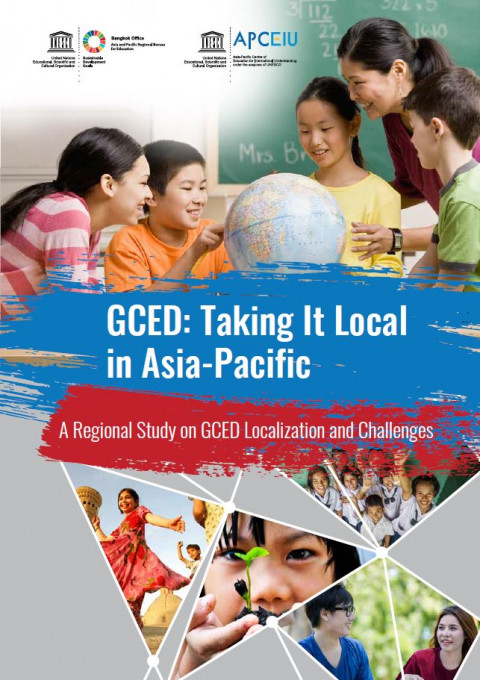 GCED: Taking It Local in Asia-Pacific; A Regional Study on GCED Localization and Challenges سنة النشر: 2019 المؤلف المؤسسي: UNESCO Bangkok Global Citizenship Education (GCED) is often interpreted in theoretical ways, which may make GCED difficult for laypeople to understand from a local perspective. However, notions of GCED are deeply rooted in the cultures of the Asia-Pacific region and are very much related to daily life experiences.In the “Asia-Pacific Regional GCED Network 2018 Jakarta Meeting Final Report”, “Contextualize GCED in Asia-Pacific while keeping in mind the global view” has been identified as one of the actions needed for facilitating GCED implementation. Thus, this study attempts to link the concept of GCED with localized ideologies by showing some examples of the way GCED is understood in different cultural contexts in the Asia and Pacific region.
  Edutech Industry Trends and Implications سنة النشر: 2020 المؤلف: Youngil Gong المؤلف المؤسسي: Software Policy & Research Institute Edutech, combining education with such technologies as artificial intelligence(AI), augmented reality(AR), virtual reality(VR) and blockchains, has been gaining attention. Edutech is considered a market with huge potential as its digitalization is slow in progress. The recent Covid-19 crisis has led our society to make an inevitable choice of contactless education by reopening schools online. It can be an opportunity for the country to take the lead in transforming education into a digitalized one, if we find common ground in society toward digitalization of education, make various edutech to tackle problems in education, and improve institutions to make those changes happen. 에듀테크 산업 동향 및 시사점 سنة النشر: 2020 المؤلف: 공영일 المؤلف المؤسسي: 소프트웨어정책연구소 AI, AR/VR, 블록체인 등의 기술을 기존 교육에 접목한 에듀테크가 주목을 받고 있다. 에듀테크는 디지털전환이 더뎌 잠재력이 큰 시장으로 평가되고 있다. 최근 코로나19 사태로 우리 사회는 온라인 개학 등 비대면 교육이라는 피할 수 없는 선택과 마주하게 되었다. 교육부문의 디지털전환에 대한 강력한 사회적 공감대 형성, 교육현장의 문제해결을 위한 에듀테크의 다양한 시도, 그리고 이를 수용할 수 있는 제도의 개선이 뒷받침된다면 우리는 코로나19 사태로 인한 교육의 위기를 교육 분야의 디지털전환을 선도할 수 있는 기회가 될 것이다.
 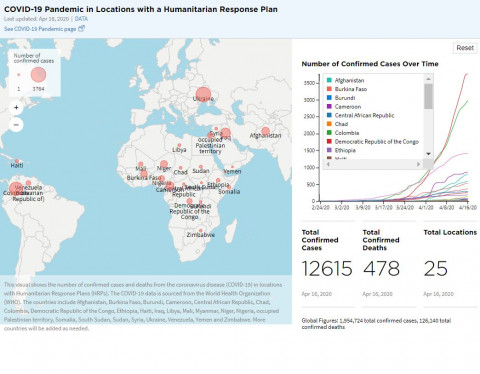 COVID-19 Pandemic in Locations with a Humanitarian Response Plans سنة النشر: 2020 المؤلف المؤسسي: United Nations Office for the Coordination of Humanitarian Affairs (OCHA) This visual shows the number of confirmed cases and deaths from the coronavirus disease (COVID-19) in locations with Humanitarian Response Plans (HRPs). The COVID-19 data is sourced from the World Health Organization (WHO). The countries include Afghanistan, Burkina Faso, Burundi, Cameroon, Сentral African Republic, Chad, Colombia, Democratic Republic of the Congo, Ethiopia, Haiti, Iraq, Libya, Mali, Myanmar, Niger, Nigeria, occupied Palestinian territory, Somalia, South Sudan, Sudan, Syria, Ukraine, Venezuela, Yemen and Zimbabwe. More countries will be added as needed.
  Research on the Strategy of Inner Mongolia Ecological Cultural Construction سنة النشر: 2019 المؤلف: WEI Zhiyong | BAI Zhifeng المؤلف المؤسسي: China Environment Publishing Group Focusing on the Ecological Civilization of Inner-Mongolia, China, this book presents to readers the backgroud and history of the ecological civilization development in the area. By analyzing the relevant policies, introducing the available resouces and typical cases, it showcases how the concept of harmonized development between man and nature evolving into the core of ecological cultural development in Inner-Mongolia. It summarizes the experiences and lessons learnt during the process, presents challenges faced and proposed practical suggestions and solutions. It also introduced some successful cases from the international experiences.
 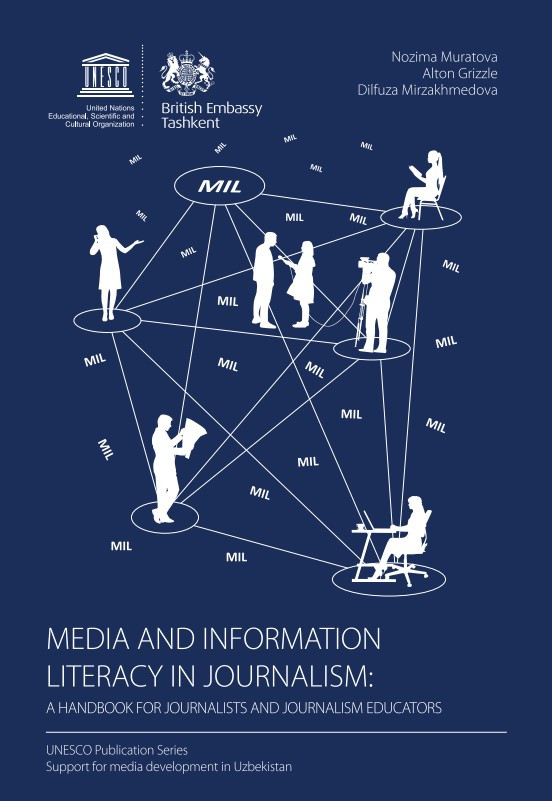 Media and Information Literacy in Journalism: A Handbook for Journalists and Journalism Educators سنة النشر: 2019 المؤلف: N. Muratova | A. Grizzle | D. Mirzakhmedova المؤلف المؤسسي: UNESCO Tashkent This handbook aims at being an important and practical tool for journalists in fulfilling their professional activities and mainly in media information literacy (MIL).The first three parts of the Handbook include theoretical material and are accompanied with exercises and case studies; the last part consists entirely of practical tools and exercises that aim to ensure that the material was understood. The Handbook deals with "fake news" and disinformation, provides a conceptual framework for media and information literacy, shows its importance, and explores principles and role of the MIL in journalism education. Also, the Handbook covers topics such as ethics on the Internet, human rights and work with sources, journalistic skills in collecting and processing information, ways to verify and provide reliable information, and the identification of fakes that may adversely affect the public. Медиа- и информационная грамотность в журналистике: Пособие для журналистов и преподавателей журналистики سنة النشر: 2019 المؤلف: N. Muratova | A. Grizzle | D. Mirzakhmedova المؤلف المؤسسي: UNESCO Tashkent Данное руководство нацелено на то, чтоб стать важным и практичным инструментом журналистов в осуществлении их профессиональной деятельности и главным образом в овладении медиа информационной грамотностью (МИГ).Первые три части книги включают в себя теоретический материал и сопровождены заданиями и кейсами по теме, последняя часть всецело состоит из практического инструментария и упражнений, которые направлены на закрепление изученного материала. В пособии рассматривается работа с «фэйковыми новостями» и дезинформацией, приведёна концептуальная основа, на которой строится медийная и информационная грамотность, показана ее важность, исследованы принципы и роль МИГ в журналистском образовании. Кроме этого в пособии рассмотрены такие темы, как этика в интернете, права человека и работа с источниками, мастерство журналиста в сборе и обработке информации, способы проверки и предоставления достоверных сведений, выявление фейков, которые могут отрицательно повлиять на общественность.
  Migration, citoyenneté et inégalités globales سنة النشر: 2012 المؤلف: Martin Provencher المؤلف المؤسسي: Les ateliers de l'éthique | Centre de recherche en éthique de l’Université de Montréal La migration est un phénomène qu’on ne peut comprendre qu’à partir d’une perspective globale. Les êtres humains se sont toujours déplacés pour améliorer leur sort, c’est-à-dire dès qu’ils ont eu des raisons de croire que le fait d’aller vivre ailleurs leur procurerait de meilleures chances. On s’entend cependant pour admettre que l’ampleur de ce phénomène est aujourd’hui inédite. Certes, seul un faible pourcentage de la population mondiale se déplace encore, à peine 3 %, mais cela représente plus de 214 millions d’individus. Et l’on estime que ce nombre augmentera. Qui plus est, plusieurs de ces individus migrent et continueront de migrer vers les pays riches du Nord dans lesquels la proportion de personnes nés à l’étranger a augmenté de 10% au cours des dernières années. Cette intensification de la mobilité internationale des individus intervient dans un contexte économique dominé par la globalisation néolibérale du monde qui accentue les inégalités entre les pays et où les États riches rivalisent entre eux pour attirer les migrants qualifiés et non qualifiés. Ces circonstances auraient pu inciter les gouvernements à reconnaître la migration comme un phénomène normal que rien ne saurait arrêter et à adapter leurs politiques publiques en conséquence. Mais elles se sont produites à un moment où la souveraineté des États, mise à mal par le développement des technologies de la communication, la densification des réseaux transnationaux, l’émergence d’une multitude de nouveaux acteurs sur la scène internationale et la formation d’entités politiques inédites, effectuait un retour en force. L’obsession de la sécurité, alimentée par les attentats terroristes, la récession économique et le populisme, a en effet servi de prétexte aux États pour resserrer le contrôle de leurs frontières en adoptant des mesures très restrictives qui ont contribué à fragiliser la condition des migrants les plus vulnérables, notamment les irréguliers et les demandeurs d’asile.
  Values of Kazakhstan Society in the Sociological Dimension سنة النشر: 2020 المؤلف: Gulnara Ismukhanova | Dina Sharipova | Botagoz Turekhanova | Botagoz Rakisheva | Gulnar Nasimova | Saltanat Ermakhanova | Shugla Kylybayeva | Tolganai Umbetalieva | Leonid Gurevich المؤلف المؤسسي: Friedrich-Ebert-Stiftung Kazakhstan Office The book provides a structured analysis of the values of modern Kazakhstani society, based both on well-known classical models and on original author’s approaches. The book is based on a sociological study conducted on a national representative sample and which allowed us to describe the value portrait of Kazakhstanis taking into account the specifics of social groups and regions. The key vectors of transformation of values in Kazakhstan are identified against the backdrop of global trends and in the context of the national strategy of spiritual modernization.The book is addressed to scientists, politicians, government and public figures, representatives of the business community, journalists, teachers and university students and is of interest to anyone who seeks to understand the complex structure of social and cultural processes in modern Kazakhstan. Ценности казахстанского общества в социологическом измерении سنة النشر: 2020 المؤلف: Gulnara Ismukhanova | Dina Sharipova | Botagoz Turekhanova | Botagoz Rakisheva | Gulnar Nasimova | Saltanat Ermakhanova | Shugla Kylybayeva | Tolganai Umbetalieva | Leonid Gurevich المؤلف المؤسسي: Фонд имени Фридриха Эберта в Казахстане В книге предпринят структурированный анализ ценностей современного казахстанского общества, базирующийся как на известных классических моделях, так и на оригинальных авторских подходах. В основе книги – социологическое исследование, проведенное на национальной репрезентативной выборке и позволившее описать ценностный портрет казахстанцев с учетом специфики социальных групп и регионов. Определены ключевые векторы трансформации ценностей в Казахстане на фоне мировых трендов и в контексте национальной стратегии духовной модернизации.Книга адресована ученым, политикам, государственным и общественным деятелям, представителям деловых кругов, журналистам, преподавателям и студентам вузов и представляет интерес для всех, кто стремится понять сложную структуру социальных и культурных процессов в современном Казахстане.