
الموارد
استكشف مجموعة واسعة من الموارد القيمة حول تعليم المواطنة العالمية لتعميق فهمك وتعزيز البحث والمناصرة والتعليم والتعلم.
تم العثور على 97 نتيجة
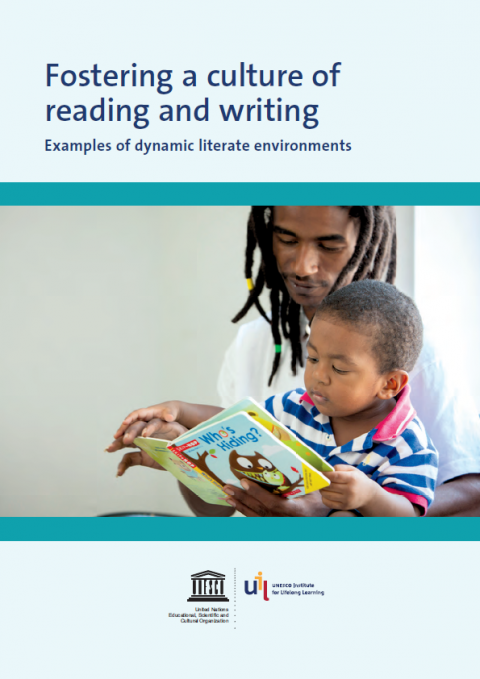 Fostering a culture of reading and writing: examples of dynamic literate environments سنة النشر: 2017 المؤلف: Hanemann, Ulrike | Krolak, Lisa المؤلف المؤسسي: UNESCO Institute for Lifelong Learning (UIL) The examples of literacy programmes showcased and analysed in this publication confirm the critical role of literate environments. They have been selected from UNESCO’s Effective Literacy and Numeracy Practises Database (LitBase), which UIL develops on a continuous basis. They demonstrate first and foremost how the development of literate environments can positively influence people’s motivation to (re-)engage in literacy and learning and how they can practise their newly acquired skills in their daily activities to reach sustainable skills levels. In addition, they reveal successful strategies towards a culture of reading, writing and learning in the family, community or wider society. The examples reflect different contexts, such as families, libraries and prisons, to illustrate the potential of ICTs, intergenerational approaches, and community, mobile and prison libraries to engage young people and adults in literacy and learning. Créer des cultures de la lecture, de l'écriture et de l'apprentissage سنة النشر: 2017 المؤلف: Hanemann, Ulrike | Krolak, Lisa المؤلف المؤسسي: UNESCO Institute for Lifelong Learning (UIL) Les exemples de programmes d'alphabétisation présen-tés et analysés dans cette publication confirment le rôle déterminant des environnements alphabétisés. Ils sont tirés de la base de données Pratiques efficaces d'alpha-bétisation (LitBase) de l'UNESCO, que UIL développe en permanence. Ils démontrent, d'abord et avant tout, com-ment la mise en place d'environnements alphabétisés peut influencer positivement une personne et la pousser à se (re)mettre à l'alphabétisation et à l'apprentissage, mais aussi comment l'apprenant peut pérenniser ses acquis en les appliquant à ses activités quotidiennes. En outre, ils révèlent des stratégies efficaces pour créer une culture de la lecture, de la lecture et de l'apprentissage au sein de la famille, de la communauté ou de la société. Les exemples incluent divers contextes – familles, biblio-thèques et prisons – pour illustrer la capacité des TIC, des approches intergénérationnelles et des bibliothèques communautaires, mobiles et carcérales à encourager jeunes et adultes à s'alphabétiser et à apprendre.
 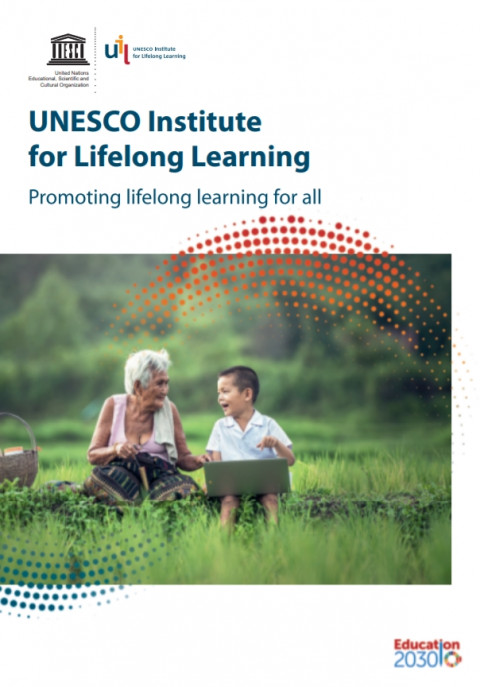 UNESCO Institute for Lifelong Learning: promoting lifelong learning for all سنة النشر: 2019 المؤلف المؤسسي: UNESCO Institute for Lifelong Learning (UIL) The UN’s 2030 Agenda for Sustainable Development is our guide to action. Leaving no one behind is at the centre of this global planof action for people, planet and prosperity. The 2030 Agenda for Sustainable Development consists of 17 Sustainable Development Goals (SDGs). UIL has a special responsibility for supporting countries to ‘ensure inclusive and equitable quality education and promote lifelong learning opportunities for all’ (SDG 4). But we are also charged with realizing the potential contribution of lifelong learning to the other 16 SDGs. In today’s fast-changing world, where social, economic and political contexts are being constantly reshaped, learning must be continuous and lifelong, for everyone.
  Towards CONFINTEA VII: adult learning and education and the 2030 Agenda سنة النشر: 2019 المؤلف المؤسسي: UNESCO Institute for Lifelong Learning (UIL) The CONFINTEA VI Mid-Term Review (MTR) Conference took place in Suwon and Osan, Republic of Korea, in October 2017. Stakeholders from 95 UNESCO Member States assessed progress in implementing the Belém Framework for Action (BFA) and discussed the next steps. The BFA, which was adopted by delegates at the Sixth International Conference on Adult Education (CONFINTEA VI) in Belém, Brazil, in December 2009, records the commitments of Member States and presents a strategic guide for the future development of adult learning and education (ALE) within the perspective of lifelong learning. This publication constitutes the third outcome document of the conference. It provides an overview of the main thematic debates. The chapters follow the conference themes and aim to illustrate or underpin the main arguments and way forward set out in the Suwon-Osan Statement.
 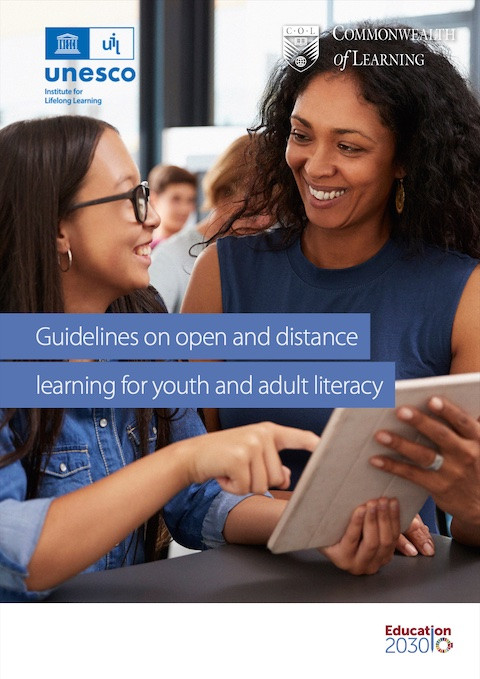 Guidelines on Open and Distance Learning for Youth and Adult Literacy سنة النشر: 2022 المؤلف المؤسسي: UNESCO Institute for Lifelong Learning (UIL) | Commonwealth of Learning Guidelines on open and distance learning for youth and adult literacy addresses a gap in literacy provision by presenting open and distance learning (ODL) principles and practices to illustrate how learning and education can be delivered at a distance.This publication is divided into two main parts. Part 1 presents practical guidance in four areas—planning, development, implementation, and monitoring and evaluation—and part 2 considers the various technologies that are used for ODL programmes and could support youth and adult literacy learning.Policy-makers, literacy providers and educators will benefit from understanding and applying the concept and principles of ODL in designing and delivering effective, inclusive and sustainable literacy programmes and learning opportunities— strengthening the resilience of their literacy programmes and expanding outreach and participation in the process. Apprentissage libre et à distance pour l’alphabétisation des jeunes et des adultes: lignes directrices سنة النشر: 2022 المؤلف المؤسسي: Institut de l’UNESCO pour l’apprentissage tout au long de la vie (UIL) | Commonwealth of Learning Les lignes directrices sur l'apprentissage ouvert et à distance pour l'alphabétisation des jeunes et des adultes comblent une lacune dans l'offre d'alphabétisation en présentant des principes et des pratiques d'apprentissage ouvert et à distance (ODL) pour illustrer comment l'apprentissage et l'éducation peuvent être dispensés à distance. Cette publication est divisée en deux parties principales. La partie 1 présente des conseils pratiques dans quatre domaines—la planification, le développement, la mise en œuvre et le suivi et l'évaluation—et la partie 2 examine les diverses technologies qui sont utilisées pour les programmes ODL et qui pourraient soutenir l'apprentissage de l'alphabétisation des jeunes et des adultes. Les décideurs politiques, les prestataires d'alphabétisation et les éducateurs bénéficieront de la compréhension et de l'application du concept et des principes de l'ODL dans la conception et la prestation de programmes d'alphabétisation et d'opportunités d'apprentissage efficaces, inclusifs et durables - renforçant la résilience de leurs programmes d'alphabétisation et élargissant la portée et la participation au processus. المبادئ اﻟﺘﻮﺟﯿﮭﯿﺔ ﻟﻠﺘﻌﻠﻢ اﻟﻤﻔﺘﻮح واﻟﺘﻌﻠﻢ ﻋﻦ ﺑﻌﺪ ﻟﻤﺤﻮ أﻣﯿﺔ اﻟﺸﺒﺎب واﻟﻜﺒﺎر سنة النشر: 2022 المؤلف المؤسسي: UNESCO Institute for Lifelong Learning (UIL) | Commonwealth of Learning تعالج المبادئ التوجيهية بشأن التعلم المفتوح والتعلم عن بعد للشباب والكبار فجوة في توفير محو الأمية من خلال تقديم مبادئ وممارسات التعلم المفتوح والتعلم عن بعد (ODL) لتوضيح كيف يمكن تقديم التعلم والتعليم عن بعد. ينقسم هذا المنشور إلى قسمين رئيسيين. يقدم الجزء الأول إرشادات عملية في أربعة مجالات - التخطيط ، والتطوير ، والتنفيذ ، والرصد والتقييم - وينظر الجزء الثاني في التقنيات المختلفة المستخدمة لبرامج ODL ويمكن أن تدعم تعلم القراءة والكتابة للشباب والكبار. سيستفيد صانعو السياسات ومقدمو محو الأمية والمعلمون من فهم وتطبيق مفهوم ومبادئ ODL في تصميم وتقديم برامج محو الأمية الفعالة والشاملة والمستدامة وفرص التعلم - تعزيز مرونة برامج محو الأمية وتوسيع نطاق التوعية والمشاركة في العملية .