
الموارد
استكشف مجموعة واسعة من الموارد القيمة حول تعليم المواطنة العالمية لتعميق فهمك وتعزيز البحث والمناصرة والتعليم والتعلم.
تم العثور على 1,726 نتيجة
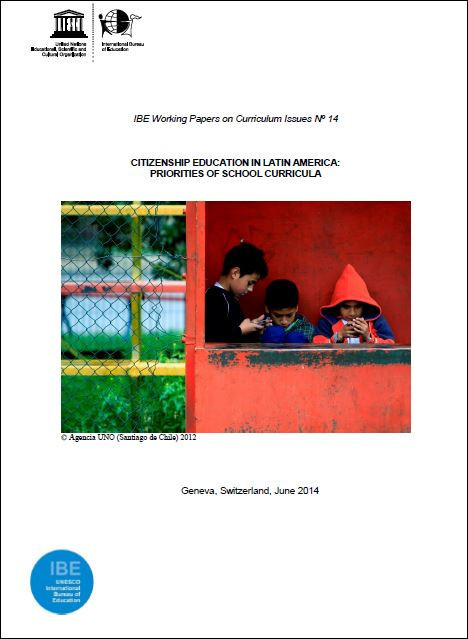 Educación Ciudadana en América Latina: Prioridades de los Currículos Escolares سنة النشر: 2014 المؤلف: Cristián Cox | Martín Bascopé | Juan Carlos Castillo | Daniel Miranda | Macarena Bonhomme المؤلف المؤسسي: UNESCO International Bureau of Education (IBE) El documento se organiza en cuatro partes. En la primera se da cuenta del estado de la creencia democrática en la región, recurriendo a evidencia de los estudios de opinión más importantes de la última década, de modo de ofrecer contexto y bases de significado amplios al análisis curricular, así como, más en general, al trabajo educativo en el área de ciudadanía. En la segunda sección se describe las características organizativas (o de estructura) de los currículos de los seis países y se presenta un esquema de categorías para el análisis comparado de los mismos. La sección siguiente describe y analiza los contenidos de los seis currículos examinados y su tratamiento de los valores, las instituciones y las relaciones de ciudadanía, en su dimensión cívica (política) y civil (convivencia). A partir de los hallazgos más importantes, la sección de cierre ofrece unas reflexiones orientadas al desarrollo curricular en el área.
 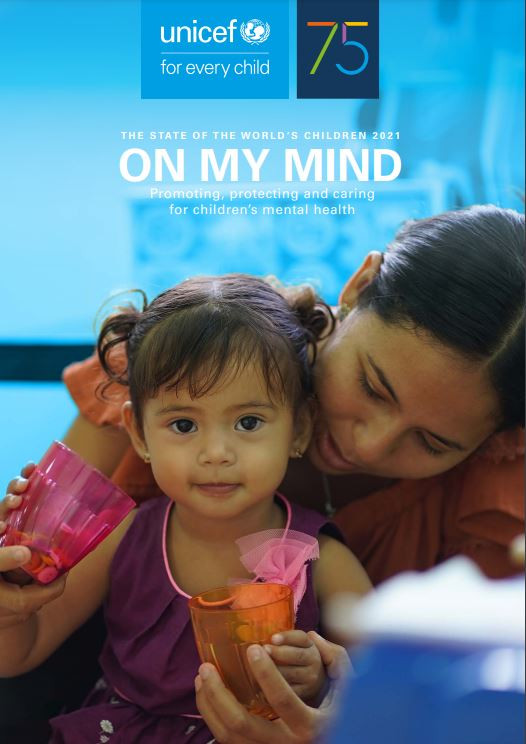 The State of the World's Children 2021 Executive Summary: ON MY MIND - Promoting, protecting and caring for children’s mental health سنة النشر: 2021 المؤلف المؤسسي: United Nations Children's Fund (UNICEF) This report focuses on the issue of children's mental health and appeals to wider public attention to the issue.
 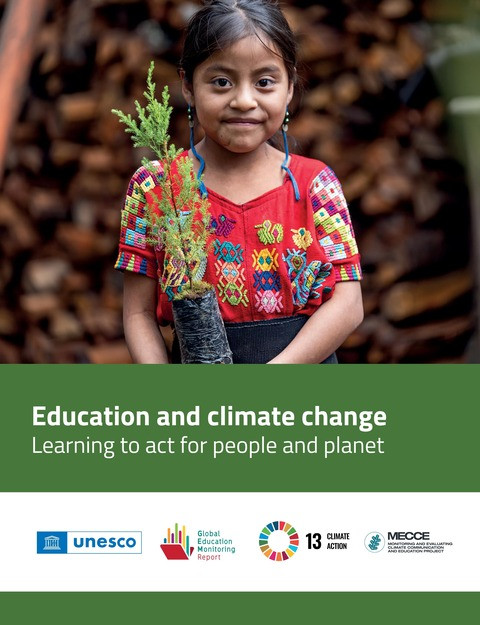 Education and Climate Change: Learning to Act for People and Planet سنة النشر: 2024 المؤلف المؤسسي: Global Education Monitoring Report Team | Monitoring and Evaluating Climate Communication and Education Project (MECCE) | University of Sakatchewan How can education lead to climate change action?Despite strong evidence on the impact of education on other development outcomes and the role it plays in developing professional capacity for sustainable development transitions, education is often absent from other sectors’ strategic, policy, planning and financing considerations. The Global Education Monitoring Report is introducing a new series to advance dialogue on the interrelationship of education with the other Sustainable Development Goals.The first paper in the series focuses on climate change. It starts by reviewing the growing impact of climate change on education before turning to the role of education in climate action. Education has a somewhat underappreciated contribution to developing professional capacities for the transition to a green economy. Formal, non-formal and informal learning are also commonly believed to be playing a critical role in motivating actions on climate change mitigation and adaptation.Yet a positive association between education attainment and unsustainable consumption levels, as well as inconclusiveness of much research on the direct impact of education on climate change adaptation and mitigation actions has in part contributed to education receiving low priority in global and national climate change agendas.This paper argues that climate change education needs to adapt to fulfil its potential. The education paradigm cannot rely solely on knowledge transfer but needs to focus on social and emotional, and action-oriented learning.Much of the research has focused on the impact of education attainment and cognitive learning. More research is therefore needed to assess other drivers through which education can influence behaviours and motivate climate change action. Such research is needed to formulate viable education reform packages that improve the curriculum, strengthen climate-readiness of schools and education systems, engage learners and prepare educators accordingly.
 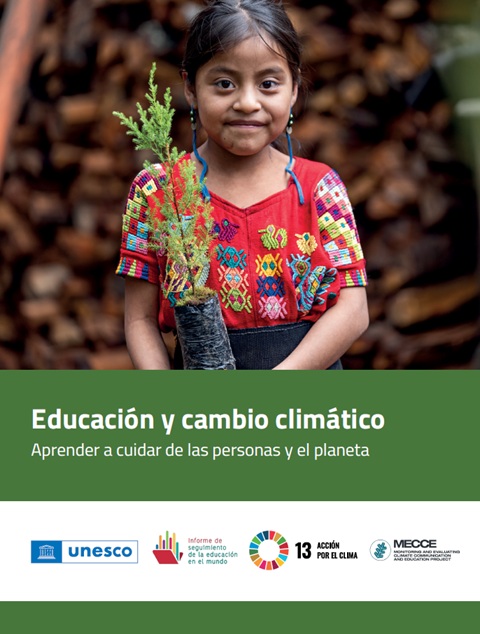 Educación y cambio climático: aprender a cuidar de las personas y el planeta سنة النشر: 2024 المؤلف المؤسسي: Global Education Monitoring Report Team | Monitoring and Evaluating Climate Communication and Education Project (MECCE) | University of Sakatchewan ¿Cómo puede la educación conducir a la acción contra el cambio climático?A pesar de las sólidas pruebas existentes sobre la repercusión de la educación en el logro de otros objetivos de desarrollo y la función que desempeña en el desarrollo de la capacidad profesional para las transiciones hacia el desarrollo sostenible, la educación suele estar ausente de las consideraciones estratégicas, políticas, de planificación y de financiación de otros sectores.El Informe de seguimiento de la educación en el mundo presenta una nueva serie destinada a fomentar el diálogo sobre la interrelación de la educación con los demás Objetivos de Desarrollo Sostenible. El primer documento de la serie se centra en el cambio climático, y empieza por analizar el creciente impacto del cambio climático en la educación antes de pasar a abordar la función de la educación en la acción climática.La contribución de la educación al desarrollo de capacidades profesionales para la transición a una economía verde está en cierta medida infravalorada. Al mismo tiempo, existe la conciencia de que el aprendizaje, tanto formal como no formal e informal, desempeña una función esencial a la hora de motivar la acción en materia de mitigación del cambio climático y adaptación a sus efectos.Sin embargo, la existencia de una correlación positiva entre el nivel de educación y los niveles de consumo insostenibles, así como la falta de conclusiones de muchas investigaciones sobre la repercusión directa de la educación en la mitigación del cambio climático y la adaptación a sus efectos, han contribuido en parte a que se otorgue escasa prioridad a la educación en las agendas mundiales y nacionales sobre el cambio climático.En este documento se sostiene que es necesario adaptar la educación sobre el cambio climático para que desarrolle todo su potencial. El paradigma educativo no puede basarse únicamente en la transferencia de conocimientos, sino que debe centrarse en el aprendizaje socioemocional y orientado a la acción. Gran parte de la investigación se ha centrado en analizar el logro educativo y los resultados que se alcanzan mediante el aprendizaje cognitivo. Por ello, es necesario seguir investigando para evaluar otros factores mediante los cuales la educación puede influir en los comportamientos y motivar la acción contra el cambio climático. Estas investigaciones son necesarias para formular paquetes de reformas educativas viables que mejoren los planes de estudios, refuercen la preparación de las escuelas y los sistemas educativos para el cambio climático, impliquen a los educandos y preparen a los educadores en consecuencia.
  Education pour le développement durable: étude réalisée par des experts sur les processus et l'apprentissage سنة النشر: 2011 المؤلف: Daniella Tilbury المؤلف المؤسسي: UNESCO A key objective of this expert review is to gather information to inform the choice of tools and the specific questions which need to be asked as part of the 2011 DESD monitoring and evaluation report. The review seeks clarification on: i) Which commonly accepted learning processes are aligned with ESD and should be promoted through ESD activities? ii) What are ESD and related learning opportunities contributing to sustainable development? Education for sustainable development: an expert review of processes and learning سنة النشر: 2011 المؤلف: Daniella Tilbury المؤلف المؤسسي: UNESCO A key objective of this expert review is to gather information to inform the choice of tools and the specific questions which need to be asked as part of the 2011 DESD monitoring and evaluation report. The review seeks clarification on: i) Which commonly accepted learning processes are aligned with ESD and should be promoted through ESD activities? ii) What are ESD and related learning opportunities contributing to sustainable development? UN decade of education for sustainable development: success stories سنة النشر: 2011 المؤلف المؤسسي: UNESCO The UN Decade of Education for Sustainable Development (DESD, 2005-2014) is a global initiative led by UNESCO. It aims at reorienting education worldwide: everyone should have the opportunity to acquire the values, competencies, skills and knowledge that are needed to contribute to sustainable development. This document includes some achievements of the UN DESD. UN decade of education for sustainable development: success stories سنة النشر: 2011 المؤلف المؤسسي: UNESCO La Décennie de l'Éducation pour le Développement Durable (DEDD, 2005-2014) de l’ONU est une initiative mondiale menée par l'UNESCO. Il vise à réorienter l'éducation dans le monde entier: tout le monde devrait avoir la possibilité d'acquérir les valeurs, les compétences, les aptitudes et les connaissances qui sont nécessaires pour contribuer au développement durable. Ce document comprend quelques réalisations de la DEDD de l’ONU. 유엔 지속가능발전교육 10년: 성공 사례 سنة النشر: 2011 المؤلف المؤسسي: 유네스코 유엔 지속가능발전교육 10년(UN Decade of Education for Sustainable Development , DESD, 2005-2014)은 유네스코가 주도하는 글로벌 이니셔티브이다. 이것은 전세계의 교육 방향을 재조정하는 것을 목표로 한다. 즉, 지속 가능한 발전에 기여하도록 모든 사람들은 필요한 가치, 역량, 기술과 지식을 습득할 수 있는 기회를 가져야 한다. 이 문서는 유엔 DESD의 일부 업적을 포함한다. Education for sustainable development lens: a policy and practice review tool سنة النشر: 2010 المؤلف المؤسسي: UNESCO The Education for Sustainable Development (ESD) Lens has been prepared to support UN Member States to respond to these challenges through implementation of the United Nations Decade of Education for Sustainable Development (DESD, 2005- 2014). The ESD Lens supports the goals of the DESD, and encourages policy-makers and practitioners in Member States to initiate the process of re-orienting education, particularly the formal education system, towards sustainable development. The overall goal of the UN Decade of Education for Sustainable Development (DESD) is for countries to integrate the understandings, skills and values inherent in sustainable development into all aspects of national education plans to encourage changes in lifestyles and behaviour that allow for a more sustainable and just society for all. This complements existing Education for All initiatives, and strengthens the objectives of the Millennium Development Goals. Education for Sustainable Development has the potential to improve the quality and relevance of education everywhere.