
الموارد
استكشف مجموعة واسعة من الموارد القيمة حول تعليم المواطنة العالمية لتعميق فهمك وتعزيز البحث والمناصرة والتعليم والتعلم.
تم العثور على 2,668 نتيجة
 Educación para la ciudadanía en el nuevo orden mundial سنة النشر: 2018 المؤلف: Walter Fernando Pérez Niño En el siguiente trabajo se analiza la concepción de ciudadanía abordándola de manera histórica y confrontándola con un análisis de las diferentes hegemonías que han tratado de imponer un orden global y las consecuencia de la aplicación de políticas en obediencia a dicho orden. Luego de ello, revisa el derecho a la educación teniendo en cuenta las nuevas realidades globales para, finalmente, centrar el estudio en las diferentes problemáticas que afronta la educación como consecuencia del orden mundial y proponer un enfoque sobre el cual debería guiarse.
  우리나라의 아동권리 이행을 위한 과제: 유엔아동권리위원회 제5·6차 최종견해를 중심으로 (아동권리 이슈포커스 17호) سنة النشر: 2019 المؤلف المؤسسي: 굿네이버스 우리나라는 2019년 9월 유엔아동권리협약의 이행에 대한 제5·6차 심의를 받았고, 그 결과를 바탕으로 유엔 아동권리위원회는 2019년 10월 아동의 권리보장을 위한 개선사항을 권고하는 제5·6차 최종견해를 발표하였다.본 원고에서는 유엔아동권리협약 채택 30주년을 맞이하여, 유엔아동권리협약이 아동권리 보장에 있어서 가지는 의미가 무엇인지 확인하고 1991년 유엔아동권리협약 비준 이후 현재 우리나라의 아동권리 보장 수준은 어떠한지, 그리고 아동권리 보장을 위한 이행 과제와 고려점이 무엇인지 유엔아동권리위원회의 대한민국 제5·6차 최종견해를 중심으로 살펴보고자 한다.
  How to Return from School Alive سنة النشر: 2020 المؤلف: Nikita Makarenko 246 million children are abused in schools around the world every year. The author explains why Uzbekistan urgently needs to develop an anti-bullying strategy in educational institutions by the beginning of the new school year. Вернуться из школы живым سنة النشر: 2020 المؤلف: Nikita Makarenko 246 миллионов детей подвергаются насилию в школах во всем мире каждый год. Автор объясняет, почему Узбекистану необходимо срочно разработать стратегию борьбы с травлей в учебных заведениях уже к началу нового учебного года.
  Éducation à la citoyenneté mondiale (ÉCM): Définitions, critiques et postures سنة النشر: 2017 المؤلف: Carine Nassif-Gouin | Philippe Tousignant المؤلف المؤسسي: Association québécoise des organismes de coopération internationale (AQOCI) La plupart des organismes de coopération internationale (OCI) se sont engagés dans un long processus d’information, de sensibilisation, d’engagement et d’éducation du public. Ce document cherche à soutenir la réflexion quant à l’approche émergente de l’éducation à la citoyenneté mondiale (ÉCM) et la question suivante : en quoi l’ÉCM est-elle nouvelle ou différent de l’engagement du public ou, par exemple, de l’éducation aux droits humains ? Les OCI mettent à la disposition des apprenants (stagiaires, coopérants, bénévoles, salariés, jeunes en milieu scolaire ou communautaire, entreprises, etc.) de l’information, des formations, des ateliers, des documents voire des trousses, et bien plus encore, qui favorisent l’autonomisation et la responsabilisation des individus. Ces activités sont souvent de nature pédagogique, mais elles peuvent également être d’une toute autre nature. Les OCI ont des pratiques riches et variées en éducation, formation, mobilisation, sensibilisation, etc. Certaines pratiques ont fait leurs preuves et nous encouragent à nous en inspirer ou encore à les adopter. Parmi les facteurs contribuant à la réussite de l’ÉCM, le choix de la définition, la qualité, la précision d’un cadre de références commun jouent un rôle crucial. Ainsi, ce guide tente d’offrir un certain nombre d’informations essentielles à la réalisation et la réussite de l’ÉCM. Du fait qu’il y ait très peu de littérature consacrée à l’éducation à la citoyenneté mondiale au Québec, nous nous sommes beaucoup tourné vers celle qui est issue d’autres pays et contextes. Ce document est conçu à l’intention de toutes les personnes qui souhaitent comprendre ce qu’est l’ÉCM pour en développer des activités et s’approprier ses définitions et contenus. Il faut reconnaître d’emblée que chaque organisme, chaque programme présente des spécificités et qu’il n’est pas souhaitable ou même possible d’uniformiser les guides ou de les rendre conformes à un modèle particulier. Il faut surtout garder à l’esprit que nous tenons à offrir à chacun des acteurs une information de qualité et préparer avec tout le soin nécessaire un guide clair et nourrissant. Ce guide est composé de six (6) parties et d’une note de synthèse. Ainsi, chacun pourra y puiser les informations et ressources ou encore les outils de références souhaités.
  Mobiliser les réseaux socionumériques: L’espace public traditionnel à l’épreuve de la critique de musulmans Français سنة النشر: 2019 المؤلف: Mohamed Sakho Jimbira المؤلف المؤسسي: Sens public Cet article qui repose sur deux enquêtes s’attache à proposer une réflexion sur l’articulation entre trois problématiques : l’usage des réseaux socionumériques, l’islam en France, et l’espace public traditionnel. Depuis plusieurs années, ce dernier est confronté à la visibilité des dogmes et pratiques religieuses islamiques. Ainsi, la laïcité et la place des religions au sein de cet espace public se trouvent-elles questionnées comme le montrent les dernières controverses sur le port du voile intégral, ou encore du burkini. Sur cet horizon, certains citoyens musulmans qui affirment faire l’objet de discriminations dans l’espace hors-ligne, à cause de leur identité musulmane, mobilisent les réseaux socionumériques pour y reconstituer des espaces éditoriaux de visibilité et d’audibilité, ce qui participe de l’élargissement des contours de l’espace public traditionnel.
 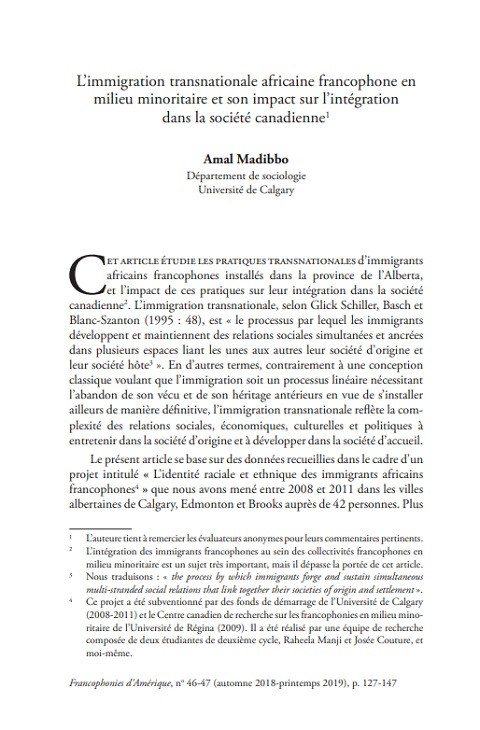 L’immigration transnationale africaine francophone en milieu minoritaire et son impact sur l’intégration dans la société canadienne سنة النشر: 2019 المؤلف: Amal Madibbo المؤلف المؤسسي: Les Presses de l'Université d'Ottawa | Centre de recherche en civilisation canadienne-française Dans un monde où la place du numérique s’affirme chaque jour davantage, et où les jeunes sont captivés par les technologies, les bibliothécaires et documentalistes ne semblent avoir d’autre option que de donner une place de choix au numérique dans le cadre de leur mission de formation. Il est dorénavant impossible pour eux de rester sourds aux transformations sociétales et aux nouvelles avenues que le numérique offre pour la recherche d’information, tout comme il est impossible de rester indifférent à la place grandissante que l’intelligence artificielle gagne dans tous les secteurs de notre société, y compris celui de l’accès à l’information. Ce texte a également pour but de montrer le rôle primordial que sont appelés à jouer bibliothécaires et documentalistes pour préparer les citoyens d’aujourd’hui à la société de l’information de demain. Il y est notamment question de leur rôle-clé pour amener tout apprenant à développer des compétences informationnelles actuelles, à agir en citoyen numérique éclairé et responsable, et à contribuer au développement de l’intelligence collective planétaire, et ce, afin de participer à sa façon à l’édification de la société de demain.
 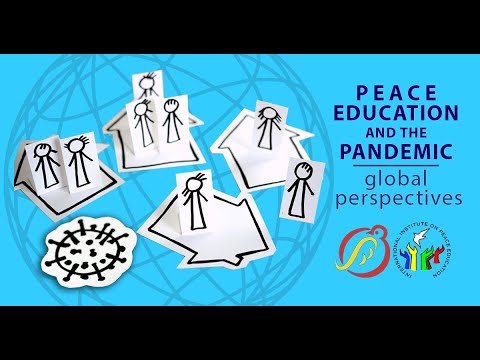 Peace Education and the Pandemic: Global Perspectives سنة النشر: 2020 المؤلف المؤسسي: International Institute on Peace Education (IIPE) This April 13 webinar, co-organized by the International Institute on Peace Education and Global Campaign for Peace Education, is an opportunity to learn, hear, and share with and from peace educators from around the world about how they are responding, adapting, and rethinking urgent agendas for peace education revealed by the global coronavirus pandemic.
  미래사회를 위한 세계시민교육 재개념화 연구 سنة النشر: 2018 المؤلف: 조윤정 | 이지영 | 권순정 | 서화진 | 윤선인 المؤلف المؤسسي: 경기도교육연구원 교통 및 통신의 발달로 국가 간 상호연결성이 증대되고 새로운 국제문제들이 발생하면서 국가 내의 계층적, 문화적, 인종적 갈등과 공존의 문제가 아니라 국가를 넘어서 전 지구적 문제 해결을 위해 전 지구적 수준의 연대와 협력을 강조하는 교육에 대한 필요성이 증대되고 있다. 특히 미래사회에는 불평등의 심화와 환경생태계의 위기, 그리고 세계화의 심화로 발생하는 다양한 문제 등으로 인하여 전 지구적 수준의 연대와 협력을 통해 문제를 해결할 필요성이 높아지고 있다. 그런 의미에서 세계시민교육은 미래사회를 살아갈 구성원들에게 꼭 필요한 교육이라고 할 수 있다. 그러나 세계시민교육의 개념에 대한 이론적 합의가 이루어지지 못하고 있으며 세계시민교육에 대한 지나치게 폭넓은 스펙트럼이 존재하기 때문에 세계시민교육에 대한 오해와 오개념을 불러일으키고 있다. 보다 구체적으로 표현하면, 학교현장에서는 세계시민성 개념을 이해하기 어렵고 다문화교육, 인권교육, 평화교육, 국제이해교육, 지속가능발전교육 등 유사개념과의 명확한 구분 없이 세계시민교육이라는 용어를 사용함으로써 세계시민교육을 구호나 국제교류와 관련된 교육이나 기존의 다문화교육이나 지속가능발전교육의 새로운 이름으로 오해하는 상황이 벌어지고 있다. 이로 인하여 학교현장에서는 세계시민교육의 원래의 취지와 방향성에서 벗어나는 내용으로 수업이나 프로그램을 구성하고 있으며 이러한 사례가 확산되면서 세계시민교육에 대한 오개념이 고착화되고 있다. 이처럼 세계시민교육에 대한 정확하고 명료한 이해를 방해하고, 세계시민교육의 실천기반을 약화시키면서 학교현장에서의 풍부한 실천을 저해하고 있는 상황에서 세계시민의 취지와 목적에 부합하는 실천이 이루어질 수 있도록 세계시민교육에 대한 재개념화 작업을 실시할 필요가 있는 것이다.본 연구의 목적은 세계시민교육에 대한 재개념화를 통해 세계시민교육의 이론적 기반과 개념을 명확히 정립하고, 이를 통해 세계시민교육 실천현장에 실천기준과 방향성을 제시하고자 하는 것이다. 이러한 연구목적을 달성하기 위해 설정한 연구문제는 다음과 같다.첫째, 세계시민교육에 대한 재개념화를 통해 도출한 세계시민교육의 정의, 세계시민성의 구성요소 및 속성, 영역상 강조점과 세계시민교육의 특징은 무엇인가?둘째, 학교현장에서 이루어지고 있는 세계시민교육의 실천사례는 어떠한가?셋째, 재정립된 세계시민교육 개념을 학교현장에 정착시키고 세계시민교육을 활성화하기 위한 정책적 방향성과 정책과제는 무엇인가?
  Regional Consultations of the National Human Rights Institutions of Central Asia: Conference Proceedings سنة النشر: 2016 المؤلف المؤسسي: UN. Office of the United Nations High Commissioner for Human Rights (UN. OHCHR) | United Nations Development Programme (UNDP) For the first time, the conference became a platform for consultations of national human rights institutions (NHRIs) of Central Asia to help strengthen partnerships and provide opportunities for mutual support and exchange of expertise. Special attention the role of NHRIs in their interaction with the government and other partners in the country, as well as the role of NHRIs in terms of achieving the Sustainable Development Goals (SDGs).