
الموارد
استكشف مجموعة واسعة من الموارد القيمة حول تعليم المواطنة العالمية لتعميق فهمك وتعزيز البحث والمناصرة والتعليم والتعلم.
تم العثور على 2,162 نتيجة
 Caribbean Sheroes Initiative: Civil Society Organizations Advancing Gender Equality; Methods & Tools سنة النشر: 2021 المؤلف: Joan Andrea Hutchinson المؤلف المؤسسي: Institute for Gender and Development Studies (IGDS) | UNESCO This Toolkit recognizes the achievements and commitment of women activists that engage in Civil Society Organizations (CSOs). It documents the practice and lessons learned of twelve Jamaican Civil Society Organizations that have worked relentlessly to advance women’s rights and social justice, fostering a less violent society and more equal gender relations grounded on human rights.
  Roadmap for Integrating Global Citizenship and Liberation History in Teaching and Learning in SADC Member States سنة النشر: 2021 المؤلف المؤسسي: UNESCO The Roadmap for integrating GCED and SALH in teaching and learning in SADC member states is grounded in two visions: Identify common values and learning outcomes that can be advanced by GCED and SALH, with a view of promoting the sense of belonging, solidarity, and regional identity and integration. Guide education planners and practitioners to mobilize the GCED and SALH contents to contribute to the SADC vision of reconciliation, social cohesion, resilience, peace, solidarity, development, and freedom for future generations through promoting an education that equips young people with skills, values, knowledge, behaviours, and attitudes that critically and creatively address today’s local, national, regional, and global challenges through an inclusive lens. The objectives of this Roadmap are to: Provide general guidance and steps for the integration of SALH and GCED in curricula and teaching and learning practices in SADC member states; Provide articulations between the regional and local philosophical concepts and the GCED core values, such as ubuntu, to support a contextualized teaching of GCED values; Support countries to identify priority topics and steps towards integrating GCED and SALH in education policies in a manner that highlights the regional dimensions of liberation history, as well as universal values; Propose learning outcomes and competencies as well as teaching and learning approaches for GCED and SALH; Provide guidance on integration of GCED and SALH in teacher education programmes, as well as possible assessment methods.
 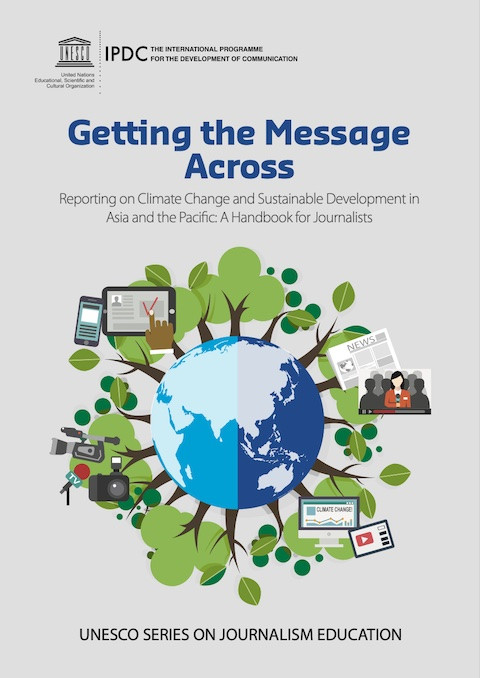 Getting the Message Across: Reporting on Climate Change and Sustainable Development in Asia and the Pacific; A Handbook for Journalists سنة النشر: 2018 المؤلف المؤسسي: UNESCO Getting the Message Across, Reporting on Climate Change and Sustainable Development in Asia and the Pacific: A Handbook for Journalists has been customized for journalists to tell the climate change story specific to the region. It explores the essential aspects of climate change, including its injustices to vulnerable communities, especially women and girls and least developed countries, and provides examples of best practices and stories of hope unique to the region. It can be used as a resource for journalists to understand the science of climate change, as well as helping journalists to improve their reporting of the environmental, social, economic ̧ political, technological and other angles of the story. Донесение сути темы Освещение темы: об изменении климата и устойчивом развитии в Азиатско-Тихоокеанском регионе; Пособие для журналистов سنة النشر: 2018 المؤلف المؤسسي: Организация Объединенных Наций по вопросам образования, науки и культуры (UNESCO) Пособие для журналистов "Донесение сути темы Освещение темы об изменении климата и устойчивом развитии в Азиатско-Тихоокеанском регионе" было разработано для журналистов, так чтобы рассказать историю изменения климата, характерную для региона. В нем рассматриваются основные аспекты изменения климата, в том числе его несправедливость по отношению к уязвимым общинам, особенно женщинам и девочкам и наименее развитым странам, и приводятся примеры передовой практики и истории надежды, уникальные для региона. Он может быть использован в качестве ресурса для журналистов, чтобы понять науку об изменении климата, а также помочь журналистам улучшить свои репортажи об экологических, социальных, экономических, политических, технологических и других аспектах истории.
 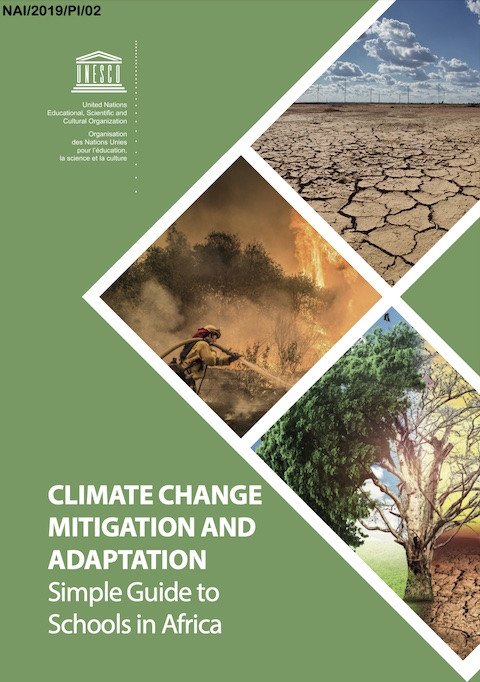 Climate Change Mitigation and Adaptation: Simple Guide to Schools in Africa سنة النشر: 2019 المؤلف المؤسسي: UNESCO This booklet aims to support educators in Africa to impart knowledge on climate change to students in secondary level education.
  K-12 AI Curricula: A Mapping of Government-Endorsed AI Curricula سنة النشر: 2022 المؤلف المؤسسي: UNESCO Regulations on their own are insufficient to ensure AI as a common good for education and for humanity. All citizens need to be equipped with some level of AI literacy covering the values, knowledge and skills relating to AI. This report features key findings and recommendations of UNESCO’s global survey on AI curricula for K-12. It reveals that only 11 countries have developed and endorsed K-12 AI curricula and another four countries have AI curricula in development. This is a strong call for Member States to develop AI curricula for K-12 students, and to build stronger mechanisms to validate non-governmental AI curricula offered to balance the private-driven approach. The report also reveals that the learning outcomes of AI curricula need to be more focused on fostering creativity in crafting AI technologies and on contextual ethics. Teacher training is key to ensure the implementation of AI curricula, and teachers need to be trained on designing and facilitating project-based learning which is the most commonly used pedagogical methodology in existing AI curricula. The report also advises an ‘agnostic approach’ towards AI brands and products when introducing domain-specific AI technologies.
  تعليم الظل في منطقة الشرق الأوسط: طبيعة الدروس الخصوصية وآثار إنتشارها سنة النشر: 2023 المؤلف: Mark Bray | Anas Hajar المؤلف المؤسسي: منظمة الأمم المتحدة للتربية والعلم والثقافة (UNESCO) يتلقى عدد متزايد من لطلبة فيجميع أنحاء العالم دروًسا خصوصية لاستكمال تعليمهما لمدرسي.وفيكثيرمنا لمؤلفات الأكاديمية، يسمى ذلك بتعليم الظل؛ لأن محتوى الدروس الخصوصية يحاكي بشكل كبير محتوى التعليم المدرسي، حيث يتغير محتواه بتغير المنهاج في المدارس. قد تأخذ الدروس الخصوصية أنماط عديدة، فمن الممكن تقديمها بشكل فردي، أو في مجموعات صغيرة، أو في صفوف كبيرة، أو عبر الإنترنت. و يتم توفير بعض الدروس الخصوصية من قبل معلمي الوزارة من أجلا لحصولعل ىدخل إضافي، كما تقوم- أيًضا- بعض المؤسسات التجارية بتوفيرتلك الدروس.أما الفئة الثالثة من مقدمي الدروس الخصوصية فتشمل طلاب الجامعات والمتقاعدين و العمال الموسميين.ففي حين أن الكثير من الأبحاث والسياسات قد ركزت على نظام تعليم الظل في شرق آسيا وبعض مناطق العالم الأخرى، كان الاهتمام أقلب الموضوع في منطقة الشرق الأوسط. ولكن الموضوع يستحق تركيًزا أكبر بسبب آثاره بعيدة المدى على الهيكليات الاجتماعية وأنظمة التعليم السائدة. تبدأ هذه الدراسة بالصورة العالمية قبل مقارنة الأنماط ضمن وبين 12 دولة ناطقة باللغة العربية في الشرق الأوسط.
  World Heritage Online Map Platform: Technical Note on the Provision of Geospatial Data سنة النشر: 2023 المؤلف المؤسسي: UNESCO UNESCO’s World Heritage Online Map Platform (WHOMP) is a Geographic Information System (GIS) developed with the support of the Government of Flanders (Belgium), aiming at the creation of a comprehensive and accessible geodatabase for World Heritage properties worldwide. This platform is hosted and managed by UNESCO which ensures that the data presented correspond exactly to the boundaries of the World Heritage properties and their buffer zones as inscribed in the World Heritage List, including any changes adopted by the World Heritage Committee after the initial inscription of a property. Plateforme de cartes en ligne du patrimoine mondial: Note technique sur la mise à disposition de données géospatiales سنة النشر: 2023 المؤلف المؤسسي: Organisation des Nations Unies pour l'éducation, la science et la culture (UNESCO) La Plateforme de cartes en ligne du patrimoine mondial de l’UNESCO est un système d’information géographique (SIG) développé avec le soutien du Gouvernement flamand (Belgique) visant à créer une base de données géospatiales complète et accessible pour les biens du patrimoine mondial du monde entier. Cette plateforme est hébergée et gérée par le Centre du patrimoine mondial de l’UNESCO, qui veille à ce que les données présentées correspondent exactement aux limites des biens du patrimoine mondial et de leurs zones tampons, telles qu’inscrites dans la Liste du patrimoine mondial, en tenant compte de toute éventuelle modification adoptée par le Comité du patrimoine mondial après l’inscription initiale du bien.
  Manuel de formation mondial: l'IA et l'état de droit pour le pouvoir judiciaire سنة النشر: 2023 المؤلف: Miriam Stankovich | Ivana Feldfeber | Yasmín Quiroga | Marianela Ciolfi Felice | Vukosi Marivate المؤلف المؤسسي: Organisation des Nations Unies pour l'éducation, la science et la culture (UNESCO) Qu'est-ce que l'intelligence artificielle (IA) ? Comment ça marche ? Et plus important encore, comment trouve-t-elle sa place dans un contexte judiciaire ? Des technologies telles que l'IA existent depuis des décennies, mais elles n’ont commencé à être utilisées dans divers cadres judiciaires et exécutifs que très récemment. Bien que l'IA ait un immense potentiel pour le système judiciaire, pour aider les juges à prendre de meilleures décisions, améliorer leur efficacité, l'accessiblité, et pour aider à détecter et à prévenir la criminalité, elle soulève également des questions importantes parmi les acteurs judiciaires, alors qu'ils se préparent à un avenir où l'IA sera de plus en plus utilisée dans les systèmes judiciaires. En 2022, l'UNESCO a lancé deux évaluations des besoins. Tout d'abord, dans le cadre de l'enquête de l'UNESCO sur l'évaluation des besoins en matière d'intelligence artificielle en Afrique, 90 % des 32 pays interrogés ont demandé un soutien au renforcement des capacités du pouvoir judiciaire en matière d'IA. Dans le même temps, une deuxième enquête mondiale sur les acteurs judiciaires dans 100 pays a mis en avant la nécessité de mieux comprendre l'utilisation de l'IA dans l'administration de la justice et ses implications juridiques plus larges sur les sociétés. Cet ouvrage, « Manuel de formation mondial : l'IA et l'état de droit pour le pouvoir judiciaire », répond à ces besoins et fournit aux acteurs judiciaires (juges, procureurs, avocats, juristes, facultés de droit et établissements de formation judiciaire) les connaissances et les outils nécessaires pour comprendre les avantages et les risques de l'IA dans leur travail. Ce manuel de formation aidera les acteurs judiciaires à atténuer les risques potentiels de l'IA pour les droits humains en fournissant des conseils sur les lois, principes, règles et jurisprudences internationales pertinents en matière de droits humains qui sous-tendent l'utilisation éthique de l'IA.