
الموارد
استكشف مجموعة واسعة من الموارد القيمة حول تعليم المواطنة العالمية لتعميق فهمك وتعزيز البحث والمناصرة والتعليم والتعلم.
تم العثور على 3,448 نتيجة
 La enseñanza del Holocausto en América Latina - Los desafios para los educadores y legisladores سنة النشر: 2015 المؤلف المؤسسي: UNESCO The Holocaust has become a point of reference worldwide to raise awareness about violations of human rights and state violence. What is the importance of Holocaust education in regions of the world that have no direct relation to the history of the Jewish people and the crimes of Nazism, especially in Latin America? Is there a rise of relevant educational practices internationally as a result of the expansion of education about the Holocaust ? How can educators address a subject so complex and emotionally charged in changing multicultural societies ? This UNESCO publication brings together the contributions of important historians and educators around the world and frames current debates in the field, emphasizing the issues that educators in Latin America are facing and revealing the reasons why it is vital to continue teaching Holocaust history in the world today, regardless of where we live. (By the publisher - Translation) La enseñanza del Holocausto en América Latina - Los desafios para los educadores y legisladores سنة النشر: 2015 المؤلف المؤسسي: Organisation des Nations Unies pour l'éducation, la science et la culture (UNESCO) L'Holocauste est devenu un point de référence dans le monde entier afin de sensibiliser sur les violations des droits de l'homme et de la violence de l'État. Quelle est l'importance de l'enseignement de l'Holocauste dans les régions du monde qui ont aucun rapport direct avec l'histoire du peuple juif et les crimes du nazisme, en particulier en Amérique latine? Y at-il une augmentation des pratiques éducatives pertinentes au niveau international en raison de l'expansion de l'éducation sur l'Holocauste? Comment les enseignants peuvent aborder un sujet si complexe et chargé d'émotion dans l'évolution des sociétés multiculturelles? Cette publication de l'UNESCO rassemble les contributions d'historiens et éducateurs du monde entier et les cadres débats actuels dans le domaine importants, en insistant sur les questions que les éducateurs en Amérique latine sont confrontés et révéler les raisons pour lesquelles il est essentiel de continuer à enseigner l'histoire de l'Holocauste dans le monde aujourd'hui , peu importe où nous vivons. (Par l'éditeur - traduction)
  Collection des meilleures pratiques en éducation pour une citoyenneté mondiale en Afrique centrale سنة النشر: 2015 المؤلف المؤسسي: UNESCO This collection of best practices in human rights education in Central Africa and Ethiopia was prepared in order to respond to UNESCO’s demand to promote such initiatives and to ensure a multiplier effect considering human rights education in the region. The objective is to support the concept of UNESCO’s ‘Global Citizenship Education’ in the field of human rights education in identifying its best practices. In order to identify the best practices, UNESCO’s activities in the field of human rights education in the region were mapped out. This mapping out has shown big differences in implementing the initiatives focused on achieving global citizenship education through human rights education, particularly in primary and secondary education, as indicated in the first phase of the World Programme for human rights education. Nevertheless, various initiatives collected are either conducted/supported by UNESCO or not, in terms of three themes: citizenship education, intercultural dialogue, and the peace and security which are considered to be relevant to Africa in general and particularly to Central Africa, in order to address the main theme of global citizenship education. The selected best practices deal with the tertiary level and are in line with the second phase of the World Programme for human rights education, covering the period between 2009 and 2014 and focusing on higher and vocational education. The practices include 1) citizenship education which supports the principles set out in the Universal Declaration of Human Rights and which is reiterated in the two phases of the World Programme for human rights education, 2) the intercultural dialogue which supports education for understanding and evaluating unity in diversity, and which fits well with the objectives of the UN Decade of Education for Sustainable Development proclaimed by the UN General Assembly and managed by UNESCO, and 3) education for peace and security.It is obvious that many linkages exist among the three subjects mentioned above. Therefore, the examples presented in this collection can affect one or several problems. Each example is presented with the following sequence: identification, background, implementation, and results.
 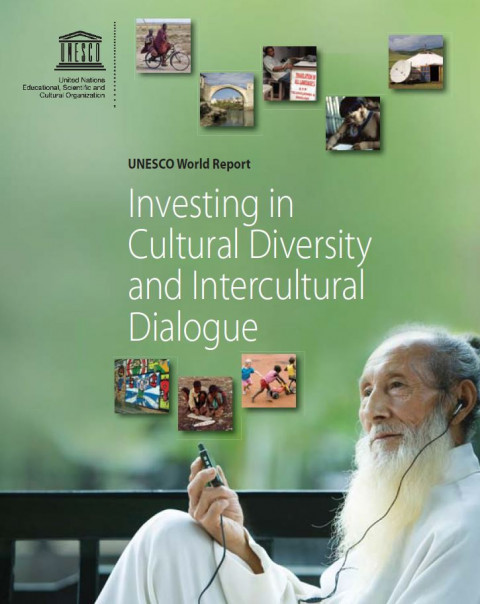 Investing in Cultural Diversity and Intercultural Dialogue: UNESCO World Report سنة النشر: 2009 المؤلف المؤسسي: UNESCO This report analyzes all aspects of cultural diversity, which has emerged as a key concern of the international community in recent decades, and maps out new approaches to monitoring and shaping the changes that are taking place. It highlights, in particular, the interrelated challenges of cultural diversity and intercultural dialogue and the way in which strong homogenizing forces are matched by persistent diversifying trends. The report proposes a series of ten policy-oriented recommendations, to the attention of States, intergovernmental and non-governmental organizations, international and regional bodies, national institutions and the private sector on how to invest in cultural diversity.Emphasizing the importance of cultural diversity in different areas (languages, education, communication and new media development, and creativity and the marketplace) based on data and examples collected from around the world, the report is also intended for the general public. It proposes a coherent vision of cultural diversity and clarifies how, far from being a threat, it can become beneficial to the action of the international community. Investir dans la diversité culturelle et le dialogue interculturel: rapport mondial de l'UNESCO سنة النشر: 2009 المؤلف المؤسسي: Organisation des Nations Unies pour l'éducation, la science et la culture (UNESCO) Au carrefour de la réflexion intellectuelle, scientifique et politique, ce second Rapport mondial vise à faire le point sur tout ce qui se dit, se pense et se fait au nom de la diversité culturelle, et à identifier les conditions nécessaires pour faire de la diversité un atout et non une menace, une source de renouveau pour les politiques publiques au service du développement, de la cohésion sociale et de la paix.Ce Rapport mondial vise à dresser un état des lieux des enjeux de la diversité culturelle, à examiner un certain nombre d’idées reçues et à proposer des recommandations opérationnelles dans un certain nombre de domaines transversaux tels que les identités et le dialogue, l’avenir des langues et l’éducation interculturelle, le pluralisme des médias et des industries culturelles, le monde de l’entreprise, les savoirs locaux, la biodiversité, le développement durable, la gouvernance et les droits de l’homme. Invertir en la diversidad cultural y el diálogo intercultural: informe mundial de la UNESCO سنة النشر: 2009 المؤلف المؤسسي: Organización de las Naciones Unidas para la Educación, la Ciencia y la Cultura (UNESCO) La diversidad cultural ha comenzado a suscitar un interés fundamental al iniciarse el nuevo siglo. Sin embargo, los significados que se le asignan a esta expresión "comodín" son tan variados como cambiantes. Algunos consideran que la diversidad cultural es intrínsecamente positiva, en la medida en que se refiere a un intercambio de la riqueza inherente a cada cultura del mundo y, por ende, a los vínculos que nos unen en los procesos de diálogo e intercambio. Para otros, las diferencias culturales son la causa de que perdamos de vista lo que tenemos en común en cuanto seres humanos y, por lo tanto, constituyen la raíz de numerosos conflictos.Este segundo diagnóstico resulta hoy tanto más digno de crédito cuanto que la mundialización ha aumentado los puntos de interacción y fricción entre las culturas, originando tensiones, repliegues y reivindicaciones en relación con la identidad, en particular de índole religiosa, que se convierten en fuentes potenciales de conflicto. Por consiguiente, el desafío fundamental consistiría en proponer una perspectiva coherente de la diversidad cultural y, por su conducto, aclarar cómo, lejos de ser una amenaza, puede contribuir a las medidas que adopte la comunidad internacional. Éste es el objetivo esencial del presente informe.
  [Резюме] Подотчетность в образовании: выполнение обязательств. Резюме всемирного доклада по мониторингу образования سنة النشر: 2017 المؤلف المؤسسي: Организация Объединенных Наций по вопросам образования, науки и культуры (UNESCO) Во второй публикации из серии Всемирного доклада по мониторингу образования (ВДМО) за 2017 год был продолжен анализ прогресса в достижении цели в области устойчивого развития, касающейся образования (ЦУР 4) и выполнения десяти предусмотренных в рамках этой цели задач. Кроме этого, задач, связанных с образованием и включенных в Повестку дня в области устойчивого развития.Наряду с этим в документе рассматриваются аспекты, касающиеся подотчетности в сфере образования, в частности, анализируются возможности повышения всеми вовлеченными сторонами эффективности, действенности и справедливости предоставляемых образовательных услуг. Доклад включает обзор различных механизмов, используемых для обеспечения подотчетности правительств, школ, учителей, родителей, международных организаций и частных структур в интересах всеохватности, справедливости и качества образования.На основе оценки эффективности подходов, существующих в вопросах подотчетности, и анализа внешних факторов, которые могут влиять на эту эффективность, в ВДМО 2017/18 гг. были сформулированы конкретные рекомендации, направленные на укрепление систем образования. [요약본] 교육의 책무성: 우리의 공약을 어떻게 이행할 것인가; 세계 교육 현황 보고서 2017/8 سنة النشر: 2017 المؤلف المؤسسي: 유네스코 두 번째로 발간되는 세계 교육 현황 보고서는 유엔 지속가능발전목표의 교육 목표를 향한 전 세계적 이행 현황에 대한 최신 증거를 제시합니다.여전히 수억 명의 사람들이 학교에 다니지 못하고, 많은 이들이 학교에서 최소한의 기술을 습득하지 못하고 있습니다. 이것은 현 교육 시스템이 글로벌 목표를 달성하기 위한 올바른 방향으로 나아가지 못하고 있음을 나타냅니다. 현재 소외 계층이 이러한 여파를 가장 크게 받고 있지만, 정책 입안자가 이들의 필요에 충분히 주의를 기울인다면 이들이 가장 큰 혜택을 받을 수도 있습니다. 이러한 과제에 직면해 있고 예산 부족 및 돈에 합당한 결과 지향적 가치의 강조에 어려움을 겪고 있는 국가들은 해결책을 모색하고 있습니다. 대부분의 경우 책무성 증진이 최우선 해결책으로 명시되고 있습니다.2017/8 세계 교육 현황 보고서 요약본은 교육의 책무성에 대한 모든 접근법을 보여 줍니다. 이 보고서는 책무성에 대한 개념이 낯선 국가 및 교육에 대한 권리 침해가 문제시 되지 않는 국가에서부터 책무성이 그 자체로 포괄적이고 공평한 양질의 교육과 평생 학습을 위한 수단이 아닌 목적이 된 국가까지를 포괄합니다.본 보고서는 교육이 공동의 책임이라는 점을 강조합니다. 교육에 대한 기본적인 책임은 정부에 있지만, 학교, 교사, 학부모, 학생, 국제기구, 민간 부문 제공자, 시민사회 및 미디어 등 모든 주체는 교육제도 향상을 위한 역할을 지닙니다. 본 보고서는 투명성과 정보 가용성의 중요성을 강조하지만 자료 사용 방법에 대한 주의를 촉구합니다. 협소하게 정의된 결과와 처벌적 제재에 대한 불균형적 집중은 책무성 시스템을 회피하게 만드는 경우를 만듭니다. 여러 책무성 도구들이 존재하는 시대에 본 보고서는 어떠한 도구가 효과가 있고 그렇지 않은지에 대한 분명한 증거를 제시하고 있습니다.
 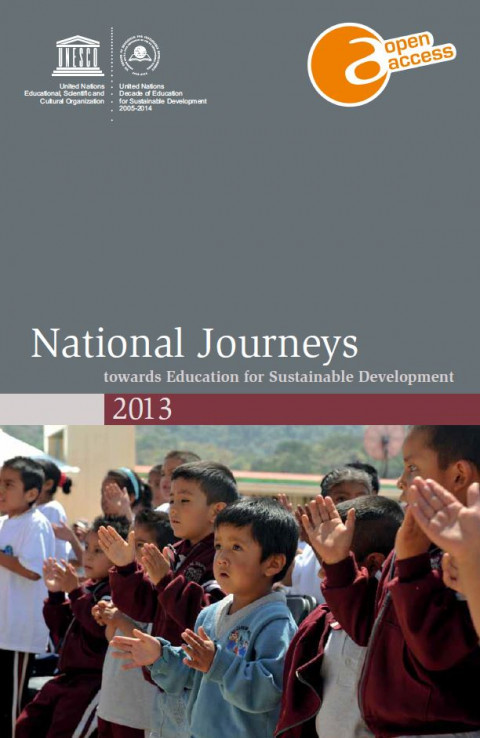 National journeys towards education for sustainable development, 2013: reviewing national ESD experiences from Costa Rica, Morocco, South Africa, Sweden, VietNam سنة النشر: 2013 المؤلف المؤسسي: UNESCO This publication has sourced information from a series of national reviews commissioned by UNESCO in 2011/2012 and was written by experts in Costa Rica, Morocco, South Africa, Sweden and Viet Nam. The countries presented in this report are not necessarily the ‘best’ examples of the region, as many other countries are also progressing effectively towards implementing Education for Sustainable Development (ESD). Rather, the countries selected illustrate the wide diversity of ESD approaches and initiatives taking place in different parts of the world. The national studies were then edited and harmonized before common themes and lessons learnt were identified to support other national efforts in moving towards the end of the UN Decade of Education for Sustainable Development. Voyages nationaux vers l'éducation pour le développement durable, 2013: examen des expériences nationales EDD du Costa Rica, Maroc, Afrique du Sud, Suède, Vietnam سنة النشر: 2013 المؤلف المؤسسي: Organisation des Nations Unies pour l'éducation, la science et la culture (UNESCO) Cette publication a source d'informations à partir d'une série d'examens nationaux mandatés par l'UNESCO en 2011/2012 et a été rédigé par des experts au Costa Rica, Maroc, Afrique du Sud, la Suède et le Viet Nam. Les pays présentés dans ce rapport ne sont pas nécessairement les exemples «meilleurs» de la région, comme beaucoup d'autres pays progressent également de manière efficace pour mettre en œuvre l'éducation pour le développement durable (EDD). Au contraire, les pays sélectionnés illustrent la grande diversité des approches et des initiatives qui se déroulent dans différentes parties du monde EDD. Les études nationales ont ensuite été modifiés et harmonisés avant les thèmes et les enseignements tirés ont été identifiés pour soutenir d'autres efforts nationaux dans le déplacement vers la fin de la Décennie des Nations Unies pour l'éducation au développement durable communs.