
الموارد
استكشف مجموعة واسعة من الموارد القيمة حول تعليم المواطنة العالمية لتعميق فهمك وتعزيز البحث والمناصرة والتعليم والتعلم.
تم العثور على 2,661 نتيجة
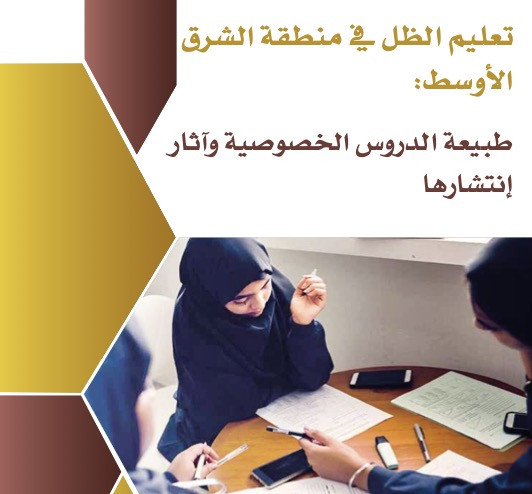 Shadow education in the Middle East: private supplementary tutoring and its policy implications سنة النشر: 2023 المؤلف: Mark Bray | Anas Hajar المؤلف المؤسسي: UNESCO An increasing number of students around the world are receiving private lessons to supplement their school education. In much academic literature, this is called shadow education; Because the content of private lessons closely mimics the content of school education, as its content changes with the change in the curriculum in schools. Private lessons can take many forms. They can be offered one-on-one, in small groups, in large classes, or online. Some private lessons are provided by the Ministry’s teachers in order to obtain additional income, and some commercial institutions also provide these lessons. As for the categoryThe third group of private lesson providers includes university students, retirees, and seasonal workers.While much research and policy has focused on the shadow education system in East Asia and some other regions of the world, there has been less interest in the topic in the Middle East. However, the topic deserves greater focus because of its far-reaching implications for prevailing social structures and education systems. This study begins with the global picture before comparing patterns within and between 12 Arabic-speaking countries in the Middle East.
  Recommendation on Education for Peace and Human Rights, International Understanding, Cooperation, Fundamental Freedoms, Global Citizenship and Sustainable Development سنة النشر: 2023 المؤلف المؤسسي: UNESCO Building more peaceful, just, and sustainable societies starts with education. It influences all aspects of our daily lives and our overall prospects while being impacted by our health and environment. In the global landscape of worsening climate change, democratic backsliding, persistent inequalities, rising discrimination, hate speech, violence and conflict, it can be a tool to address and prevent these problems in the future. And it can also be a long-term investment with increasing returns if shaped and deployed effectively. The new UNESCO Recommendation on Education for Peace and Human Rights, International Understanding, Cooperation, Fundamental Freedoms, Global Citizenship and Sustainable Development, which is commonly referred to as the Recommendation on Education for Peace, Human Rights and Sustainable Development is a landmark guidance document that defines what needs to evolve in and through education to accomplish these goals. 평화, 인권, 국제이해, 협력, 기본적 자유, 세계시민성, 지속가능발전을 위한 교육 권고 سنة النشر: 2023 المؤلف المؤسسي: 유네스코 이 권고는 ‘국제이해, 협력, 평화를 위한 교육과 인권, 기본적 자유에 관한 교육 권고(1974)’를 개정하여 2023년 제42차 유네스코 총회가 채택한 것이다.
 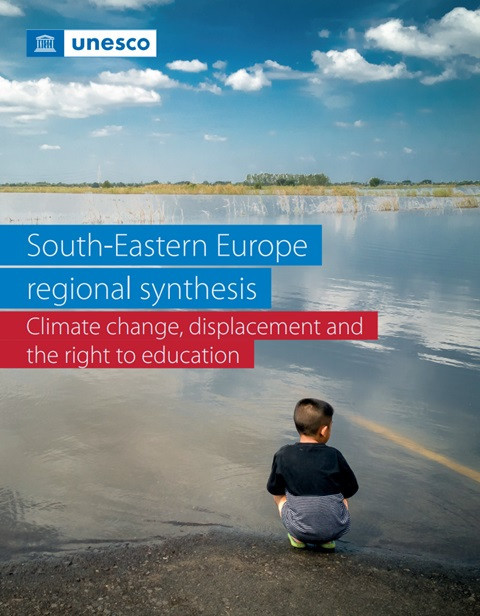 South-Eastern Europe regional synthesis: climate change, displacement and the right to education سنة النشر: 2023 المؤلف المؤسسي: UNESCO In 2021 alone, 23.7 million people were displaced in 137 countries and territories due to natural disasters, which the scientific community has recognized have become more frequent and intense due to climate change. Climate change and displacement is currently taking place in Europe, with particularly disastrous consequences in South-Eastern Europe due to regional specificities. Comparative country case studies were carried out in Bosnia and Herzegovina, the Republic of Moldova, and Serbia, as they exemplify clear, present patterns of climate displacement, to examine the impacts of climate change on the right to education in the region. The case studies show that climate change directly threatens education through the destruction of schools and property. It also indirectly puts learning in peril by leading people across borders where their legal residency nor right to education is ensured. This publication aims to guide policy-makers by providing recommendations on how to ensure the protection of the right to education in South-Eastern Europe in the face of climate change and displacement. It is one of four regional reports that will lead to the development of a global report providing global policy guidance.
 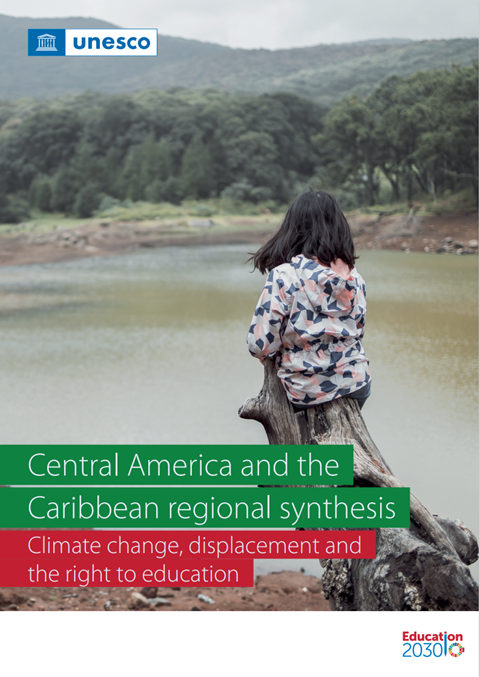 Central America and the Caribbean regional synthesis: climate change, displacement and the right to education سنة النشر: 2023 المؤلف المؤسسي: UNESCO From rising sea level to drought and increasingly frequent natural disasters - the effects of climate change are well-known today. However, its effect on human mobility is just coming to the forefront of the political discussion. In 2020 alone, 30.7 million people globally were displaced by natural disasters. Central America and the Caribbean region is prone to the effects of climate change and displacement due to its socioeconomic characteristics and geographic location. Country case studies were carried out in the Bahamas, Cuba, the Dominican Republic, Guatemala, and Jamaica to examine the impacts on the right to education in the region. The research shows that climate change directly threatens education through the destruction of schools and property. It also leads people across borders where their legal residency and right to education are not guaranteed. This report aims to guide policy-makers on how to ensure education is protected in the face of climate change and displacement. The report is one of four being developed and will contribute to UNESCO’s global initiative on climate change, displacement and the right to education. It will inform the development of a Global Report with policy recommendations.
  Kit de herramientas global sobre IA y el estado de derecho para el poder judicial سنة النشر: 2023 المؤلف: Miriam Stankovich | Ivana Feldfeber | Yasmín Quiroga | Marianela Ciolfi Felice | Vukosi Marivate المؤلف المؤسسي: UNESCO ¿Qué es la Inteligencia artificial (IA)? ¿Cómo funciona? Y lo que es más importante, ¿cómo se abre camino en el contexto judicial? Tecnologías como la IA han existido durante décadas, pero solo recientemente han comenzado a usarse en una variedad de entornos de justicia y aplicación de la ley. Si bien la IA tiene un inmenso potencial para el sistema de justicia, ya que ayuda a los jueces a tomar mejores decisiones, mejora la eficiencia, aumenta el acceso y ayuda a detectar y prevenir el delito, también existen algunas cuestiones importantes que las partes interesadas en la justicia deben tener en cuenta mientras se preparan para un futuro en el que la IA se utiliza cada vez más en los sistemas de justicia. En 2022, la UNESCO lanzó dos evaluaciones de necesidades. En primer lugar, a través de la Encuesta de evaluación de necesidades de inteligencia artificial de la UNESCO en África, el 90 % de los 32 países encuestados solicitaron apoyo para el desarrollo de capacidades para el poder judicial en materia de IA. Al mismo tiempo, una segunda encuesta mundialde actores judiciales en 100 países subrayó la necesidad de comprender mejor el uso de la IA en la administración de justicia y sus repercusiones jurídicas más amplias en las sociedades. El “Kit de herramientas mundial sobre la IA y el Estado de derecho” para el Poder Judicial responde a estas necesidades y proporciona a los actores judiciales (jueces, fiscales, fiscales estatales, abogados públicos, universidades de derecho e instituciones de formación judicial) el conocimiento y las herramientas necesarias para comprender los beneficios y riesgos de la IA en su trabajo. El kit de herramientas ayudará a los actores judiciales a mitigar los posibles riesgos de la IA para los derechos humanos al brindar orientación sobre las leyes, principios, normas y jurisprudencia internacional de derechos humanos relevantes que sustentan el uso ético de la IA.
  Guidelines for the governance of digital platforms: safeguarding freedom of expression and access to information through a multi-stakeholder approach سنة النشر: 2023 المؤلف المؤسسي: UNESCO Guidelines for an Internet for TrustSafeguarding freedom of expression and the right to information while dealing with dis- and misinformation, hate speech, and conspiracy theories requires a multistakeholder approach. This is the reason why UNESCO, the leading UN agency for the promotion and protection of freedom of expression and to information, is launching Guidelines for the Governance of Digital Platforms. The Guidelines outline a set of duties, responsibilities and roles for States, digital platforms, intergovernmental organizations, civil society, media, academia, the technical community and other stakeholders to enable the environment where freedom of expression and information are in the core of digital platforms governance processes. The Guidelines were produced through a multi-stakeholder consultation that gathered more than 10,000 comments from 134 countries. These global-scale consultations fostered inclusive participation, ensuring a diversity of voices to be heard, including those from groups in situation of marginalization and vulnerability. Cultivating an Internet of Trust is a shared responsibility among all stakeholders. It calls upon us all to sustain an enabling environment for freedom of expression and the right to information.
  Gender Report 2020: A New Generation; 25 Years of Efforts for Gender Equality in Education (Global Education Monitoring Report) سنة النشر: 2020 المؤلف المؤسسي: UNESCO | Global Education Monitoring Report Team Building on the 2020 Global Education Monitoring Report, this report investigates how inclusion in education can advance gender equality in and through education, which is critical to make progress towards gender equality in society. The goal of gender equality is, of course, not new. It was enshrined in the 1979 Convention on the Elimination of All Forms of Discrimination Against Women and was at the core of the 1995 Beijing Declaration and Platform for Action, whose 25th anniversary is marked in 2020.
  Balancing Act: Countering Digital Disinformation While Respecting Freedom of Expression سنة النشر: 2020 المؤلف: Kalina Bontcheva | Julie Posetti المؤلف المؤسسي: UNESCO | Broadband Commission for Sustainable Development. Working Group on AI Capacity Building | International Telecommunication Union (ITU) This report provides stakeholders with a rich suite of sector-specific recommendations, as well as a helpful 23-point framework that can be used for assessing any particular response to disinformation in the context of freedom of expression challenges. This research will help the widest range of key actors to better understand this phenomenon, and especially the way the world is responding to it, and where the gaps are.At the heart of this knowledge product is the need to balance responses to disinformation with respect for freedom of expression. The research shows us that this can be done.
 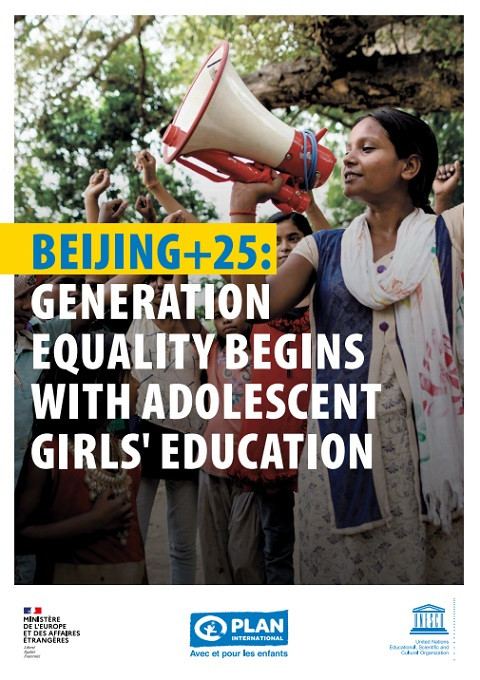 Beijing+25: Generation Equality Begins With Adolescent Girls' Education سنة النشر: 2020 المؤلف المؤسسي: Plan International France | France. Ministry for Europe and Foreign Affairs | UNESCO This publication examines progress and persistent gaps in our efforts to achieve gender equality in and through education since the adoption of the Beijing Platform for Action 25 years ago. In 2018, 130 million girls worldwide were out of school, and only two out of three girls were enrolled in secondary education. The crisis related to the COVID-19 pandemic is likely to further widen these gaps and threatens to interrupt the education of more than 11 million girls.This publication demonstrates the importance of adolescent girls' education for the advancement of the Beijing Platform for Action’s visionary agenda, and the achievement of the Sustainable Development Goals.It provides recommendations to fast-track investments and action on adolescent girls’ education during the 2021 Generation Equality Forum, and the related Action Coalitions aiming to accelerate progress for gender equality. It promotes intersectoral approaches and multi-stakeholder partnerships, and focuses on three ‘levers of action’: comprehensive sexuality education, the involvement of adolescent girls in science, technology, engineering and mathematics education, and the development of adolescent girls’ leadership. It shares adolescent girls’ own priorities and expectations, and their vision of what is needed for an equal future for us all.