
الموارد
استكشف مجموعة واسعة من الموارد القيمة حول تعليم المواطنة العالمية لتعميق فهمك وتعزيز البحث والمناصرة والتعليم والتعلم.
تم العثور على 91 نتيجة
 INSPIRE: семь стратегий по ликвидации насилия в отношении детей سنة النشر: 2016 المؤلف المؤسسي: World Health Organization (WHO) Cборник информационных материалов, основанных на фактических данных и предназначенных для всех, кто заинтересован в профилактике насилия в отношении детей и подростков и принятии ответных мер — от государственных деятелей до обычных граждан и от организаций гражданского общества до представителей частного сектора. В этом документе представлен комплекс избранных стратегий, основанных на самых убедительных из имеющихся на сегодняшний день фактических данных и призванных помочь странам и сообществам сосредоточить усилия на профилактических программах и услугах, обладающих наибольшим потенциалом для снижения уровня насилия в отношении детей. В комплекс входят семь следующих стратегий: Implementation and enforcement of laws (Принятие и обеспечение соблюдения нормативных актов); Norms and values (Нормы и ценности); Safe environments (Создание безопасной среды); Parent and caregiver support (Поддержка родителей и воспитателей); Income and economic strengthening (Повышение доходов и улучшение экономического положения); Response and support services (Ответные меры и оказание поддержки); Education and life skills (Обучение и формирование жизненных навыков). Кроме того, в комплекс INSPIRE входят два типа сквозных мероприятий, сочетание которых позволяет связывать между собой и усиливать эти семь стратегий и одновременно оценивать ход их реализации.
  What Makes a Quality Curriculum?: In-Progress Reflection No.2 on Current and Critical Issues in Curriculum and Learning سنة النشر: 2016 المؤلف: Philip Stabback المؤلف المؤسسي: UNESCO International Bureau of Education (IBE) Sustainable Development Goal Four has to do with education in the post-2015 development agenda. It aims to “ensure inclusive and equitable quality education and promote lifelong learning opportunities for all”.Given the essential role of curriculum in enabling quality learning and in articulating and supporting education that is relevant to holistic development, our purpose in this paper is to identify what makes a quality curriculum, so as to support curricular innovation in UNESCO Member States to the end of the realization of Sustainable Development Goal Four.In this we are assuming that curriculum, given its essential role in the provision of quality learning for all children and young people, and in articulating and supporting education that is relevant to holistic development, is critical in the realization of SDG 4. It is the curriculum that determines to a large extent whether education is inclusive, thus playing a significant role in ensuring that provision is equitable. It is the curriculum that provides the structure for the provision of quality learning, especially where teachers might be under-qualified and inexperienced, their classrooms under-resourced, and their students lacking the prior frameworks within which to situate their learning. And it is the curriculum that articulates both the competencies necessary for lifelong learning and the competencies needed for holistic development.We thus argue that curriculum lies at the crossroads of these four key aspects of SDG 4: that education should be (1) inclusive and equitable, (2) characterized by quality learning, (3) promoting lifelong learning, and (4) relevant to holistic development. Curriculum, in other words, provides the bridge between education and development – and it is the competencies associated with lifelong learning and aligned with development needs, in the broadest, holistic sense of the term, that span that bridge.
  Content, Comprehensiveness and Coherence in Policies for Early Childhood: How the Curriculum Can Contribute سنة النشر: 2016 المؤلف: María Isabel Díaz المؤلف المؤسسي: UNESCO International Bureau of Education (IBE) In the context of international agreements and commitments concerning early childhood, the purpose of this document is to review and renew the challenges that are involved in forging educational and curriculum policies for the first level of education. In the light of early childhood being increasingly included in the public agenda, countries are making sustained efforts to increase equity and quality in the design and implementation of policies for the early years.These are policies that are in the process of changing by including quality and participation criteria; fine-tuning monitoring and assessment mechanisms; going beyond the lack of sectoral and territorial coordination, among other limitations; moving from a needs-based approach to a rights-based approach; and adopting a comprehensive view. The document analyses, from a long-term public policy perspective, some of the challenges that second-generation policies face, positioning the curriculum as the articulating factor for the development of comprehensive policies for early childhood.
  Child Rights Education Toolkit: Rooting Child Rights in Early Childhood Education, Primary and Secondary Schools سنة النشر: 2014 المؤلف المؤسسي: United Nations Children's Fund (UNICEF) This toolkit, developed by UNICEF, defines what is meant by child rights education and the child rights approach. It explains the relevance of child rights education to UNICEF’s mission and the ways in which education can take place in a range of contexts--including with professionals, caregivers, the corporate sector, the media, and children’s groups. The audience of this toolkit is therefore intended to be UNICEF National Committees, UNICEF country offices, UN agencies working on child rights education (CRE), governments, and other civil society organisations, NGOs, and academic institutions.Although this Toolkit focuses on child rights education in the formal learning environment (early childhood education settings, primary and secondary schools), it is hoped that it will also be useful for those working to promote child rights education through other channels, such as in the media, with children’s organizations and through children’s involvement in advocacy.For more information check the UNICEF webpage. INSPIRE: Seven strategies for Ending Violence Against Children سنة النشر: 2016 المؤلف المؤسسي: World Health Organization (WHO) Evidence-based resource for everyone committed to preventing and responding to violence against children and adolescents – from government to grassroots, and from civil society to the private sector. It represents a select group of strategies based on the best available evidence to help countries and communities intensify their focus on the prevention programmes and services with the greatest potential to reduce violence against children. The seven strategies are: Implementation and enforcement of laws; Norms and values; Safe environments; Parent and caregiver support; Income and economic strengthening; Response and support services; and Education and life skills. Additionally, INSPIRE includes two cross-cutting activities that together help connect and strengthen – and assess progress towards – the seven strategies.
 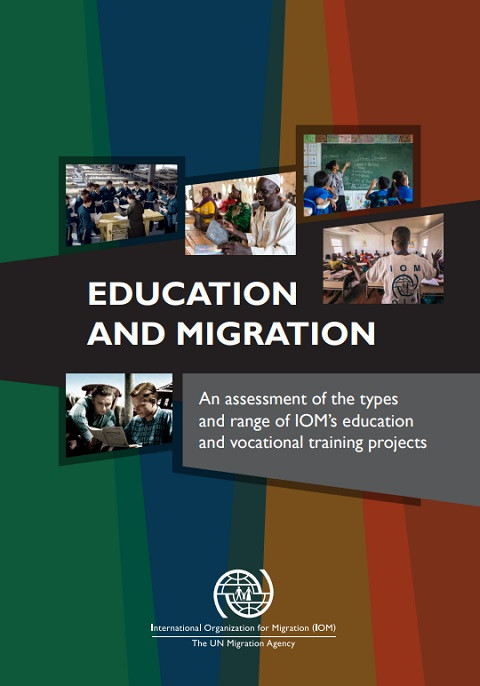 Education and Migration: An Assessment of the Types and Range of IOM’s Education and Vocational Training Projects سنة النشر: 2018 المؤلف: Rocio Sanz المؤلف المؤسسي: International Organization for Migration (IOM) This report presents the results of the assessment of the range and types of IOM’s education and vocational training programmes as of December 2017. Within an overall framework of reviewing the Organization’s role in supporting the development and implementation of migration policy, the purpose of this assessment is to understand how these programmes contribute to education and vocational training outcomes, especially in the specific context of SDG 4 (Quality Education) of the 2030 Agenda for Sustainable Development.
  Personalized Learning within Teacher Education: A Framework and Guidelines سنة النشر: 2020 المؤلف المؤسسي: UNESCO International Bureau of Education (IBE) This paper explores the theoretical and practice elements that together inform the concept of personalised learning. These insights are then used to develop a Framework for Personalized Learning within Teacher Education. In addition, the final chapter outlines pedagogical strategies to support the development of personalised learning that were tested during the project within the participating universities.The Framework and Guidelines are intended for use by to teacher educators and their students, as well as by teachers and students in schools, to support the on‐going shift towards a personalised learning and collaborative paradigm which forefronts learner agency and autonomy and encourages learners of all ages to assume increased responsibility for their own learning and achievements.
 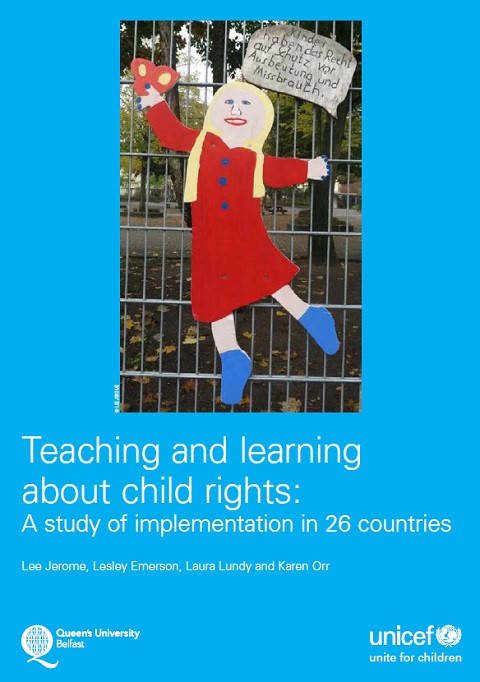 Teaching and Learning about Child Rights: A Study of Implementation in 26 Countries سنة النشر: 2015 المؤلف: Lee Jerome | Lesley Emerson | Laura Lundy | Karen Orr المؤلف المؤسسي: Queen’s University Belfast | United Nations Children's Fund (UNICEF) This research contributes to the global debate on child rights education (CRE). It explores implementation of CRE in early childhood education, primary and secondary schools in 26 countries with a UNICEF National Committee presence. It includes a literature review, results from an on-line survey completed by national experts, seven country case studies and a series of benchmarking statements for CRE implementation.
  Global Citizenship Concepts in Curriculum Guidelines of 10 Countries: Comparative Analysis سنة النشر: 2017 المؤلف: Cristián Cox المؤلف المؤسسي: UNESCO International Bureau of Education (IBE) This paper reports on a study of concepts associated with the new construct of global citizenship education (GCED) in school curricula. We compared the national school curricula of ten countries with markedly different cultures and levels of development across different regions of the world (Africa, Asia, Europe, Latin America, and Southeast Asia) on the presence of concepts associated with GCED. The curricula of both primary and secondary education, in the areas of history and social sciences, and civics and moral education, were compared using a set of categories constructed for this study and derived from UNESCO’s definitions of GCED as well as from the International Association for the Evaluation of Educational Achievement’s (IEA) international assessment studies of civic and citizenship education. Patterns of presence/absence of GCED and related content were identified. The main finding is that only two of the ten countries’ curricula consistently included global citizenship concepts. At the same time, all ten countries, to the extent that the analysis distinguished, included content related to knowledge, values and attitudes that have the world or humanity as referent.
 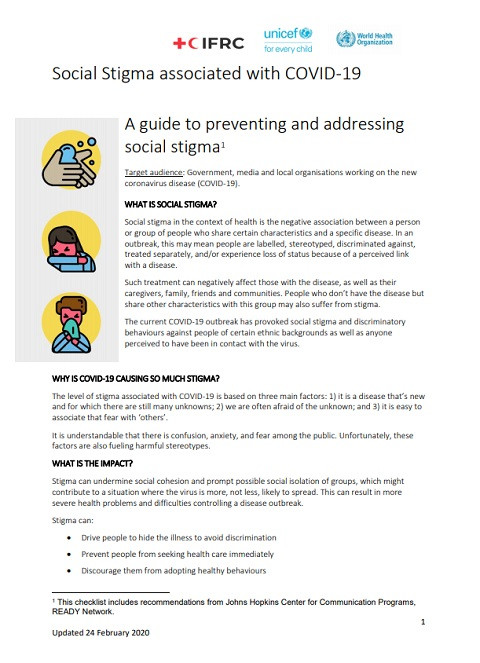 Social Stigma Associated with COVID-19: A Guide to Preventing and Addressing Social Stigma سنة النشر: 2020 المؤلف المؤسسي: International Federation of Red Cross and Red Crescent Societies (IFRC) | United Nations Children's Fund (UNICEF) | World Health Organization (WHO) This resource aims for Government, media and local organisations working on the new coronavirus disease to prevent and address social stigma associated with COVID-19. It offers concrete examples and communication tips on possible actions to counter stigmatizing attitudes.