
الموارد
استكشف مجموعة واسعة من الموارد القيمة حول تعليم المواطنة العالمية لتعميق فهمك وتعزيز البحث والمناصرة والتعليم والتعلم.
تم العثور على 2,162 نتيجة
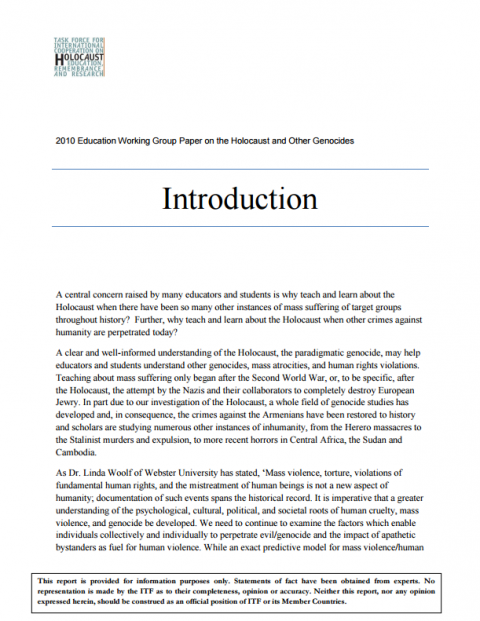 Holocaust and Other Genocides In this series of documents, the IHRA's Education Working Group offers ideas and recommendations to educators who wish to teach about the Holocaust and its relationship to other genocides and crimes against humanity.
  The Holocaust and the United Nations Outreach Programme Detailed information on the Holocaust and the United Nations Outreach Programme can be found at this website. Educational materials as well as professional development opportunities are presented.
 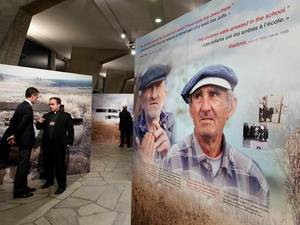 UNESCO Education about the Holocaust The website of UNESCO is a good place to begin an exploration of Holocaust and human rights education. It provides an international structural framework for examining the connection between the Holocaust and genocide and human rights issues. UNESCO Education about the Holocaust Le site de l'UNESCO est un bon endroit pour commencer une exploration de l'Holocauste et éducation aux droits de l’homme. Il fournit un cadre structurel international pour étudier le lien entre les questions d’Holocauste et de génocide et de questions liées aux droits de l'homme.
 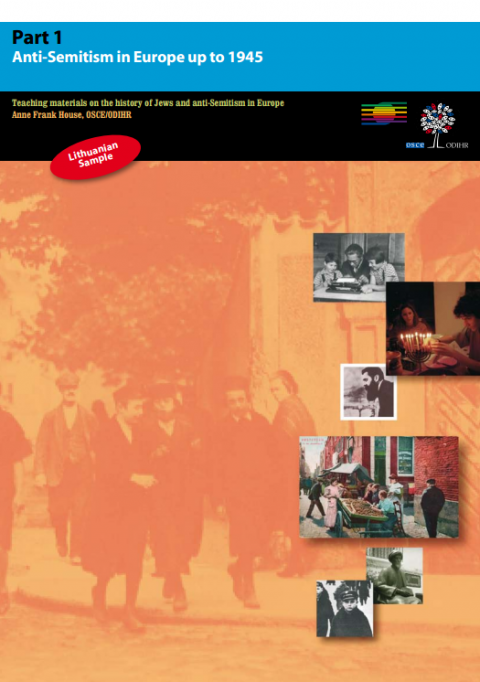 Anti-Semitism in Europe up to 1945 (Vol 1) These teaching materials were developed by ODIHR and the Anne Frank House in Amsterdam, in co-operation with experts from several OSCE participating States. Part 1 examines the history of anti-Semitism. The version available here is an English translation of the Lithuanian version.
 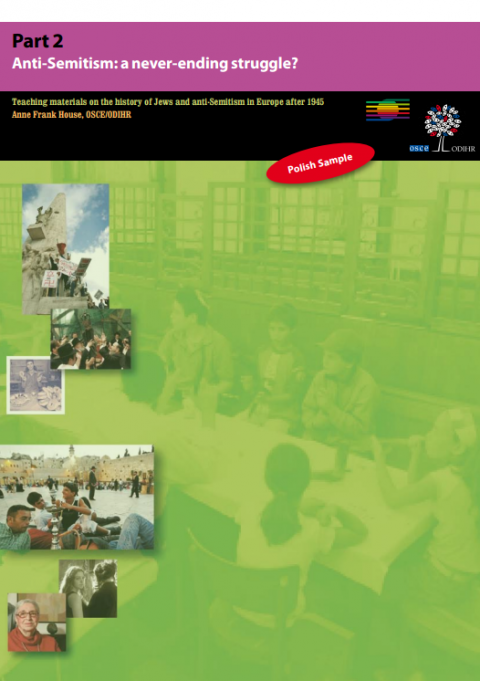 Anti-Semitism: A Never-ending Struggle? (Vol 2) These teaching materials were developed by ODIHR and the Anne Frank House in Amsterdam, in co-operation with experts from several OSCE participating States. Part 2 covers contemporary forms of anti-Semitism. The version available here is an English translation of the Polish version.
 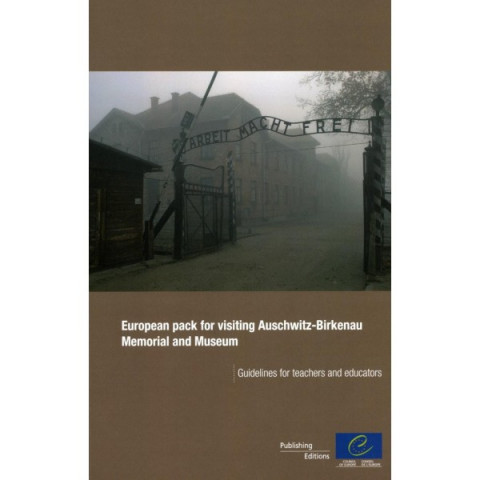 European pack for visiting Auschwitz-Birkenau Memorial and Museum - Guidelines for teachers and educators Taking groups of students to the Auschwitz-Birkenau Memorial and Museum is a heavy responsibility, but it is a major contribution to citizenship if it fosters understanding of what Auschwitz stands for, particularly when the last survivors are at the end of their lives. This pack is designed for teachers wishing to organize student visits to authentic places of remembrance, and for the guides, academics and others who work every day with young people at Auschwitz. To avoid the risk of inappropriate reactions or the failure to benefit from a large investment in travel and accommodation, considerable preparation and discussion is necessary before the visit and serious reflection afterwards. This pack offers insights into the complexities of human behaviour so that students can have a better understanding of what it means to be a citizen. The young people who visit Auschwitz in the next few years will be witnesses of the last witnesses. Their generation will be the last to hear the survivors speaking on the spot. The Council of Europe, the Polish Ministry of Education and the Auschwitz-Birkenau Memorial and Museum are jointly sponsoring this project aimed at preventing crimes against humanity through Holocaust remembrance teaching. (By the Council of Europe)
  The Holocaust on screen: Crimes against humanity and representation The staging of the Holocaust and crimes against humanity poses filmmakers ethical issues and some documentaries or fictions have already raised controversy. Is audio-visual therefore the best way to raise awareness among young populations? Should it not rather be the role of other materials such as archives or testimonies? These are the questions raised by this book. Cinema can't only stage the concentration camp horror but must also educate young audiences. In the first part, Anne-Marie Baron re-examines definitions and important concepts concerning the audio-visual treatment of Holocaust and in the second part, she provides a list of documentaries and films along with analysis to help teachers in this exercise. L'Holocauste et le Programme d'information des Nations Unies Des informations détaillées sur le Programme de communication des Nations Unies pour l'Holocauste et peut être trouvé sur ce site. Le matériel pédagogique ainsi que des possibilités de perfectionnement professionnel sont présentés. Addressing Anti-Semitism: Why and How? A Guide for Educators These guidelines provide suggestions for teachers and other educators who feel the need to address issues pertaining to contemporary anti-Semitism. Recognizing that the context may vary in every country, or even in individual classrooms, this document provides educators with a general overview of common manifestations of contemporary anti-Semitism, as well as with some key educational principles and strategies for addressing this complex and challenging subject.