
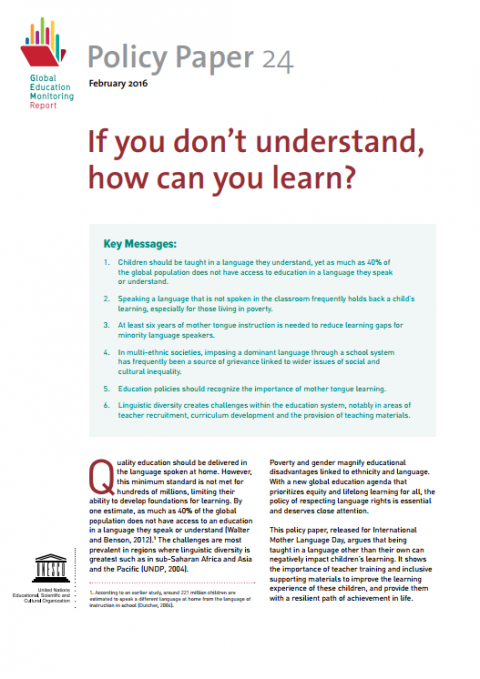
If you don't understand, how can you learn?
- Corporate Author
- UNESCO
- Collation
- 9 p.
- Resource Language
- EnglishFrenchSpanishRussianArabicChinese
- Year of publication
- 2016
- Resource Type
- Research papers / journal articles
- Region
- Global
Key Messages:
1. Children should be taught in a language they understand, yet as much as 40% of the global population does not have access to education in a language they speak or understand.
2. Speaking a language that is not spoken in the classroom frequently holds back a child’s learning, especially for those living in poverty.
3. At least six years of mother tongue instruction is needed to reduce learning gaps for minority language speakers.
4. In multi-ethnic societies, imposing a dominant language through a school system has frequently been a source of grievance linked to wider issues of social and cultural inequality.
5. Education policies should recognize the importance of mother tongue learning. 6. Linguistic diversity creates challenges within the education system, notably in areas of teacher recruitment, curriculum development and the provision of teaching materials.
Related Resources
-
 Study on the Historical Impact of the 1974 Recommendation concerning Education for International Understanding, Cooperation and Peace and Education relating to Human Rights and Fundamental Freedoms
 -
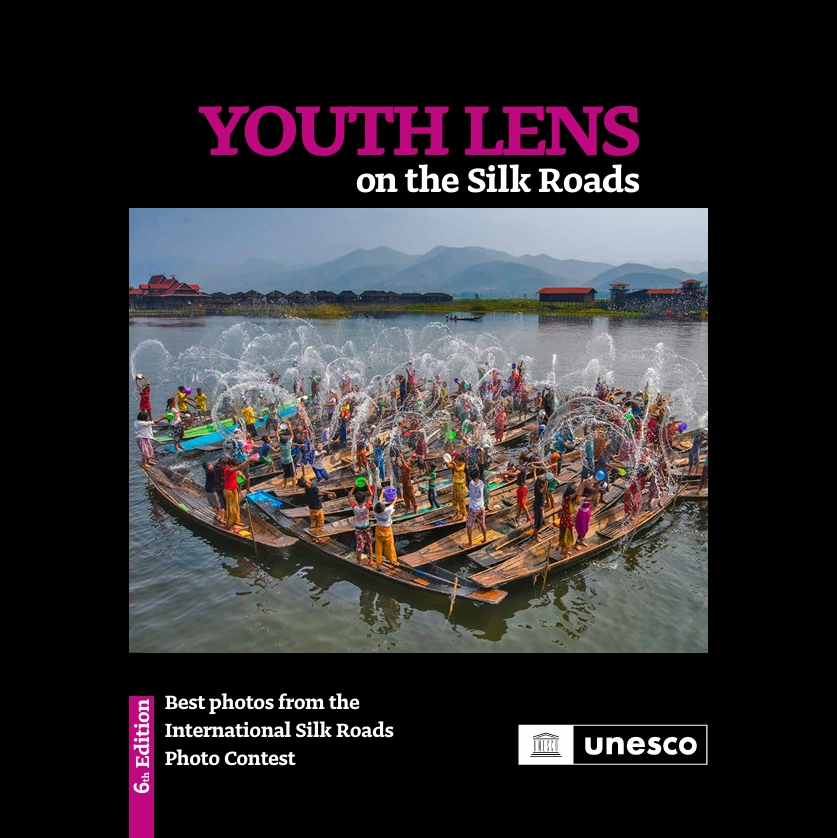 Youth Lens on the Silk Roads: Best Photos from the International Silk Roads Photo Contest; 6th Edition
 -
 More than Welcome: Intercultural Integration of Migrants in and Through Higher Education
 -
 UNESCO Framework for Culture and Arts Education: Implementation Guidance