
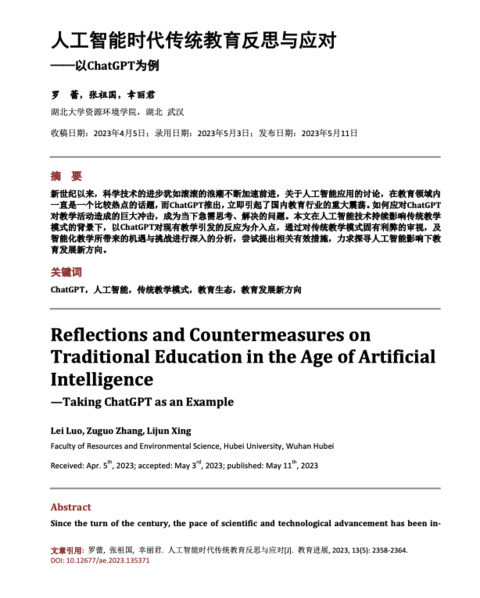
Reflections and Countermeasures on Traditional Education in the Age of Artificial Intelligence: Taking ChatGPT as an Example (Advances in Education; Vol.13, No.5)
- ISBN
- ISSN 2160-7303
- Collation
- p. 2358-2364
- Resource Language
- Chinese
- Year of publication
- 2023
- Topic
- Media and information literacy / Digital citizenshipTransformative initiatives / Transformative pedagogies
- Resource Type
- Research papers / journal articles
- Level of education
- Primary educationSecondary education
- Region
- Global
- Place of publication
- Wuhan
Since the turn of the century, the pace of scientific and technological advancement has been increasing rapidly, like a rolling wave gaining momentum. As a result, the topic of artificial intelli-gence and its potential applications has remained a hot topic in the field of education. The introduction of ChatGPT had an immediate and significant impact on the domestic education industry. Addressing how to manage this impact on teaching activities has become an urgent issue that requires prompt consideration and resolution. In light of the ongoing impact of artificial intelligence technology on traditional teaching methods, this article focuses on ChatGPT’s response as an intervention point, delving into a thorough analysis of the inherent strengths and weaknesses of traditional teaching modes, as well as the opportunities and challenges presented by intelligent teaching. Through our analysis of artificial intelligence, we aim to propose effective measures and explore new directions for the development of education in its influence.
Related Resources
-
 IIEP-UNESCO 12th Medium-Term Strategy: 2026–2029
 -
 Digital Empowerment for Lifelong Learning and Transformative Andragogy (DELTA) for Adult Educators: Introduction to the DELTA Framework and Resources
 -
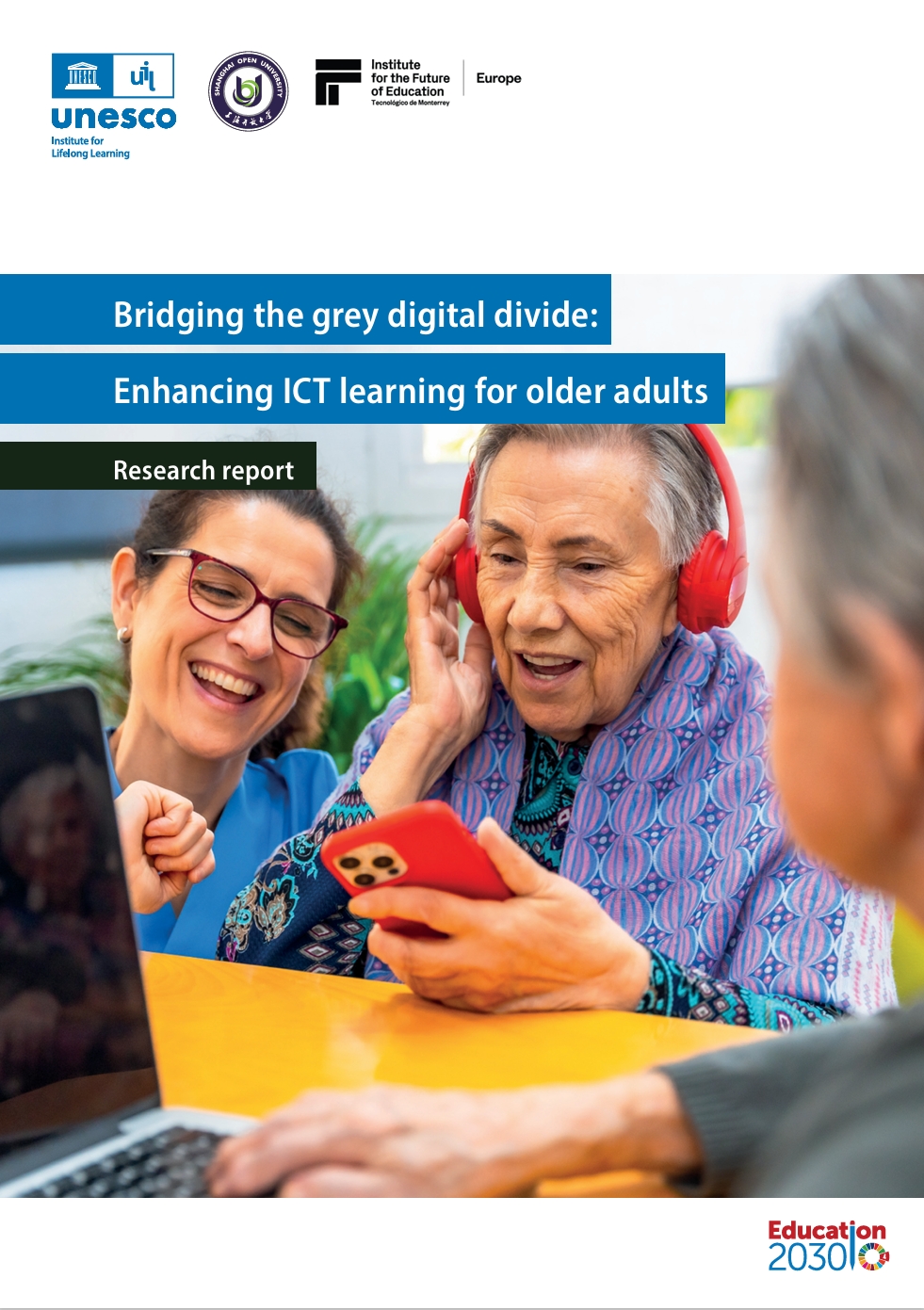 Bridging the Grey Digital Divide: Enhancing ICT Learning for Older Adults; Research Report
 -
 Envisioning the Future of Assessment in Transformative Education: A Synthesis Report of the Expert Meeting on Evaluation and Assessment for Transformative Education: Towards and Beyond 2030