
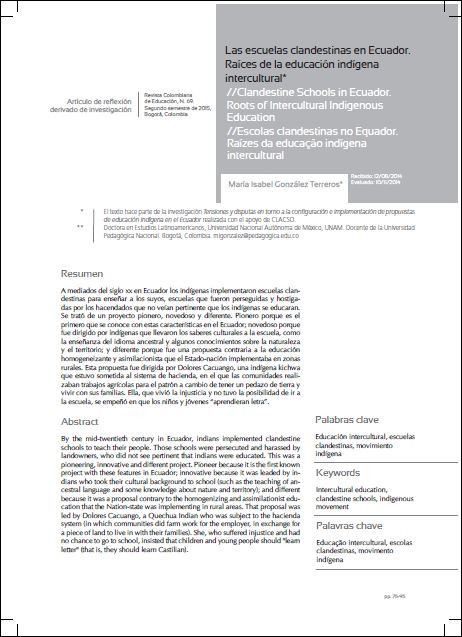
The Clandestine Schools in Ecuador. Roots of Intercultural Indigenous Education
- ISBN
- ISSN 0120-3916
- Collation
- pp. 75-95
- Resource Language
- SpanishEnglish
- Year of publication
- 2015
- Resource Type
- Research papers / journal articles
- Level of education
- Primary educationSecondary education
By the mid-twentieth century in Ecuador, indians implemented clandestine schools to teach their people. Those schools were persecuted and harassed by landowners, who did not see pertinent that indians were educated. This was a pioneering, innovative and different project. Pioneer because it is the first known project with these features in Ecuador; innovative because it was leaded by Indians who took their cultural background to school (such as the teaching of ancestral language and some knowledge about nature and territory); and different because it was a proposal contrary to the homogenizing and assimilationist education that the Nation-state was implementing in rural areas. That proposal was led by Dolores Cacuango, a Quechua Indian who was subject to the hacienda system (in which communities did farm work for the employer, in exchange for a piece of land to live in with their families). She, who suffered injustice and had no chance to go to school, insisted that children and young people should "learn letter" (that is, they should learn Castilian).
Related Resources
-
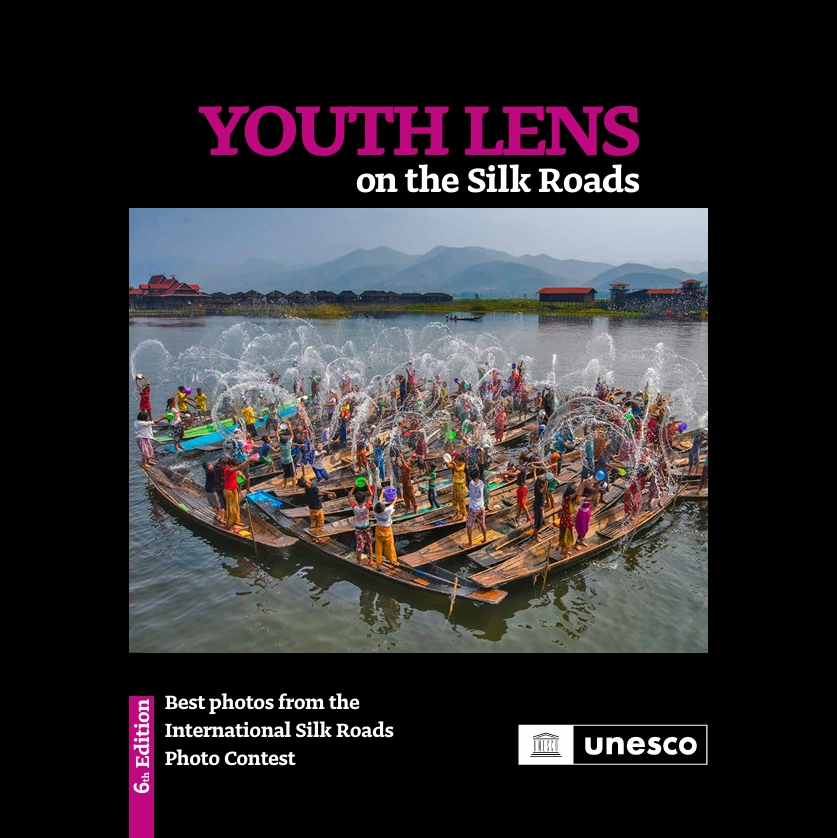 Youth Lens on the Silk Roads: Best Photos from the International Silk Roads Photo Contest; 6th Edition
 -
 UNESCO Framework for Culture and Arts Education: Implementation Guidance
 -
 The Representation of Jews, Judaism and Antisemitism in School Textbooks and Curricula in Europe
 -
 Strategies to Counter Antisemitism: A Handbook for Educators