
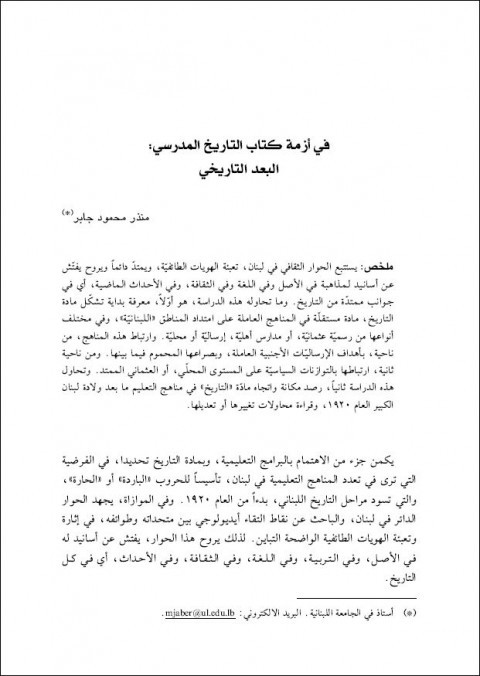
The History Textbook Crisis: A Historical Background
- Author
- جابر، منذر محمود
- Corporate Author
- Lebanese Association for Educational Studies (LAES)
- Collation
- p. 87-129
- Resource Language
- Arabic
- Year of publication
- 2012
The cultural dialogue in Lebanon brings into play attempts to build up sectarian identities, by seeking arguments in support of the claims of each sect whether in terms of origin, language, culture or past events that stretch back in history. This study tries to: 1) Explore the beginnings of the development of history as an independent subject in the curricula of schools throughout the regions of “Lebanon”, whether Ottoman state schools or private schools, missionary or local. It also looks into the connections between these curricula and the aims of the foreign missions working in the field, and the fierce inter-fighting among them on one hand, and the connections with the local political power balance at both the local and the extended Ottoman level, on the other. 2) Take stock of the importance and development of the history subject in the school curricula after the creation of Greater Lebanon in 1920, and analyze the attempts made to change or revise it.
Related Resources
-
 Study on the Historical Impact of the 1974 Recommendation concerning Education for International Understanding, Cooperation and Peace and Education relating to Human Rights and Fundamental Freedoms
 -
 IIEP-UNESCO 12th Medium-Term Strategy: 2026–2029
 -
 Youth Lens on the Silk Roads: Best Photos from the International Silk Roads Photo Contest; 6th Edition
 -
 More than Welcome: Intercultural Integration of Migrants in and Through Higher Education