
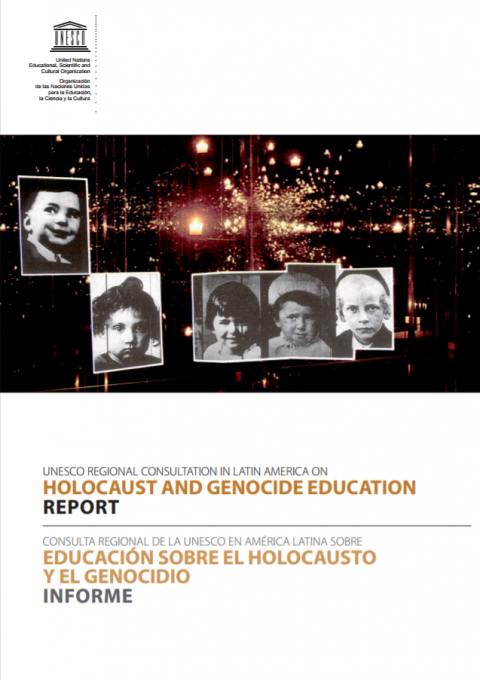
UNESCO regional consultation in Latin America on Holocaust and genocide education: report
- Corporate Author
- UNESCO Santiago
- Collation
- 28 p.
- Resource Language
- EnglishSpanish
- Year of publication
- 2014
- Resource Type
- International normative instruments / policy and advocacy documentsResearch papers / journal articlesConference and programme reportsCurriculum, teaching-learning materials and guides
- Place of publication
- Santiago
This consultation with Latin American Member States sought to raise awareness amongst policymakers and education specialists of the region about the history of the Holocaust, as it can contribute to the prevention of genocide, following United Nations General Assembly resolution 60/7 on Holocaust remembrance. The meeting also aimed at fostering concrete cooperation between UNESCO and Member States on education about the history of genocide and mass atrocities, notably the Holocaust, with a view of introducing the subject in the curriculum and of developing relevant educational programmes in the region. The overall objectives of the project were as follows:
▶ Strengthen educational leaders’ awareness and support for Holocaust remembrance and education about the history of genocide and mass atrocities, in line with regional efforts to foster education for peace and human rights.
▶ Increase the implementation of education programmes about the history of the Holocaust and other genocides, and support interested Ministries of Education to introduce these subjects in the curriculum.
▶ Foster regional exchanges about this topic and facilitate access to good practices regarding Holocaust and genocide related issues and peace education.
Related Resources
-
 Addressing Violent Pasts through Education: A Policy Guide
 -
 The Representation of Jews, Judaism and Antisemitism in School Textbooks and Curricula in Europe
 -
 Strategies to Counter Antisemitism: A Handbook for Educators
 -
 Addressing Antisemitism Through Education: A Survey of Teachers’ Knowledge and Understanding