
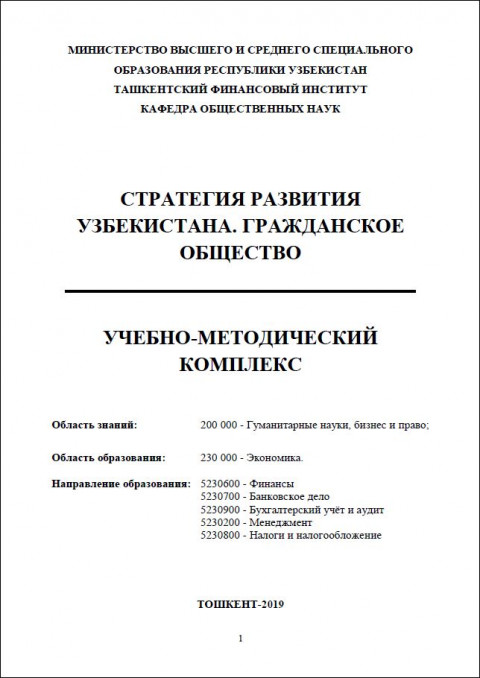
Development Strategy of Uzbekistan: Civil Society; Training and Methodology Complex
- Author
- M.N. PrimovT. Norboev
- Corporate Author
- Uzbekistan. Ministry of Higher and Secondary-Specialized EducationTashkent Institute of Finance
- Collation
- 302 p.
- Resource Language
- Russian
- Year of publication
- 2019
- Resource Type
- International normative instruments / policy and advocacy documentsCurriculum, teaching-learning materials and guides
- Level of education
- Higher education
- Region
- Asia and the Pacific
- Place of publication
- Ташкент
The document is a collection of training materials on the conditions and prospects for the development of civil society in Uzbekistan, as well as the implementation of the main directions of the Action Strategy. The document also the role of local governments of citizens, non-governmental non-profit organizations in improving institutions civil society.
A major role in this is played by new socio-political disciplines, which include the “Development Strategy of Uzbekistan. Civil society". This course reveals the basic scientific principles of the formation of civil society and the development strategy of Uzbekistan, analyzes the main stages of transformation, shows the irreversibility of the reforms carried out in the country, and helps to build the civic position of each member of the society. It is organically woven into the humanities system, forming a common logical chain with it; It helps to answer questions of modern policy of our state and to determine the place and role of each person in the grandiose transformations carried out in the country.
Related Resources
-
 Study on the Historical Impact of the 1974 Recommendation concerning Education for International Understanding, Cooperation and Peace and Education relating to Human Rights and Fundamental Freedoms
 -
 IIEP-UNESCO 12th Medium-Term Strategy: 2026–2029
 -
 More than Welcome: Intercultural Integration of Migrants in and Through Higher Education
 -
 Advancing Intergenerational Learning: Identifying Challenges and Opportunities for Older Adults; Integrated Case Study Report