
© CLACSO 2021
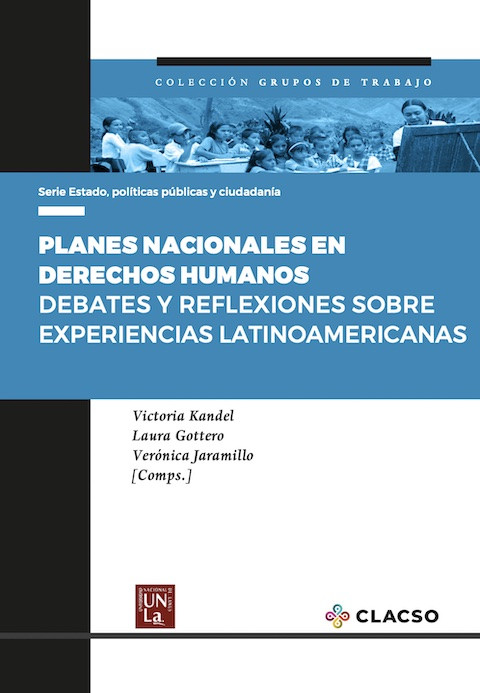
National Plans on Human Rights: Debates and Reflections on Latin American Experiences
- Author
- Laura PautassiMariela Alejandra AcevedoFelicitas AcostaMyriam FeldfeberPablo ImenMaría Mercedes PalumboFernanda SaforcadaSoledad Vercellino
- Corporate Author
- Consejo Latinoamericano de Ciencias Sociales (CLACSO)
- ISBN
- ISBN 978-987-722-887-8
- Collation
- 318 p.
- Resource Language
- Spanish
- Year of publication
- 2021
- Topic
- Diversity / Cultural literacy / InclusivenessHuman rightsGlobalisation and social justice / International understanding
- Resource Type
- International normative instruments / policy and advocacy documentsResearch papers / journal articles
- Level of education
- Higher educationLifelong learningNon-formal education
- Place of publication
- Buenos Aires
The texts gathered in this book reflect the tensions and challenges involved in creating inclusive human rights public policies that respond to effective and impactful citizen participation. They also highlight the tension—once again—between the short and long term: the temporalities of governments and states. Furthermore, these writings incorporate an analysis of contexts and policies from a human rights perspective, revealing that, very often, plans of this nature—as tools provided by international protection bodies—are not fully implemented at the national or subnational level. Instead, they are frequently constructed as ways to appease international agendas rather than as means of engaging and engaging communities in collective initiatives for transformation. Therefore, we try to build interpretive proposals that allow us to critically analyze—and also strengthen—human rights plans in these ambiguous paths of formulation, implementation, and evaluation, because we believe that these comprehensive and cross-cutting policies are, or can be, instruments for building more just and inclusive societies, but they require long-term work and commitment.
Related Resources
-
 Addressing Violent Pasts Through Education: A Policy Guide
 -
 Where Learners Meet History: Reaffirming the Role of History Education in the 21st Century
 -
 Voices Against Violence: Middle Years
 -
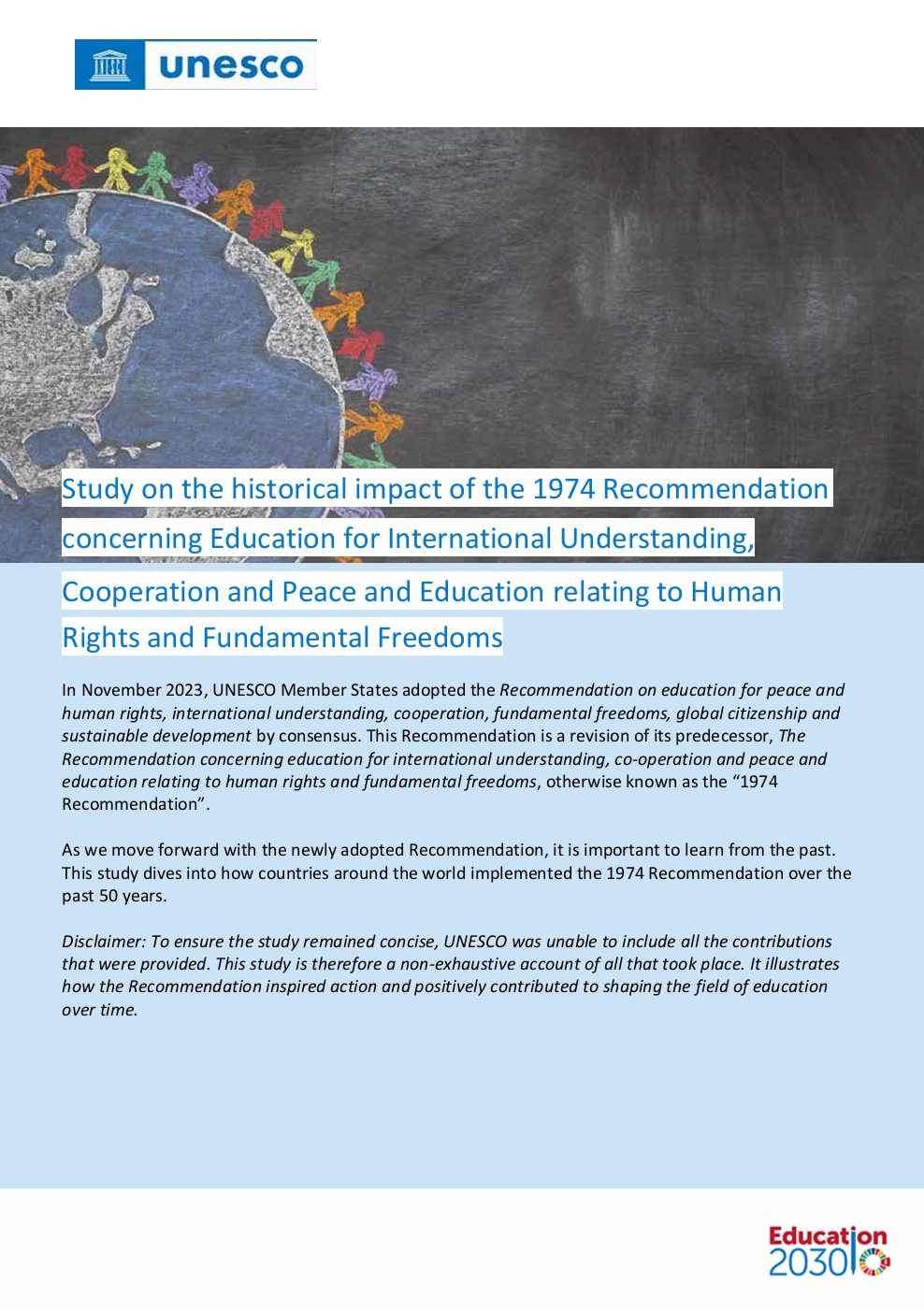 Study on the Historical Impact of the 1974 Recommendation concerning Education for International Understanding, Cooperation and Peace and Education relating to Human Rights and Fundamental Freedoms