
Resources
Explore a wide range of valuable resources on GCED to deepen your understanding and enhance your research, advocacy, teaching, and learning.
58 Results found
 Un mundo diverso Year of publication: 2023 Corporate author: Entreculturas | European Union (EU) Esta publicación es la propuesta pedagógica de Entreculturas para educar en una ciudadanía global a todas y todos. Con ella pretendemos contribuir a la formación de personas capaces de ejercer una ciudadanía activa y comprometida, de transformar su entorno y de asumir como suyos los retos globales de nuestro tiempo así como el cumplimiento de la Agenda 2030 y de los Objetivos de Desarrollo Sostenible. Esta publicación recoge actividades de anteriores publicaciones, con la diferencia de que se ha adaptado a un modelo de lectura fácil para que sea mucho más sencillo y accesible para personas con diversidad funcional. Las actividades tratan tres grandes temáticas: 1.) Defensa del medio ambiente, 2.) Igualdad de género, Y 3.) Interculturalidad. Con el tratamiento de estos temas buscamos promover la reflexión sobre los diferentes retos globales que nos afectan y conocer las diferentes maneras de contribuir a estas causas.
  Informative Kit on Global Citizenship Education (GCE) for Policy Makers: Boosting Global Citizenship Education Using Digital Storytelling Year of publication: 2017 Corporate author: European Union (EU) | European Commission This informative kit aims to equip policy makers with all the necessary knowledge about the role that Global Citizenship Education (GCE) can play in contemporary society. This document will summarize GCE, its principles, capabilities and advantages and will provide best cases regarding its application. The goal is to convince policy makers into adopting GCE in the training and education curricula. Furthermore, it presents the Digital Storytelling (DS) method and its benefits as a tool to teach GCE more effectively.
  Youth Employment in the Mediterranean: Improving Skills Anticipation and TVET Systems Year of publication: 2018 Corporate author: European Union (EU) The Youth Employment in the Mediterranean (YEM) project is a three-year regional initiative launched by UNESCO, to be implemented in collaboration with nine Member States from 2018 to 2020. The YEM project is funded by the European Union and aims to improve skills anticipation systems and to promote technical and vocational education and training (TVET). Its goal is also to strengthen youth employment and encourage entrepreneurship in the Mediterranean region. Emploi des jeunes dans la région méditerranéenne: améliorer la prévision des compétences et les systèmes d'EFTP Year of publication: 2018 Corporate author: European Union (EU) Emploi des jeunes dans la région méditerranéenne (YEM) est un projet à l’échelle régionale de trois ans initié par l’UNESCO et mis en oeuvre en collaboration avec les États membres sur une période de trois ans (2018-2020). Le projet YEM est financé par l’Union européenne (UE) et vise à améliorer les systèmes de prévision des compétences et à promouvoir l’enseignement et la formation techniques et professionnels (EFTP) pour renforcer l’emploi et l’entrepreneuriat dans la région méditerranéenne.
  Equality in Second-level Schools: A Training Manual for Educators and Trainers Year of publication: 2014 Author: Mary Gannon | Karen O'Shea Corporate author: Equality Authority | European Union (EU) This resource is based on two and a half days of training delivered to second-level teachers on how to guide discussion and take action on equality in the curriculum and the school. The activities and resources provide ideas and methodologies to engage students in discussing and taking action on equality, human rights and social justice issues in the classroom, the school and the community. These include issues relating to the 9 equality grounds in Irish equality legislation: gender, civil status, family status, sexual orientation, religion, age, disability, race and the Traveller community. Exploring and taking action in these areas supports the development of key skills across curricula including critical and creative thinking, communication, active citizenship and working together.
 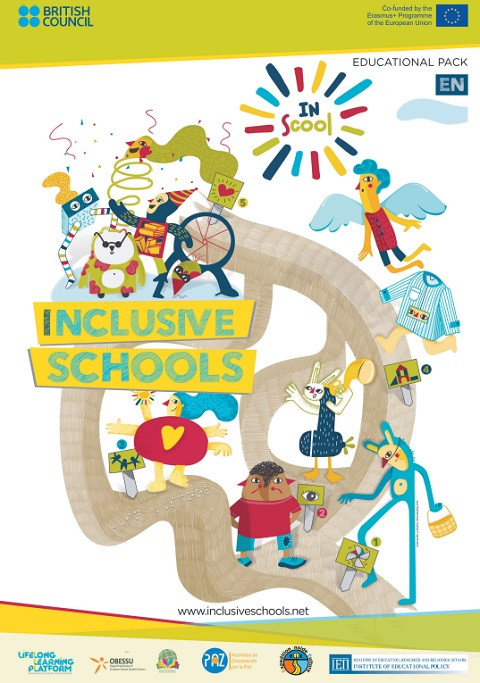 Inclusive Schools: Educational Pack (Inscool) Year of publication: 2019 Author: Sian Williams Corporate author: British Council | European Union (EU) This toolkit is designed to guide you flexibly, in ways that suit your school, through the start of a journey towards inclusion: improving personal and academic outcomes for all children and young people by focusing on their access to and participation in quality, relevant education. A key point to remember about this journey is that it does not have a final destination. Rather, it is about cumulative change that has, at its heart, a continuous focus on including more children and young people in learning and life at school: “an inclusive school is one that is on the move.” Inclusive Schools: Material Educativo (Inscool) Year of publication: 2019 Author: Sian Williams Corporate author: British Council | European Union (EU) Este kit de herramientas se diseñó para orientarle de una manera más flexible, con métodos adaptables a su centro educativo, en el inicio de un viaje hacia la inclusión: en este proceso se mejorarán los resultados personales y académicos de todos las/los menores y jóvenes poniendo el foco en su acceso a una educación de calidad y pertinente, y en su participación en ella. Un aspecto clave que cabe recordar respecto a este viaje es que no tiene un destino definitivo. Más bien, se trata de un cambio acumulativo que alberga, en su núcleo, un propósito constante de incluir a más niñas/os y jóvenes en el aprendizaje y en la vida cotidiana del centro educativo: «una escuela inclusiva es aquella que está siempre en un proceso de evolución». Inclusive Schools: Educational Pack (Inscool) Year of publication: 2019 Author: Sian Williams Corporate author: British Council | European Union (EU) Ce toolkit est conçu pour vous accompagner avec souplesse tout au long d’un voyage vers l’inclusion, d’une manière qui conviendra à votre école, dans le but d’améliorer les résultats personnels et scolaires de tous les enfants et de tous les jeunes, en mettant l’accent sur leur accès à l’éducation et sur leur participation à une éducation pertinente et de qualité. Un point essentiel à retenir de ce voyage est qu’il n’y a pas de destination finale. Il s’agit plutôt d’un changement cumulatif qui vise essentiellement à inclure davantage d’enfants et de jeunes dans l’apprentissage et dans la vie scolaire: «une école inclusive est une école en mouvement».”
 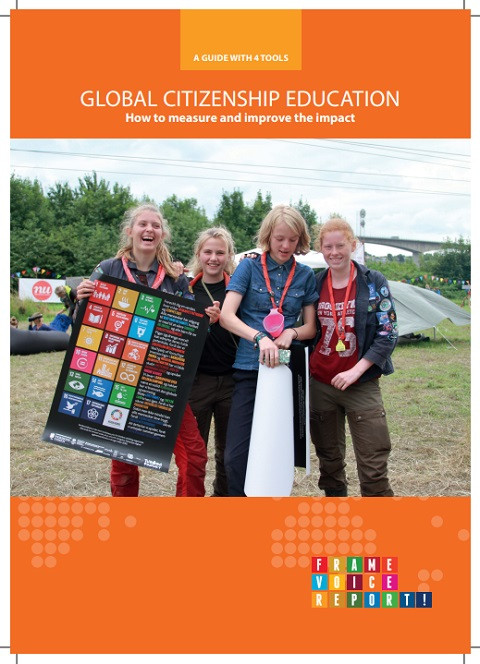 Global Citizenship Education: How to Measure and Improve the Impact Year of publication: 2020 Author: Jan Van Ongevalle Corporate author: Frame Voice Report! Project | Civil Society in Development (CISU) | European Union (EU) This guide presents 4 methods and tools that can help organisations set up an easy-to-use monitoring system for learning about the effects of global citizenship education (GCE) projects. The methods can be used for planning as well as monitoring and evaluating the changes a project has contributed to. At best the methods can keep on strengthening the project in the implementation phase thereby contributing to greater change.
  Building Cross-Sectoral Cooperation: Estonian Coalition for Sustainable Development Year of publication: 2020 Corporate author: Estonian Roundtable for Development Cooperation (AKÜ) | Bridge 47 | European Union (EU) This publication presents the members of Estonian Coalition for Sustainable Development, examples of their actions towards a more sustainable future and also some of the activities that the partnerships together have carried over the past few years. It is a great example of a cross-sectoral cooperation and a way of sharing knowledge.