
Resources
Explore a wide range of valuable resources on GCED to deepen your understanding and enhance your research, advocacy, teaching, and learning.
58 Results found
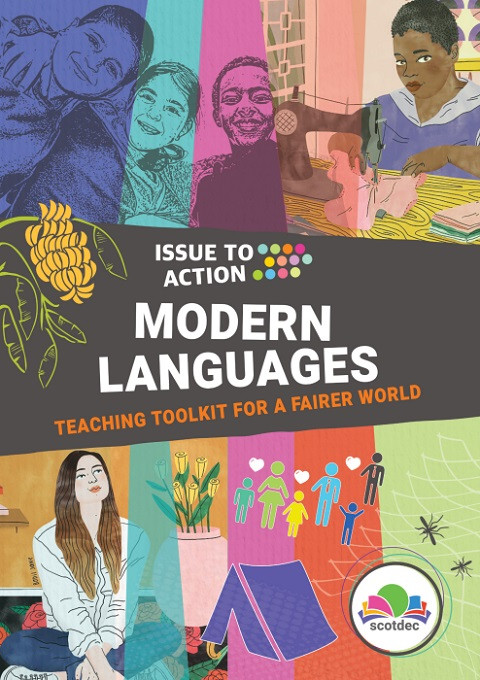 Issue to Action: Modern Languages; Teaching Toolkit for a Fairer World Year of publication: 2020 Author: Megan Clark | Irina Gancheva | Laura Morris | Peigi Morrison Corporate author: Scotdec | European Union (EU) Global Citizenship Education is essential in enabling young people to access and participate in shaping modern society. All teachers and subjects have a role to play in educating young people to enable them to participate as fully as possible in building a fair and just world for all. A Global Citizenship approach to Modern Languages enable young people to gain insights into other ways of thinking and other views of the world. With a focus on diversity and equality, the many and varied Spanish and French speaking cultures in Africa and South America, can provide a rich learning context. The materials in this resource have been written by Modern Languages teachers and tested in Scottish classrooms. They provide an opportunity to learn common vocabulary in new contexts and consider global issues such as migration and gender equality from different perspectives.
 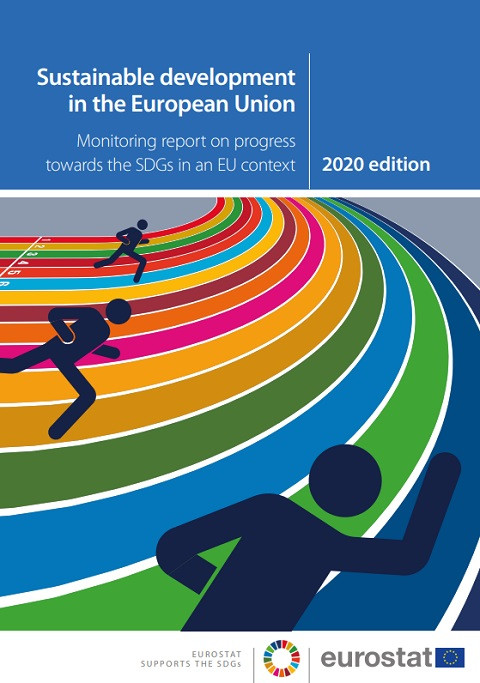 Sustainable Development in the European Union: Monitoring Report on Progress Towards the SDGs in an EU Context (2020) Year of publication: 2020 Corporate author: European Union (EU) Sustainable development is firmly anchored in the European Treaties and has been at the heart of European policy for a long time. The 2030 Agenda for Sustainable Development and its 17 Sustainable Development Goals (SDGs), adopted by the UN General Assembly in September 2015, have given a new impetus to global efforts for achieving sustainable development. The EU is fully committed to playing an active role to maximise progress towards the Sustainable Development Goals. This publication is the fourth of Eurostat’s regular reports monitoring progress towards the SDGs in an EU context. The analysis in this publication builds on the EU SDG indicator set, developed in cooperation with a large number of stakeholders. The indicator set comprises around 100 indicators and is structured along the 17 SDGs. For each SDG, it focuses on aspects which are relevant from an EU perspective. The monitoring report provides a statistical presentation of trends relating to the SDGs in the EU over the past five years (‘short-term’) and, when sufficient data are available, over the past 15 years (‘long-term’). The indicator trends are described on the basis of a set of specific quantitative rules.
  Global Citizenship and Multimedia: Guidelines for Teachers and Educators Year of publication: 2019 Author: Giorgia Bailo | Mirca Ognisanti | Simona Bruni | Adriana Aralica | Sandra Oliveira | Fernando Catarino | Celia Quico | Maria Leonida | Dimitra Deroyiannis | Alessandro Soriani | Charlot Cassar Corporate author: WeWorld Onlus | European Union (EU) The objective of this book is to strengthen and systematize the effectiveness of global citizenship education through the use of new technologies, within and outside the school context. The aim is to provide theoretical basis and specific tools that can be used directly in educational activities, to promote critical thinking and the active involvement of young people in topics such as human rights, migration, climate change and the Sustainable Development Goals. Both the theoretical and practical sections have been laid out starting from the good practices already tested in several European countries, and the proposed educational methodologies intend to foster technology as an inclusive tool, therefore as an incentive for participation and dialogue between different cultures.
  Tackling Controversial Issues in the Citizenship Classroom: A Resource for Citizenship Education Year of publication: 2012 Author: Lesley Emerson | Mary Gannon | Conor Harrison | Valerie Lewis | Anne-Marie Poynor Corporate author: City of Dublin Vocational Education Committee (CDVEC). Curriculum Development Unit | European Union (EU) The purpose of this resource is to provide teachers with the opportunity to reflect on a number of issues associated with teaching controversial issues in the classroom. It offers a practical approach which allows students to explore controversial issues which arise in citizenship and other areas of the curriculum in a way which is safe for both teacher and students.
  Philosophy for Global Learning: Tried and Tested Stimuli Year of publication: 2018 Corporate author: Cumbria Development Education Centre(CDEC) | European Union (EU) | Global Schools Program Philosophy for Global Learning has been created as a flexible and practical resource for teachers of all levels of experience. It is for those who want to teach global awareness to children through the structure of Philosophy for Children. Philosophy for Global Learning is aimed for use with children in Key Stage 2 but some parts can be used with younger children.
  Who in the World Am I?: An Activity and Enquiry Pack about Values and Identity for SMSC and British Values Year of publication: 2018 Author: Caroline Harmer Corporate author: European Union (EU) | Global Schools Program | Cumbria Development Education Centre(CDEC) Who in the World Am I is a resource pack for teachers and children who want to actively explore their own identity from the personal right through to being part of a family, a community, a country and becoming a global citizen. The activities develop progressively through the global learning themes of valuing diversity and skills of self-awareness and reflection.
  Global Citizenship Education in Europe: A Comparative Study on Education Policies across 10 EU Countries Year of publication: 2016 Corporate author: Global Schools | European Union (EU) This research, realised in the framework of the EU-funded project Global Schools, is a comparative qualitative analysis of educational policies of 10 European countries (Austria, Bulgaria, Czech Republic, France, Ireland, Italy, Latvia, Spain, Portugal, England) that support the introduction of Global Citizenship Education (GCE) in primary school curriculum. The analysis focuses on four main topics: 1) identification of key actors and definition of their roles; 2) conceptual and terminology analysis; 3) levels and modes of implementation of GCE in primary school; and 4) identification of barriers to introducing GCE in the primary school system.The research has highlighted that political actors, not only governmental ones, play a crucial role in implementing GCE policies, as well as in promoting GCE more generally, and in facilitating links between different actors, who in some countries may otherwise have little institutional coordination with schools. The conceptual analysis points out that, besides the choice of different wording of GCE national terms, the main topics composing GCE are very similar. The specific terminology often reflects the history, will and political discourse of the organisations promoting GCE in the different countries.
  Issue to Action: Science; Teaching Toolkit for a Fairer World Year of publication: 2020 Author: Tracey Shaw | Claire Tatar | Krissie Davis Corporate author: Scotdec | European Union (EU) Global Citizenship Education is essential in enabling young people to access and participate in shaping modern society. All teachers and subjects have a role to play in educating young people to enable them to participate as fully as possible in building a fair and just world for all. Global Citizenship provides a wealth of real-life contexts for learning Science. By using relevant and meaningful topics, young people are more motivated to learn and understand the key role Science plays in driving change for a more sustainable future. The materials in this resource have been written by Science teachers and tested in Scottish classrooms. They focus on sustainability, plastic waste, health and wellbeing and women in Science.
  Manual for Teachers and Educators: To Empower Young People on Sdgs and Migration Year of publication: 2018 Corporate author: Start the Change | European Union (EU) The Start the Change project aims to improve education provision linked to the Sustainable Development Goals (SDGs) in 12 European countries, with a special emphasis on the relationship between migration and global inequality, and contributing to the fulfilment of the 2030 Agenda for Sustainable Development.The first part of the guide (THINK) describes the educational model proposed by Start the Change. Service Learning gives an overview of a pedagogical approach that promotes a new perspective to acquiring global citizenship knowledge, skills and attitudes - not just in the classroom but also through direct experience of working on real issues in the community. MANUAL TO INSPIRE: START THE CHANGE 11 Participative methodologies are the basis of all good global citizenship education, and youth empowerment can be enhanced through peer to peer approaches. The second part of the guide (LEARN) is dedicated to enhancing teachers’ and educators’ knowledge of the contents of the project: the Sustainable Development Goals, inequality and migration issues. Storytelling can be used to develop short film storylines on Start the Change issues. Educational activities can be enriched by using ICT to promote global learning and include voices and experiences from the Global South. The third part of the guide (DO) is dedicated to activities and methodologies to help young people explore these issues and inspire them to take action in their communities.
  Teach the Change: 8 Steps to Be a Global Teacher Year of publication: 2018 Corporate author: Start the Change | European Union (EU) These guidelines are a result of consultation with 45 teachers from across Europe, drawing on their combined experiences to reflect on the main challenges of developing educational activities on global issues and with a particular focus on the Sustainable Development Goals (SDGs) and migration.