
Resources
Explore a wide range of valuable resources on GCED to deepen your understanding and enhance your research, advocacy, teaching, and learning.
89 Results found
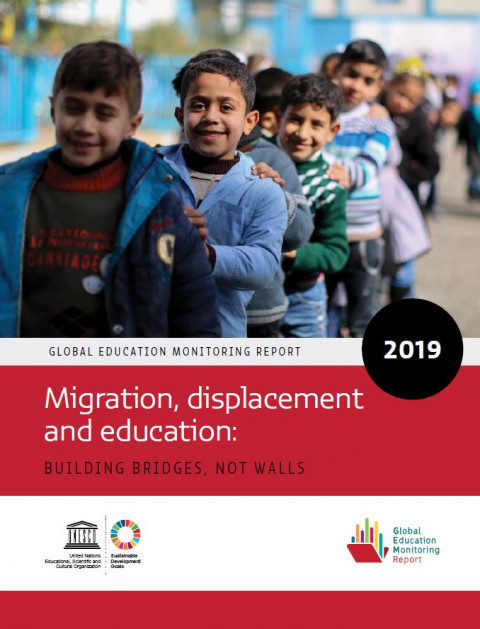 Global Education Monitoring Report, 2019: Migration, Displacement and Education: Building Bridges, Not Walls Year of publication: 2018 Corporate author: UNESCO | Global Education Monitoring Report Team The 2019 Global Education Monitoring Report examines the education impact of migration and displacement across all population movements: within and across borders, voluntary and forced, for employment and education. It also reviews progress on education in the 2030 Agenda for Sustainable Development.Two new global compacts on migrants and refugees recognize education’s role and set objectives aligned with the global commitment to leave no one behind. This report is a vital toolkit for these compacts. It covers policy issues that address seasonal migrants, rural school consolidation, intercultural curricula, refugee inclusion in national education systems and elimination of segregation, qualifications recognition, targeting of school funding, more effective humanitarian education aid and teacher preparedness for diverse classrooms in emergency, protracted and “new normal” contexts.The report calls on countries to see education as a tool to manage migration and displacement and an opportunity for those needing one.
 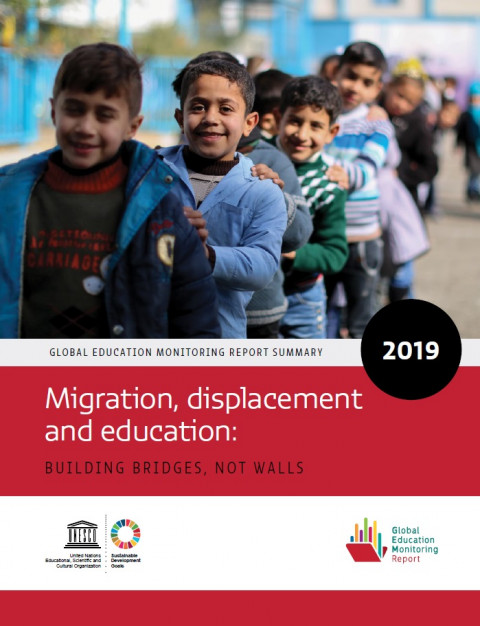 [Summary] Global Education Monitoring Report Summary 2019: Migration, Displacement and Education: Building Bridges, Not Walls Year of publication: 2018 Corporate author: UNESCO | Global Education Monitoring Report Team This Report points directly to a major challenge: How can teachers be supported to practise inclusion? It offers us fascinating insights into humanity and the age-old phenomenon of migration. I invite you to consider its recommendations and to act on them. This report is a vital toolkit for these compacts. It covers policy issues that address seasonal migrants, rural school consolidation, intercultural curricula, refugee inclusion in national education systems and elimination of segregation, qualifications recognition, targeting of school funding, more effective humanitarian education aid and teacher preparedness for diverse classrooms in emergency, protracted and “new normal” contexts. This summary of the 2019 GEM Report calls on countries to see education as a tool to manage migration and displacement and an opportunity for those needing one.
 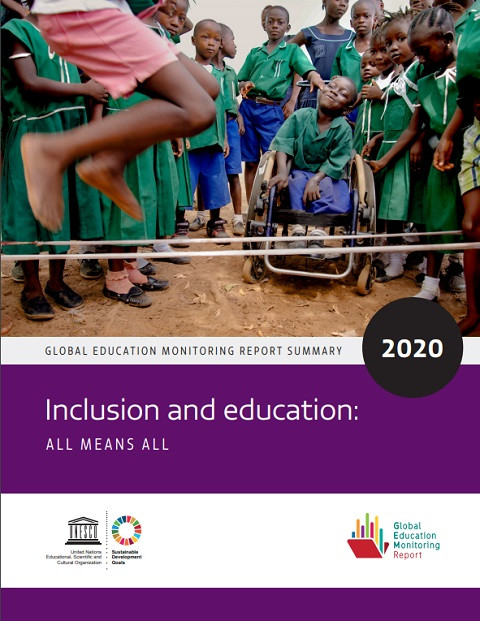 [Summary] Global Education Monitoring Report Summary 2020: Inclusion and Education; All Means All Year of publication: 2020 Corporate author: UNESCO | Global Education Monitoring Report Team The 2020 Global Education Monitoring Report looks at social, economic and cultural mechanisms that discriminate against disadvantaged children, youth and adults, keeping them out of education or marginalized in it. Spurred by their commitment to fulfil the right to inclusive education, countries are expanding their vision of inclusion in education to put diversity at the core of their systems. Yet implementation of well-meaning laws and policies often falters. Released at the start of the decade of action to 2030, and in the middle of the Covid-19 crisis, which has exacerbated underlying inequalities, the Report argues that resistance to addressing every learner’s needs is a real threat to achieving global education targets. [Résumé] Résumé du rapport mondial de suivi sur l’éducation 2020: Inclusion et éducation; Tous, sans exception Year of publication: 2020 Corporate author: UNESCO | Global Education Monitoring Report Team L’édition 2020 du Rapport mondial de suivi sur l’éducation examine les mécanismes sociaux, économiques et culturels qui discriminent les enfants, les jeunes et les adultes défavorisés, les tenant à l’écart de l’éducation ou les marginalisant en son sein. Encouragés par leur engagement à réaliser le droit à l’éducation inclusive, les pays élargissent leur vision de l’inclusion dans l’éducation afin de placer la diversité au cœur de leurs systèmes. Pourtant, la mise en œuvre de lois et de politiques bien intentionnées échoue souvent. Publié au début de la décennie d’action à l’horizon 2030, et en pleine crise de COVID-19 qui a exacerbé les inégalités existantes, rapport affirme que la résistance à la prise en compte des besoins de chaque apprenant constitue une menace réelle pour la réalisation des objectifs mondiaux d’éducation. [Resumen] Resumen del informe de seguimiento de la educación en el mundo 2020: Inclusión y educación; Todos sin excepción Year of publication: 2020 Corporate author: UNESCO | Global Education Monitoring Report Team En el Informe de Seguimiento de la Educación en el Mundo 2020 se examinan los mecanismos sociales, económicos y culturales que discriminan a niños, jóvenes y adultos desprotegidos, manteniéndolos excluidos de la educación o marginados dentro de ella. Estimulados por su compromiso de hacer realidad el derecho a la educación inclusiva, los países están ampliando su visión de la inclusión en la educación y otorgando a la diversidad un lugar central en sus sistemas. Sin embargo, la aplicación de leyes y políticas bienintencionadas suele flaquear. El informe, publicado a principios del decenio de acción que culmina en 2030 y en el contexto de la crisis de Covid-19 que ha exacerbado las desigualdades subyacentes, sostiene que la resistencia a atender las necesidades de todos los educandos es una verdadera amenaza para el logro de los objetivos mundiales de educación. Pезюме всемирного доклада по мониторингу образования 2020: Инклюзивность и образование; для всех означает для всех Year of publication: 2020 Corporate author: UNESCO | Global Education Monitoring Report Team Во Всемирном докладе по мониторингу образования за 2020 г. рассматриваются социальные, экономические и культурные механизмы, которые служат источниками дискриминации обездоленных детей, молодых людей и взрослых, не позволяя им получать образование или отводя им маргинальное место. В подтверждение своей приверженности делу осуществления права на инклюзивное образование страны расширяют свое видение инклюзивности в образовании, отводя разнообразию центральное место в рамках своих систем. Однако воплотить в жизнь правильные, по сути, законы и стратегии часто не удается. В настоящем докладе, вышедшем в начале десятилетия действий на период до 2030 г., в разгар кризиса COVID-19, усугубившего основные формы неравенства, утверждается, что отказ обеспечить удовлетворение потребностей каждого учащегося представляет собой реальную угрозу для решения глобальных задач в области образования.
 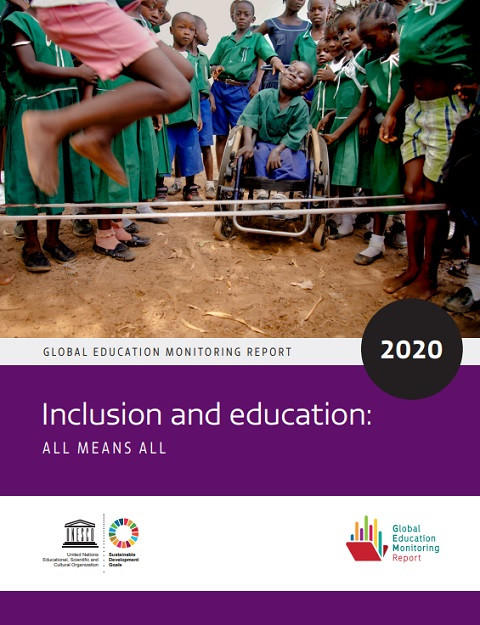 Informe de seguimiento de la educación en el mundo 2020: Inclusión y educación: Todos y todas sin excepción Year of publication: 2020 Corporate author: Global Education Monitoring Report Team | UNESCO En el Informe de Seguimiento de la Educación en el Mundo 2020 se examinan los mecanismos sociales, económicos y culturales que discriminan a niños, jóvenes y adultos desprotegidos, manteniéndolos excluidos de la educación o marginados dentro de ella. Estimulados por su compromiso de hacer realidad el derecho a la educación inclusiva, los países están ampliando su visión de la inclusión en la educación y otorgando a la diversidad un lugar central en sus sistemas. Sin embargo, la aplicación de leyes y políticas bienintencionadas suele flaquear. El informe, publicado a principios del decenio de acción que culmina en 2030 y en el contexto de la crisis de Covid-19 que ha exacerbado las desigualdades subyacentes, sostiene que la resistencia a atender las necesidades de todos los educandos es una verdadera amenaza para el logro de los objetivos mundiales de educación.En Inclusión y educación: todos y todas sin excepción se definen prácticas en materia de gobernanza y finanzas; planes de estudios, manuales escolares y evaluaciones; formación de los docentes; infraestructura escolar; y relaciones con los alumnos, los padres y las comunidades que pueden desbloquear el proceso hacia la inclusión. Se formulan recomendaciones de política para que la diversidad de los educandos sea una fuerza que se valora, una fuerza de cohesión social.Dos nuevos sitios web complementan la cuarta edición del Informe de Seguimiento de la Educación en el Mundo. Education Profiles (Perfiles educativos) describe la manera en que los países abordan la inclusión, y constituye un medio útil para el diálogo sobre políticas. Education Progress (El Progreso de la educación) brinda la oportunidad de interactuar con los datos y explorar una serie de indicadores del ODS 4. ملخص التقرير العالمي لرصد التعليم 2020: التعليم الشامل للجميع; الجميع بال استثناء Year of publication: 2020 Corporate author: UNESCO | Global Education Monitoring Report Team ينظر التقرير العالمي لرصد التعليم لعام 2020 في اآلليات االجتماعية واالقتصادية والثقافية التي تميز ضد األطفال والشباب والبالغين المحرومين، مما يحرمهم من التعليم أو يجعلهم مهمشين فيه. وبفضل حافز التزامها بإعمال الحق في التعليم الشامل، تعمل البلدان على توسيع نطاق رؤيتها للتعليم الشامل بإدراج التنوع في صلب ً ما يتعثر تنفيذ القوانين والسياسات الهادفة التي تنطوي نظمها التعليمية. لكن غالبا على نوايا حسنة. ويرى التقرير الذي صدر في بداية عقد العمل حتى عام 2030 ، وفي خضم األزمة الناجمة عن جائحة كوفيد-19 ،التي أسفرت عن تفاقم أوجه عدم ً أمام ً حقيقيا المساواة الكامنة، أن مقاومة تلبية احتياجات كل متعلم تشكل تهديدا تحقيق أهداف التعليم العالمية. 全球教育监测报告摘要 2020: 包容与教育; 覆盖全民,缺一不可 Year of publication: 2020 Corporate author: UNESCO | Global Education Monitoring Report Team 2020年《全球教育监测报告》分析了歧视弱势儿童、青年和成人、将 其排除在教育之外或是在教育领域内使其边缘化的社会、经济和文化机 制。各国承诺落实民众享有包容性教育的权利,并以此为鞭策,努力拓 展对于教育包容性的认识,将多样性作为教育系统的核心。然而,出于 良好意愿的法律和政策在实施过程中往往举步维艰。本报告发布于迈向 2030年目标的十年行动之初,仍在肆虐的2019冠状病毒病危机加剧了深 层次的不平等问题,报告认为对满足每名学习者需求的抵触,是对实现 全球教育目标的真正威胁。 [Резюме] РЕЗЮМЕ ВСЕМИРНОГО ДОК ЛАДА ПО МОНИТОРИНГ У ОБРАЗОВАНИЯ 2019 г .: Миграция, перемещенные лица и образование: наводить мосты, а не возводить препятствия Year of publication: 2018 Corporate author: UNESCO | Global Education Monitoring Report Team В докладе четко указан один из главных вызовов: как обеспечить поддержку учителей в их инклюзивной работе. В нем увлекательно рассказывается об истории человечества и о феномене миграции, существующем с незапамятных времен. Я приглашаю вас рассмотреть содержащиеся в нем рекомендации и действовать в соответствии с ними. Настоящий доклад является важнейшим информационным источником для этих договоров, охватывающим вопросы политики, которые, среди прочего, касаются сезонных мигрантов, объединения сельских школ, межкультурных учебных программ, включения беженцев в национальные системы образования и борьбы с сегрегацией, признания квалификаций, целенаправленного финансирования школ, более эффективной гуманитарной помощи образованию и подготовленности учителей к работе в классах с разнообразным составом учащихся в чрезвычайных ситуациях, в условиях затянувшегося кризиса и в новых обстоятельствах, характерных для сегодняшнего дня. Настоящий доклад также содержит обращенный к странам призыв рассматривать образование как средство для регулирования миграции и перемещений и как возможность для тех, кто в этой возможности нуждается.