
Resources
Explore a wide range of valuable resources on GCED to deepen your understanding and enhance your research, advocacy, teaching, and learning.
94 Results found
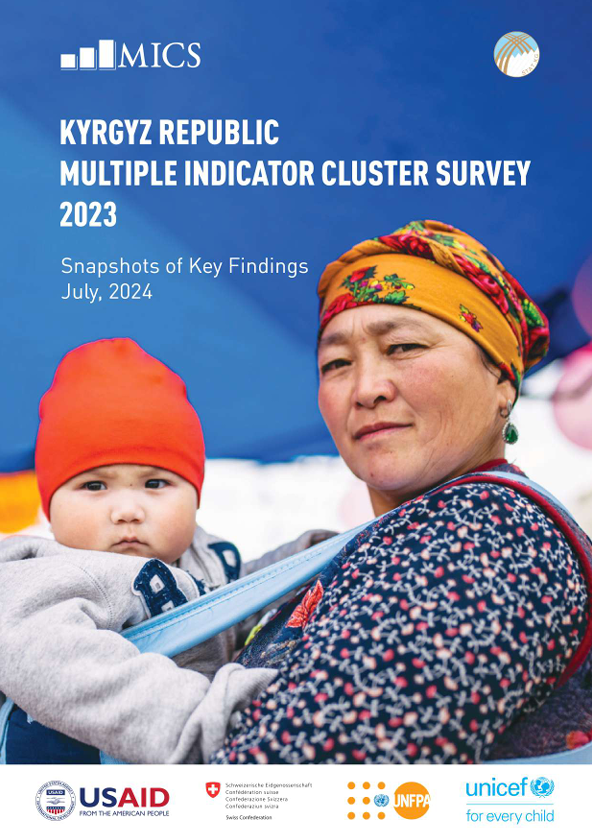 Kyrgyz Republic Multiple Indicator Cluster Survey 2023: Snapshots of Key Findings July, 2024 Year of publication: 2024 Corporate author: National Statistical Committee of the Kyrgyz Republic | UNICEF Kyrgyzstan | United Nations Population Fund (UNFPA) | United States Agency for International Development (USAID) | Government of Switzerland The 5th round of Multiple Indicator Cluster Survey (MICS) covers 7,200 households across Kyrgyzstan, measuring 185 indicators related to healthcare, education, and social protection for women and children. MICS 2023 produced data for 32 global Sustainable Development Goal (SDG) indicators, disaggregated by key characteristics such as gender, age, geographic location, income level and disability. Кластерное обследование по многим показателям в Кыргызстане 2023: Обзор основных статистических данных Июль 2024г. Year of publication: 2024 Corporate author: National Statistical Committee of the Kyrgyz Republic | UNICEF Kyrgyzstan | United Nations Population Fund (UNFPA) | United States Agency for International Development (USAID) | Government of Switzerland Национальный статистический комитет КР презентовал результаты нового Кластерного обследования по многим показателям (КОМП). В рамках исследования, было опрошено 7,2 тыс. домохозяйств по всему Кыргызстану по 185 показателям, связанных со здравоохранением, образованием и социальной защитой женщин и детей. В результате КОМП-2023 были собраны данные для 32 глобальных показателей Целей устойчивого развития (ЦУР), дезагрегированные по ключевым признакам, таким как пол, возраст, географическое положение, уровень дохода и наличие инвалидности.
  Развитие инклюзивного образования в государствах Средней Азии (Балтийский гуманитарный журнал; Том 9; № 4(33) Year of publication: 2020 Author: Сучков Максим Александрович Corporate author: Ассоциация «Профессиональные аналитики аутопойэйзисных систем» В статье рассматриваются основные тенденции развития инклюзивного образования в странах Средней Азии (Таджикистане, Казахстане, Кыргызстане, Узбекистане и Туркменистане). Дан общий обзор нормативно-правовых документов, Национальных программ и Концепций, регулирующих вопросы предоставления равного и доступного образования в этих странах.
  Участие женщин в делах государства: Казахстан 2022 Year of publication: 2022 Corporate author: United States Agency for International Development (USAID) Цель предусматривает обеспечение полного и значимого участия женщин и равных возможностей для лидерства на всех уровнях принятия решений в политической, экономической и общественной жизни.
  Анализ ситуации по предотвращению буллинга в Республике Казахстан Year of publication: 2022 Author: Муха Александр Corporate author: United States Agency for International Development (USAID) По данным ЮНИСЕФ, буллинг, или травля в школе, – одна из самых серьѐзных проблем современности. Согласно докладу ЮНЕСКО «Что стоит за цифрами? Искоренение насилия и запугивания в школе», каждый третий ученик в мире сталкивается с разными формами травли и насилия со стороны своих сверстников или одноклассников. И этот тяжѐлый опыт для большинства из них не проходит бесследно и может со временем перерасти в психологическую травму.
 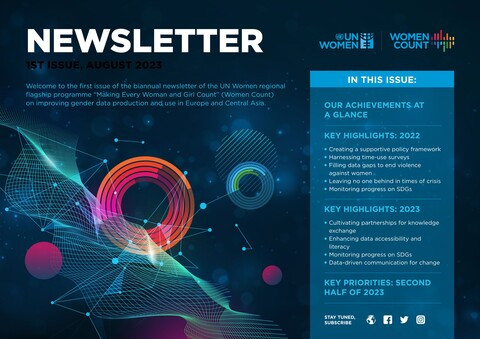 Making Every Woman and Girl Count in Europe and Central Asia Year of publication: 2023 Corporate author: United Nations Entity for Gender Equality and the Empowerment of Women (UN Women) The Women Count newsletter provides the latest updates on improving gender data production and use in the region. It highlights the programme's achievements, including key events, new publications and inspiring stories that underscore the importance of gender data in shaping policies and programs to promote gender equality and achieve the Sustainable Development Goals (SDGs). Каждая женщина и девочка значима в странах Европы и Центральной Азии и Центральной Азии Year of publication: 2023 Corporate author: United Nations Entity for Gender Equality and the Empowerment of Women (UN Women) В информационном бюллетене «Women Count» публикуются последние новости об улучшении производства и использования гендерных данных в регионе. В нем освещаются достижения программы, в том числе ключевые события, новые публикации и вдохновляющие истории, которые подчеркивают важность гендерных данных при формировании политики и программ по продвижению гендерного равенства и достижению Целей устойчивого развития (ЦУР).
 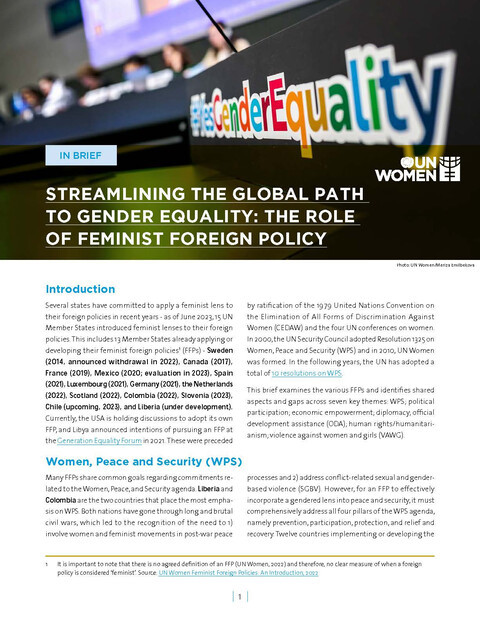 Streamlining the Global Path to Gender Equality: The Role of Feminist Foreign Policy Year of publication: 2023 Corporate author: UN WOMEN Europe and Central Asia As of June 2023, 15 UN Member States introduced feminist lenses to their foreign policies (FFPs). The policy brief examines the various FFPs and identifies shared aspects and gaps across seven key themes: WPS, political participation, economic empowerment, diplomacy, official development assistance, human rights/humanitarianism, violence against women and girls. Ускорение глобального движения к гендерному равенству: роль феминистской внешней политики Year of publication: 2023 Corporate author: UN WOMEN Europe and Central Asia По состоянию на июнь 2023 года 15 государств - членов ООН внедрили феминистские подходы в свою внешнюю политику. В аналитической записке рассматриваются различные FFP и выявляются общие аспекты и пробелы по семи ключевым темам: ЖМБ, участие в политической жизни, расширение экономических прав и возможностей, дипломатия, официальная помощь в целях развития, права человека/ гуманитарная деятельность, насилие в отношении женщин и девочек.
 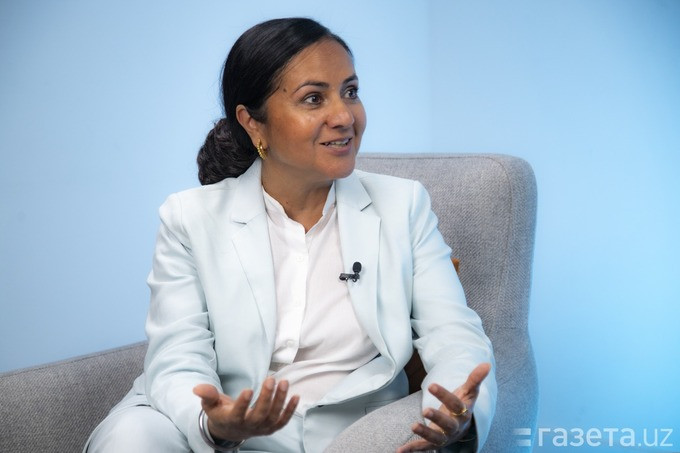 "Creating Equal Opportunities is the Responsibility of the Government.": A Conversation with Anjali Kaur from USAID Year of publication: 2023 Corporate author: Gazeta.uz Anjali Kaur, the deputy assistant administrator of the US Agency for International Development(USAID) for Asia, gave an interview during her visit to Uzbekistan "Газете.uz ". She spoke about the activities of USAID, the importance of creating equal opportunities for all and the responsibility of government, business and citizens. She spoke about the goals and activities of USAID in Uzbekistan, the importance of Uzbekistan for the agency, the need for equal access to education and other services for both boys and girls, as well as the responsibility of the state in ensuring such access.