
Resources
Explore a wide range of valuable resources on GCED to deepen your understanding and enhance your research, advocacy, teaching, and learning.
31 Results found
 Holocaust Education in a Global Context: Report Year of publication: 2013 Corporate author: UNESCO Teaching and learning about the Holocaust, which until this point had largely been a matter of regional interest, for Europeans, as well as North Americans and Israelis, became officially an issue of universal concern. Other countries are now invited to teach about the Holocaust even if they do not have a direct link to the event. This raises many issues concerning the pedagogical implications of this global perspective on Holocaust education. Why and how is the Holocaust taught in countries that have no connections with the genocide and the history of the Jewish people? How does this history connect and resonate with the preoccupations of these countries? Generally speaking, what could be the purposes and the benefits of teaching about the Holocaust globally?In order to address these issues, UNESCO organized an experts-meeting on 27 April 2012, in partnership with the Topography of Terror Foundation (Berlin, Germany). The purpose was specifically to clarify the following questions: What are the current trends of Holocaust education worldwide? How can the Holocaust be studied in a comparative fashion in the classroom? In which ways does Holocaust education contribute to the prevention of genocide? Furthermore, how is it taught in a human rights education perspective? Can the Holocaust provide a suitable framework to address other traumatic events of the past?
 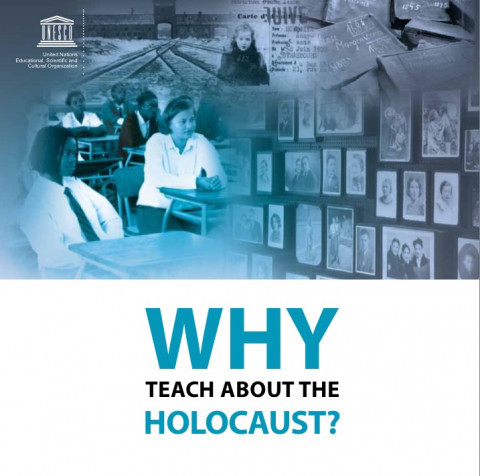 Pourquoi enseigner l'holocauste Year of publication: 2014 Corporate author: UNESCO The Holocaust was a turning point in human history. Understanding the genocide of the Jewish people and other crimes perpetrated by the Nazi regime remains of great signi cance in the modern world.Regardless of where we live or who we are, learning about this universal history can help engage students in a critical re action about the roots of genocide and the necessity to nurture peace and human rights to prevent such atrocities in the future.This short introduction provides an essential overview on education about the Holocaust that can support policymakers, educators and students alike in their understanding of genocide and why it is vital that we continue to teach about the Holocaust today. ¿Por qué enseñar sobre el holocausto? Year of publication: 2014 Corporate author: UNESCO The Holocaust was a turning point in human history. Understanding the genocide of the Jewish people and other crimes perpetrated by the Nazi regime remains of great signi cance in the modern world.Regardless of where we live or who we are, learning about this universal history can help engage students in a critical re action about the roots of genocide and the necessity to nurture peace and human rights to prevent such atrocities in the future.This short introduction provides an essential overview on education about the Holocaust that can support policymakers, educators and students alike in their understanding of genocide and why it is vital that we continue to teach about the Holocaust today. Зачем преподавать историю Холокоста? Year of publication: 2014 Corporate author: UNESCO The Holocaust was a turning point in human history. Understanding the genocide of the Jewish people and other crimes perpetrated by the Nazi regime remains of great signi cance in the modern world.Regardless of where we live or who we are, learning about this universal history can help engage students in a critical re action about the roots of genocide and the necessity to nurture peace and human rights to prevent such atrocities in the future.This short introduction provides an essential overview on education about the Holocaust that can support policymakers, educators and students alike in their understanding of genocide and why it is vital that we continue to teach about the Holocaust today. ما الداعي إلى التعليم بشأن محرقة اليهود Year of publication: 2014 Corporate author: UNESCO The Holocaust was a turning point in human history. Understanding the genocide of the Jewish people and other crimes perpetrated by the Nazi regime remains of great signi cance in the modern world.Regardless of where we live or who we are, learning about this universal history can help engage students in a critical re action about the roots of genocide and the necessity to nurture peace and human rights to prevent such atrocities in the future.This short introduction provides an essential overview on education about the Holocaust that can support policymakers, educators and students alike in their understanding of genocide and why it is vital that we continue to teach about the Holocaust today. 为什么要进行关于反犹大屠杀的教育? Year of publication: 2014 Corporate author: 联合国教科文组织 (UNESCO) The Holocaust was a turning point in human history. Understanding the genocide of the Jewish people and other crimes perpetrated by the Nazi regime remains of great signi cance in the modern world.Regardless of where we live or who we are, learning about this universal history can help engage students in a critical re action about the roots of genocide and the necessity to nurture peace and human rights to prevent such atrocities in the future.This short introduction provides an essential overview on education about the Holocaust that can support policymakers, educators and students alike in their understanding of genocide and why it is vital that we continue to teach about the Holocaust today.
  Study on measures taken by municipalities and recommendations for further action to achieve greater vigilance against racism: Commitment 1 of the Ten-Point Plan of Action Year of publication: 2006 Author: Klaus Starl Corporate author: UNESCO | European Training and Research Centre for Human Rights and Democracy (Austria) Commitment 1 of the Ten-Point Plan of Action of the European Coalition of Cities against Racism requires ‘Greater Vigilance against Racism’. This point aims at setting up a monitoring, vigilance and solidarity network against racism at the municipal level. To reach this goal, the members of the coalition are called to undertake activities, elaborate strategies and establish relevant institutions to monitor the local situation concerning structures in society, attitudes within the population and racist incidents. They are called to find out causes for racist tendencies among their population and establish solidarity networks involving all stakeholders, particularly civil society organisations. As an external expert, the European Training and Research Centre for Human Rights and Democracy in Graz, Austria, (ETC Graz) was commissioned by UNESCO to carry out a study on the measures already taken against racism at the local level that serve as good illustration of ‘Commitment 1’. Major information resource was the written material provided by the selected cities. Through direct exchange and/or interviews with responsible officers of the municipalities and some NGOs, additional or missing information could be obtained. The material is not to be considered as complete. On the basis of the contribution sent in by the participating cities, the ETC made an assessment whether these actions/activities meet the objective of the Commitment 1. The authors used the following criteria to make this assessment: does the action undertaken contribute to a) creating and promoting vigilance directly; b) creating and promoting vigilance indirectly through awareness raising; c) creating and promoting vigilance through a monitoring measure or d) the establishment and maintenance of a solidarity network. The authors presumed that c) and d) will lead directly to greater vigilance. The following recommendations are derived from the eight selected measures documented in Chapter II, and the analysis on their replicability in Chapter III. The 10 recommendations expicitly or implicitly refer to the replicable documented measures. Where the replicability requires specific conditions, these are stated or it is recommended to fulfil these conditions firstly, i.e. structural and institutional conditions. The 10 recommendations are addressed to municipalities in Europe irrespective of their current membership in the European Coalition of Cities against Racism. As already mentioned the recommendations focus on meeting the requirement of Commitment 1, creating greater vigilance against racism.
 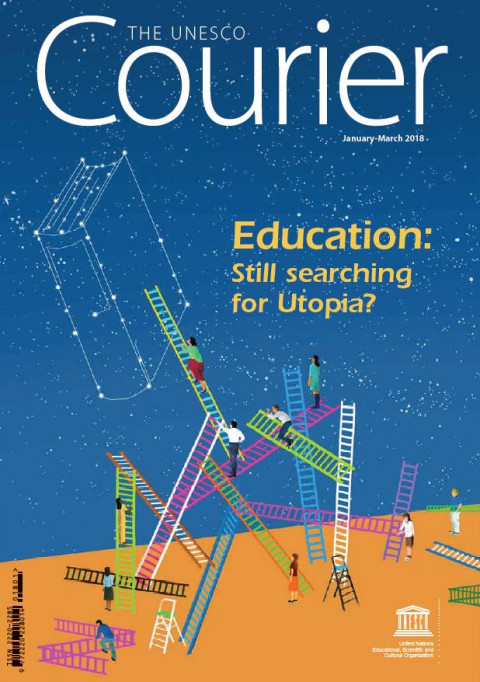 Education: Still Searching for Utopia? (The UNESCO Courier no. 1, January-March 2018) Year of publication: 2018 Corporate author: UNESCO At a time of heightened global tension, when human rights, freedom of speech, peace and the future of the planet itself may seem challenged as never before, the transformational power of education is of critical importance.In Learning: The Treasure Within, the landmark Report to UNESCO by the International Commission on Education for the Twenty-first Century in 1996, Jacques Delors, then Chairman of the Commission (1992 to 1996), spoke of education as “the necessary Utopia” and “an indispensable asset in its attempt to attain the ideals of peace, freedom and social justice.”Education was held up as neither miracle nor magic, but rather the best means to foster a climate where humanity would be improved −. and where the rich potential for learning, inherent in every individual, would be tapped. Our humanity is confronted with a very strange paradox: the world’s population has never been better educated, and yet, according to the UNESCO Institute for Statistics, 263 million children and young people are out of school, 617 million children and adolescents worldwide do not meet the minimum threshold for literacy and mathematics, at least 750 million adults are illiterate, and girls remain more likely than boys to never set foot in a classroom. Yet education is still called upon to address inequalities, poverty, terrorism and conflict. It is seen as one of the keys to global citizenship and sustainable development, two of UNESCO’s fields of action. The Organization is also mandated to lead the Education 2030 global agenda with a special focus on ensuring that no one is left behind. Under the title, “Education: Still searching for Utopia?”, the UNESCO Courier evaluates the state of global education and explores how it responds to some of the main challenges we face. Education: en quête d'une utopie nécessaire (Le Courrier de l’UNESCO no. 1, Janvier-Mars 2018) Year of publication: 2018 Corporate author: UNESCO À une époque où la tension ne cesse de croître, où les droits de l'homme, la liberté d'expression, la paix et l'avenir de la planète semblent plus que jamais remis en question, le pouvoir de transformation véhiculé par l'éducation revêt une importance cruciale.L’éducation est une « utopie nécessaire », elle est « un atout indispensable pour permettre à l’humanité de progresser vers les idéaux de paix, de liberté et de justice sociale », lit‑on dans le rapport historique de l’UNESCO, L’éducation : un trésor est caché dedans, élaboré par la Commission internationale sur l'éducation pour le XXIe siècle, présidée en 1996 par Jacques Delors.L'éducation n'y est présentée ni comme miracle, ni comme baguette magique, mais comme le meilleur moyen de favoriser un climat permettant à l'humanité de s’améliorer.Notre humanité est confrontée à un paradoxe très étrange : la population mondiale n’a jamais été aussi instruite, alors que, selon l’Institut de statistiques de l’UNESCO, 263 millions d’enfants et de jeunes ne sont pas scolarisés, que 617 millions d’enfants et d’adolescents dans le monde n’atteignent pas le seuil minimal de compétence en lecture et en mathématiques, qu’au moins 750 millions d’adultes sont analphabètes, et que les filles demeurent plus susceptibles que les garçons de ne jamais mettre les pieds dans une classe. Cependant l’éducation est toujours appelée à remédier aux inégalités, à la pauvreté, au terrorisme et aux conflits. Elle est considérée comme une des clés essentielles de la citoyenneté mondiale et du développement durable, deux domaines d’action de l’UNESCO, qui a aussi pour mandat de diriger l’agenda mondial Éducation2030 en veillant tout particulièrement à ce que personne ne soit laissé pour compte.Sous le titre « Éducation : en quête d'une utopie nécessaire », Le Courrier de l'UNESCO porte un regard panoramique sur l'éducation dans le monde et explore comment elle peut répondre à certains grands défis. La Educación, una utopia necesaria (El Correo de la UNESCO no.1, Enero-Marzo 2018) Year of publication: 2018 Corporate author: UNESCO El poderoso vector de transformación que es la educación reviste una importancia fundamental en estos tiempos en que parecen ponerse en tela de juicio más que nunca los derechos humanos, la libertad de expresión, la paz y el futuro de nuestro planeta.La educación es una “utopía necesaria” y “constituye un instrumento indispensable para que la humanidad pueda progresar hacia los ideales de paz, libertad y justicia social”, tal como se afirma en el histórico informe “La educación encierra un tesoro”, presentado a la UNESCO en 1996 por la Comisión Internacional sobre la Educación para el siglo XXI presidida por Jacques Delors.La educación, según ese informe, no es un remedio milagroso ni un mágico “ábrete sésamo”, sino una vía mejor que otras para lograr que la humanidad sea mejor.Nuestra época afronta una situación extremadamente paradójica. Mientras que el nivel de instrucción de la población mundial ha alcanzado su más alto nivel histórico, todavía quedan en el mundo 263 millones de niños y adolescentes sin escolarizar y otros 617 millones no logran alcanzar un nivel mínimo de competencia en lectura, escritura y matemáticas. Además, hay 750 millones de adultos analfabetos y actualmente la posibilidad de que las niñas y las jóvenes no pisen jamás una escuela es mucho más alta que en el caso de los varones. Ahora bien, la educación sigue siendo un instrumento indispensable para reducir las desigualdades, la pobreza, elterrorismo y los conflictos armados, así como un factor clave para la mentalización de las personas con vistas a que lleguen a “ciudadanos del mundo” y coadyuven a al desarrollo sostenible. La educación para la ciudadanía y para el desarrollo sostenible son dos ámbitos de acción de la UNESCO, que además tiene el mandato de liderar la agenda mundial Educación 2030, procurando en especial que los sistemas educativos no dejen a nadie atrás.Bajo el título “La educación, una utopía necesaria”, El Correo de la UNESCO traza una panorámica de determinados aspectos de la educación en el mundo, así como de la manera en que ésta puede responder a algunos de los grandes retos planteados a la humanidad.