
Resources
Explore a wide range of valuable resources on GCED to deepen your understanding and enhance your research, advocacy, teaching, and learning.
90 Results found
 Руководство по использованию генеративного искусственного интеллекта в образовании и научных исследованиях Year of publication: 2023 Author: Fengchun Miao | Wayne Holmes Corporate author: UNESCO Данное руководство направлено на поддержку разработки соответствующих правил, политик и программ развития человеческого потенциала с целью обеспечения того, чтобы генеративный искусственный интеллект (ИИ) стал инструментом, действительно приносящим пользу и расширяющим возможности учителей, учащихся и исследова телей. В нем объясняются методы искусственного интеллекта, используемые в генеративном ИИ, а также приводится список моделей СРТ, которые становятся общедоступными, особенно модели с открытым исходным кодом. Руководство также открывает обсуждение о появлении ЕсІСРТ - моделей генеративного ИИ, обученных на конкретных данных для образовательных целей. Кроме того, в нем суммируются некоторые ключевые противоречия вокруг генеративного ИИ - от ухудшения цифрового неравенства до гомогенизации мнений, от более сложных дипфейков до вопросов авторского права. Исходя из гуманистического подхода, руководство предлагает ключевые шаги по регулированию инструментов генеративного ИИ, включая обязательную защиту конфиденциальности данных и установку возрастных ограничений для самостоятельного взаимодействия с платформами генеративного ИИ. Для обеспечения правильного использования инструментов в сфере образования и исследований, в руководстве затронуты вопросы этики и проектирования педагогического процесса и заложен подход, ориентированный на человека и учитывающий возрастные особенности.
  Readiness Assessment Methodology: A Tool of the Recommendation on the Ethics of Artificial Intelligence Year of publication: 2023 Corporate author: UNESCO In November 2021, the 193 Member States of UNESCO signed the Recommendation on the Ethics of Artificial Intelligence, the first global normative instrument in its domain. The Recommendation serves as a comprehensive and actionable framework for the ethical development and use of AI, encompassing the full spectrum of human rights. It does so by maintaining focus on all stages of the AI system lifecycle. Beyond elaborating the values and principles that should guide the ethical design, development and use of AI, the Recommendation lays out the actions required from Member States to ensure the upholding of such values and principles, through advocating for effective regulation and providing recommendations in various essential policy areas, such as gender, the environment, and communication and information. With these values, principles, and policy areas in mind, the UNESCO Secretariat elaborated a programme for the implementation of the Recommendation, with the core aim of building national capacities to discharge the actions set out in the Recommendation and bolster regulatory frameworks. The Recommendation mandated the development of two key tools, the Readiness Assessment Methodology (RAM) and the Ethical Impact Assessment (EIA), which form the core pillars of the implementation. These tools both aim to assess and promote the resilience of existing laws, policies and institutions to AI implementation in the country, as well as the alignment of AI systems with the values and principles set out in the Recommendation. The goal of this document is to provide more information on the Readiness Assessment Methodology, lay out its various dimensions, and detail the work plan for the implementing countries, including the type of entities that need to be involved, responsibilities of each entity, and the split of work between UNESCO and the implementing country. ارشادات استخدام الذكاء الاصطناعي التوليدي في التعليم والبحث Year of publication: 2023 Author: Fengchun Miao | Wayne Holmes Corporate author: UNESCO تهدف هذه الإرشادات إلى دعم تخطيط اللوائح والسياسات وبرامج تنمية القدرات البشرية المناسبة ً لضمان أن يصبح الذكاء الاصطناعي التوليدي أداة تفيد المعلمين والمتعلمين والباحثين وتمكنهم حقا. وهو يشرح تقنيات الذكاء الاصطناعي التي يستخدمها الذكاء الاصطناعي التوليدي ويرسم قائمة بنماذج ً المحولات التوليدية المدربة مسبقا المتاحة للجمهور، خاصة تلك التي تخضع لترخيص مفتوح المصدر. كما ً ً حول ظهور نماذج المحولات التوليدية التعليمية المدربة مسبقا - التي يتم تدريبها باستخدام يفتح نقاشا بيانات محددة لخدمة الأغراض التعليمية. علاوة على ذلك، فهو يلخص بعض الخلافات الرئيسية حول ً الذكاء الاصطناعي التوليدي، بدءا من تفاقم الفقر الرقمي إلى تجانس ً الآراء، ومن التزييف العميق إلى قضايا حقوق الطبع والنشر. واستنادا إلى رؤية إنسانية، تقترح الإرشادات خطوات أساسية لتنظيم أدوات الذكاء الاصطناعي التوليدي، بما في ذلك فرض حماية خصوصية البيانات ووضع حد عمري للمحادثات المستقلة مع منصات الذكاء الاصطناعي التوليدي. ً لتوجيه الاستخدام السليم للأدوات في التعليم والبحث، تقترح هذه الإرشادات نهج ً ا مناسبا للعامل البشري والعمر للتحقق من الصحة الأخلاقية وعمليات التصميم التربوي. Guidance for Generative AI in Education and Research Year of publication: 2023 Author: Fengchun Miao | Wayne Holmes Corporate author: UNESCO This Guidance aims to support the planning of appropriate regulations, policies and human capacity development programmes to ensure that generative artificial intelligence (GenAI) becomes a tool that genuinely benefits and empowers teachers, learners and researchers. It explains the Al techniques used by GenAI and maps out a list of GPT models that are made publicly available, especially those under open-source licences. It also opens a discussion on the emergence of EdGPT - GenAI models that are trained with specific data to serve educational purposes. Furthermore, it summarizes some of the key controversies around GenAI, from worsening digital poverty to the homogenization of opinions, and from deeper deepfakes to issues of copyright. Based on a humanistic vision, the Guidance proposes key steps for the regulation of GenAI tools, including mandating the protection of data privacy and setting an age limit for independent conversations with GenAI platforms. To guide the proper use of the tools in education and research, this Guidance proposes a human-agent and age-appropriate approach to the ethical validation and pedagogical design processes.
 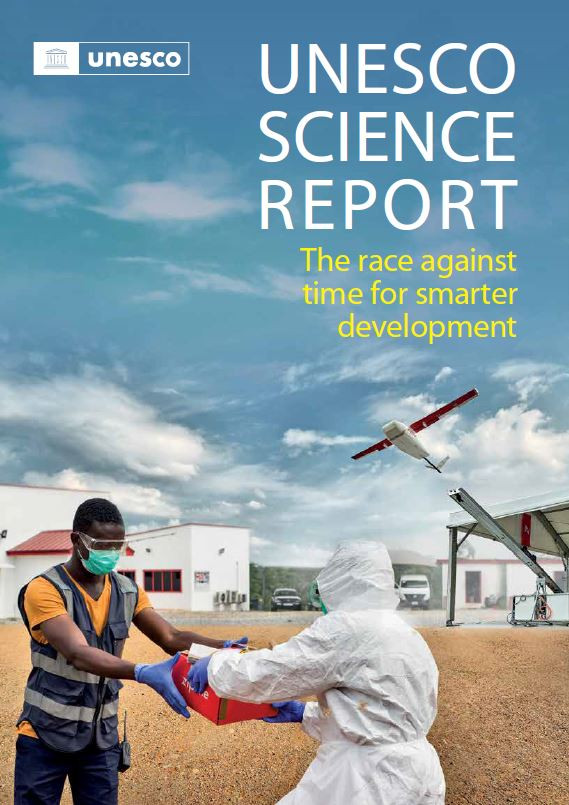 UNESCO Science Report: The Race Against Time for Smarter Development Year of publication: 2021 Author: Susan Schneegans | Tiffany Straza | Jake Lewis Corporate author: UNESCO This seventh edition of the report monitors the development path that countries have been following over the past five years from the perspective of science governance. It documents the rapid societal transformation under way, which offers new opportunities for social and economic experimentation but also risks exacerbating social inequalities, unless safeguards are put in place.The report concludes that countries will need to invest more in research and innovation, if they are to succeed in their dual digital and green transition. More than 30 countries have already raised their research spending since 2014, in line with their commitment to the Sustainable Development Goals. Despite this progress, eight out of ten countries still devote less than 1% of GDP to research, perpetuating their dependence on foreign technologies.
  Harnessing the Era of Artificial Intelligence in Higher Education: A Primer for Higher Education Stakeholders Year of publication: 2023 Author: Bosen Lily Liu | Diana Morales | Jaime Roser-Chinchilla | Emma Sabzalieva | Arianna Valentini | Daniele Vieira do Nascimento | Clarisa Yerovi Corporate author: UNESCO | UNESCO International Institute for Higher Education in Latin America and the Caribbean (IESALC) The International Institute for Higher Education in Latin America and the Caribbean (UNESCO IESALC) is one of UNESCO’s key education-focused institutes and is the only institute in the United Nations with a specific mandate for higher education. Taking a holistic and integrated intersectoral and cross-sectoral approach to higher education, UNESCO IESALC provides support to Member States through policy-driven and action-oriented research and publications, capacity development, training, advocacy and networking. Following the release of a Quick Start Guide on using ChatGPT and Artificial Intelligence (AI) in higher education, UNESCO IESALC is pleased to offer to the wider community of higher education stakeholders worldwide this Primer on AI and higher education. Providing information and tips for developing further thinking and policies related to the use of AI processes and outcomes in higher education institutions, the Primer is a comprehensive and comprehensible introduction to AI. It also serves as a practical tool for guidance and reference with recommendations for its use in higher education. Oportunidades y desafíos de la era de la inteligencia artificial para la educación superior: Una introducción para los actores de la educación superior Year of publication: 2023 Author: Bosen Lily Liu | Diana Morales | Jaime Roser-Chinchilla | Emma Sabzalieva | Arianna Valentini | Daniele Vieira do Nascimento | Clarisa Yerovi Corporate author: UNESCO | UNESCO International Institute for Higher Education in Latin America and the Caribbean (IESALC) El Instituto Internacional de la UNESCO para la Educación Superior en América Latina y el Caribe (UNESCO IESALC) es uno de los institutos clave de la UNESCO centrado en la educación y es el único instituto de las Naciones Unidas con un mandato específico para la educación superior. Adoptando un enfoque holístico e integrado de manera intersectorial y transectorial de la educación superior, el IESALC presta apoyo a los Estados miembros mediante investigaciones y publicaciones orientadas a la formulación de políticas y a la acción, al desarrollo de capacidades, la formación, la abogacía y la creación de redes. Tras la publicación de una Guía de inicio rápido sobre el uso de ChatGPT y la Inteligencia Artificial (IA) en la educación superior, UNESCO IESALC se complace en ofrecer a la comunidad en general interesada en la educación superior global este Manual en IA y educación superior. Proporcionando información y consejos para el desarrollo de pensamiento y de políticas relacionadas con el uso de la IA en las instituciones de educación superior, este Manual es una introducción comprensible y exhaustiva a la IA. También sirve como herramienta práctica de orientación y referencia con recomendaciones para su uso en la enseñanza superior.
  Challenging Systematic Prejudices: An Investigation into Bias Against Women and Girls in Large Language Models Year of publication: 2024 Author: Daniel Van Niekerk | Maria Peréz Ortiz | John Shaw-Taylor | Davor Orlic | Ivana Drobnjak | Jackie Kay | Noah Siegel | Katherine Evans | Nyalleng Moorosi | Tina Eliassi-Rad | Leone Maria Tanczer | Wayne Holmes | Marc Peter Deisenroth | Isabel Straw | Maria Fasli | Rachel Adams | Nuria Oliver | Dunja Mladenić | Urvashi Aneja | Madeleine Janicky Corporate author: UNESCO | International Research Centre on Artificial Intelligence (IRCAI) This study explores biases in three significant large language models (LLMs): OpenAI’s GPT-2 and ChatGPT, along with Meta’s Llama 2, highlighting their role in both advanced decision-making systems and as user-facing conversational agents. Across multiple studies, the brief reveals how biases emerge in the text generated by LLMs, through gendered word associations, positive or negative regard for gendered subjects, or diversity in text generated by gender and culture. The research uncovers persistent social biases within these state-of-the-art language models, despite ongoing efforts to mitigate such issues. The findings underscore the critical need for continuous research and policy intervention to address the biases that exacerbate as these technologies are integrated across diverse societal and cultural landscapes. The emphasis on GPT-2 and Llama 2 being open-source foundational models is particularly noteworthy, as their widespread adoption underlines the urgent need for scalable, objective methods to assess and correct biases, ensuring fairness in AI systems globally.
  Global Toolkit on AI and the Rule of Law for the Judiciary Year of publication: 2023 Author: Miriam Stankovich | Ivana Feldfeber | Yasmín Quiroga | Marianela Ciolfi Felice | Vukosi Marivate Corporate author: UNESCO What is Artificial Intelligence (AI)? How does it work? And more importantly, how does it find its way into the judicial context? Technologies such as AI have been around for decades, but only recently have they begun to be used in a variety of justice and law enforcement settings. While AI has immense potential for the justice system, helping judges make better decisions, improving efficiency, increasing access, and helping to detect and prevent crime, there are also some important issues that justice stakeholders should consider as they prepare for a future in which AI is increasingly used in justice systems.In 2022, UNESCO launched two needs assessments. First, through UNESCO’s Artificial Intelligence Needs Assessment Survey in Africa, 90% of the 32 countries surveyed requested capacity building support for the Judiciary on AI. At the same time, a second global survey of judicial actors in 100 countries underlined the need for better understanding the use of AI in the administration of justice and its wider legal implications on societies.The “Global Toolkit on AI and the Rule of Law” for the Judiciary responds to these needs and provides judicial actors (judges, prosecutors, state attorneys, public lawyers, law universities and judicial training institutions) with the knowledge and tools necessary to understand the benefits and risks of AI in their work. The toolkit will assist judicial actors in mitigating the potential human rights risks of AI by providing guidance on the relevant international human rights laws, principles, rules and emerging jurisprudence that underpin the ethical use of AI.
  AI and the Holocaust: Rewriting History?; The Impact of Artificial Intelligence on Understanding the Holocaust Year of publication: 2024 Author: Mykola Makhortykh | Heather Mann Corporate author: UNESCO The threats associated with AI on safeguarding the record of the Holocaust are manifold, including the potential for manipulation by malicious actors, the introduction of falsehoods or dissemination of biased information, and the gradual erosion of public trust in authentic records. This paper provides a warning of what is at stake for the preservation of historical truth in a digital era increasingly mediated by AI. It highlights five major concerns:1. AI automated content may invent facts about the Holocaust2. Falsifying historical evidence: Deepfake Technology3. AI models can be manipulated to spread hate speech4. Algorithmic bias can spread Holocaust denial5. Oversimplifying history While there are some benefits to be gained, such as enhanced engagement and interaction opportunities for learners, as well as more efficient data processing capabilities for researchers, to navigate these challenges and capitalize on the benefits, it’s essential for AI designers, policymakers, educators, and researchers to collaborate closely. Only AI systems equipped with robust safeguards and human rights assessments, coupled with an increased focus on developing digital literacy skills, can uphold the integrity of historical truth and ensure the responsible use of artificial intelligence.