
Resources
Explore a wide range of valuable resources on GCED to deepen your understanding and enhance your research, advocacy, teaching, and learning.
49 Results found
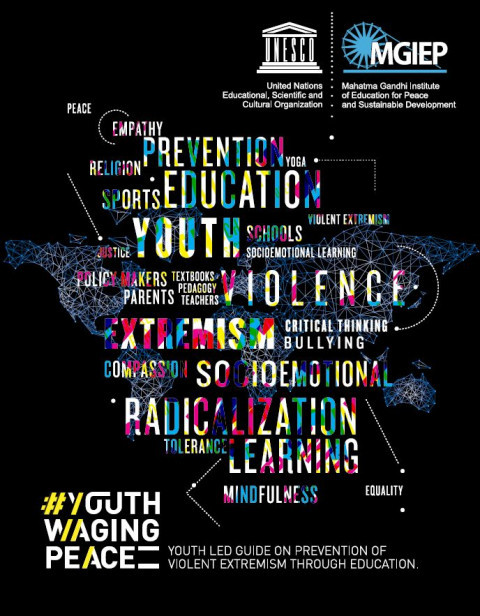 Youth Led Guide on Prevention of Violent Extremism through Education Year of publication: 2017 Author: Carolyn Nash | Yulia Nesterova | Kenneth Primrose | Wing Yu Alice Chan | Rios, Paul A. Chan | María José Velásquez Flores | Aniqah Zowmi Corporate author: Mahatma Gandhi Institute of Education for Peace and Sustainable Development (MGIEP) In September 2016, the education sector from the UNESCO headquarters and the UNESCO category 1 research Institute, the UNESCO Mahatma Gandhi Institute of Education for Peace and Sustainable Development(MGIEP) organised the first International Conference on Prevention of Violent Extremism through Education: Taking Action, in New Delhi, India. The usual plethora of reports and guides produced by experts on the subject, roundtables and expert panels were organised.But something different also happened. UNESCO MGIEP brought 50 youth from across the world rigorously selected through six week online discussion on the subject to participate in a first of its kind, “Talking Across Generations on Education (TAGe)” event. This event organised as a plenary session—not a side or lunch event—brought together these youth in a non-hierarchical “flat” dialogue with about 12 senior policymakers on the challenges and opportunities the youth see in preventing violent extremism through education.The conference culminated with the presentation of a “Youth Action Plan” containing three clear tangible action points. One action point was the development of a youth-led guide on Prevention of Violent Extremism through Education. This Guide is the result of that call to action.The Institute circulated a global call to youth who were willing to take up the challenge of producing the Guide. After a rigorous search based on a well-defined set of criteria, two coordinating lead authors were identified. These authors were then tasked to find the remaining authors who they saw fit to contribute to the Guide and this team then reached out to the wider group of youth to solicit their experiences and guidance in producing the Guide. The youth have done their part. They have reached out to more than 2,000 young people from more than 50 countries, collated their ideas and experiences and finally featured more than 150 unique voices into this document.
  Educación Integral de la Sexualidad: Conceptos, Enfoques y Competencias Year of publication: 2014 Corporate author: UNESCO Santiago El objetivo de este documento es comprender que la sexualidad es parte integral de la vida de las personas (en sus diferentes etapas o edades, y en toda su diversidad), y que contribuye al desarrollo de su identidad y por lo tanto, a su desarrollo social. Se trata de capacidades más que de contenidos, las que deben desarrollarse en forma interdisciplinaria y de manera progresiva para que las personas actúen de forma responsable respecto a ellas mismas y con los demás. El documento explica que la educación de la sexualidad está íntimamente relacionada con la comprensión, la reflexión y el discernimiento, y fortalece las bases para el aprendizaje a lo largo de la vida, preparando a los jóvenes para la vida adulta. Es así que el enfoque se centra en alcanzar un desarrollo y bienestar humano sostenible. Integral Education of Sexuality: Concepts, Approaches and Competencies Year of publication: 2014 Corporate author: UNESCO Santiago The objective of this document is to understand that sexuality is an integral part of people's lives (in their different stages or ages, and in all their diversity), and that it contributes to the development of their identity and, therefore, to their development Social. It is about capacities rather than content, which must be developed in an interdisciplinary way and progressively so that people act responsibly towards themselves and with others. The document explains that the education of sexuality is closely related to understanding, reflection and discernment, and strengthens the bases for lifelong learning, preparing young people for adult life. Thus, the focus is on achieving sustainable human development and well-being.
  Violence in Schools: Thematic Report Year of publication: 2023 Corporate author: Higher Council for Education, Training, and Scientific Research (CSEFRS) | United Nations Children's Fund (UNICEF) This report presents the results of an assessment of violence in school settings conducted by the Higher Council for Education, Training and Scientific Research, through the National Evaluation Authority, in partnership with UNICEF. This report highlights the importance of a safe, violence-free school environment to ensure quality education.The main objective of this evaluation is to provide a detailed diagnosis of the situation of violence in the school environment in Morocco. Accordingly, the study focuses on measuring the extent of the spread of this phenomenon and identifying its various forms and manifestations in the school environment, as well as the actors involved in it. It does not only target the perpetrators of violence, but also its victims, including students and educational staff. La violence en Milieu scolaire: Rapport Thématique Year of publication: 2023 Corporate author: Higher Council for Education, Training, and Scientific Research (CSEFRS) | United Nations Children's Fund (UNICEF) Ce rapport présente les résultats de l’évaluation de la violence en milieu scolaire réalisée par le Conseil Supérieur de l’Éducation, de la Formation et de la Recherche Scientifique à travers l’Instance Nationale d’Évaluation en partenariat avec l’UNICEF. Il met en évidence l’importance d’un environnement scolaire sûr et sans violence pour garantir une éducation de qualité. L’objectif principal de cette évaluation est d’apporter un diagnostic détaillé sur la situation de la violence en milieu scolaire au Maroc. Elle vise ainsi à en mesurer la prévalence et à identifier les différentes formes et manifestations de celle-ci, ainsi que les acteurs impliqués, en ciblant, non seulement les auteurs de violence, mais également les victimes parmi les élèves et le personnel éducatif. Cette évaluation repose sur les résultats d’une enquête quantitative réalisée à la fin du premier trimestre de l’année scolaire 2021-2022, auprès de 260 établissements représentatifs à l’échelle nationale, avec la participation de 13 884 élèves représentant les trois cycles de l’enseignement (primaire, secondaire collégial et qualifiant), ainsi qu’une enquête qualitative menée dans 27 établissements. العنف في الوسط المدرسي:تقرير موضوعاتي Year of publication: 2023 Corporate author: Higher Council for Education, Training, and Scientific Research (CSEFRS) | United Nations Children's Fund (UNICEF) يقدم هذا التقرير نتائج تقييم العنف في الوسط المدرسي الذي أجراه المجلس الأعلى للتربية والتكوين والبحث العلمي، من خلال الهيئة الوطنية للتقييم، بشراكة مع منظمة اليونيسيف. ويسلط هذا التقرير الضوء على أهمية وجود بيئة مدرسية آمنة وخالية من العنف لضمان تعليم ذي جودة.الهدف الرئيسي لهذا التقييم يكمن في تقديم تشخيص مفصل لوضع العنـف في الوسط المدرسي في المغرب. وعليـه، تركــز الدراســة عـلـى قيــاس مــدى انتشــار هــذه الظاهــرة وتحديــد أشــكالها وتجلياتها المختلفة في الوســط المدرسي، وكــذا الفاعلـيـن المعنين بهــا، وهــي لا تســتهدف مرتكبــي العنــف فقــط، بــل أيضــا ضحايــاه مــن تلامذة وأطر تربوية.
  Tween Cyberbullying in 2020 Year of publication: 2020 Author: Justin W. Patchin | Sameer Hinduja Corporate author: Cyberbullying Research Center | Cartoon Network This report presents the results of a nationally representative survey of 1,034 children between the ages of 9 and 12 years-old. The survey was conducted online from June 19 through July 6, 2020, and was fielded by Ipsos using their probability-based KnowledgePanel. KnowledgePanel is the largest online panel that is representative of the U.S. population. KnowledgePanel recruitment employs an addressed-based sampling methodology from the United States Postal Service’s Delivery Sequence File—a database with full coverage of all delivery points in the U.S. As such, samples from KnowledgePanel cover all households regardless of their phone status. Member households without Internet access are furnished with a free computing device and Internet service. KnowledgePanel members are randomly recruited through probability-based sampling, and panel members are randomly selected so that survey results can properly represent the U.S. population with a measurable level of accuracy, features that are not obtainable from nonprobability panels. Ipsos currently recruits panel members by using address-based sampling methods (the firm previously relied on random-digit dialing for recruitment). Households without Internet connection are provided with a web-enabled device and free Internet service. In contrast, “convenience” or “opt-in” surveys recruit participants through emails, word-of-mouth, pop-up ads online, or other non-scientific methods.
  التنمر الإلكتروني بين المراهقين: دراسة مطبَّقة على عينة من طلبة المرحلة المتوسطة المستخدمين للعبة الفورتنايت Year of publication: 2019 Author: Moudi Al-Anzi Corporate author: Qassim University استهدفت الدراسة التعرف على الأسباب الشخصية للتنمر الالكتروني ومعرفة دور المناخ الأسري والمدرسي في التنمر الالكتروني. استخدمت لعبة الفورتنايت كمثال للتعرف على التنمر الذي يحصل من خلال الألعاب الالكترونية. استخدمت الاستبانة لجمع البيانات. Cyberbullying among Adolescents: A Study Applied to a Sample of Middle School Students Who Used the Game of Fortnite Year of publication: 2019 Author: Moudi Al-Anzi Corporate author: Qassim University The study aimed to identify the personal causes of cyberbullying and the role of the family and school climate in cyberbullying. The study used the game Fortnite as an example to recognize bullying that occurs through electronic games. A questionnaire was used to collect data.
 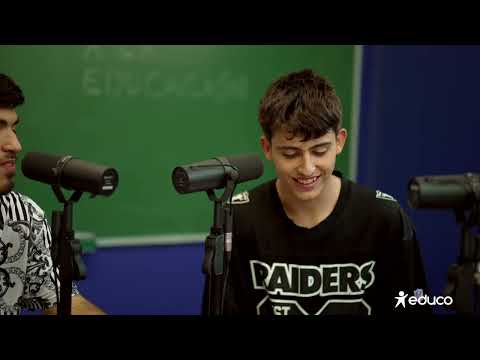 Podcast: Right to Education Against Hate Speech (SAME 2024) Year of publication: 2024 Corporate author: Global Campaign for Education (GCE) The Global Action Week for Education (GAE) 2024 has been the perfect setting for children and adolescents to contribute their voice and perspective to the issue of hate speech. Through awareness-raising and reflection workshops, children and adolescents have shared complex personal situations and cases of hate that they have witnessed, reproduced or experienced first-hand. Guided by their reflections, the participants designed a two-chapter podcast, where they addressed the issues that concern them most. This process not only allowed them to deepen their understanding of the normalization of hate speech and structural violence, but also to prepare for the production of the podcast, where they were able to express their thoughts and proposals in a creative and accessible way for a wider audience.