
Resources
Explore a wide range of valuable resources on GCED to deepen your understanding and enhance your research, advocacy, teaching, and learning.
9 Results found
 طرق تدريس ذوي الاحتياجات الخاصة " تخصص علوم" Year of publication: 2010 Author: Marwa El-Baz Corporate author: Port Said University هذا الملف يحتوي على المادة العلمية المستخدمة في تدريس مقرر طرق تدريس ذوي الاحتياجات الخاصة " تخصص علوم". تم تقسيم المقرر على مواضيع متعددة تعرف المتعلم بذوي الاحتياجات الخاصة وطرق تدريسهم. Methods of Teaching People with Special Needs "Specialization in Science" Year of publication: 2010 Author: Marwa El-Baz Corporate author: Port Said University This report contains the scientific material used in the teaching methodology for people with special needs course "Specialization Science". The course was divided into multiple topics that familiarize the learner with people with special needs and methods of teaching them.
  أثر برامج التأهيل المجتمعي على المشكلات السلوكيّة لدى الأطفال ذوي الإعاقة ونوعيّةُ الحياة لدى أسرهم Year of publication: 2022 Author: Mohammad Abedel Hameed هدفت هذه الدّراسة إلى الكشف عن أثر برامج التأهيل المجتمعيّ على المشكلات السلوكيّة لدى الأطفال ذوي الإعاقة ونوعيّة الحياة لدى أُسرهم. وقد تم اختيار عينة مكونة من (115) أسرة من أسر الأطفال ذوي الإعاقة (75 أسرة منتفعة من التأهيل المجتمعي و40 أسرة غير منتفعة). واستخدم مقياس للمشكلات السلوكية ومقياس لنوعية الحياة. أفادت النتائج بوجود فروق ذات دلالة إحصائية في المشكلات السلوكية بين المنتفعين وغير المنتفعين لصالح الفئة الأولى فقد جاءت درجة المشكلات السلوكية لدى أطفال الأسر المنتفعة متوسطة, في حين كانت مرتفعة لدى أطفال الأسر غير المنتفعة, ووجود فروق في درجة المشكلات السلوكيّة, تُعزى لطول مدّة تلقّي الخدمات لصالح فئة متلقّي الخدمات لمدّة أطول, وعدم وجود فروق تعزى لجِنس الطفل. وأشارت نتائج الدراسة أيضاً إلى وجود فروق ذات دلالة إحصائية في درجة نوعية الحياة لدى الأسر تعزى لمتغير تلقّي التأهيل, وكانت الفروق لصالح الأسر المنتفعة إذ جاءت نوعية الحياة لديهم بدرجة متوسطة على جميع أبعاد المقياس في حين جاءت لدى الأسر غير المنتفعة بدرجة منخفضة, على جميع الأبعاد ما عدا بُعد الحالة الصحية الذي جاء بدرجة متوسطة. The Effect of Community-Based Rehabilitation Programs on Behavioral Problems among Children with Disabilities and the Quality of Life of their Families Year of publication: 2022 Author: Mohammad Abedel Hameed This study aimed at revealing the impact of community-based rehabilitation (CBR) programs on behavioral problems of children with disabilities and the quality of life of their families. A sample consisting of (115) families (75 beneficiary families and 40 non-beneficiary families). A behavioral problem scale and a quality of life (QoL) measure were applied. Results indicated statistically significant differences in the degree of behavioral problems between the beneficiaries and non-beneficiaries of CBR in favor of the first group, where the degree of behavioral problems among the children of the beneficiary families was medium, while it was high among the children of non-beneficial families, in addition to differences in the degree behavioral problems attributed to the duration of received services in favor of the longer duration, and no differences attributed to the child gender. Results also indicated statistically significant differences in QoL of families due to receiving CBR services, and the differences were in favor of beneficiary families with average QoL on all dimensions while it was low for non-beneficiary families on all dimensions except for health status.
  Learning Must Go On: Recommendations for Keeping Children Safe and Learning, During and After the COVID-19 Crisis Year of publication: 2020 Corporate author: Save the Children | United Nations Children's Fund (UNICEF) | The Inter-agency Network for Education in Emergencies (INEE) This brief highlights some of the potential impacts of school closures on children, with a focus on the most marginalised, including those already living in crisis and conflict contexts. It provides recommendations for governments and donors, together with partners, to ensure that safe, quality and inclusive learning reaches all children and that education systems are strengthened ready for the return to school.A comprehensive curation of free and accessible resources to support the response during the COVID-19 is available on INEE’s website.
  A Situation Analysis of Children in Kazakhstan Year of publication: 2019 Corporate author: UNICEF Kazakhstan Kazakhstan has set the overarching objective of becoming one of the 30 most developed countries in the world by 2050. Children and adolescents in Kazakhstan, who constitute 31.4 per cent of the total population, should be the beneficiaries and active contributors to achieving these goals. This Situation Analysis provides analysis and recommendations to ensure that children remain at the centre of the country’s development priorities. It confirms measurable progress made in advancing the rights of children and identifies outstanding challenges. Анализ положения детей в Республике Казахстан Year of publication: 2019 Corporate author: UNICEF Kazakhstan Казахстан поставил перед собой важную стратегическую цель – стать одной из 30 самых развитых стран мира к 2050 году. При этом нынешние дети и подростки, составляющие 31,4% от общей численности населения страны, будут теми, кто больше всех ощутит положительные изменениня и поэтому также должны стать активными участниками в реализации поставленной цели.В данном документе представлены анализ и рекомендации, направленные на то, чтобы дети оставались в центре приоритетов развития страны. Отчет подтверждает ощутимый прогресс, достигнутый в продвижении прав детей, а также выявляет факторы, влияющие на их уязвимость.
 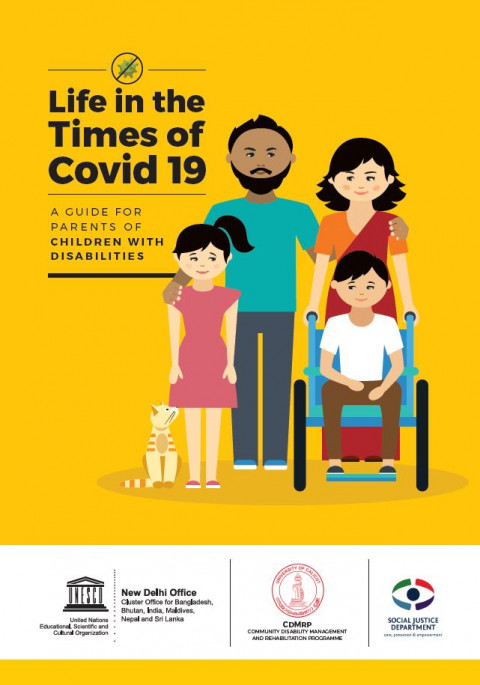 Life in the Times of Covid 19: A Guide for Parents of Children with Disabilities Year of publication: 2020 Corporate author: UNESCO New Delhi The 2019–20 coronavirus pandemic has affected educational systems worldwide, leading to the widespread closure of schools and universities. The radical changes and ensuing stress brought about by COVID-19 and the lockdown may also result in different sorts of difficulties among these children.Hence, parents and caregivers of such children must know how to manage and guide their children during this pandemic.This guideline explains the different aspects that a parent/ caregiver must take into account while taking care of children with special needs. This guideline also addresses the need to maintain the mental health of the parent/ caregiver of children with special needs. The eleven sections in this guideline explain the duties and responsibilities that parents/ caregiver must follow.
  장애청소년 친화적 청소년정책 추진방안 연구 Year of publication: 2021 Author: 김지연 | 김승경 | 오욱찬 | 정소연 Corporate author: 한국청소년정책연구원 2021년 현재 24세 이하 장애청소년은 약 10만 명으로 우리나라 전체 청소년 인구 대비 약 1% 수준이다. 그러나 이는 ‘등록 장애청소년’만 해당하며, ‘미등록 장애청소년, 법정 장애 유형에 해당하지 않는 장애를 가진 청소년, 신체건강 및 정신건강 문제로 비장애청소년에 비해 일상생활 전반에서 현저한 제약이 있는 청소년’이 제외된 규모다. 우리나라는 장애 유형의 범위가 협소하여 주요국 대비 장애인 출현율이 현저히 낮으며, 아동·청소년기에 장애 등록을 꺼리는 경향 등을 고려하면 잠재적인 정책대상의 명확한 규모는 커질 수밖에 없다.이에 본 연구는 ‘포용국가 청소년정책’의 일환으로 그간 청소년정책의 대상으로 인식하지 못했던 장애청소년을 비장애청소년과 통합적으로 지원하기 위한 방안을 다각적으로 모색하였다.