
Resources
Explore a wide range of valuable resources on GCED to deepen your understanding and enhance your research, advocacy, teaching, and learning.
117 Results found
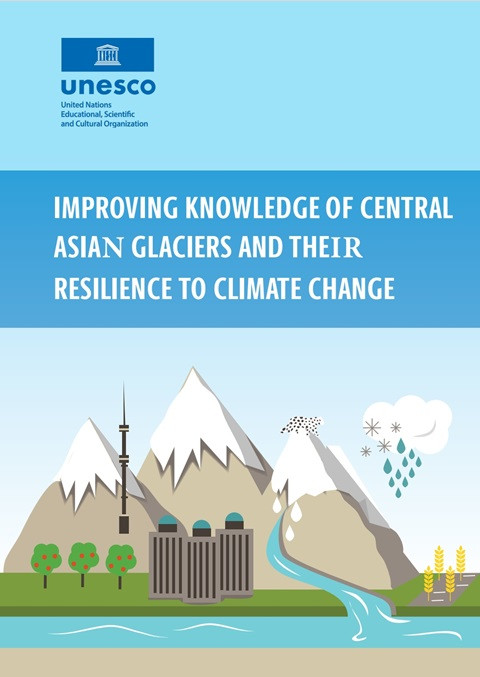 Improving Knowledge of Central Asian Glaciers and Their Resilience to Climate Change Year of publication: 2022 Corporate author: UNESCO Almaty | Global Environment Facility (GEF) | United Nations Development Programme (UNDP) The planned project under the Global Environment Facility and jointly with the UN Development Programme aims to improve the knowledge and monitoring of all key components of the cryosphere: glaciers, snow and permafrost, and support practical climate adaptation measures in the five nations of Central Asia. Paзвитие знаний о ледниках центральной азии и меры адаптации к изменению климата Year of publication: 2022 Corporate author: UNESCO Almaty | Global Environment Facility (GEF) | United Nations Development Programme (UNDP) Планируемый проект в рамках Глобального Экологического Фонда и совместно с Программой Развития ООН направлен на улучшение знаний и мониторинга всех ключевых компонентов криосферы: ледников, снега и вечной мерзлоты, а также на поддержку практических мер по адаптации к изменению климата в пяти странах Центральной Азии.
 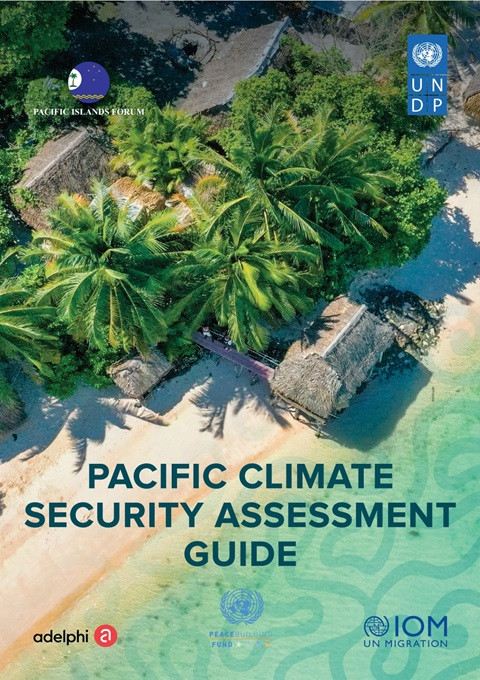 Pacific Climate Security Assessment Guide Year of publication: 2023 Author: Spencer McMurray | Lukas Ruttinger | Serena Arcone | Michael Crowe Corporate author: United Nations Development Programme (UNDP) | Pacific Islands Forum Secretariat (PIFS) The new Pacific Climate Security Assessment guide aims to support Pacific Island Countries to collectively and individually uncover, assess and respond to climate security implications for their peoples, prosperity and peace. The Assessment Guide builds off of the Weathering Risk initiative’s methodology, and was undertaken by adelphi in collaboration with the UNDP, IOM and PIF as a part of the UNPBF-funded “Climate Security in the Pacific” project. In addition to incorporating a brief regional trend analysis and limited entry points to kick start countries’ efforts to address climate insecurity, the guide provides a “how to” for countries to undertake assessments themselves and across different levels. Anchored in the Pacific, the guide was developed through extensive consultation with regional specialists, key regional institutions, civil society and with Forum member representatives.
  Third Global Conference on Strengthening Synergies Between the Paris Agreement and the 2030 Agenda for Sustainable Development: Building the Evidence Base for Synergistic Action in Support of Raising Climate and SDGs Ambition Year of publication: 2022 Corporate author: UN. Department of Economic and Social Affairs (UN. DESA) The Third Global Conference on Strengthening Synergies Between the Paris Agreement and the 2030 Agenda For Sustainable Development was co-convened by the United Nations Department of Economic and Social Affairs (UNDESA) and the Secretariat of the United Nations Framework Convention on Climate Change (UNFCCC), and it was hosted by the Ministry of the Environment of Japan, in partnership with the United Nations University (UNU) and the Institute for Global Environmental Strategies (IGES).
 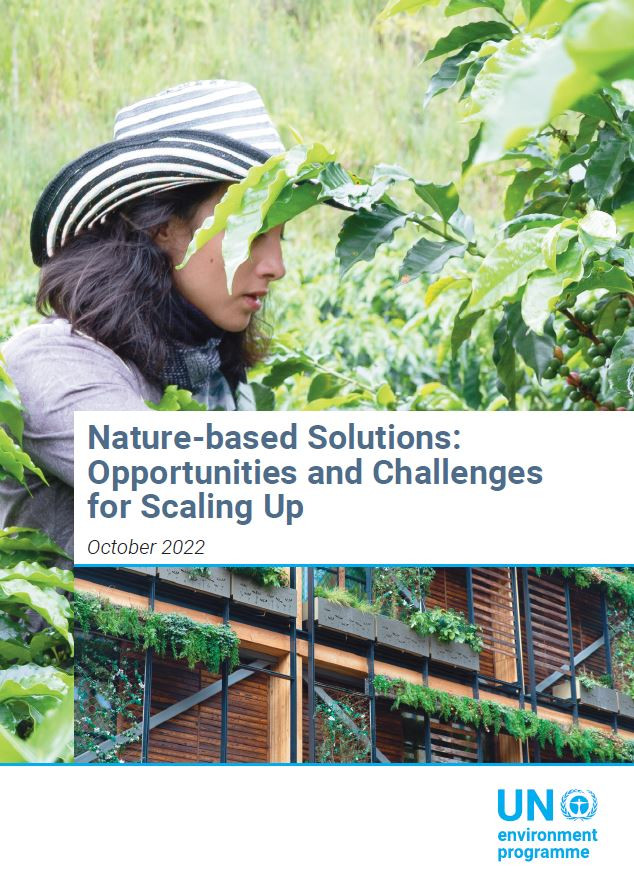 Nature-based Solutions: Opportunities and Challenges for Scaling Up Year of publication: 2022 Author: Charlotte Hicks | Carolina Chambi | Hemant Tripathi | Katie Dawkins | Tania Salvaterra | Kollie Tokpah | Valerie Kapos | Hashim Zaman Corporate author: United Nations Environment Programme (UNEP) Nature-based Solutions (NbS) are important for the global sustainable development agenda because they offer the potential to address, in an effective way, diverse challenges such as climate change, food and water insecurity, disaster impacts, and threats to human health and wellbeing, while reducing environmental degradation and biodiversity loss. Some of the challenges addressed by NbS, including biodiversity loss and climate action, cannot be fully tackled without this contribution. This does not mean that other actions, such as rapid decarbonization of our economies, are not also essential. This report: Outlines recent developments on NbS, with a focus on global, regional and national commitments, and key issues and concerns Builds on the new multilaterally agreed definition of NbS – agreed by the UN Environment Assembly in March 2022 – to set out key elements in the concept, provides examples of NbS, and discusses related approaches Provides recommendations for actions by governments, civil society and the private sector to substantially scale up the use of NbSThe report aims to inform NbS-related initiatives and discussions on NbS at global, regional, and national levels, with a focus on how NbS can be scaled up to more effectively address social, economic, and environmental challenges.
 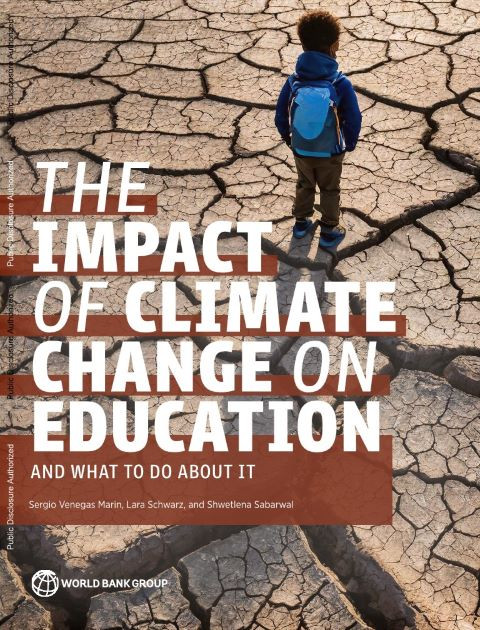 The Impact of Climate Change on Education and What to Do about It Year of publication: 2024 Author: Sergio Venegas Marin | Lara Schwarz | Shwetlena Sabarwal Corporate author: International Bank for Reconstruction and Development | World Bank Education can be the key to ending poverty in a livable planet, but governments must act now to protect it. Climate change is increasing the frequency and intensity of extreme weather events such as cyclones, floods, droughts, heatwaves and wildfires. These extreme weather events are in turn disrupting schooling; precipitating learning losses, dropouts, and long-term impacts. Even if the most drastic climate mitigation strategies were implemented, extreme weather events will continue to have detrimental impacts on education outcomes.
 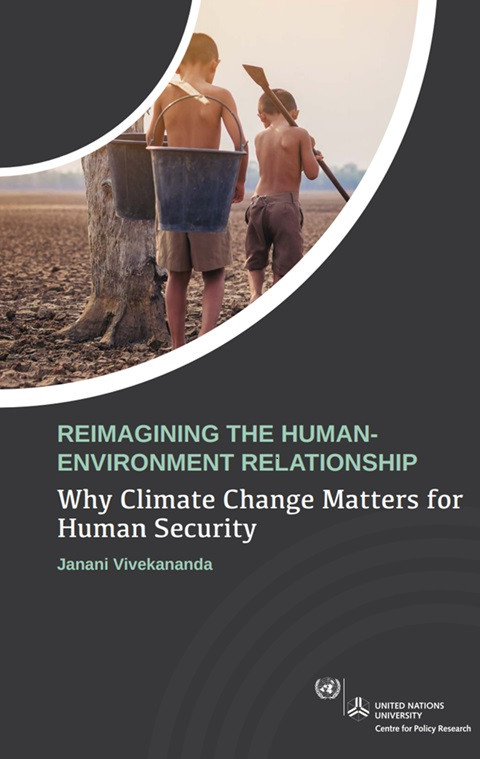 Why Climate Change Matters for Human Security Year of publication: 2022 Author: Janani Vivekananda Corporate author: United Nations University | United Nations Environment Programme (UNEP) This paper outlines the state of knowledge regarding security risks related to climate change, synthesizing the existing scientific evidence to set out five broad pathways of risk. Climate change itself is rarely a direct cause of conflict. Yet, there is ample evidence that its effects exacerbate important drivers and contextual factors of conflict and fragility, thereby challenging the stability of states and societies. Climate change impacts such as coral bleaching, diversity loss, and erratic rainfall can stress livelihoods and drive displacement, increase resource conflicts, and challenge the security and stability of people and states worldwide. Managing these security risks requires action across the entire impact chain: work to mitigate climate change; reducing its consequences on ecosystems; adapting socioeconomic systems; better management of climate-induced heightened resource competition; and strengthening governance and conflict management institutions. And every dimension of the response must be conflict-sensitive and climate proof. Without the right responses, climate change will mean more fragility, less peace and less security. But this paper sets out illustrative examples of how, with a greater understanding of how climate change interacts with social, political, economic and environmental drivers of conflict and fragility, we will be better placed to make the kind of risk-informed decisions is integral to achieving international peace and security.
  The United Nations World Water Development Report 2020: Water and Climate Change Year of publication: 2020 Corporate author: UNESCO World Water Assessment Programme (WWAP) The 2020 edition of the UN World Water Development Report addresses the critical linkages between water and climate change in the context of sustainable development. It also serves as a guide for concrete actions to address these challenges. It outlines actions, supported by examples from across the world, in three areas: first, enabling people to adapt to the impacts of climate change; second, improving the resilience of livelihoods; and, third, reducing the drivers of climate change. Critically, measures to improve the efficiency of water use in agriculture is inextricably linked to multiple SDGs. These include those related to zero hunger (SDG 2), availability and access to water (SDG 6), climate action (SDG 13), and promoting the sustainable use of ecosystem services (SDG 15).The Report concludes that reducing both the impacts and drivers of climate change will require substantial changes in the way we use and reuse the Earth’s limited water resources. The experience and expertise needed to achieve this goal are brought together in the Report through UN-Water’s Members and Partners. It will support policy makers in tackling the challenges of climate change by harnessing the wide-ranging opportunities that improved water management offers for adaptation, mitigation and resilience in a rapidly changing world. Rapport mondial des Nations Unies sur la mise en valeur des ressources en eau 2020: l'eau et les changements climatiques Year of publication: 2020 Corporate author: UNESCO World Water Assessment Programme (WWAP) L’édition 2020 du Rapport mondial sur la mise en valeur des ressources en eau montre les liens essentiels entre l’eau et les changements climatiques dans le cadre du développement durable. Le rapport sert également de guide pour prendre des mesures concrètes et relever ces défis. Il présente des actions, illustrées par des exemples provenant du monde entier, liées à trois domaines : premièrement, permettre aux personnes de s’adapter aux effets des changements climatiques ; deuxièmement, renforcer la résilience des moyens de subsistance ; enfin, réduire les moteurs des changements climatiques. Les mesures visant à accroître l’efficacité de l’utilisation de l’eau dans le domaine agricole – tout en garantissant l’accès à l’eau de groupes vulnérables tels que les petits exploitants agricoles – sont incontestablement liées à de multiples ODD. Il s’agit de ceux liés à l’objectif zéro faim (ODD 2), à la disponibilité et l’accès à l’eau (ODD 6), à l’action climatique (ODD 13) et à la promotion de l’utilisation durable des services écosystémiques (ODD 15).Le rapport conclut sur le fait que réduire tant les effets que les facteurs des changements climatiques exigera des transformations importantes dans la manière dont nous utilisons et réutilisons les ressources en eau limitées de la planète. L’expérience et l’expertise nécessaires pour atteindre cet objectif sont rassemblées dans ce rapport par les membres et partenaires d’ONU-Eau. Il contribuera à aider les dirigeants à lutter contre les difficultés liées aux changements climatiques en saisissant les vastes opportunités qu’offrent l’amélioration de la gestion de l’eau pour l’adaptation, la mitigation et la résilience dans un monde en rapide évolution.
 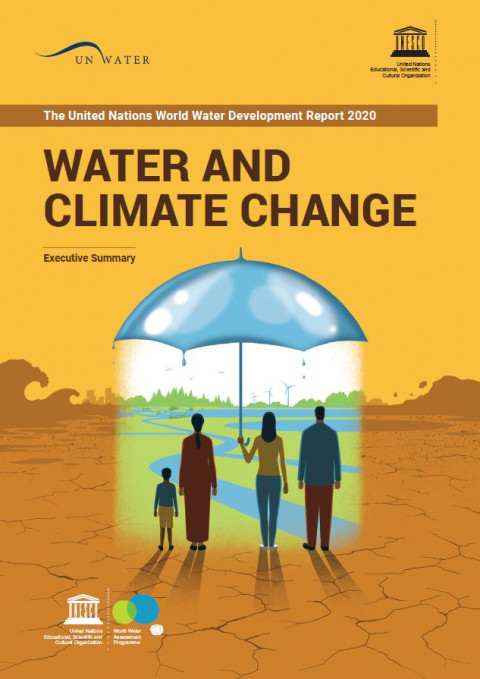 [Summary] The United Nations World Water Development Report 2020: Water and Climate Change; Executive Summary Year of publication: 2020 Corporate author: UNESCO World Water Assessment Programme (WWAP) The 2020 edition of the United Nations World Water Development Report (WWDR) addresses the critical linkages between water and climate change in the context of the broader sustainable development agenda. The report is not meant to be a purely technical examination of the impacts of climate change on the hydrological cycle. Rather, the report focuses on the challenges, opportunities and potential responses to climate change – in terms of adaptation, mitigation and improved resilience – that can be addressed through improving how water resources are management and used, while providing water supply and sanitation services for all in a sustainable manner. In doing so, the report tackles two of the most critical crises the world will continue facing over the next several decades: Water (in)security and climate change.