
Resources
Explore a wide range of valuable resources on GCED to deepen your understanding and enhance your research, advocacy, teaching, and learning.
16 Results found
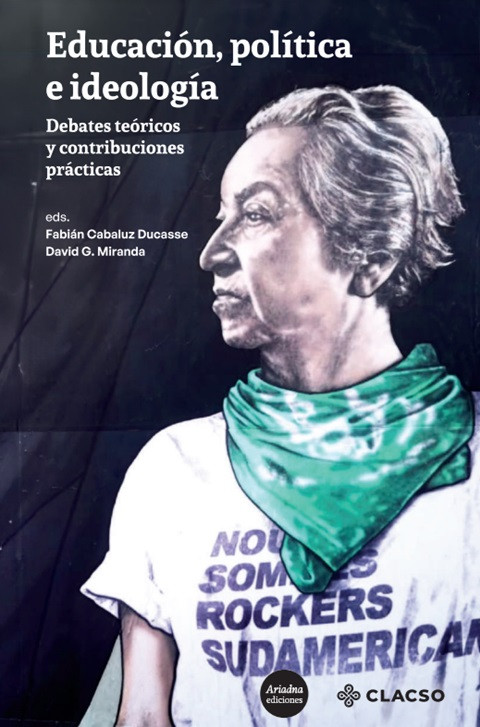 Education, Politics and Ideology: Theoretical Debates and Practical Contributions Year of publication: 2024 Author: David G. Miranda | Jorge Fabián Cabaluz Ducasse Corporate author: Latin American Council of Social Sciences (CLACSO) This book, "Education, Politics and Ideology: Theoretical Debates and Practical Contributions", is a work by the Latin American Pedagogies Research Group at the University of Playa Ancha, which is positioned from a critical perspective in the educational and pedagogical field. This currently implies, among other things, the relevance of discussing, polemizing and confronting those perspectives that have technified and instrumentalized pedagogy, reducing it to a merely practical, technical field, unrelated to epistemological, ethical, philosophical and/or political issues. In this direction, the essays that make up the book distance themselves substantially from those perspectives that conceive our field as a terrain that must advocate for neutrality, impartiality, and asepsis; and they propose clear and explicit positions with respect to social justice, democracy, equality, and dignity. Educación, política e ideología: Debates teóricos y contribuciones prácticas Year of publication: 2024 Author: David G. Miranda | Jorge Fabián Cabaluz Ducasse Corporate author: Latin American Council of Social Sciences (CLACSO) Este libro "Educación, política e ideología: debates teóricos y contribuciones prácticas", surge desde el Grupo de Investigación de Pedagogías Latinoamericanas de la Universidad de Playa Ancha, el cual se encuentra posicionado desde las perspectivas críticas del campo educativo y pedagógico, lo que implica en la actualidad, entre otras cosas, la relevancia de discutir, polemizar y confrontar aquellas perspectivas que han tecnificado e instrumentalizado la pedagogía, reduciéndola a un campo meramente práctico, técnico, ajeno a cuestiones epistemológicas, éticas, filosóficas y/o políticas. En esta dirección, los ensayos que componen el libro se distancian sustancialmente de aquellas perspectivas que conciben nuestro campo como un terreno que debe abogar por la neutralidad, la imparcialidad, la asepsia; y proponen posicionamientos claros y explícitos con respecto a la justicia social, la democracia, la igualdad, la dignidad.
  Manual on Citizenship Competencies: Citizenship Academy Project Year of publication: 2020 Corporate author: Organization of Ibero-American States for Education, Science and Culture (OEI) | Panamanian Debate Association (ASPADE) | Eduardo Morgan Foundation (FUNDAMORGAN) The Citizen Competencies Manual is a tool for facilitators of the Ibero-American Education Program in human rights, democracy and citizenship. Citizen Academy is an initiative led by the Organization of Ibero-American States (OEI) with the Panamanian Debate Association (ASPADE) and the Eduardo Morgan Foundation (FUNDAMORGAN). Within the Citizen Academy Program, various initiatives have been developed, all focused on the importance of citizen participation and the development of skills that contribute to the personal and professional growth of the participants. In this manual, teachers and trainers will be able to find a roadmap to learn and teach their students about: i) citizenship skills, ii) debate and democracy, iii) culture of legality, iv) good governance, v) human rights , vi) equity and diversity and vii) peaceful conflict resolution and the ImPacta methodology. Manual en competencias ciudadanas: Proyecto acdemia ciudadana Year of publication: 2020 Corporate author: Organización de Estados Iberoamericanos para la Educación, la Ciencia y la Cultura (OEI) | Panamanian Debate Association (ASPADE) | Eduardo Morgan Foundation (FUNDAMORGAN) El Manual de Competencias Ciudadanas es una herramienta para los facilitadores del Programa iberoamericano de educación en derecho humanos, democracia y ciudadanía. Academia Ciudadana es una iniciativa liderada por la Organización de Estados Iberoamericanos (OEI) con la Asociación Panameña de Debate (ASPADE) y Fundación Eduardo Morgan (FUNDAMORGAN). Dentro del Programa de Academia Ciudadana, se han desarrollado diversas iniciativas todas enfocadas en la importancia de la participación ciudadana y el desarrollo de habilidades que contribuyan al crecimiento personal y profesional de los participantes. En el presente manual, los docentes y formadores podrán encontrar una hoja de ruta para aprender y enseñar a sus estudiantes sobre: i) competencias ciudadanas, ii) debate y democracia, iii) cultura de legalidad, iv) buen gobierno, v) derechos humanos, vi) equidad y diversidad y vii) resolución pacífica de conflictos y la metodología ImPacta.
  Human Rights in Argentina and Latin America: Training and Debates for Critical Citizenship Year of publication: 2022 Author: Ana Laura Sucari | Ramiro Manduca Corporate author: Red de Investigadores y Organizaciones Sociales de Latinoamérica (RIOSAL) This book is an invitation to study about Human Rights. At the same time, it seeks to be a material that expands rights by opening debates that promote teaching and learning in a framework of respect for Human Rights since it is necessary to learn what our rights are in order to intervene in reality, according to them. Derechos humanos en Argentina y américa latina: Formación y debates para unaciudadanía crítica Year of publication: 2022 Author: Ana Laura Sucari | Ramiro Manduca Corporate author: Red de Investigadores y Organizaciones Sociales de Latinoamérica (RIOSAL) Este libro es una invitación a estudiar sobre los Derechos Humanos. A la vez, busca ser un material que amplíe derechos abriendo debates que fomenten la enseñanza y el aprendizaje en un marco de respeto por los Derechos Humanos y para los DDHH ya que es necesario aprender cuáles son nuestros derechos con el fin de intervenir en la realidad de acuerdo a los mismos.
  Education for Global Citizenship: Promoting Democracy Year of publication: 2019 Author: Manuela Mesa Corporate author: Autonomous University of Madrid | Red Iberoamericana de Investigación sobre Cambio y Eficacia Escolar (RINACE) This paper makes a reflection on the role of education in the current international context, marked by profound changes and by a situation of uncertainty and instability and reverse in rights. It discusses the various interpretative frameworks that explain the current world and that are articulated around the global-local axis and ethnic-national identities and multiple identities. In a world characterized by the complexity and speed of changes, it is very important to overcome the the compartmentalization of knowledge in areas such as mathematics, social, language, etc and look for global approaches. Education as a transformative practice cannot be outside of the major challenges facing humanity at the national and multilateral. The 2030 Agenda and the Sustainable Development Goals gives opportunities for the consolidation of the Education for Global Citizenship. La Educación para la ciudadanía global: Una apuesta por la democracia Year of publication: 2019 Author: Manuela Mesa Corporate author: Autonomous University of Madrid | Red Iberoamericana de Investigación sobre Cambio y Eficacia Escolar (RINACE) En este artículo se hace una reflexión sobre el papel de la educación en el actual contexto internacional, marcado por profundos cambios y por una situación de incertidumbre e inestabilidad y de retroceso en derechos. Se abordan los diversos marcos interpretativos que explican el mundo actual y que se articulan en torno al eje global-local y al eje identitario. En un mundo caracterizado por la complejidad y la rapidez de cambios es muy importante superar la compartimentalización del conocimiento en áreas estanco (matemáticas, sociales, lengua, etc.) para abordarlo de manera global. La educación como práctica transformadora no puede estar al margen de los grandes retos que enfrenta la humanidad en el ámbito nacional y multilateral. La Agenda 2030 y los Objetivos de Desarrollo Sostenible abre oportunidades para consolidar la educación para la ciudadanía global.
  Education for Democratic Citizenship and a Culture of Peace Year of publication: 2022 Author: Jéssica Marisol Vera Carrera Corporate author: University of Santiago de Cali Education for peace and citizen training as a promotion of peace construction. It is a global need in educational centers, particularly when making a comparison in Colombia and Mexico, to understand that education is a dynamic, continuous and permanent educational process by playing a fundamental role in the formation of the citizen; It is also the conducive setting for the promotion of socio-emotional skills that allow students to have sufficient tools to be a citizen agent of peace. Educación para la ciudadanía democrática y cultura de paz Year of publication: 2022 Author: Jéssica Marisol Vera Carrera Corporate author: University of Santiago de Cali La educación para la paz y formación ciudadana como fomento de construcción de paz. Es una necesidad global en los centros educativos, particularmente al realizar un comparativo en Colombia y México, comprender que la educación es un proceso educativo, dinámico, continuo y permanente al desempeñar un papel fundamental en la formación del ciudadano; además es el escenario propicio para el fomento de habilidades socioemocionales que le permitan a los estudiantes contar con las herramientas suficientes para ser un ciudadano agente de paz.