
Resources
Explore a wide range of valuable resources on GCED to deepen your understanding and enhance your research, advocacy, teaching, and learning.
28 Results found
 Detectar y combatir desinformación Year of publication: 2021 Corporate author: European Commission La pandemia ha puesto de manifiesto la rapidez con que informaciones falsas se propagan en línea. Con este kit de herramientas, los profesores de enseñanza secundaria pueden ayudar a sus alumnos a distinguir lo verdadero de lo falso cuando navegan por internet. El kit de herramientas se compone de una presentación editable y de un folleto de instrucciones. Repérer et combattre la désinformation Year of publication: 2021 Corporate author: European Commission La pandémie a montré à quel point les fausses informations se diffusent rapidement en ligne. Grâce à cette boîte à outils, les enseignants du secondaire peuvent aider leurs élèves à démêler le vrai du faux lorsqu’ils naviguent en ligne. Elle se compose d’une présentation éditable et d’une brochure contenant des instructions.
  Disinformation and Peacebuilding in Sub-saharan Africa: Security Implications of AI-Altered Information Environments; Research Report Year of publication: 2024 Author: Eduardo Albrecht | Eleonore Fournier-Tombs | Rebecca Brubaker Corporate author: United Nations University | Interpeace This report aims to further explore the way in which AI technologies as they currently stand impact peace and conflict, and what methods might be used to mitigate their adverse effects - through the development of better tools and the inclusion of peace and conflict considerations in AI governance frameworks. The report proposes the following recommendations: 1. More funding and support should be provided to civil society organization efforts to expand media literacy and fact-checking initiatives using AI tools to enhance capabilities. 2. Governments need to work with civil society to develop and implement comprehensive, transparent legal frameworks combating disinformation. These legislative measures need to support digital and media literacy campaigns and fact-checking organizations. 3. Social media companies need to expand investment and research into understanding local information environments, so they can better identify and respond to instances of disinformation in all contexts in which they operate and enhance transparency. 4. Peacebuilding organizations need to carefully consider local media ecosystems and information environments when conducting conflict analyses, and factor these dynamics into their projects' frameworks.
  Disinformation and Peacebuilding in Sub-Saharan Africa : Security Implications of AI-Altered Information Environments : Research Report Year of publication: 2024 Author: Eduardo Albrecht | Eleonore Fournier-Tombs | Rebecca Brubake Corporate author: United Nations University This report aims to further explore the way in which AI technologies as they currently stand impact peace and conflict, and what methods might be used to mitigate their adverse effects - through the development of better tools and the inclusion of peace and conflict considerations in AI governance frameworks. The report proposes the following recommendations: 1. More funding and support should be provided to civil society organization efforts to expand media literacy and fact-checking initiatives using AI tools to enhance capabilities. 2. Governments need to work with civil society to develop and implement comprehensive, transparent legal frameworks combating disinformation. These legislative measures need to support digital and media literacy campaigns and fact-checking organizations. 3. Social media companies need to expand investment and research into understanding local information environments, so they can better identify and respond to instances of disinformation in all contexts in which they operate and enhance transparency. 4. Peacebuilding organizations need to carefully consider local media ecosystems and information environments when conducting conflict analyses, and factor these dynamics into their projects' frameworks.
  Addressing Conspiracy Theories: What Teachers Need to Know Year of publication: 2022 Corporate author: UNESCO This document is a first introduction for educators, working in and outside of formal schooling, on how to identify, prevent and address conspiracy theories in education settings. It seeks to provide educators with key definitions and essential knowledge to grasp the complexity of the phenomenon and alert learners about the key characteristics and harmful effects of conspiracy theories for a first, immediate response. To support educators in this endeavour, this document outlines strategies to prevent the belief in conspiracy theories as well as to engage with learners who already believe in them.
 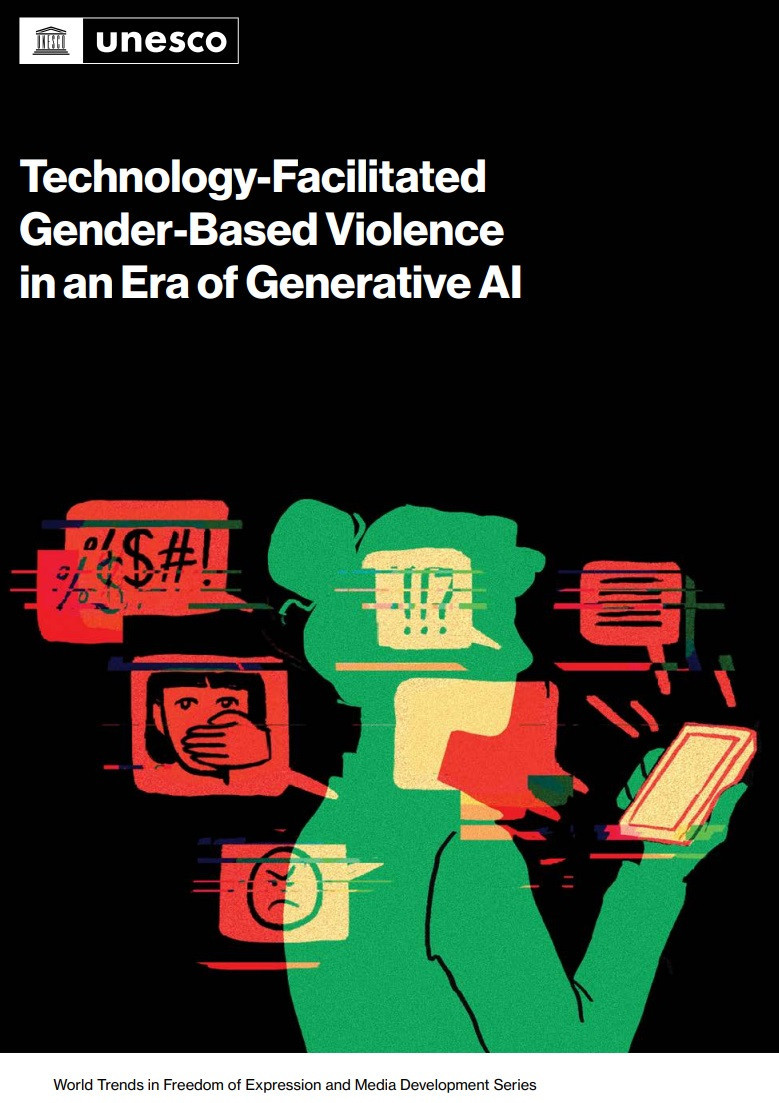 Technology-facilitated gender-based violence in an era of generative AI Year of publication: 2023 Corporate author: UNESCO <Short summary>Experiments reveal how generative AI facilitates gender-based violence Generative Artificial Intelligence (AI) — deep-learning models that create voice, text, and image — are revolutionizing the way people access information and produce, receive and interact with content. While technological innovations like ChatGPT, DALL-E and Bard offer previously unimaginable gains in productivity, they also present concerns for the overall protection and promotion of human rights and for the safety of women and girls.The arrival of generative AI introduces new, unexplored questions: what are the companies’ policies and normative cultures that perpetuate technology-facilitated gender-based violence and harms? How do AI-based technologies facilitate gender-specific harassment and hate speech? What “prompt hacks” can lead to gendered disinformation, hate speech, harassment, and attacks? What measures can companies, governments, civil society organisations and independent researchers take to anticipate and mitigate these risks?A combination of measures are proposed to be put in place by generative AI companies and the technology companies that platform them, regulators and policy makers, by civil society organisations and independent researchers, as well as users.
 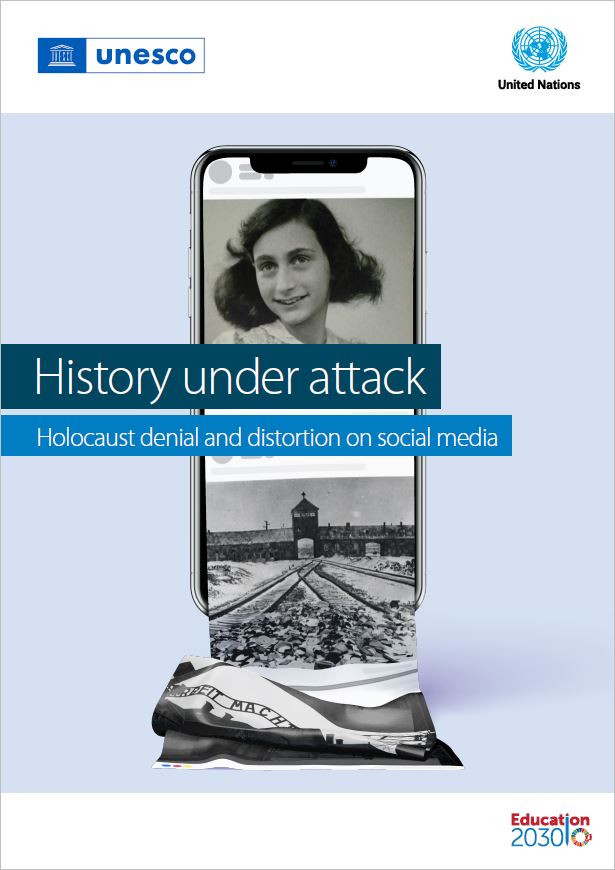 History Under Attack: Holocaust Denial and Distortion on Social Media Year of publication: 2022 Corporate author: 联合国教科文组织 (UNESCO) | United Nations (UN) A new United Nations and UNESCO study together with the support of the World Jewish Congress investigates Holocaust denial and distortion on social media, measuring their extent and nature on Facebook, Instagram, Telegram, Twitter and TikTok, at a time when the memory and fundamental facts of the Holocaust are under threat from lies, smears and the spread of violent ideologies. It provides recommendations that governments, online platforms, educators and researchers can implement to counter denial and distortion, prevent antisemitism and uphold human rights.This report aims to provide a wide-ranging assessment of the extent to which Holocaust-related content on social media and online platforms denies its factual basis or distorts the Holocaust by minimizing or misrepresenting its history. The report seeks to identify content that has evaded content moderation (on platforms that seek to remove content which denies and distorts the Holocaust). Perhaps more importantly, it also aims to provide an understanding of how denial and distortion about the Holocaust are communicated by people on online platforms.
  [Summary] Media and Information Literacy: The Time to Act is Now! Year of publication: 2021 Corporate author: UNESCO UNESCO has developed a comprehensive Curriculum which provides a framework for training teachers. But it is also a foundation that will also be of help to others: to learners, to content providers like internet companies and news media outlets, and to citizens of all ages as they consume, create and use content, including information.The second edition of the learning resource has been significantly expanded since the first publication in 2011. The MIL Curriculum reflects the changing nature of the information landscape. It now includes insight from a broader range of content providers than before, including libraries, archives, museums, media, and digital communications companies.The Curriculum is designed to empower educators and learners in general – from schoolteachers to those involved in training, the media and libraries, governments, and NGOs – to train people to spot misrepresentations and disinformation, and most importantly develop critical thinking competencies.
  온라인 허위정보와 뉴스 미디어 Year of publication: 2020 Author: 박아란, 이나연, 오현경 Corporate author: 한국언론진흥재단 본 연구에서는 코로나19 사태 등 최근 국내외에서 발생한 주요 사안들과 관련하여 유포되고 있는 허위정보와 가짜뉴스의 사례와 개념 등을 정리하고 각국의 대응방안에 대해 조사하는 것을 목표로 한다. 특히 현재 진행 중인 코로나19 사태는 전 세계적으로 관심이 집중되고 있는 사안이니만큼 코로나19와 관련된 허위정보의 확산 및 피해 사례들을 중점적으로 살펴보고, 최근 선거를 치르거나 앞두고 있는 국가들의 사례를 통해 선거 관련 허위조작정보 문제에 대해서도 살펴봄으로써 사회적 혼란을 가져오고 불신을 양산하는 허위정보 문제에 효과적으로 대응할 수 있는 방안을 모색하고자 한다.
  Social Media 4 Peace Year of publication: 2021 Corporate author: UNESCO | European Union (EU) The overall objective of the UNESCO project 'Social Media 4 Peace' funded by the European Union is to strengthen the resilience of societies to potentially harmful content spread online, in particular hate speech inciting violence while protecting freedom of expression and enhancing the promotion of peace through digital technologies, notably social media. For more information, please visit:https://en.unesco.org/social-media-4-peace